

We use cookies to ensure our website works properly and to personalise your experience. Cookies policy
B.PHARMACY, SND COLLEGE OF PHARMACY, BAHULGON
Using tiny carriers at the nanoscale helps improve how well drugs dissolve, stay stable, get absorbed by the body, and release over time. Nanotechnology-based approaches have emerged as promising strategies for improving drug delivery. Nanotechnology-based drug delivery systems can facilitate the delivery of drugs to specific tissues or cells, potentially reducing adverse effect on healthy tissues. Various nanocarriers, including liposomes, polymeric nanoparticles, micelles, dendrimers, and lipid-based nanoparticles, have been investigated for their potential therapeutic applications. These systems have potential applications in cancer treatment, gene and vaccine delivery, neurological disorders, infectious diseases, and theranostics, which combines therapeutic and dignostics approaches. Despite these potential benefits, challenges remain regarding toxicity, biocompatibility, long-term stability, large-scale manufacturing, regulatory requirements, and clinical translation. Further research is needed to establish the safety, efficacy, and clinical applicability of nanotechnology-based drug delivery systems.
Nanotechnology is a new area in pharmaceutical science that helps create better ways to deliver medicine. It involves using materials at the nanoscale, usually between 1 and 100 nanometers, to diagnose and treat different diseases. Nanotechnology-based drug delivery systems are made to release medications in a controlled way and help deliver them more precisely to certain parts of the body [1,2 ,3].
Conventional drug delivery systems often encounter issues like poor drug solubility, low bioavailability, limited absorption, and challenges in delivering drugs to specific areas of the body. Nanocarriers can help solve some of these problems by keeping drugs safe from breaking down, improving how well they dissolve and are absorbed, and allowing for more accurate delivery to the right areas of the body.
Many tiny carriers like nanoparticles, liposomes, polymeric micelles, dendrimers, and solid lipid nanoparticles have been studied for use in medicine. These systems can provide better treatment results and cause less harm to the body. However, their toxicity, how well they work with the body, and their safety over a long time need to be carefully checked. Nanotechnology has a lot of potential in improving drug delivery, but more research is needed to make sure the different nanocarriers are safe and work effectively [3,4,10].
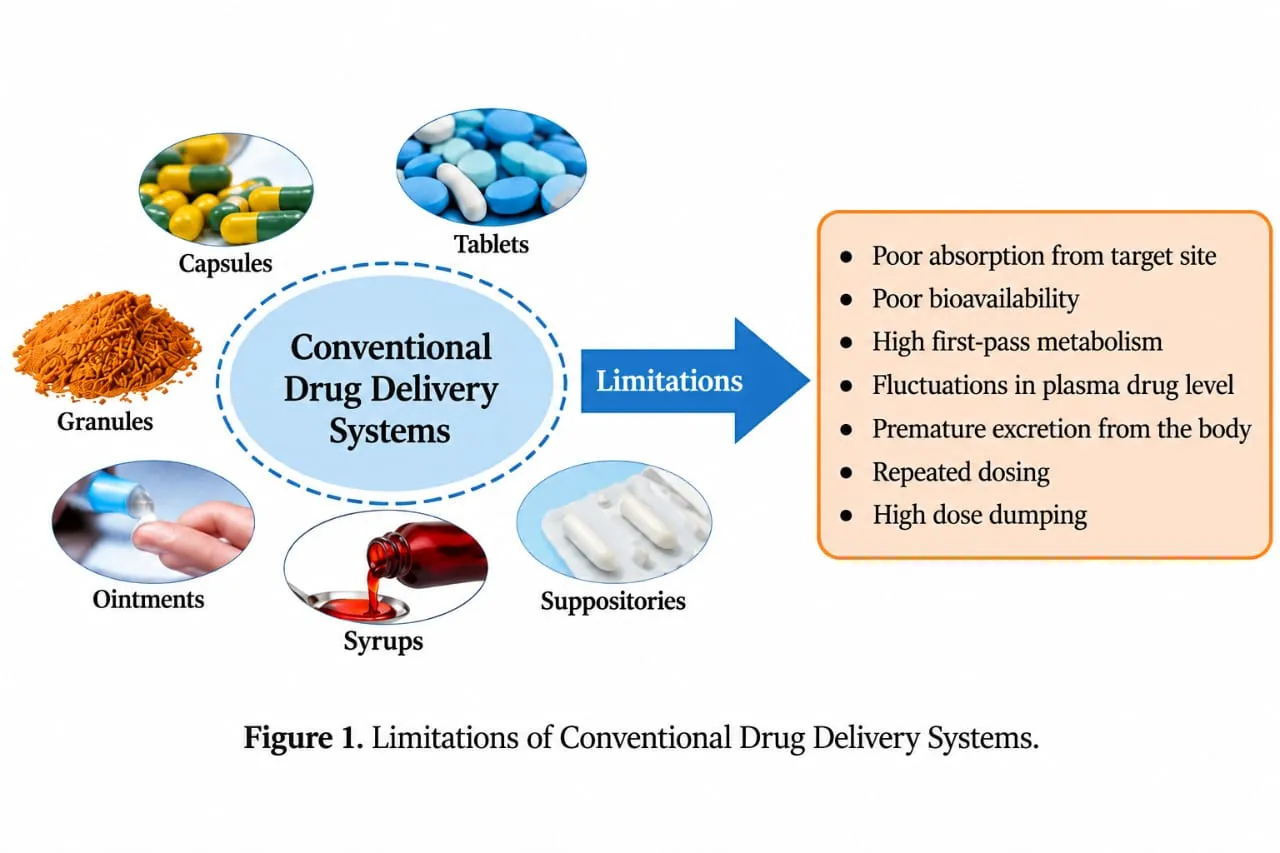
2. LIMITATIONS OF CONVENTIONAL DRUG DELIVERY SYSTEMS:
Tablets, capsules, syrups, and ointments are commonly used to deliver therapeutic agents. However, these dosage forms have limitations that may reduce the drugs’ therapeutic effectiveness [5,16].
1. Poor Absorption and Bioavailability:
Some drugs aren't well absorbed by the body, leading to low levels in the bloodstream and less effectiveness in treating the condition [2,5].
2. Fluctuations in Drug Concentration:
Traditional medication forms can lead to changes in the amount of drug in the blood, making it hard to keep the drug levels in the right range for treatment [5,16].
3. Frequent Dosing:
Some medications are quickly broken down or removed by the body, so they need to be taken more often, which can make it harder for patients to follow their treatment plan [5,16].
4. Lack of Target Specificity:
Traditional drug delivery methods might not target the specific area where the drug needs to work, which could mean that other parts of the body might get exposed to the drug unnecessarily [3,4].
5. Early Excretion and Metabolism:
Before it gets to where it's supposed to work, a drug might be broken down or removed from the body, which reduces the amount of actual medicine that's active [5,16].
3. Nanotechnology-Based Drug Delivery Systems:
Nanotechnology-based drug delivery systems are advanced methods for delivering medication to specific areas of the body. They use very small materials and particles to transport drugs safely and accurately. These systems are widely used in pharmaceutical research due to their unique physical, chemical, and biological properties. The goal of these methods is to improve drug stability, solubility, bioavailability, effectiveness in treating diseases, and the controlled release of the drug [1,3].
By mixing nanoparticles with medications and improving their surface features, they can better interact with body tissues and cells. Compared to usual ways of giving medicine, systems that use nanotechnology could help fix many issues. These issues include medicines not breaking down properly, not staying the same over time, having difficulty getting through cells, not staying in the body for long, and causing bad side effects [3,5,17].
Types of Nanotechnology-Based Drug Delivery Systems:
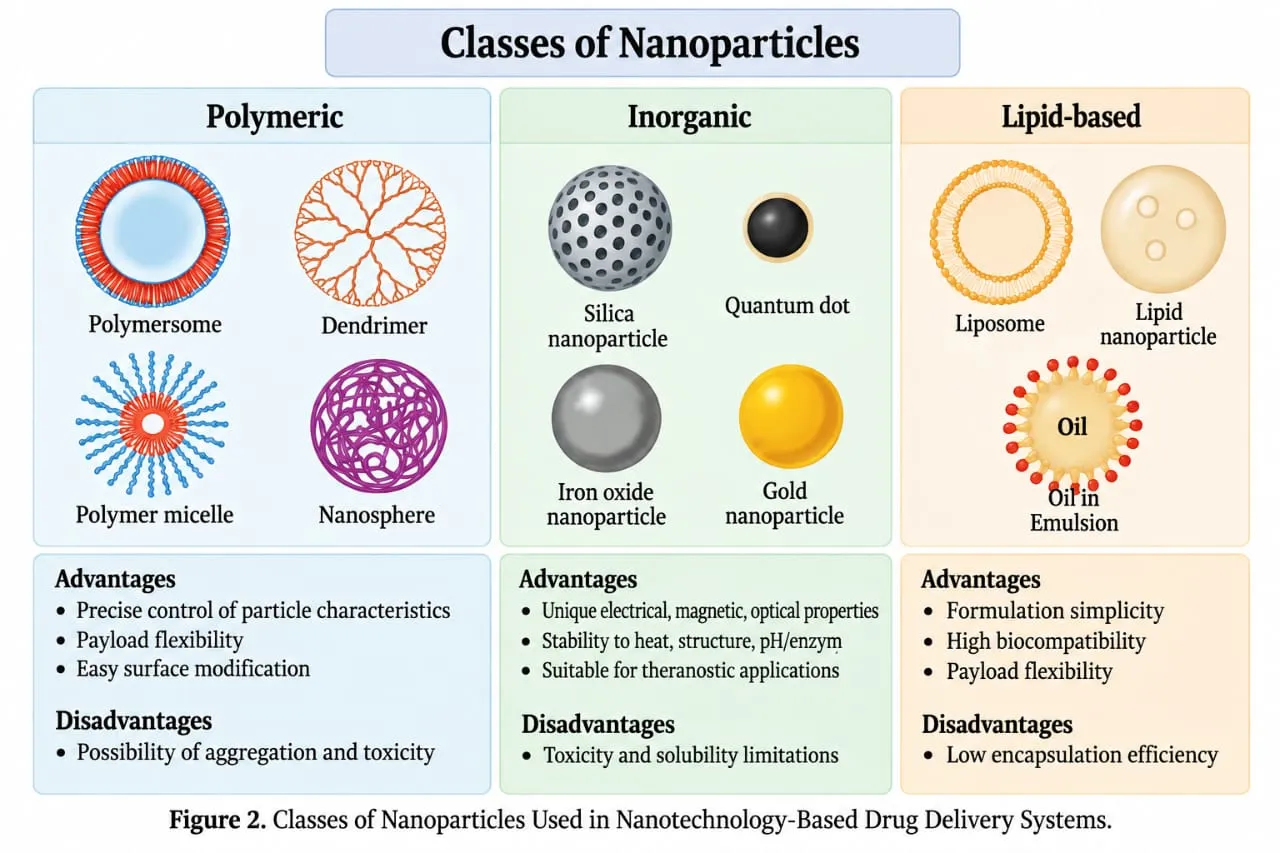
Researchers are looking into various nanomaterial systems to deliver drugs effectively Some key examples are listed in references [3,5].
3.1 Liposomes:
Liposomes are round packages that can carry both water-soluble and oil-based medicines inside, which helps keep the medicines more stable [13,14].
3.2 polymeric nanoparticles:
Polymeric nanoparticles are created from polymers and are used to carry drugs. They help release the medicine slowly over time, which can make the drug delivery more effective.
3.3 lipid based nanoparticles:
Lipid-based nanoparticles are small particle carriers made from lipids that help drugs dissolve better, get absorbed more effectively, and stay active longer in the body [12,16].
3.4 polymeric micelles:
Polymeric micelles are unique structures that form independently, aiding in the transportation of drugs that are not soluble in water.
3.5 Dendrimers:
Dendrimers are branched, tree-like molecules created at a very small size that can carry drugs and can be modified to deliver medicine to specific areas in the body [19].
3.6 inorganic nanoparticles:
Inorganic nanoparticles, such as gold, silica, and iron oxide nanoparticles, have beneficial optical or magnetic properties.
4. Mechanism of Drug Delivery:
Nanotechnology-based drug delivery systems use very small carriers such as liposomes, polymeric nanoparticles, and micelles to transport medicine throughout the body. The drug might be inside the nanocarrier or attached to its surface. By using these carriers, the drug stays protected from breaking down too early and becomes more stable, which helps it reach the intended target safely. Once it is given, the nanocarrier travels through the body and may accumulate in the target tissue. The drug leaves the body in various ways, such as moving through the bloodstream, breaking down the material it's carried in, or being released when specific conditions are met [3,5,15].
Cellular Uptake and Drug Release:
Once the nanocarriers reach the target tissue, they can get inside cells through different ways, especially by a process known as endocytosis. How something gets taken up depends on factors like the size of the particles, the charge on their surface, the material that covers their surface, and the type of cell they are entering. When nanocarriers are taken up inside cells, the drug they carry can be released in the cell's inner parts.This release can happen by the drug moving on its own, the nanocarriers breaking down, or changes in the surroundings inside the cell. Sometimes, things like light or heat can also make the medicine come out. The amount of drug that gets inside cells and how well it works therapeutically depend on these mechanisms [14,18,20].
Important Steps in the Mechanism of Drug Delivery:
4.1 Drug Loading into Nanocarrier:
The drug is combined with or linked to the nanocarrier. This helps the medication travel through the body [3,10].
4.2 Administration into the Body:
The way the drug is carried in the nanocarrier determines how it is given to the body, and the options include taking it by mouth, injecting it, or applying it through the skin [5,16].
4.3 Transport Through the Body:
The nanocarrier moves through the body and can protect the drug from breaking down too early before it reaches the intended tissue [6,18].
4.4 Accumulation at the Target Site:
Some nanocarriers can collect at the target area through either passive or active ways, which helps in getting the drug to the correct location [4,6].
4.5 Drug Release:
The drug exits the nanocarrier by passing through it, dissolving the carrier, or responding to changes such as pH, temperature, or enzyme activity [3,15].
4.6 Therapeutic Effect:
The drug is released and targets the site, leading to the desired therapeutic effect [4,9].
4.7 Elimination:
After the drug is released, the nanocarrier or its breaking down components can be processed or eliminated through normal bodily processes.
Drug loading into nanocarrier
↓
Administration into the body
↓
Transport through the body
↓
Accumulation at target site
↓
Drug release
↓
Therapeutic effect
Figure 2: General Mechanism of Nanotechnology-Based Drug Delivery.
5. Targeted Drug Delivery:
Targeted drug delivery is a method that sends medicine straight to a particular area in the body, like an organ, tissue, or cell, making the treatment work better and causing less harm to other parts of the body. Nanocarriers can be made to help drugs move through the body better and reach certain areas more accurately. The main types of targeted drug delivery systems include: [3,4,6].
5.1 Passive Targeting:
Passive targeting depends on the natural buildup of nanocarriers in certain tissues. In some tumors, the EPR effect helps nanoparticles gather in the area because the blood vessels are not fully sealed and the lymphatic system isn't working well, which lets the particles stay there [4,6,9].
5.2 Active Targeting:
Changing the surface of nanocarriers to attach targeting molecules like peptides, ligands, or antibodies is called active targeting. These molecules can identify particular receptors on the target cells, which might help improve the drug's ability to be absorbed by the cells [4,6,9].
5.3 Ligand-Mediated Targeting:
In this method, certain molecules are attached to the outside of the nanocarrier so they can stick to receptors on the cells that are being targeted. Examples include folate- and transferrin-modified nanoparticles [4, 9].
5.4 Site-Specific Drug Release:
Nanocarriers can be made to release medicine when certain conditions, like pH level, temperature, or enzyme activity, change in a specific area. This could make it easier to give the right amount of medicine to the right place.
Using tiny technology to send medicine straight to certain parts of the body has offered promise in treating cancer and other diseases. But effective targeting relies on factors such as the size of the nanoparticles, their surface characteristics, the body's natural defenses, and the specific type of tissue being targeted [3 ,15].
6. Applications of Nanotechnology in Drug Delivery Systems:
Nanotechnology is used in drug delivery for better drug solubility, accurate targeting, and controlled release of drugs. Its major applications are described below [3 ,15].
6.1 Cancer Drug Delivery:
Scientists are looking into using nanocarriers such as liposomes and polymeric nanoparticles to carry anticancer drugs and help them spread better in tumor tissues [4, 9,10].
6.2 Gene Delivery:
Lipid nanoparticles can take genetic materials such as DNA, mRNA, and siRNA into cells. They assist in preserving these materials from deterioration [12 ,18].
6.3 Brain Drug Delivery:
Scientists are studying the use of nanocarriers to help drugs pass through the blood–brain barrier, which often stops many medications from getting to the brain [6 ,9].
6.4 Vaccine Delivery:
Nanoparticles can carry antigens or genetic material and protect them from getting damaged. Some mRNA vaccines use lipid nanoparticles [12 ,25].
6.5 Delivery of Poorly Water-Soluble Drugs:
Nanotechnology-based formulations, like nanoemulsions and polymeric micelles, can improve the solubility or how well a drug dissolves in water for drugs that don't dissolve easily in water [10, 20].
6.6 Controlled and Sustained Drug Delivery:
Nanocarriers can be designed to release drugs gradually and consistently for a longer time. This might help to maintain the correct level of medicine in the body and reduce how often it has to be taken [5, 15].
6.7 Treatment of Inflammatory and Infectious Diseases:
Nanocarriers are being researched as a potential source of antimicrobial and anti-inflammatory drugs to improve drug stability and distribution [3,5].
6.8 Diagnostic and Imaging Applications:
The utilization of nanomaterials is being pursued for medical imaging and disease detection. Some systems use both diagnostic and treatment features [6, 9].
7. Advantages of Nanotechnology - Based drug delivery systems:
Nanotechnology-based drug delivery systems offer advantages over traditional methods, including improved solubility, accurate targeting, and controlled release of the medication.
7.1 Improved Solubility and Bioavailability:
The bioavailability of drugs that don't dissolve in water can be improved by using nanocarriers [1,3,4].
7.2 Targeted Drug Delivery:
Nanocarriers can deliver drugs to specific areas of the body or particular cells, which might help keep healthy tissues from getting damaged [4,6,9].
7.3 Controlled and Sustained Drug Release:
The benefits of using nanocarriers in therapy can last longer because the medications are released slowly over time [5,15].
7.4 Protection from Drug Degradation:
Nanocarriers protect the drugs so they don't break down too soon and help them stay stable [3,10,13].
Table 1: Applications of Nanotechnology-Based Drug Delivery Systems
| Applications | Nanocarrier/Approach | Main purpose |
|---|---|---|
| Cancer drug delivery |
Liposomes, Polymeric, nanoparticles |
Anticancer drug delivery |
| Gene delivery | Lipid nanoparticles |
DNA,mRNA and SiRNA delivery |
| Brain drug delivery |
Specially Designed nanocarriers |
Drug delivery Across the Blood-brain barrier |
| Vaccine delivery | Lipid nanoparticles |
Vaccine Component delivery |
| Poorly soluble drugs |
Nanoemulsions Polymeric, micelles |
Improve solubility Or dissolution |
| Controlled drug delivery |
Polymeric Nanoparticles |
Control drug release |
| Infectious and Inflammatory diseases |
Drug- loaded Nanocarriers |
Improve drug delivery |
| Diagnostic and imaging |
Functional nanomaterials |
Imagining and Disease detection |
8. The Limits and Challenges of Nanotechnology-Based Drug Delivery Systems:
Despite the many benefits of nanotechnology in drug delivery, there are still several challenges that prevent it from being widely used. The major challenges include:[3,5]
8.1 Toxicity and Safety:
Some nanomaterials can cause harmful effects because of their makeup, size, and how much of them there is [3,9].
8.2 Stability Issues:
The stability and performance of nanocarriers can be influenced by physical or chemical changes that occur over time when they are stored [5,10].
8.3 High Manufacturing Cost:
Creating products using nanotechnology can require expensive equipment and unique techniques [3,5].
8.4 Scale-Up Difficulties:
Making nanocarriers in large amounts while keeping their quality the same is a difficult process[3,5].
8.5 Regulatory Challenges:
Nanotechnology-based medicines need to be carefully checked for their quality, safety, and how well they work before they can be approved [1,3].
8.6 Biological Barriers:
The delivery of drugs using nanocarriers can face challenges like being cleared by the immune system and difficulty in reaching certain tissues [6,9].
9. Clinical Applications and Marketed Nanomedicines:
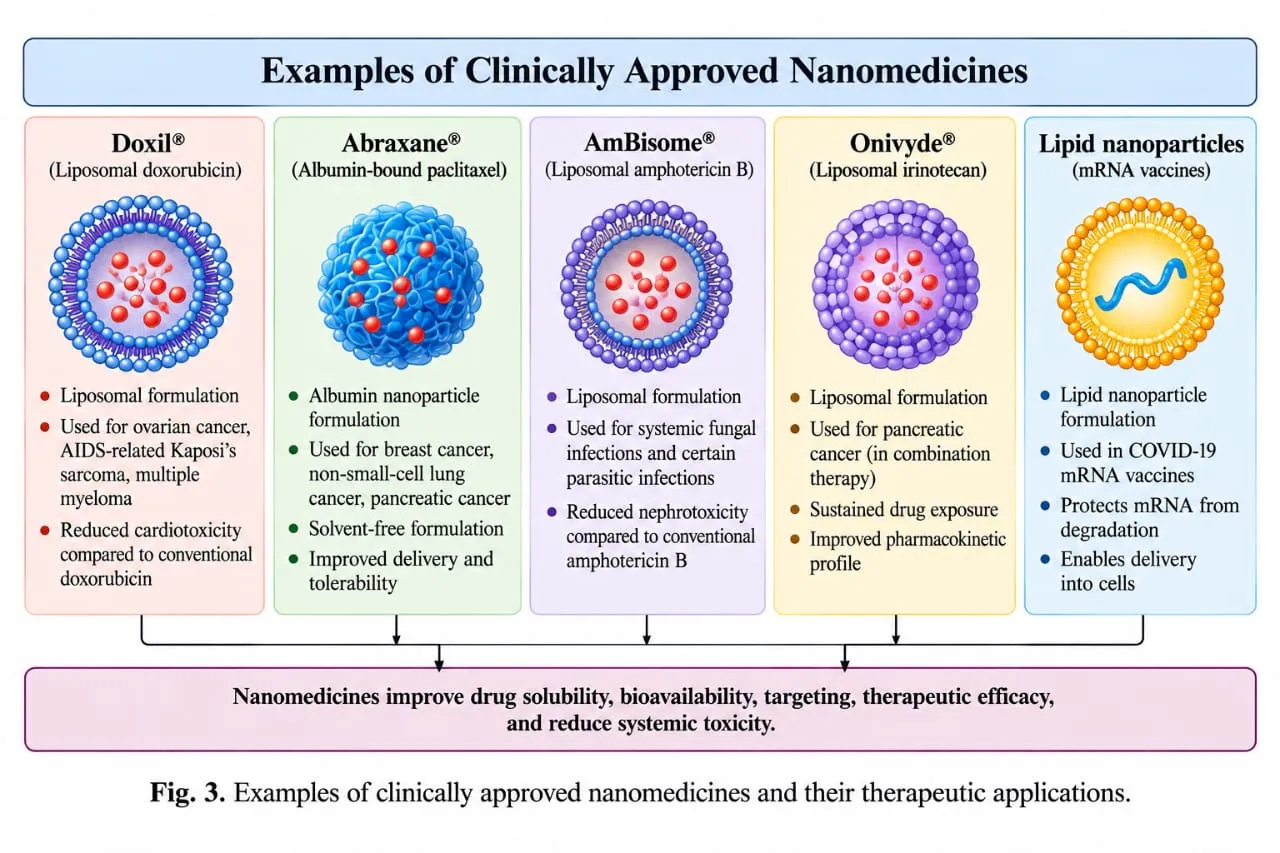
The use of nanotechnology-based drug delivery systems has made significant advancements in modern medicine, including easier drug dissolution, improved drug absorption, improved disease treatment, and targeted delivery of drugs to specific body regions. Several nanomedicines have been approved for use in clinical settings, particularly for treating cancer and managing other diseases. These treatments use tiny particles such as liposomes, lipid nanoparticles, and albumin-based nanoparticles to help drugs move through the body more effectively, which can make the medicine work better [1,2].
9.1 Liposomal Doxorubicin:
Liposomal doxorubicin, known as Doxil in the U.S., is a type of drug delivered using liposomes.It's used to treat certain cancers, such as ovarian cancer, Kaposi's sarcoma related to AIDS, and multiple myeloma, often along with other medications. Putting doxorubicin inside liposomes changes how it spreads through the body and may reduce certain harmful side effects, like heart damage, compared to using regular doxorubicin [3,4].
9.2 Albumin-Bound Paclitaxel:
Albumin-bound paclitaxel, sold under the brand name Abraxane, is a type of nanoparticle that binds paclitaxel to albumin. It is used to treat some types of cancer, like breast cancer, non-small-cell lung cancer, and pancreatic cancer. The new version of the content lets it be given without using the usual solvent system that is often found in some paclitaxel products [3,5].
9.3 Liposomal Amphotericin B:
Liposomal amphotericin B, also known by the brand name AmBisome, is used to treat serious fungal infections that spread throughout the body and certain types of parasitic infections. Its liposomal form changes how the drug moves through the body and can reduce the risk of kidney damage compared to regular amphotericin B, but it's still important to monitor kidney function and other side effects [3,6].
9.4 Liposomal Irinotecan:
Liposomal irinotecan, which is also known by the brand name Onivyde, is used in specific treatment plans for pancreatic cancer. Putting irinotecan inside liposomes changes how the drug moves through the body, which helps keep the drug active for a longer time in the body [3,7].
9.5 Lipid Nanoparticles in mRNA Vaccines:
The delivery of messenger RNA (mRNA) into cells is made easier by using lipid nanoparticles, which act as a protective barrier against degradation. This technology is used in the mRNA vaccines for COVID-19 and has also helped advance research on other vaccines and treatments that use nucleic acids [1,2,8].
10. Recent Advances and Future Perspectives:
Recent improvements in nanotechnology have helped create new and better ways to deliver drugs. These changes aim to improve drug delivery, making it safer and more effective for treating diseases [1,2].
Lipid nanoparticles are becoming a key method for delivering nucleic acids such as mRNA and are used in certain mRNA vaccines [2,8].
10.1 Stimuli-Responsive Nanocarriers:
Nanocarriers are designed to release drugs when certain conditions occur, like changes in pH levels, temperature, or the presence of specific enzymes [5,9].
10.2 Improved Targeted Delivery:
Scientists are working on creating nanocarriers that can target specific cells or tissues to improve how drugs are delivered [3,6].
10.3 Personalized Medicine:
Nanotechnology can help create personalized treatment options by enabling the development of drug delivery systems that are customized to meet each individual's unique medical needs [1,5].
10.4 Future Perspectives:
Nanotechnology-based drug delivery systems demand more studies to make them safer, more dependable, reproducible, and more appropriate for clinical use [1,3,5].
CONCLUSION:
Using nanotechnology in drug delivery systems is a promising approach that helps improve how drugs are delivered and the effectiveness of treatments. Nanocarriers like liposomes, polymeric nanoparticles, micelles, and lipid nanoparticles can improve drug solubility, stability, bioavailability, and controlled drug release. They also have the potential for targeted delivery and can be used in cancer treatment, gene delivery, and vaccine development. There are still some problems with toxicity, stability, producing it in large quantities, scaling up the production process, and getting approval from the regulators that need to be addressed. More research and testing are required to ensure these systems are safe, function properly, and can be used more broadly in healthcare environments.
In the future, improvements in nanotechnology could help create safer, more effective, and more comfortable ways to deliver medicines to patients. More research, testing in actual medical situations, and approval from health authorities will be required to ensure these treatments go from being tested in laboratories to being used by patients.
REFERENCES

Samiksha Pravin Sonje, Dr. Amol U. Gayke, Nanotechnology in Drug Delivery Systems, Int. J. Sci. R. Tech., 2026, 3 (11), 502-510. https://doi.org/10.5281/zenodo.24158049
 10.5281/zenodo.24158049