

We use cookies to ensure our website works properly and to personalise your experience. Cookies policy
1Delight College of Pharmacy, Koregaon Bhima, Pune, Maharashtra, India-412216.
2Department of Pharmaceutical Chemistry , Delight College of Pharmacy, Koregaon Bhima, Pune, Maharashtra, India-412216.
3Principal of Delight College of Pharmacy, Koregaon Bhima, Pune, Maharashtra, India-412216
Okra (Abelmoschus esculentus L. Moench) mucilage is a natural, water-soluble polysaccharide obtained from okra pods and is gaining attention as a sustainable moisturizing excipient for topical hydrogel formulations. This review examines the extraction, characterization, formulation, and evaluation of okra mucilage as a natural moisturizing agent. Okra mucilage is primarily composed of pectic polysaccharides, including rhamnogalacturonan-I and arabinogalactan-type fractions, containing galactose, galacturonic acid, rhamnose, and associated proteins. Its abundant hydroxyl and carboxyl groups enable strong hydrogen bonding with water, supporting humectant activity, film formation, bioadhesion, and reduction of transepidermal water loss. Mucilage is commonly extracted by soaking or heating sliced okra pods in water, followed by filtration and precipitation with ethanol or acetone. Extraction yield and functional quality depend on temperature, extraction time, water-to-material ratio, pH, ethanol concentration, drying method, cultivar, and pod maturity. Optimized aqueous extraction has reported yields of approximately 11.87–13.68%, while conventional and microwave-assisted methods can produce mucilage with useful viscosity, swelling, antioxidant, and film-forming properties. In hydrogel systems, okra mucilage may act as the primary gelling polymer or as a co-polymer with xanthan gum, carrageenan, guar gum, carbomer, gelatin, or polyvinyl alcohol. Reported okra-containing hydrogels show high water-holding capacity, shear-thinning rheology, pH-dependent swelling, and improved adhesive strength. A 0.2% okra mucilage-containing hydrogel pad demonstrated superior moisture retention, while an okra-extract emulsion-gel increased human skin hydration for up to 90 minutes without irritation. Overall, okra mucilage is a promising natural moisturizer for topical hydrogels; however, standardization of extraction, microbial stability, preservative efficacy, long-term stability, and controlled clinical moisturization studies remain essential for cosmetic and pharmaceutical development.
The skin is the outermost protective organ of the human body and is continuously exposed to environmental stressors such as ultraviolet radiation, pollution, low humidity, detergents, and temperature variation. These factors can disrupt the stratum corneum barrier, accelerate water loss, and lead to dryness, roughness, scaling, irritation, and reduced elasticity. Moisturizing formulations therefore play an important role in maintaining skin barrier function by increasing water content, reducing transepidermal water loss (TEWL), and forming a protective surface film.1,2,3Conventional moisturizers commonly use synthetic humectants such as glycerol, propylene glycol, polyethylene glycol, hyaluronic acid derivatives, and polymeric gelling agents. Although effective, there is increasing consumer and regulatory interest in plant-derived, biodegradable, renewable, and skin-friendly alternatives. Natural gums and mucilages have therefore been explored as hydrogel-forming polymers because of their hydrophilicity, biocompatibility, water-retention capacity, thickening ability, and film-forming behavior.4,5Okra (Abelmoschus esculentus L. Moench), commonly known as lady’s finger or bhindi, belongs to the family Malvaceae and is widely cultivated in tropical and subtropical regions. It is an economical and readily available agricultural crop, and its pods contain a viscous mucilage that is released when the tissue is cut, soaked, cooked, or blended with water. This mucilage is a complex natural hydrocolloid composed mainly of polysaccharides, along with proteins, minerals, vitamins, and minor bioactive constituents. The major monosaccharide units include D-galactose, L-rhamnose, and galacturonic acid, which are arranged largely in pectic polysaccharide structures such as rhamnogalacturonan-I and arabinogalactan fractions.6,7The high density of hydroxyl and carboxyl groups in okra mucilage provides strong water-binding capacity. These groups interact with water molecules through hydrogen bonding and electrostatic interactions, allowing the mucilage to hydrate rapidly, increase viscosity, retain moisture, and form a cohesive polymeric network. When applied topically, such a network can act as a humectant and film former, helping to reduce moisture evaporation from the skin surface and improve the residence time of the formulation. A patent literature also describes plant mucilage-containing extracts, including okra-derived mucilage, as suitable for lubricating and moisturizing external body tissues.8 Okra mucilage has already been investigated for several pharmaceutical and cosmetic functions, including use as a binder, suspending agent, emulsifier, stabilizer, thickener, film former, and antioxidant excipient. Its hydrophilic and gel-forming nature makes it particularly suitable for hydrogel systems, which are three-dimensional polymer networks capable of absorbing and retaining large quantities of water. Okra polysaccharide has also been incorporated into guar gum–polyvinyl alcohol double-network hydrogels, where it improved mechanical and thermal properties while maintaining swelling behavior. Similarly, okra-containing xanthan gum/κ-carrageenan hydrogel pads showed improved water-holding capacity and reduced moisture loss, supporting its potential as a moisturizing ingredient in cosmeceutical products.4The extraction process is a critical determinant of the final performance of okra mucilage in topical hydrogels. Conventional aqueous extraction, hot-water extraction, microwave-assisted extraction, and other non-conventional techniques can alter mucilage yield, molecular weight, monosaccharide composition, viscosity, swelling capacity, and antioxidant activity. After extraction, polysaccharides are commonly precipitated using ethanol or acetone because okra mucilage is soluble in water but insoluble in many organic solvents. However, variations in cultivar, pod maturity, extraction temperature, pH, water-to-material ratio, and drying conditions can cause batch-to-batch variability.9
Therefore, this review focuses on okra mucilage as a natural moisturizing agent for topical hydrogel formulations. It discusses the extraction methods, physicochemical and structural characterization, moisturizing mechanisms, hydrogel formulation strategies, evaluation parameters, safety considerations, and current research gaps. The overall aim is to provide a scientific basis for developing stable, effective, and consumer-acceptable okra-mucilage-based moisturizing hydrogels.10
Botanical and Chemical Profile
Okra mucilage is not made up of a single pure polymer. Instead, it is a mixture of acidic pectic polysaccharides, proteins, minerals, and small amounts of other bioactive compounds. Its main polysaccharide components include acetylated rhamnogalacturonans and arabinogalactan-like structures. A purified pectic polysaccharide obtained from okra and used in wound-healing hydrogels was found to have a molecular weight of approximately 3.28 × 10ⶠDa. It mainly contained galactose (24.45%), galacturonic acid (24.6%), and rhamnose (18.25%).9,11,12
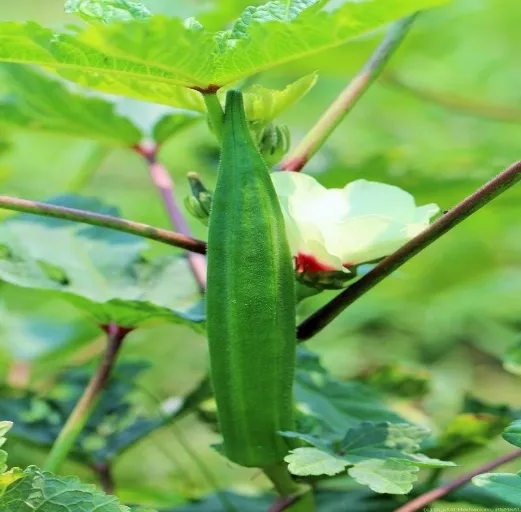
Figure 1: Okra Mucilage
| Component/feature | Relevance to moisturization |
|---|---|
| Hydroxyl groups | Bind water through hydrogen bonding; support hydration and gel formation.13,14 |
| Galacturonic acid/carboxyl groups | Confer anionic character, water solubility, and film-forming capacity.14 |
| Rhamnogalacturonan-I backbone | Provides a flexible, branched pectic architecture capable of entrapping water.15,16 |
| Proteins and phenolics | May contribute to antioxidant and soothing properties, but can affect microbial stability and color.17 |
| High molecular weight | Supports viscosity, cohesion, bioadhesion, and sustained water retention.9,16 |
The mucilage is generally soluble in water and insoluble in organic solvents such as ethanol, acetone, chloroform, and n-butanol; this solubility contrast is exploited during purification by alcohol precipitation.11,18
Moisturizing Mechanism
Okra mucilage helps moisturize the skin through three main mechanisms:
1. Humectancy: Okra mucilage contains hydroxyl and carboxyl groups that attract and bind water molecules. This helps reduce water loss from the formulation and keeps the skin hydrated.13, 14
2. Film formation: When the mucilage dries, it forms a thin and flexible layer on the skin. This layer helps reduce transepidermal water loss (TEWL) and protects the skin from environmental and physical damage.10, 11
3. Bioadhesion and residence time: Okra mucilage has a thick, sticky, and adhesive nature, which helps the hydrogel remain in contact with the skin for a longer time. This may improve the duration of skin hydration.9, 19
A study on an okra-based xanthan/κ-carrageenan hydrogel pad found that adding 0.2% okra mucilage powder gave the best results. It showed the lowest moisture-loss rate and the highest water content and water-holding capacity. It also improved the adhesive strength of the hydrogel. This finding is important because a good moisturizing hydrogel should be able to retain water and remain in proper contact with the skin for an extended period.20
Extraction of Okra Mucilage
Conventional Aqueous Extraction
The traditional method of extracting okra mucilage involves using fresh, mature but tender okra pods. First, the pods are properly washed, cut into small pieces, and soaked in distilled water. During soaking, the polysaccharides absorb water and dissolve into it, forming a thick and sticky extract. This extract is then filtered and treated with ethanol or acetone to separate the mucilage.In a typical laboratory procedure, 20–30 g of okra pods are cut into small pieces and soaked in 200–300 mL of distilled water for about 6–8 hours or overnight. The mixture is then heated at 60–70°C for 30 minutes and filtered using muslin cloth. The thick filtrate obtained is collected for further processing and purification of okra mucilage.15
The concentration of ethanol plays an important role in the precipitation of okra mucilage. In one study, 20% and 40% ethanol were not effective in separating the polymer, while 60%, 80%, and 95% ethanol showed better results. Among these, 95% ethanol produced the highest yield of mucilage. In other studies, the crude extract is commonly mixed with ethanol in a ratio of 1:3 or 1:4. After precipitation, the mucilage is washed, dried, and ground into a fine powder. It is then stored in an airtight container because dried okra mucilage easily absorbs moisture from the surroundings.18
Hot-water extraction
Hot water extraction helps in increasing the swelling of okra cell walls and allows polysaccharides to dissolve more easily in water. It also improves the movement of these compounds into the extraction medium. In one optimization study, the best extraction conditions were found to be around 50.5°C for 1.52 hours, with a water-to-okra ratio of 7.2:1. Under these conditions, the predicted mucilage yield was 23.24%, along with good swelling capacity and emulsion stability.Another study reported that extraction at 80°C with a higher water-to-material ratio could produce an estimated yield of 11.87%. The experimental results further confirmed a yield of 13.68%.6, 14
Microwave-assisted extraction
Microwave-assisted extraction is a useful method that helps reduce the extraction time while maintaining the functional properties of okra mucilage. In one study, mucilage extracted using microwave treatment for 1 minute showed good antioxidant activity through DPPH radical-scavenging and metal-chelating effects. Another study found that extraction for 5 minutes resulted in a short wetting time of 2.75 minutes. This method can be useful when good antioxidant activity and faster water absorption are required. However, the temperature and exposure time must be carefully controlled to prevent the breakdown of polysaccharide chains.21
Effect of processing variables
The extraction conditions play an important role in determining the quality and properties of the final okra mucilage used in hydrogel preparation.
Characterization of Extracted Mucilage
Physicochemical characterization
The characterization of okra mucilage should include different physical and chemical tests to check its quality and suitability for pharmaceutical or cosmetic applications. These tests include appearance, colour, odour, moisture content or loss on drying, pH, ash value, solubility, swelling index, bulk density, tapped density, angle of repose, and microbial load. These evaluation tests help to determine the purity, physical properties, stability, and overall quality of the extracted mucilage before using it in formulation development.24
The properties and yield of okra mucilage may differ depending on the source of okra and the extraction method used. One study reported an aqueous extraction yield of 11.44%, with 9.917% loss on drying and a pH of 7.5. Another study reported mucilage yields of 11.5% and 10.5% using methanol and ethanol, respectively. The loss on drying values were found to be 7.86% and 8.10%, respectively. Since dried okra mucilage has the ability to absorb moisture from the air, it should be stored in a low-humidity environment and packed in moisture-resistant containers to maintain its quality.18, 25
Structural characterization
Fourier-transform infrared spectroscopy (FTIR) is used to confirm polysaccharide identity. Characteristic broad O–H stretching near 3415–3276 cm⻹ indicates hydrogen-bonded hydroxyl groups; C–H stretching near 2914 cm⻹ reflects carbohydrate structure; and bands around 1719–1596 cm⻹ correspond to carbonyl/carboxylate groups associated with uronic acids. These functional groups underpin water binding, emulsification, and film formation.14
Additional useful techniques include:
Rationale for Hydrogel Use
Hydrogels are three-dimensional structures formed by hydrophilic polymers that have the ability to absorb and retain large quantities of water without losing their basic structure. These polymer networks remain swollen because of the presence of water-loving functional groups in their structure. Okra mucilage is considered a useful natural polymer for hydrogel preparation due to its polysaccharide-rich composition and excellent water-absorbing properties. Its long polysaccharide chains interact with water molecules through hydrogen bonding and electrostatic forces, which help in forming a stable hydrated network. In addition, the presence of carboxyl groups in okra mucilage allows it to interact with other polymers and crosslinking agents. These interactions may help in forming ionic or covalent bonds, depending on the formulation method and the materials used. As a result, okra mucilage can contribute to the swelling capacity, water retention, viscosity, flexibility, and overall stability of hydrogel formulations. Its natural origin and moisture-retaining properties make it a promising material for pharmaceutical and cosmetic applications, particularly in moisturizing gels and topical preparations.13, 14
In one study, a double-network hydrogel was prepared using polyvinyl alcohol (PVA) and guar gum, with okra polysaccharide added as a reinforcing material and citric acid used as a crosslinking agent. The results showed that the addition of okra polysaccharide improved the mechanical strength and thermal stability of the hydrogel compared with the formulation that did not contain okra. It also maintained good swelling properties, showing that okra mucilage can improve the overall performance of hydrogel formulations.Another study reported that adding heated okra mucilage to a hydrogel increased its swelling capacity from 5013% to 6797%. It also improved the antibacterial properties of the formulation. These findings suggest that the addition of okra mucilage can influence the water absorption, swelling behaviour, strength, and antibacterial performance of hydrogels. They also indicate that the extraction method and processing conditions play an important role in determining the final properties and effectiveness of the hydrogel.26
Formulation Strategies for Moisturizing Hydrogels
Typical composition
A practical okra-mucilage moisturizing hydrogel may contain:
| Ingredient | Typical function | Example range |
|---|---|---|
| Okra mucilage powder or mucilage solution27 | Natural humectant, film former, thickener, bioadhesive | 0.1–5% w/w, formulation-dependent |
| Carbomer, xanthan gum, carrageenan, guar gum, or cellulose derivative27 | Gel matrix and texture modifier | 0.2–1.5% w/w |
| Glycerol, propylene glycol, or butylene glycol27 | Humectant and skin-feel modifier | 3–15% w/w |
| Preservative27 | Microbial protection | According to cosmetic regulations and challenge-test data |
| pH adjuster27 | Skin-compatible pH, typically about 5.0–6.0 | q.s. |
| Purified water27 | Continuous aqueous phase | q.s. to 100% |
Okra extract has been used at 5–10% w/w in patented topical gel formulations, with 1% carbomer as a gelling agent. These formulations were evaluated for pH, viscosity, spreadability, gel strength, and bioadhesion. In another study, okra mucilage powder was added to a xanthan/κ-carrageenan hydrogel pad at concentrations of 0.02–0.6%. Among these, 0.2% showed the best moisture-retention properties.27, 28
Formulation Approaches
Manufacturing Process
A typical laboratory-scale method for preparing okra mucilage hydrogel involves the following steps:
1. Mucilage extraction: Fresh okra pods are washed, sliced, and soaked in purified water. They may be heated at 60–80°C and then filtered using muslin cloth.9,28
2. Precipitation and purification: Ethanol is added to the extract to separate the mucilage. The collected material is washed, dried, powdered, and sieved.9,14
3. Hydration: The mucilage powder is slowly added to purified water with continuous stirring until it forms a uniform mixture.18,25
4. Gel formation: Suitable gelling agents, humectants, preservatives, and pH-adjusting agents are added and mixed properly to obtain a uniform gel.27
5. Deaeration and filling: Air bubbles are removed using vacuum deaeration or sonication. The prepared gel is then filled into suitable containers.27
6. Maturation: The gel is kept undisturbed for 24–48 hours to allow proper hydration and formation of a stable gel network before evaluation.24
Evaluation of Okra-Mucilage Hydrogels
Organoleptic and Physical tests
The prepared hydrogel should be evaluated for its physical appearance, including colour, odour, homogeneity, phase separation, grittiness, and the presence of air bubbles. These tests help to check the overall quality and uniformity of the formulation. The gel should have a smooth texture, uniform consistency, and an acceptable appearance without any lumps or visible particles. It should also be free from phase separation and excessive air bubbles to ensure proper stability and ease of application on the skin.28
PH and Skin Compatibility
Topical formulations should have a pH that is suitable for healthy skin, generally within the range of 5.0–6.0. Maintaining this pH helps reduce the chances of skin irritation and supports the natural balance of the skin. Studies on okra mucilage-based gels have reported pH values ranging from approximately 5.2 to 6.0, indicating their potential suitability for skin and scalp applications. In addition, okra extract-based emulsion gels showed no signs of irritation during a 24-hour patch test conducted on 15 female volunteers. A patented okra-extract gel also passed an in vitro skin irritation test using a reconstructed human epidermis model. These findings suggest that okra-based topical formulations may have good skin compatibility. However, further safety studies are required before confirming their suitability for regular use.22,28
Viscosity and Rheology
Viscosity is an important parameter in hydrogel evaluation because it affects the ease of application, spreadability, skin contact time, and overall feel of the product. Okra mucilage shows an increase in viscosity with increasing concentration. One study reported a viscosity of approximately 317.5 cP at a concentration of 1% w/v. Its viscosity is also influenced by pH and temperature. Rheological studies should include flow behaviour, thixotropy, yield stress, storage modulus (G′), and loss modulus (G″). Okra mucilage generally shows pseudoplastic or shear-thinning behaviour, which means its viscosity decreases when force is applied during rubbing, allowing easy spreading on the skin. When the force is removed, the gel gradually regains its structure, helping it remain at the application site.9,14
Spreadability and Washability
Spreadability is an important parameter that determines how easily the hydrogel can be applied to the skin. It can be measured using the glass-slide method or a texture analyzer by observing the spreading area or distance under a fixed weight and time. Washability is also evaluated by applying the gel to the skin and checking how easily it can be removed with water. A good moisturizing hydrogel should spread smoothly, absorb properly, and leave a non-greasy and non-sticky feeling on the skin. These parameters have also been considered in studies evaluating okra-based topical gel formulations.28
Bioadhesion
Bioadhesion refers to the ability of a hydrogel to remain attached to the skin for a certain period. It can be measured by determining the force required to separate the gel from skin, porcine skin, glass, or synthetic membranes. Okra mucilage hydrogels have shown good adhesive properties. One study reported an adhesive strength of 57.6 ± 1.9 kPa on glass and 40.6 ± 4.3 kPa on pig skin. However, for cosmetic moisturizers, excessive adhesion should be avoided as it may cause a sticky feeling or leave unwanted residue. Therefore, the formulation should provide sufficient skin contact time while remaining comfortable to apply and remove.19,28
Moisture-retention and Hydration studies
The moisturizing properties of okra-based hydrogels can be evaluated using different in vitro tests:
In a study conducted on human volunteers, an okra-extract emulsion gel showed an increase in skin hydration for up to 90 minutes after application. No signs of skin irritation were observed during the study. These findings suggest that okra extract may be useful as a natural moisturizing ingredient in topical formulations. However, further long-term and controlled clinical studies are required to confirm its effectiveness and safety.17
Antioxidant and Antimicrobial evaluation
Okra mucilage and extracts contain natural compounds such as phenolics, flavonoids, tannins, and anthocyanins, which may provide antioxidant properties. Studies have shown that microwave-extracted okra mucilage exhibits DPPH radical-scavenging and metal-chelating activity. Antimicrobial testing is also important because plant-based hydrogels may encourage microbial growth if they are not properly preserved. In one study, okra-containing hydrogels showed antibacterial activity against Staphylococcus aureus, indicating their potential for use in topical formulations.17,21
Stability studies
Stability testing is important to ensure that the hydrogel maintains its quality, safety, and effectiveness during storage. Different parameters, such as appearance, pH, viscosity, microbial count, preservative effectiveness, and moisturizing properties, should be checked regularly. The following storage conditions can be used:
Safety and Regulatory Considerations
Okra mucilage is a natural, plant-based material that is generally considered to have good biocompatibility. However, its safety for topical use should be properly evaluated in the final formulation rather than assumed based on its use as a food ingredient. Different safety tests, such as skin patch testing, in vitro skin irritation, cytotoxicity, preservative effectiveness, and microbial limit testing, should be performed. Screening for heavy metals and pesticide residues is also important to ensure the purity and safety of the formulation. In addition, stability testing should be carried out under recommended storage conditions to confirm that the product remains safe and effective over time.24,29
Okra mucilage contains proteins, phenolic compounds, and other natural substances that may provide useful properties, but they can also cause variations in colour, odour, and composition between different batches. Some components may also increase the risk of skin sensitivity in certain individuals. Therefore, proper selection and identification of okra plants, standardized cultivation, controlled extraction methods, and regular quality-control testing are necessary to maintain the safety, purity, and consistency of the final hydrogel formulation.17
Challenges and Future Directions
Despite the promising properties of okra mucilage, some important challenges and research gaps still need to be addressed:
CONCLUSION
Okra mucilage is a promising natural moisturizing agent for topical hydrogel formulations because of its ability to bind water, form a protective film, adhere to the skin, and provide suitable flow properties. It may also offer antioxidant benefits. The most common method of extraction is water-based extraction followed by ethanol precipitation. Using 95% ethanol and maintaining a controlled extraction temperature may help improve the yield and quality of mucilage. Studies have shown that hydrogel pads containing 0.2% okra mucilage provide better moisture retention, while okra-based emulsion gels have improved skin hydration for a short period without causing irritation. However, further research is needed to improve extraction standardization, microbial preservation, long-term stability, and clinical evaluation to establish its effectiveness and safety as a natural moisturizing ingredient.
REFERENCES


Rushikesh Devkar, Prajakta Kate, Sampat D. Navale, Okra (Abelmoschus Esculentus) Mucilage as a Natural Moisturizing Agent in Topical Hydrogel Formulations: A Review of Extraction, Formulation, and Evaluation, Int. J. Sci. R. Tech., 2026, 3 (11), 795-804. https://doi.org/10.5281/zenodo.24279267
 10.5281/zenodo.24279267