View Article

  • Recent Advances In Prodrug Design For Targeted Drug Delivery

  • 1Gandhari College (School of Pharmacy), Garhbari, Nazirbazar, Bhutanathdham, Purba Medinipur, West Bengal, 721655.
    2Pandaveswar School of Pharmacy, Near Coalfield College of Education (B.Ed), Pandaveswar - Raniganj Road, NH-14 (formerly NH-60), District - Paschim Bardhaman, West Bengal, India. Pin - 713346.
    3Rangamati College of Pharmacy, Banior, Nalhati, Birbhum, West Bengal, 731243.
    4Faculty of Medical Science and Research, Sai Nath University, Ranchi, Jharkhand-835219, India.

Abstract

Prodrugs are inactive molecules that are metabolized to active drugs in the body. They are intended to address issues of poor solubility, low membrane permeability, rapid metabolism, and off-target toxicity. There has been considerable research on targeted prodrug systems that are activated at disease sites in recent years. This review highlights recent developments in prodrugs that are responsive to enzymes, pH-sensitive, hypoxia-activated, and receptor-targeted. We also explore nanoparticulate and antibody-drug conjugate (ADC) platforms that increase delivery accuracy. From the oncology field to infectious diseases and metabolic disorders, recent clinical approvals and running trials illustrate the increasing impact of prodrug strategies. While significant strides are being made, there are still hurdles to overcome in ensuring selectivity, complexity of manufacturing, and patient outcomes in different populations.

Keywords

prodrug, targeted drug delivery, enzyme-responsive, pH-sensitive, antibody-drug conjugate, nanoparticle, cancer therapy.

Introduction

× Popup Image

Bioavailability is a common reason for many promising drug candidates to be rejected from clinical development—not due to a lack of biological activity. Common barriers include poor solubility, enzymatic degradation, low cell membrane permeability, and non-specific distribution to healthy tissues. One of the strategies to resolve these problems is the prodrug approach [1].

A prodrug is an inactive compound that is metabolized to become an active compound in the body. Depending on the design, this transformation can occur under specific enzyme, pH level, redox, or light conditions. Many aspirin- and prontosil-like compounds have been in use for years, but today, prodrugs have undergone a significant leap in sophistication [2].
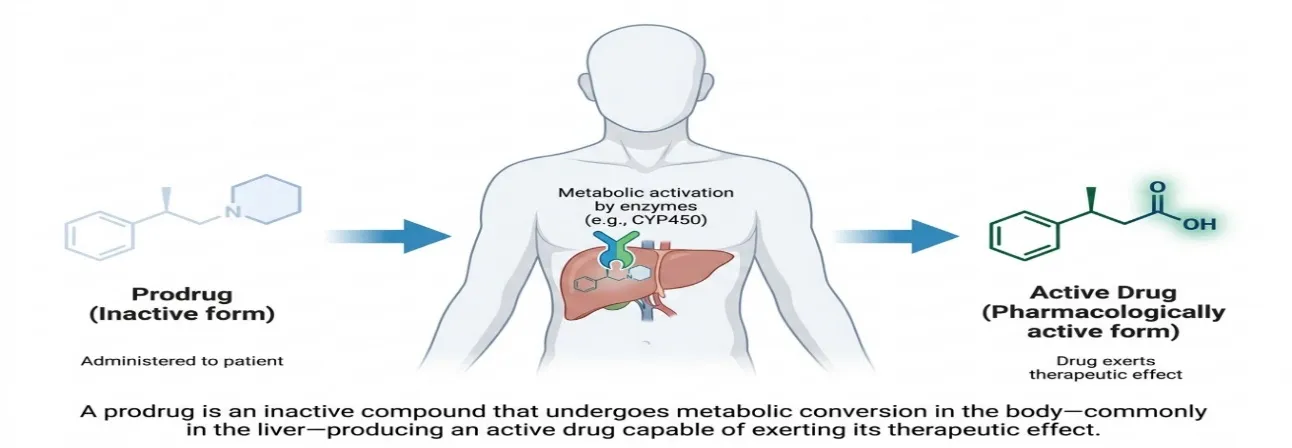
Fig 1: General concept of prodrug

The global prodrugs market has been growing significantly in the past few years due to the developments in molecular biology, structural chemistry, and nanotechnology. A significant proportion (approximately 10%) of all marketed drugs are prodrugs, and many new chemical entities currently undergoing clinical trials are formulated according to prodrug concepts [3]. This review aims to provide a concise overview of the current state of the art in prodrug design, specifically regarding targeted delivery systems, from 2018 to 2024.

2. CLASSIFICATION OF PRODRUGS

There are two types of prodrugs: Prodrugs that are activated within the cell (Type I) and prodrugs that are activated outside of the cell (Type II). Type I are prodrugs that utilize enzymes that are present in cells (e.g., cytochrome P450 enzymes or intracellular esterases). Type II prodrugs are activated in the gastrointestinal lumen, blood plasma, or tissue fluid [4].

These two can be further differentiated by whether the prodrug is activated by enzyme, pH, redox, receptor, or light. The following table summarizes the major classes and provides some examples.

Prodrug Type

Activation Mechanism

Example

Target Site

Type I (Intracellular)

Enzymatic (cytochrome P450, esterase)

Valacyclovir

Intestinal epithelium / liver

Type II (Extracellular)

Enzymatic (alkaline phosphatase, protease)

Fosamprenavir

GI lumen / blood plasma

Antibody-Drug Conjugates

Lysosomal / protease cleavage

Trastuzumab emtansine

HER2+ tumor cells

pH-sensitive

Acid/base-triggered hydrolysis

Omeprazole

Gastric parietal cells

Hypoxia-activated

Reductive enzymes (NTR, DT-diaphorase)

Tirapazamine

Hypoxic tumor core

Receptor-targeted

Ligand-receptor binding + internalization

Folate-drug conjugates

Folate receptor+ tumors

Table 1Classification of prodrug types, their activation mechanisms, and target sites.

3. ENZYME-RESPONSIVE PRODRUGS

The most widespread triggers used in prodrug design are enzymes. Some tumors and infected tissues exhibit elevated levels of enzymes, which typically occur in low amounts in normal tissue. This differential expression can be applied to selectively activate a prodrug at the disease location [5].

3.1 Protease-Activated Prodrugs

The proteases, known as matrix metalloproteinases (MMPs) and cathepsins, are the proteases that are over-expressed in many solid cancers. Peptide linkers that are selectively cleaved by the enzymes have been engineered to make prodrugs from which the active drug is released at the site of the enzyme. For instance, there are legumain-cleavable prodrugs of doxorubicin that have demonstrated impressive tumor selectivity in preclinical studies [6].
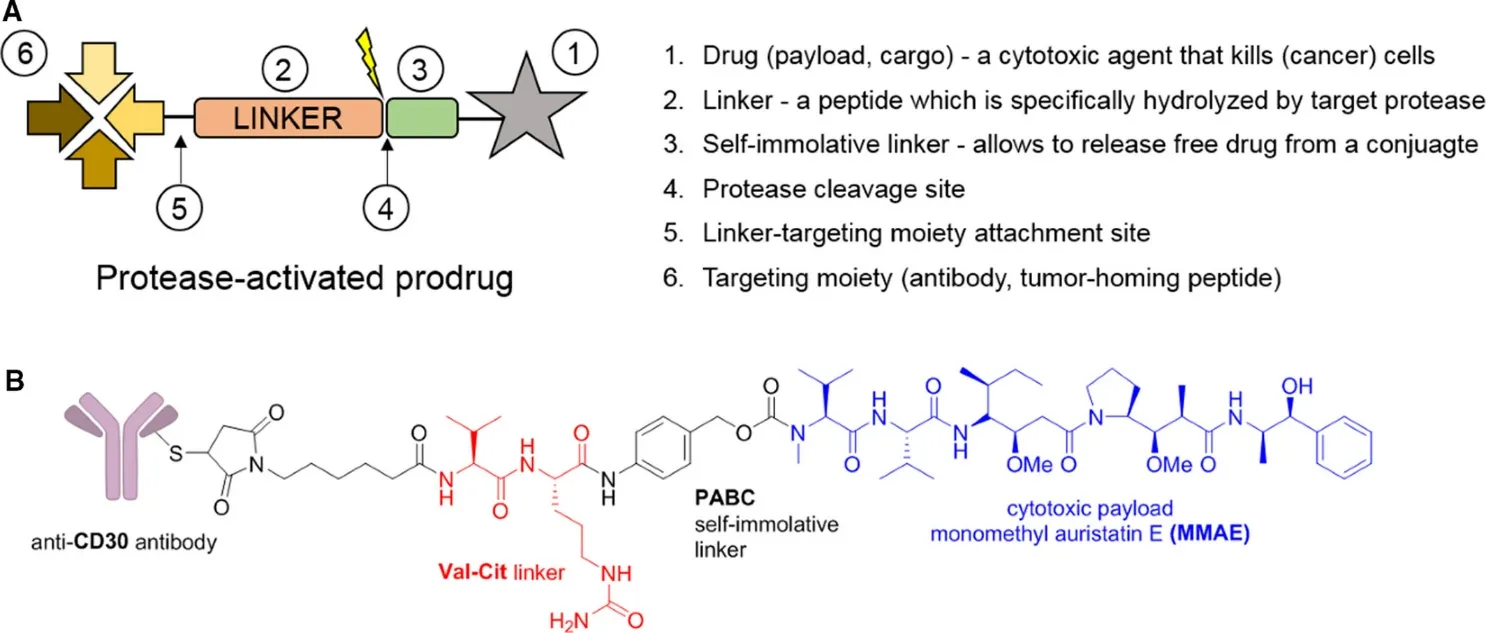
Fig 2: PAPs. Panel (A): PAPs' general framework. The targeting moiety, linker, and cytotoxic payload are the essential elements. The free payload is released when protease hydrolyzes peptide bonds. Panel (B) shows the structure of the protease-cleavable Ab–drug conjugate brentuximab vedotin, which is approved to treat relapsed systemic anaplastic large cell lymphoma and relapsed classical HL. The cytotoxic payload (MMAE) is indicated in blue, and the protease-cleavable linker (Val–Cit, VC) is indicated in red.

3.2 Phosphatase- and Glucuronidase-Activated Prodrugs

In certain cancers, such as osteosarcoma and colorectal cancer, alkaline phosphatase (ALP) is very active. Phosphate-masked prodrugs are converted to the active agent by ALP at the tumor site. Likewise, the accumulation of beta-glucuronosidase in necrotic tumor tissue has been exploited to mediate the release of a prodrug used for the treatment of cancer [7].

4. PH-SENSITIVE PRODRUGS

Tumors are generally more acidic (pH 6.5–6.9) compared with normal tissues (pH 7.4). This difference is due to the Warburg effect, the ability of cancer cells to metabolize through glycolysis even in the presence of oxygen, creating excess lactic acid [8].

This pH acidity is utilized by pH-sensitive prodrugs to release the drug. Hydrazones, acetals, and orthoester linkages are chemical bonds that are sensitive to acid. For example, doxorubicin hydrazone conjugates are not hydrolyzed at neutral pH, but rather hydrolyze very quickly at pH < 6.8, releasing the free drug in the tumor tissue [9].

Such systems can also be used in oral drug delivery. Drugs can be delivered to the intestine, where they are released once the pH of the gastrointestinal tract becomes alkaline, by using enteric-coated or pH-responsive prodrugs. The approach has been used for some medications, such as mesalazine, in inflammatory bowel disease [10].

5. HYPOXIA-ACTIVATED PRODRUGS

Often poor blood vessel development creates areas of very low oxygen concentration (hypoxia) within solid tumors. There is an association between hypoxia and conventional therapy resistance and poor prognosis. It also offers a novel activation platform for a prodrug [11].

Hypoxia-activated prodrugs (HAPs) are electron-accepting groups, e.g., nitro groups, N-oxide, or quinone groups that are reduced to electron-donating groups by reducing enzymes, e.g., nitroreductase or DT-diaphorase, under hypoxic conditions. Evofosfamide (TH-302) is a well-studied HAP that is activated in the hypoxic areas of a tumor by releasing a DNA alkylating agent [12].

Although they were initially promising, a number of HAPs have failed in large clinical trials, in part due to the heterogeneity of hypoxia in tumors. Current research continues to determine how to combine HAPs with anti-angiogenic agents that would exacerbate hypoxia, thus making it more selective [13].

6. RECEPTOR-TARGETED PRODRUG SYSTEMS

Receptor-targeted prodrugs deliver a prodrug to cells expressing a specific receptor via a specific ligand (e.g., folate, transferrin, glucose) or monoclonal antibody. Once bound, the complex is taken into the cell, and the active drug is released within the cell [14].

6.1 Folate-Receptor Targeting

Many types of cancer cells such as ovarian, lung and cervical cancers over-express folate receptor (FR) on their surface. This overexpression of folate receptors is used to target drugs specifically to tumor cells by the use of folate-drug conjugates. Vintafolide is a clinical-stage folate-receptor-targeted prodrug for therapeutic use in the treatment of cancer [15].

6.2 Antibody-Drug Conjugates (ADCs)

The class of targeted prodrugs is growing and is known as ADCs. They are composed of a monoclonal antibody with a potent cytotoxic drug attached by a cleavable linker. The antibody targets the specific surface antigen of cells to deliver the drug. Once inside the cell, the drugs released from the phagosomales are degraded by the content of the lysosomal enzymes, releasing the active drugs [16].

The FDA has approved a number of new ADCs since 2019: enfortumab vedotin, trastuzumab deruxtecan, and sacituzumab govitecan. In DESTINY-Breast03, trastuzumab deruxtecan (T-DXd) demonstrated an overall response rate of more than 60% in patients with HER2+ breast cancer [17].

7. NANOPARTICLE-BASED PRODRUG SYSTEMS

The use of prodrugs is a potent approach for the enhancement of systemically delivered nanoparticulate formulations. The enhanced permeability and retention (EPR) effect allows nanoparticles to accumulate in tumors and offers protection from early degradation as well as increasing circulation times of the prodrug [18].

Several types of lipid nanoparticles (LNPs), polymeric micelles, dendrimers, and mesoporous silica nanoparticles (MSNs) have been investigated as prodrug carriers. This drug has been used in one study that found a camptothecin prodrug loaded into self-assembling amphiphilic nanoparticles to be 5-fold more tumor-specific than the free drug in a mouse xenograft study [19].

There are further advantages for using polymer-prodrug conjugates since the drug is covalently attached to a biodegradable polymer backbone, such as the sustained release and the reduced burst effect. One of the most investigated systems in this group is the poly(ethylene glycol)-drug conjugate (PEGylated prodrug) [20].

8. RECENT CLINICAL APPROVALS AND ONGOING TRIALS

Table 2 highlights selected prodrugs with recent FDA approvals or strong clinical evidence. These examples span several therapeutic areas and demonstrate the breadth of prodrug applications.

Prodrug

Active Drug

Disease Indication

Approval / Stage

Sacituzumab govitecan

SN-38 (irinotecan metabolite)

Triple-negative breast cancer

FDA approved 2020

Enfortumab vedotin

Monomethyl auristatin E

Urothelial carcinoma

FDA approved 2019

Enalapril

Enalaprilat

Hypertension / heart failure

Established clinical use

Sofosbuvir

GS-461203 (nucleoside)

Hepatitis C virus

FDA approved 2013

Capecitabine

5-Fluorouracil

Colorectal / breast cancer

FDA approved 1998

Table 2: Selected clinically relevant prodrugs with recent approvals and therapeutic indications.

Sofosbuvir is a phosphoramidate prodrug of a nucleoside analog that is activated in the hepatocytes without being phosphorylated in the systemic circulation as in the case of the active form. It revolutionized hepatitis C treatment and got cure rates of over 95% [21].

Capecitabine is an anticancer agent that is selectively converted to 5-fluorouracil in tumor tissues but not in normal tissues, due to the differential expression of thymidine phosphorylase (TP) in these tissues. Capecitabine has a more favorable toxicity profile since the tumor-selective activation [22].

9. COMPARISON OF DELIVERY STRATEGIES

Strategy

Advantages

Limitations

Nanoparticle-prodrug

EPR effect; sustained release

Batch variability; regulatory complexity

ADC (Antibody-Drug Conjugate)

High target selectivity; potent cytotoxicity

High manufacturing cost; antigen heterogeneity

Polymer-prodrug

Long circulation; tunable release

Incomplete drug release; immunogenicity risk

Enzyme-responsive

Precise tumor activation

Enzyme expression variability across patients

pH-responsive

Simple design; oral delivery compatibility

Non-specific activation in acidic healthy tissue

Table 3: Comparative overview of major prodrug delivery strategies and their advantages and limitations.

10. CHALLENGES AND FUTURE DIRECTIONS

Although there have been significant advances, there are still significant hurdles in the way of the development of prodrugs. The first and most important is to be sure of selective activation. But if the activating enzyme or condition is too nonspecific in its action, it will activate in normal tissue, causing toxicity. This is further complicated by interpatient variability of enzyme expression [23].

Scaling up of the nanoparticle-prodrug system from lab to clinical production is significant. The batch-to-batch consistency, sterility, and shelf stability must be shown prior to regulatory approval [24].

The problem for ADCs is antigen heterogeneity, meaning that the antigen is not always expressed on all of the cells in a tumor. This may result in some tumor cells remaining undestroyed. In part this is overcome by bystander effects, whereby the released drug diffuses to neighboring antigen-negative cells and extends off-target toxicity [25].

Dual-trigger prodrugs: Future directions include the development of dual-trigger prodrugs that require two signals simultaneously (e.g. low pH AND elevated protease activity) which could significantly enhance the selectivity. Light activated prodrugs (photoactivatable prodrugs) are also under investigation for superficial tumours and local infections [26].

AI/ML has been used to predict the metabolism of prodrugs, optimize the linker chemistry, and discover new pairs of enzymes and substrates. The tools could potentially greatly speed up the rational design of next-generation prodrug systems [27].

CONCLUSION

Prodrug design has evolved from an idea to a complex, multi-disciplinary area of drug design. The rapid developments in enzyme biology, materials science, and immunology have enabled the development of highly targeted prodrug systems that can be selectively activated at disease sites. The recent clinical approvals, especially within the ADC area, support the therapeutic worth of these approaches.

The quest for selectivity, manufacturing, and patient-to-patient variability still needs to be tackled and will require ongoing collaboration between chemists, biologists, and clinicians. As investment in this field continues to increase and computational tools are being integrated, prodrug-based therapies will no doubt be a larger part of precision medicine in the next decade.

REFERENCES

  1. Rautio, J., Meanwell, N. A., Di, L., & Hageman, M. J. (2018). The expanding role of prodrugs in contemporary drug design and therapy. Nature Reviews Drug Discovery, 17(8), 559–587. https://doi.org/10.1038/nrd.2018.46
  2. Huttunen, K. M., Raunio, H., & Rautio, J. (2011). Prodrugs — from serendipity to rational design. Pharmacological Reviews, 63(3), 750–771. https://doi.org/10.1124/pr.110.003459
  3. Zawilska, J. B., Wojcieszak, J., & Olejniczak, A. B. (2013). Prodrugs: A challenge for the drug development. Pharmacological Reports, 65(1), 1–14. https://doi.org/10.1016/S1734-1140(13)70959-9
  4. Jornada, D. H., dos Santos Fernandes, G. F., Chiba, D. E., de Melo, T. R. F., dos Santos, J. L., & Chung, M. C. (2016). The prodrug approach: A successful tool for improving drug solubility. Molecules, 21(1), 42. https://doi.org/10.3390/molecules21010042
  5. Shin, W. S., Han, J., Verwilst, P., Kumar, R., Kim, J. H., & Kim, J. S. (2021). Cancer targeted enzyme-activated prodrugs. Bioconjugate Chemistry, 32(5), 861–875. https://doi.org/10.1021/acs.bioconjchem.1c00135
  6. Grinda, M., Clarhaut, J., Renoux, B., Tranoy-Coutelier, I., & Papot, S. (2012). A self-immolative dendritic glucuronide prodrug of doxorubicin. MedChemComm, 3(1), 68–70. https://doi.org/10.1039/C1MD00233C
  7. de Graaf, M., Boven, E., Scheeren, H. W., Haisma, H. J., & Pinedo, H. M. (2002). Beta-glucuronidase-mediated drug release. Current Pharmaceutical Design, 8(15), 1391–1403. https://doi.org/10.2174/1381612023394485
  8. Vander Heiden, M. G., Cantley, L. C., & Thompson, C. B. (2009). Understanding the Warburg effect: The metabolic requirements of cell proliferation. Science, 324(5930), 1029–1033. https://doi.org/10.1126/science.1160809
  9. Kanamala, M., Wilson, W. R., Yang, M., Palmer, B. D., & Wu, Z. (2016). Mechanisms and biomaterials in pH-responsive tumour targeted drug delivery: A review. Biomaterials, 85, 152–167. https://doi.org/10.1016/j.biomaterials.2016.01.061
  10. Sinha, V. R., & Kumria, R. (2001). Polysaccharides in colon-specific drug delivery. International Journal of Pharmaceutics, 224(1–2), 19–38. https://doi.org/10.1016/S0378-5173(01)00720-7
  11. Wilson, W. R., & Hay, M. P. (2011). Targeting hypoxia in cancer therapy. Nature Reviews Cancer, 11(6), 393–410. https://doi.org/10.1038/nrc3064
  12. Meng, F., Evans, J. W., Bhupathi, D., Banica, M., Lan, L., Lorente, G., ... & Bhatt, D. L. (2012). Molecular and cellular pharmacology of the hypoxia-activated prodrug TH-302. Molecular Cancer Therapeutics, 11(3), 740–751. https://doi.org/10.1158/1535-7163.MCT-11-0634
  13. Hunter, F. W., Wouters, B. G., & Wilson, W. R. (2016). Hypoxia-activated prodrugs: Paths forward in the era of personalised medicine. British Journal of Cancer, 114(10), 1071–1077. https://doi.org/10.1038/bjc.2016.79
  14. Danhier, F., Feron, O., & Préat, V. (2010). To exploit the tumor microenvironment: Passive and active tumor targeting of nanocarriers for anticancer drug delivery. Journal of Controlled Release, 148(2), 135–146. https://doi.org/10.1016/j.jconrel.2010.08.027
  15. Leamon, C. P., & Jackman, A. L. (2008). Exploitation of the folate receptor in the management of cancer and inflammatory disease. Vitamins and Hormones, 79, 203–233. https://doi.org/10.1016/S0083-6729(08)00407-X
  16. Beck, A., Goetsch, L., Dumontet, C., & Corvaïa, N. (2017). Strategies and challenges for the next generation of antibody–drug conjugates. Nature Reviews Drug Discovery, 16(5), 315–337. https://doi.org/10.1038/nrd.2016.268
  17. Cortés, J., Kim, S. B., Chung, W. P., Im, S. A., Park, Y. H., Hegg, R., ... & Thomssen, C. (2022). Trastuzumab deruxtecan versus trastuzumab emtansine for breast cancer. New England Journal of Medicine, 386(12), 1143–1154. https://doi.org/10.1056/NEJMoa2115022
  18. Shi, J., Kantoff, P. W., Wooster, R., & Farokhzad, O. C. (2017). Cancer nanomedicine: Progress, challenges and opportunities. Nature Reviews Cancer, 17(1), 20–37. https://doi.org/10.1038/nrc.2016.108
  19. Bhosale, R. R., Osmani, R. A. M., Ghodake, P. P., Shaikh, S. M., & Chavan, S. R. (2014). Nanoparticulate drug delivery system: A review. Journal of Pharmaceutical and Scientific Innovation, 3(1), 1–9.
  20. Greenwald, R. B., Choe, Y. H., McGuire, J., & Conover, C. D. (2003). Effective drug delivery by PEGylated drug conjugates. Advanced Drug Delivery Reviews, 55(2), 217–250. https://doi.org/10.1016/S0169-409X(02)00180-1
  21. Sofia, M. J., Bao, D., Chang, W., Du, J., Nagarathnam, D., Rachakonda, S., ... & Symons, J. (2010). Discovery of a beta-D-2'-deoxy-2'-alpha-fluoro-2'-beta-C-methyluridine nucleotide prodrug (PSI-7977) for the treatment of hepatitis C virus. Journal of Medicinal Chemistry, 53(19), 7202–7218. https://doi.org/10.1021/jm100863x
  22. Walko, C. M., & Lindley, C. (2005). Capecitabine: A review. Clinical Therapeutics, 27(1), 23–44. https://doi.org/10.1016/j.clinthera.2005.01.005
  23. Parveen, S., & Sahoo, S. K. (2008). Polymeric nanoparticles for cancer therapy. Journal of Drug Targeting, 16(2), 108–123. https://doi.org/10.1080/10611860701794353
  24. Bobo, D., Robinson, K. J., Islam, J., Thurecht, K. J., & Corrie, S. R. (2016). Nanoparticle-based medicines: A review of FDA-approved materials and clinical trials to date. Pharmaceutical Research, 33(10), 2373–2387. https://doi.org/10.1007/s11095-016-1958-5
  25. Khongorzul, P., Ling, C. J., Khan, F. U., Ihsan, A. U., & Zhang, J. (2020). Antibody–drug conjugates: A comprehensive review. Molecular Cancer Research, 18(1), 3–19. https://doi.org/10.1158/1541-7786.MCR-19-0265
  26. Klán, P., Šolomek, T., Bochet, C. G., Blanc, A., Givens, R., Rubina, M., ... & Wirz, J. (2013). Photoremovable protecting groups in chemistry and biology. Chemical Reviews, 113(1), 119–191. https://doi.org/10.1021/cr300177k
  27. Huang, K., Fu, T., Gao, W., Zhao, Y., Roohani, Y., Leskovec, J., ... & Zitnik, M. (2021). Therapeutics data commons: Machine learning datasets and tasks for drug discovery and development. Proceedings of Neural Information Processing Systems, 34, 27–tape. https://doi.org/10.48550/arXiv.2102.09548

Reference

  1. Rautio, J., Meanwell, N. A., Di, L., & Hageman, M. J. (2018). The expanding role of prodrugs in contemporary drug design and therapy. Nature Reviews Drug Discovery, 17(8), 559–587. https://doi.org/10.1038/nrd.2018.46
  2. Huttunen, K. M., Raunio, H., & Rautio, J. (2011). Prodrugs — from serendipity to rational design. Pharmacological Reviews, 63(3), 750–771. https://doi.org/10.1124/pr.110.003459
  3. Zawilska, J. B., Wojcieszak, J., & Olejniczak, A. B. (2013). Prodrugs: A challenge for the drug development. Pharmacological Reports, 65(1), 1–14. https://doi.org/10.1016/S1734-1140(13)70959-9
  4. Jornada, D. H., dos Santos Fernandes, G. F., Chiba, D. E., de Melo, T. R. F., dos Santos, J. L., & Chung, M. C. (2016). The prodrug approach: A successful tool for improving drug solubility. Molecules, 21(1), 42. https://doi.org/10.3390/molecules21010042
  5. Shin, W. S., Han, J., Verwilst, P., Kumar, R., Kim, J. H., & Kim, J. S. (2021). Cancer targeted enzyme-activated prodrugs. Bioconjugate Chemistry, 32(5), 861–875. https://doi.org/10.1021/acs.bioconjchem.1c00135
  6. Grinda, M., Clarhaut, J., Renoux, B., Tranoy-Coutelier, I., & Papot, S. (2012). A self-immolative dendritic glucuronide prodrug of doxorubicin. MedChemComm, 3(1), 68–70. https://doi.org/10.1039/C1MD00233C
  7. de Graaf, M., Boven, E., Scheeren, H. W., Haisma, H. J., & Pinedo, H. M. (2002). Beta-glucuronidase-mediated drug release. Current Pharmaceutical Design, 8(15), 1391–1403. https://doi.org/10.2174/1381612023394485
  8. Vander Heiden, M. G., Cantley, L. C., & Thompson, C. B. (2009). Understanding the Warburg effect: The metabolic requirements of cell proliferation. Science, 324(5930), 1029–1033. https://doi.org/10.1126/science.1160809
  9. Kanamala, M., Wilson, W. R., Yang, M., Palmer, B. D., & Wu, Z. (2016). Mechanisms and biomaterials in pH-responsive tumour targeted drug delivery: A review. Biomaterials, 85, 152–167. https://doi.org/10.1016/j.biomaterials.2016.01.061
  10. Sinha, V. R., & Kumria, R. (2001). Polysaccharides in colon-specific drug delivery. International Journal of Pharmaceutics, 224(1–2), 19–38. https://doi.org/10.1016/S0378-5173(01)00720-7
  11. Wilson, W. R., & Hay, M. P. (2011). Targeting hypoxia in cancer therapy. Nature Reviews Cancer, 11(6), 393–410. https://doi.org/10.1038/nrc3064
  12. Meng, F., Evans, J. W., Bhupathi, D., Banica, M., Lan, L., Lorente, G., ... & Bhatt, D. L. (2012). Molecular and cellular pharmacology of the hypoxia-activated prodrug TH-302. Molecular Cancer Therapeutics, 11(3), 740–751. https://doi.org/10.1158/1535-7163.MCT-11-0634
  13. Hunter, F. W., Wouters, B. G., & Wilson, W. R. (2016). Hypoxia-activated prodrugs: Paths forward in the era of personalised medicine. British Journal of Cancer, 114(10), 1071–1077. https://doi.org/10.1038/bjc.2016.79
  14. Danhier, F., Feron, O., & Préat, V. (2010). To exploit the tumor microenvironment: Passive and active tumor targeting of nanocarriers for anticancer drug delivery. Journal of Controlled Release, 148(2), 135–146. https://doi.org/10.1016/j.jconrel.2010.08.027
  15. Leamon, C. P., & Jackman, A. L. (2008). Exploitation of the folate receptor in the management of cancer and inflammatory disease. Vitamins and Hormones, 79, 203–233. https://doi.org/10.1016/S0083-6729(08)00407-X
  16. Beck, A., Goetsch, L., Dumontet, C., & Corvaïa, N. (2017). Strategies and challenges for the next generation of antibody–drug conjugates. Nature Reviews Drug Discovery, 16(5), 315–337. https://doi.org/10.1038/nrd.2016.268
  17. Cortés, J., Kim, S. B., Chung, W. P., Im, S. A., Park, Y. H., Hegg, R., ... & Thomssen, C. (2022). Trastuzumab deruxtecan versus trastuzumab emtansine for breast cancer. New England Journal of Medicine, 386(12), 1143–1154. https://doi.org/10.1056/NEJMoa2115022
  18. Shi, J., Kantoff, P. W., Wooster, R., & Farokhzad, O. C. (2017). Cancer nanomedicine: Progress, challenges and opportunities. Nature Reviews Cancer, 17(1), 20–37. https://doi.org/10.1038/nrc.2016.108
  19. Bhosale, R. R., Osmani, R. A. M., Ghodake, P. P., Shaikh, S. M., & Chavan, S. R. (2014). Nanoparticulate drug delivery system: A review. Journal of Pharmaceutical and Scientific Innovation, 3(1), 1–9.
  20. Greenwald, R. B., Choe, Y. H., McGuire, J., & Conover, C. D. (2003). Effective drug delivery by PEGylated drug conjugates. Advanced Drug Delivery Reviews, 55(2), 217–250. https://doi.org/10.1016/S0169-409X(02)00180-1
  21. Sofia, M. J., Bao, D., Chang, W., Du, J., Nagarathnam, D., Rachakonda, S., ... & Symons, J. (2010). Discovery of a beta-D-2'-deoxy-2'-alpha-fluoro-2'-beta-C-methyluridine nucleotide prodrug (PSI-7977) for the treatment of hepatitis C virus. Journal of Medicinal Chemistry, 53(19), 7202–7218. https://doi.org/10.1021/jm100863x
  22. Walko, C. M., & Lindley, C. (2005). Capecitabine: A review. Clinical Therapeutics, 27(1), 23–44. https://doi.org/10.1016/j.clinthera.2005.01.005
  23. Parveen, S., & Sahoo, S. K. (2008). Polymeric nanoparticles for cancer therapy. Journal of Drug Targeting, 16(2), 108–123. https://doi.org/10.1080/10611860701794353
  24. Bobo, D., Robinson, K. J., Islam, J., Thurecht, K. J., & Corrie, S. R. (2016). Nanoparticle-based medicines: A review of FDA-approved materials and clinical trials to date. Pharmaceutical Research, 33(10), 2373–2387. https://doi.org/10.1007/s11095-016-1958-5
  25. Khongorzul, P., Ling, C. J., Khan, F. U., Ihsan, A. U., & Zhang, J. (2020). Antibody–drug conjugates: A comprehensive review. Molecular Cancer Research, 18(1), 3–19. https://doi.org/10.1158/1541-7786.MCR-19-0265
  26. Klán, P., Šolomek, T., Bochet, C. G., Blanc, A., Givens, R., Rubina, M., ... & Wirz, J. (2013). Photoremovable protecting groups in chemistry and biology. Chemical Reviews, 113(1), 119–191. https://doi.org/10.1021/cr300177k
  27. Huang, K., Fu, T., Gao, W., Zhao, Y., Roohani, Y., Leskovec, J., ... & Zitnik, M. (2021). Therapeutics data commons: Machine learning datasets and tasks for drug discovery and development. Proceedings of Neural Information Processing Systems, 34, 27–tape. https://doi.org/10.48550/arXiv.2102.09548

Photo
Deep Jyoti Shah
Corresponding author

Faculty of Medical Science & Research, Sai Nath University, Ranchi, Jharkhand-835219, India.

Photo
Suvasish Mitra
Co-author

Gandhari College (School of Pharmacy), Garhbari, Nazirbazar, Bhutanathdham, Purba Medinipur, West Bengal, 721655.

Photo
Soumita Das
Co-author

Pandaveswar School of Pharmacy, Near Coalfield College of Education (B.Ed), Pandaveswar-Raniganj Road, NH-14 (formerly NH-60), District - Paschim Bardhaman, West Bengal, India. Pin - 713346.

Photo
Ishita De
Co-author

Gandhari College (School of Pharmacy), Garhbari, Nazirbazar, Bhutanathdham, Purba Medinipur, West Bengal, 721655.

Photo
Arpan Bera
Co-author

Rangamati College of Pharmacy, Banior, Nalhati, Birbhum, West Bengal, 731243.

Suvasish Mitra1, Soumita Das2, Ishita De1, Arpan Bera3, Deep Jyoti Shah4*, Recent Advances In Prodrug Design For Targeted Drug Delivery, Int. J. Sci. R. Tech., 2026, 3 (7), 1854-1860. https://doi.org/10.5281/zenodo.21103836

More related articles
Magnetically Loaded Drug Delivery System: A Review...
Debarghya Karforma, Harekrishna Saha, Hirak Bhowmik , Pintukumar ...
Stimuli-Responsive Drug Delivery Systems: Mechanis...
Vaishnavi Gajanan Ahir, Dr. Sanjay Arote, Dr. Amol Rakte , Kunal...
Artificial Intelligence in Pharmacy: A Boon for Dr...
Sayali Gandhi , Swapnil Katkhade, Meet Shah, Nalini Javane, Kalya...
Recent Advances In Nanotechnology For Drug Delivery: A Comprehensive Review...
Vaishnavi Bhadange, Avinash Darekar, Mukund Pache, Aarti Bagul, Sanika Pawar...
Colon Targeted Drug Delivery System: An Overview on Current Approaches...
Pooja Rasal, Aniket Thul, Nikhil Sandhan, Om Pawar, Onkar Shepal...
Niosome As A Promising Tool for Increasing the Effectiveness of Anti-Diabetic Dr...
Nabamita Sen, M. Sruthi, B. Tejaswini, J. Tejaswi, M. Ganga Raju, Fowad Khurshid...
Related Articles
Innovations In Prodrug Approaches For Enhanced Bioavailability...
Alok Kumar, Afzal Tabrez, Amit Kumar Yadav, Manav Kumar, Vishal Mahali, Kishlay Kumar, Bandita Das, ...
Oral Disintegrating Tablets Biodegradable Polymers for Drug Delivery...
Khatode Sahil, Dr. Mansuk Avinash, Dr. Jha Urmilesh, Kharat Ajit, Navale Sonali...
Nanosponges In Drug Delivery: Recent Advances, Applications, Challenges, And Fut...
Vaishnavi Rajeshwar Bhimewad, Samiksha Prakash Kawade, S. M. Ambore , Ajay Kshirsagar...
Magnetically Loaded Drug Delivery System: A Review...
Debarghya Karforma, Harekrishna Saha, Hirak Bhowmik , Pintukumar De...
More related articles
Magnetically Loaded Drug Delivery System: A Review...
Debarghya Karforma, Harekrishna Saha, Hirak Bhowmik , Pintukumar De...
Stimuli-Responsive Drug Delivery Systems: Mechanisms, Recent Advances, and Thera...
Vaishnavi Gajanan Ahir, Dr. Sanjay Arote, Dr. Amol Rakte , Kunal Vishnu Ghansawant, Dipali Ratnakar...
Artificial Intelligence in Pharmacy: A Boon for Drug Delivery & Drug Discovery...
Sayali Gandhi , Swapnil Katkhade, Meet Shah, Nalini Javane, Kalyani Raut, Varsharani Avhad ...
Magnetically Loaded Drug Delivery System: A Review...
Debarghya Karforma, Harekrishna Saha, Hirak Bhowmik , Pintukumar De...
Stimuli-Responsive Drug Delivery Systems: Mechanisms, Recent Advances, and Thera...
Vaishnavi Gajanan Ahir, Dr. Sanjay Arote, Dr. Amol Rakte , Kunal Vishnu Ghansawant, Dipali Ratnakar...
Artificial Intelligence in Pharmacy: A Boon for Drug Delivery & Drug Discovery...
Sayali Gandhi , Swapnil Katkhade, Meet Shah, Nalini Javane, Kalyani Raut, Varsharani Avhad ...