

We use cookies to ensure our website works properly and to personalise your experience. Cookies policy
Kamla Institute of Pharmaceutical Sciences, Bhilai, Chhattisgarh, 490020
The present study presents the structure-based computational evaluation of a novel series of polyhydroxy chromone hydrazone derivatives (B1-12) designed as potential antiglycation agents. A series of derivatives based on the polyhydroxy chromone scaffold containing the quercetin skeleton were designed and tested for molecular recognition and drug-like activities. The human serum albumin (HSA) (PDB ID: 4IW1) against which molecular docking was carried out was done so using Argus Lab 4.0.1, followed by interaction analysis using Discovery Studio Visualizer. All its derivatives were found to have good binding affinities of -8.933 to -10.113 kcal/mol, which were favorable in comparison with the binding affinity of the reference ligand pyridoxamine, with a value of -8.102 kcal/mol. The compounds tested ranked in the following order under the predicted binding value with decreasing strength: B12, B1, B5, B9, B11, with B12 having the lowest RMSD of 1.07 Å, followed by B1, B5, B9, and B11. The derivatives interacting with multiple hydrogen-bonding and non-covalent interactions within the HSA binding site are shown as multi-point interactions. In addition, in silico ADMET profiling showed good predicted gastrointestinal absorption, penetration, and generally acceptable predicted acute toxicity. The polyhydroxylated scaffold was also suggested by the high molecular descriptor values of hydrogen bonding and polarity. Overall, B12 emerged as the most promising computational lead, supporting further experimental investigation of polyhydroxy chromone hydrazones as potential antiglycation agents.
Glycation refers to all reactions that connect a sugar to a protein or peptide, regardless of enzymatic involvement. Enzymatic modification of proteins involves saccharides in protein glycosylation, leading to glycoproteins, while non-enzymatic modification results in protein glycation, forming glycated proteins [1]. Non-enzymatic reactions of proteins, lipids, and nucleic acids with amino groups result in the formation of reducing sugars, e.g., glucose. This interaction produces the Amadori products, which are products of the reaction of an aldehyde or ketone with an amine, and Schiff bases. These biochemical interactions are very important in several physiological functions and can affect cell activities [2]. AG happens in weeks, affecting long-lived proteins such as collagen in the connective tissue matrix or basement membrane [3]. Uraemia is a disorder in which the blood level of angiotensin-converting enzyme (ACE) is much higher than normal, adversely affecting several biological compounds. It has the potential to impair myelin, complement C3, tubulin, plasminogen activator, as well as fibrinogen. Even something as transient as lipid constituents or nucleic acids is adversely affected by too much ACE accumulation in the case of uraemia [4]. The early stage of the Maillard reaction is a concentration-dependent process of glycation, which is enhanced by diabetes. Glucose has a poorer glycation rate than other intracellular sugars such as glucose-6-phosphate and fructose, which leads to the formation of advanced glycation end products (AGEs) [5]. Glycation-oxidation leads to the creation of compounds called glycation-oxidation products. The AGEs are a group of various molecules resulting from the nonenzymatic reaction of glucose or other sugar derivatives with proteins or lipids [6].
Natural polyphenols have attracted considerable interest as potential antiglycation and antioxidant agents. Among them, quercetin, a naturally occurring flavanol [2-(3,4-dihydroxyphenyl)-5,7-dihydroxy-4H-chromen-4-one], is widely distributed in fruits and vegetables, with onions being a particularly rich dietary source [7-10]. Its structure contains five hydroxyl groups, which contribute substantially to its hydrogen-bonding ability, radical-scavenging capacity, and diverse biological activities [7]. Quercetin and its derivatives, including glycosides, ethers, sulfates, and phenyl-substituted analogues, have demonstrated promising pharmacological properties, including antioxidant and anticancer effects [8-12].
However, the physicochemical and pharmacokinetic properties of the naturally occurring quercetin, coupled with suboptimal target affinity and biological activity, justify the structural modification of this scaffold. Thus, a series of novel polyhydroxy chromone hydrazone derivatives has been designed as new candidate antiglycation agents. Structural characterization, model building, and in vitro biological evaluation of the designed derivatives, molecular docking simulation, and in silico ADMET and drug-likeness study were carried out. The overall goal was to select structurally optimized derivatives with a superior ability to inhibit the glycation process, superior target interaction properties, and acceptable expected pharmacokinetics and toxicity profile to advance for drug development.
2. MATERIAL AND METHOD
2.1 Software and Online Databases
Computational studies were performed using ChemDraw Ultra 22.2.0 and Chem3D 22.2.0 for ligand preparation, Argus Lab 4.0.1, SwissADME, MolSoft, and ProTox-II online databases.
2.2 Computational Study
2.2.1 Molecular docking study
The 2D structures of designed (4E)-4-(substituted hydrazineylidene)-2-(3,4-dihydroxyphenyl) chromane-5,7-diol derivatives (B1-12) summarized in Table 1 and Figure 1 were drawn using ChemDraw Ultra 22.2.0 software and converted into 3D structures in Chem3D 22.2.0 software with energy minimization using the MM2 force field. The optimized structures were saved in .pdb format [13]. The crystal structure of the HSA-fructose complex (PDB ID: 4IW1) was obtained from the RCSB Protein Data Bank [14]. Molecular docking studies using Argus Lab 4.0.1 software were conducted to estimate both the binding capability and the molecular interactions that occur within the active site [15].
Figure 1. Chemical structure of (4E)-4-(substituted hydrazineylidene)-2-(3,4-dihydroxyphenyl) chromane-5,7-diol
|
Compound ID |
Substituted aromatic aldehydes (R) |
Molecular Formula |
Molecular Weight |
Chemical Name |
|
B1 |
-H |
C22H18N2O5 |
390.39 |
(4E)-4-(benzylidene hydrazineylidene)-2-(3,4-dihydroxyphenyl) chromane-5,7-diol |
|
B2 |
4-Cl |
C22H17ClN2O5 |
424.83 |
(4E)-4-((4-chlorobenzylidene) hydrazineylidene)-2-(3,4-dihydroxyphenyl) chromane-5,7-diol |
|
B3 |
4-F,5-Cl |
C22H16ClFN2O5 |
442.82 |
(4E)-4-((3-chloro-4-fluorobenzylidene) hydrazineylidene)-2-(3,4-dihydroxyphenyl) chromane-5,7-diol |
|
B4 |
3-CH3 |
C23H20N2O5 |
404.42 |
(4E)-2-(3,4-dihydroxyphenyl)-4- ((3-methylbenzylidene) hydrazineylidene) chromane-5,7-diol |
|
B5 |
3-Br |
C22H16BrN3O7 |
514.28 |
(4E)-4-((5-bromo-2-nitrobenzylidene) hydrazineylidene)-2-(3,4-dihydroxyphenyl) chromane-5,7-diol |
|
B6 |
3-Br,5-NO2 |
C23H20N2O6 |
420.41 |
(4E)-2-(3,4-dihydroxyphenyl)-4- ((4-hydroxy-3-methylbenzylidene) hydrazineylidene) chromane-5,7-diol |
|
B7 |
4-N(CH3)2 |
C24H23N3O5 |
433.46 |
(4E)-2-(3,4-dihydroxyphenyl)-4- ((4-(dimethylamines)benzylidene) hydrazineylidene) chromane-5,7-diol |
|
B8 |
3-OCH3, 5-OH |
C23H20N2O7 |
436.41 |
(4E)-2-(3,4-dihydroxyphenyl)-4- ((2-hydroxy-5-methoxybenzylidene) hydrazineylidene) chromane-5,7-diol |
|
B9 |
3-Br, 5-OH |
C22H17BrN2O6 |
485.28 |
(4E)-4-((5-bromo-2-hydroxybenzylidene) hydrazineylidene)-2-(3,4-dihydroxyphenyl) chromane-5,7-diol |
|
B10 |
5-NO2 |
C22H17N3O7 |
435.39 |
(4E)-2-(3,4-dihydroxyphenyl)-4- ((2-nitrobenzylidene) hydrazineylidene) chromane-5,7-diol |
|
B11 |
4-NH2 |
C22H19N3O5 |
405.4 |
(4E)-4-((4-aminobenzylidene) hydrazineylidene)-2-(3,4-dihydroxyphenyl) chromane-5,7-diol |
|
B12 |
5-OH |
C22H18N2O6 |
406.39 |
(4E)-2-(3,4-dihydroxyphenyl)-4- ((2-hydroxybenzylidene) hydrazineylidene) chromane-5,7-diol |
Table 1. Molecular profile of designed (4E)-4-(substituted hydrazineylidene)-2-(3,4-dihydroxyphenyl) chromane-5,7-diol.
2.2.2 Molecular visualization
Protein-ligand complexes were obtained using Argus Lab 4.0.1, followed by docking and analysis through Discovery Studio Visualizer (BIOVIA) [16, 17]. The selected docked poses, which exhibited the highest binding energies, were further examined for intricate interactions. Detailed three-dimensional (3D) illustrations were created to explore the binding modes of the ligands within the active site of the target protein.
2.2.3 Pharmacokinetic and Drug Likeness
To predict ADMET (Absorption, Distribution, Metabolism, Excretion, and Toxicity) and drug-likeness properties, compounds were subjected to in silico calculations utilizing the Swiss ADME tool from the Swiss Institute of Bioinformatics. Compounds with optimal docking scores were selected for further assessment. The physicochemical parameters, such as molecular weight, hydrogen bond donors and acceptors, topological polar surface area, and compliance with the Lipinski Rule of Five, were evaluated to determine drug-like characteristics. Additionally, the Swiss ADME and PROTOX-II online servers were employed to predict essential pharmacokinetic parameters, including gastrointestinal absorption, blood-brain barrier penetrability, and toxicity-related metrics, along with similar toxicity classes and LD50 values [18].
3. RESULTS AND DISCUSSION
3.1 Molecular Docking Study
The molecular docking was carried out to explore the binding affinity and interaction of the developed polyhydroxy chromone hydrazone derivatives with the preferred antiglycation target. All designed derivatives showed promising docking scores as summarized in Table 1, suggesting good interactions between the protein and the designed ligand. The docking scores ranged from -8.93305 to -10.1129 kcal/mol and, when compared with the docking score of -8.10210 kcal/mol of the reference drug pyridoxamine. Among the tested derivatives, B12 exhibited the most favorable docking score (-10.1129 kcal/mol), followed by B1 (-9.96461 kcal/mol), B5 (-9.94899 kcal/mol), B9 (-9.91153 kcal/mol), and B11 (-9.87335 kcal/mol). B12 is better than the standard drug at docking with the target site, as indicated by these docking scores. RMSD values for docked poses were between 1.07 and 1.51 Å, and for pyridoxamine, the value was 1.81 Å. The RMSD values of the designed derivatives are relatively low, which suggests reasonable conformational consistency of the proposed binding postures. The lowest RMSD value (1.07 Å) was obtained from B12, lending support to the stability of its predicted binding orientation. The derivatives also showed several Hydrogen-bonding and non-covalent interactions with important amino acid residues in the binding pocket. B12 formed interactions with 26ALA, 194ALA, 429ASN, 252GLU, 425GLU, 70TYR, 23VAL, and 456VAL, whereas pyridoxamine interacted with a broader set of residues, including 26ALA, 89ASN, 249ASP, 252GLU, 248GLY, 67HIS, 247HIS, 22LEU, 66LEU, 250LEU, 251LEU, 70PHE, 30TYR, and 23VAL (Table 2).
The interaction of the ligand in the active binding site with the key amino acid residues through hydrogen-bonding and other stabilizing interactions is displayed in the 2D and 3D molecular interaction diagrams illustrated in Figure 2. The docking score of B12 was enhanced because it exhibited favorable interactions with both polar residues and hydrophobic residues. In contrast, pyridoxamine was found to interact widely at the same binding site with a relatively lower binding score. The binding profile observed for B12, along with favorable RMSD and interaction to identify this amongst the investigated polyhydroxy chromone hydrazone derivatives for further investigation as a possible anti-glycating agent.Bottom of Form
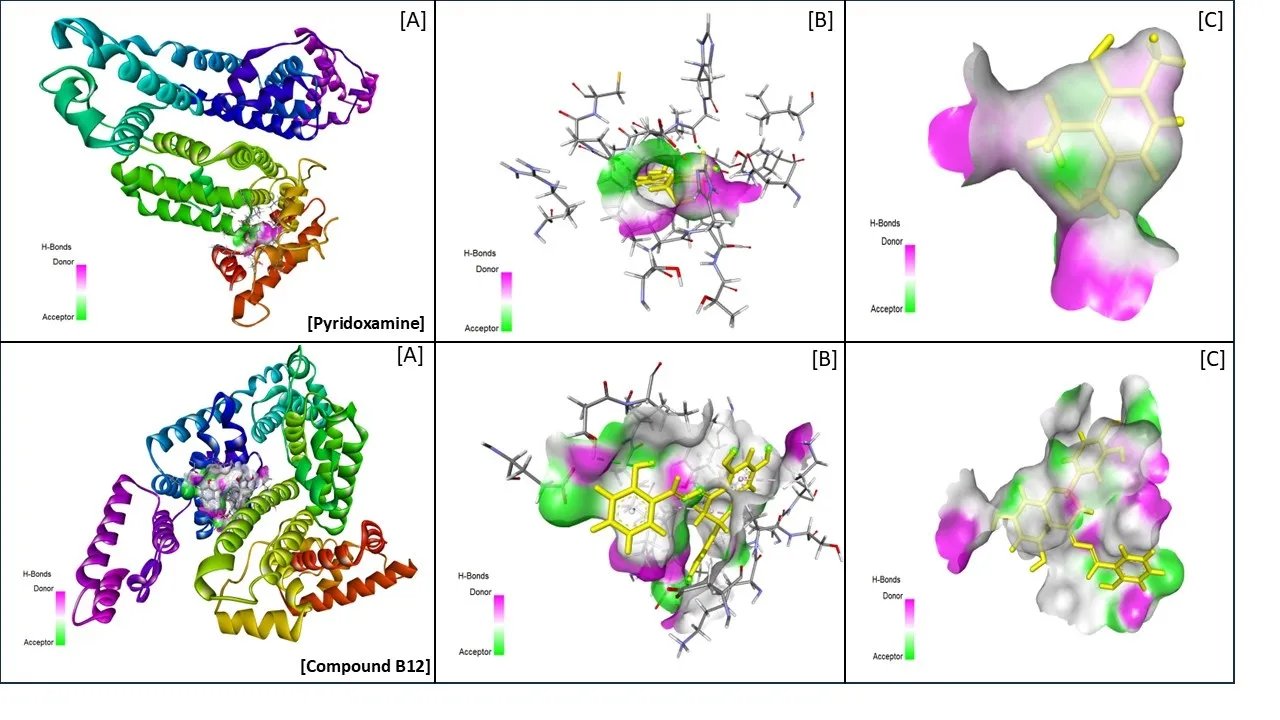
Figure 2. 2D and 3D molecular visualization of the reference drug and designed potent compound B12.
|
Compound ID |
Docking Score (Kcal/mol) |
RMSD value |
No. of H-bonds |
Amino acid Interaction |
|
Pyridoxamine |
-8.10210 |
1.81 |
14 |
26ALA, 89ASN, 249ASP, 252GLU, 248GLY, 67HIS, 247HIS, 22LEU, 66LEU, 250LEU, 251 LEU, 70PHE, 30TYR, 23VAL |
|
B1 |
-9.96461 |
1.14 |
5 |
26ALA, 249ASP, 451ASP, 30TYR, 23VAL |
|
B2 |
-9.25380 |
1.39 |
7 |
26ALA, 213ALA, 248GLY, 70PHE, 70PHE, 23VAL, 482VAL |
|
B3 |
-9.62266 |
1.22 |
10 |
26ALA, 539ALA, 89ASN, 22LEU, 66LEU, 250LEU, 251LEU, 70PHE, 30TYR, 23VAL |
|
B4 |
-9.10280 |
1.42 |
12 |
26ALA, 213ALA, 248GLY, 22LEU, 251LE, 70PHE, 211PHE, 202SER, 480SER,23VAL, 344VAL, 482VAL |
|
B5 |
-9.94899 |
1.13 |
10 |
26ALA, 194ALA, 249ASP, 457ASP, 252GLU, 435SER, 30TYR, 23VAL, 455VAL, 456VAL |
|
B6 |
-9.41819 |
1.29 |
7 |
249ASP, 252GLU, 66LEU, 250LEU, 70PHE, 30TYR, 161TYR |
|
B7 |
-8.93305 |
1.51 |
10 |
26ALA, 89ASN, 249ASP, 252GLU, 66LEU, 70PHE, 30TYR, 161TYR, 23VAL, 122VAL |
|
B8 |
-9.26304 |
1.33 |
10 |
26ALA, 89ASN, 249ASP, 141GLU, 252GLU, 70PHE, 134PHE, 08TYR, 140TYR, 23VAL |
|
B9 |
-9.91153 |
1.14 |
9 |
26ALA, 213ALA, 350ALA, 89ASN, 252GLU, 22LEU, 251LEU, 70PHE, 23VAL |
|
B10 |
-9.52593 |
1.25 |
10 |
26ALA, 231ALA, 89ASN, 248GLY, 22LEU, 66LEU, 251LEU, 70PHE, 23VAL, 482VAL |
|
B11 |
-9.87335 |
1.17 |
6 |
26ALA, 249ASP, 451ASP, 252GLU, 70TYR, 23VAL |
|
B12 |
-10.1129 |
1.07 |
8 |
26ALA, 194ALA, 429ASN, 252GLU, 425GLU, 70TYR, 23VAL, 456VAL |
Table 2. Molecular docking scores and key amino acid interactions of the designed chromone hydrazone derivatives.
3.2 In Silico ADMET and Drug-Likeness Prediction
The physicochemical, pharmacokinetic, and toxicity parameters of polyhydroxy Chromone hydrazone derivatives (B1-12) were computationally evaluated and summarized in Tables 3 and 4. The compounds have 29-33 heavy atoms, 22 aromatic heavy atoms, and 3-4 rotatable bonds, and have moderate conformational flexibility in the aromatic scaffold. The calculated MR (109.34-125.86) and TPSA (118.78-164.60 Å2) indices were found to reflect the degree of polarity and hydrogen-bonding capacity of the derivatives. However, all compounds exhibited good prediction of GIT absorption (76.790-86.166%), with the highest value for B3. Limited BBB penetration or CNS permeability was suggested by the negative values of log BB (-0.780 to -1.193) and log PS (-1.791 to -2.867) for the tested compounds.
The compound-dependent differences in predicted elimination parameters ranged from 0.130 to 0.742. The acute toxicity prediction was generally favorable, as most of the derivatives had a predicted LD50 of 4000 mg/kg; B5 had a predicted LD50 of 1070 mg/kg and B8 had a predicted LD50 of 3919 mg/kg. Overall, favorable ADMET predictions are good, suggesting good oral absorption, limited CNS distribution, and acceptable computational toxicity. These results, together with the good docking scores for B12, B1, B5, B9, and B11, indicate that the Chromone hydrazone scaffold is a promising lead for further antiglycation research. These computational predictions need to be confirmed with experimental pharmacokinetic and toxicological studies.
|
Compound ID |
nHA |
nAHA |
nRB |
nHBA |
nHBD |
MR |
TPSA (Å2) |
|
B1 |
29 |
22 |
3 |
7 |
4 |
109.34 |
118.78 |
|
B2 |
30 |
22 |
3 |
7 |
4 |
114.35 |
118.78 |
|
B3 |
31 |
22 |
3 |
8 |
4 |
114.31 |
118.78 |
|
B4 |
30 |
22 |
3 |
7 |
4 |
114.31 |
118.78 |
|
B5 |
33 |
22 |
4 |
9 |
4 |
125.86 |
164.6 |
|
B6 |
31 |
22 |
3 |
8 |
5 |
116.33 |
139.01 |
|
B7 |
32 |
22 |
4 |
7 |
4 |
123.55 |
122.02 |
|
B8 |
32 |
22 |
4 |
9 |
5 |
117.86 |
148.24 |
|
B9 |
31 |
22 |
3 |
8 |
5 |
119.06 |
139.01 |
|
B10 |
32 |
22 |
4 |
9 |
4 |
118.16 |
164.6 |
|
B11 |
30 |
22 |
3 |
7 |
5 |
113.75 |
144.8 |
|
B12 |
30 |
22 |
3 |
8 |
5 |
111.36 |
139.01 |
nHA: No. of heavy atoms, nAHA: No. of Aromatic heavy atoms, nRB: No. of Rotatable bonds, nHBA: No. of H-bond acceptors, nHBD: No. of H-bond donors, MR: Molar refractivity, TPSA: Topological Polar Surface Area.
Table 3. Molecular properties of the designed derivatives.
|
Compound ID |
GIT Absorption (Numeric (% Absorbed) |
Distribution |
Elimination |
Toxicity |
Drug likeness |
|
|
BBB Numeric (log BB) |
CNS Numeric (log PS) |
Numeric (log ml/min/kg) |
LD50 (mg/kg) |
|||
|
B1 |
84.709 |
-0.780 |
-1.906 |
0.475 |
4000 |
0.04 |
|
B2 |
85.886 |
-0.944 |
-1.791 |
0.130 |
4000 |
0.27 |
|
B3 |
86.166 |
-1.147 |
-1.830 |
0.171 |
4000 |
0.12 |
|
B4 |
85.178 |
-0.791 |
-1.832 |
0.483 |
4000 |
0.05 |
|
B5 |
82.647 |
-1.193 |
-1.957 |
0.266 |
1070 |
0.53 |
|
B6 |
78.891 |
-0.969 |
-2.022 |
0.689 |
4000 |
0.05 |
|
B7 |
82.287 |
-0.827 |
-1.997 |
0.668 |
4000 |
0.15 |
|
B8 |
76.790 |
-1.157 |
-2.867 |
0.742 |
3919 |
0.03 |
|
B9 |
79.335 |
-1.143 |
-1.958 |
0..111 |
1070 |
0.33 |
|
B10 |
81.735 |
-1.008 |
-2.094 |
0.444 |
4000 |
0.31 |
|
B11 |
77.559 |
-0.832 |
-2.081 |
0.491 |
4000 |
0.00 |
|
B12 |
78.422 |
-0.958 |
-2.096 |
0.512 |
4000 |
0.32 |
GIT: Gastrointestinal tract, BBB: Blood-brain barrier, CNS: Central nervous system, LD50: Lethal dose50.
Table 4. In silico pharmacokinetic, toxicity, and drug-likeness profiles of the designed derivatives.
CONCLUSION
The present study successfully designed a series of novel polyhydroxy chromone hydrazone derivatives (B1-12) as potential antiglycation agents. The compounds designed exhibited favorable protein-ligand interactions and favorable in silico drug-likeness and pharmacokinetic properties, with B12 being a potential lead compound. The promising compounds will be synthesized, structurally characterized, and biologically evaluated using appropriate in vitro and in vivo biological assays to support the experimental validation of the potential antiglycation agent and further investigate the mechanism of action in future studies.
ACKNOWLEDGMENTS
We sincerely thank Kamla Institute of Pharmaceutical Sciences, Bhilai, and Shri Shankaracharya Professional University, Bhilai, Chhattisgarh, India, for providing the necessary facilities and support for this research work.
REFERENCES

Mousmi Sahu, Anju Daharia*, Structure-Based Computational Evaluation Of Polyhydroxy Chromone Hydrazone Derivatives As Potential Antiglycation Agents, Int. J. Sci. R. Tech., 2026, 3 (8), 932-940. https://doi.org/10.5281/zenodo.22077168
 10.5281/zenodo.22077168