

We use cookies to ensure our website works properly and to personalise your experience. Cookies policy
Department of Community Health Nursing, Rohilkhand College of Nursing, Bareilly
Effective breastfeeding is crucial for infant and mother’s health. Breastfeeding is a process of feeding an infant or young child with milk from mother’s breasts. Babies have a suckling urge that enables them to take-in the milk, provided there is a good latch, a good position and milk supply. Adequate practical skills among postnatal mothers are essential to prevent the common breastfeeding difficulties. Despite the importance of correct breastfeeding technique, some postnatal mother may have inadequate practical skills. This study aimed to assess the effectiveness of a demonstration method in improving breastfeeding practices among postnatal mothers. A pre-experimental study was conducted in Dharampur, Bareilly, U.P. The sample size taken was 30 postnatal mothers, sampling technique used was Non-Probability Purposive sampling technique. The data collection tool was (1) demographic data and (2) Self-structured Observation Checklist. The statistical analysis was done by SPSS software. The results showed that mean post-test score (21.47 ± 2.05) was higher than the mean pre-test score (11.27 ± 2.35). The mean difference was 10.20, which showed improvement in practice after demonstration. The calculated t-value (21.13) was higher than the table value (2.05), indicating a statistically significant improvement in breastfeeding practice after the intervention (p<0.05). The findings revealed that majority of mothers had poor practice regarding correct breastfeeding technique in pre-test. After the intervention, the level of practice was enhanced. In conclusion, the demonstration method proved to be a simple yet powerful tool in bridging the gap between knowledge and practice, ensuring that every mother is better equipped to nurture her child for a healthier future.
Breastfeeding is an essential component of maternal and child health, providing important nutritional, immunological and developmental benefits to the infant while also supporting maternal health. Effective breastfeeding depends on adequate milk supply and the correct use of breastfeeding techniques.
Proper positioning, latch-on and milk expression are important components of successful breastfeeding.[1] Correct positioning helps the mother and baby maintain an appropriate posture, while effective latch-on supports adequate milk transfer and helps prevent breastfeeding difficulties.[2] Milk expression is also an important skill for maintaining milk supply when direct breastfeeding is not possible.
Breastfeeding is a natural process, but effective breastfeeding may require appropriate guidance and support. Many mothers experience difficulties such as poor latch, improper positioning and nipple pain, which can interfere with successful breastfeeding.[3] Early identification of these difficulties and timely postnatal support may help mothers develop and maintain appropriate breastfeeding practices.[4]
NEED FOR THE STUDY
Ineffective breastfeeding techniques can have negative effects on both infant and maternal health. For mothers, it can lead to nipple soreness, trauma and pain resulting in decreased milk supply and breastfeeding duration. Additionally, it increased the risk of breast engorgement, mastitis and abscesses.[5] For infants, it can lead to poor weight gain, dehydration, increased risk of infection and delayed cognitive and motor development.
Despite the established importance of breastfeeding, incorrect positioning and attachment remain common among postnatal mothers. An Indian study conducted among 99 postnatal mothers found that 28.3% demonstrated improper positioning and 27.3% demonstrated poor attachment. The study also identified lack of breastfeeding counselling as a factor associated with poor breastfeeding technique.[1]
Evidence suggests that structured breastfeeding support can improve breastfeeding outcomes. A randomized study among 504 mother-infant pairs found that a baby-led self-attachment breastfeeding support intervention increased exclusive breastfeeding rates and reduced nipple pain compared with standard postpartum care.[6]
STATEMENT OF THE PROBLEM
“A pre-experimental study to assess the effectiveness of demonstration method on practice regarding breastfeeding techniques among postnatal mothers at Dharampur, Bareilly, U.P.”
OBJECTIVES OF THE STUDY
1. To assess the practice regarding breastfeeding techniques among postnatal mothers at Dharampur, Bareilly, U.P.
2. To evaluate the effectiveness of demonstration method on practice regarding breastfeeding technique among postnatal mothers at Dharampur, Bareilly, U.P.
3. To find out the association between pre-test practice score of postnatal mothers with their selected demographic variables.
HYPOTHESIS
H1: There will be significant difference between the pre-test and post-test practice scores regarding breastfeeding techniques of postnatal mothers.
H2: There will be significant association between pre-test practice score regarding breastfeeding techniques among postnatal mothers with their selected demographic variables.
REVIEW OF LITERATURE
Sunita Kumari et al. (2024) A pre-experimental research study was conducted to assess the knowledge regarding breastfeeding technique at MCH ward in PGIMS, Rohtak, Haryana among 50 primipara mothers. The samples were selected by non-probability convenient sampling technique and structured interview schedule method was used to collect data by using structured knowledge questionnaire. Result showed that pre-test mean score of knowledge regarding breastfeeding technique was 10.18 and mean post-test score was 21.64. It showed that there was significant difference in mean improvement score as measured by t-test (27.61), which was significant at 0.05 level of significance. The study concluded that interventions were effective which improve the knowledge of primipara mothers regarding breastfeeding techniques.[7]
S.R. Manjapallikkunnel et al. (2023) A cross-sectional study was conducted with the aim of understanding the level of knowledge, attitude and practice of breastfeeding among mothers and factors associated with effective breastfeeding. The study was conducted among 25 mothers of infants admitted in the paediatric ward of SAT Hospital, Thiruvananthapuram. The data was analysed using Statistical Package of Social Sciences (SPSS) version 26.0. The result showed that mean age of participants was 26 years. Chi-square tests showed that exclusive breastfeeding was significantly associated with the mother’s age (p=0.006), 64.2% of women practicing exclusive and effective breastfeeding were less than 25 years of age. The study concluded that mothers with higher age and higher educational qualification were significantly associated with good knowledge and practice about breastfeeding.[8]
Menon and Thomas (2022) conducted a randomized controlled trial with the aim of assessing the effect of breastfeeding technique demonstrations on nipple soreness and latch among primiparous mothers. The study was conducted in a tertiary hospital in South India with 60 primipara mothers selected using random sampling technique. Data was collected using a nipple soreness scale and LATCH observation checklist. The result indicated that mothers in the intervention group had significantly better latch scores and lower incidence of nipple soreness as compared to controls. The study concluded that early demonstration of breastfeeding techniques improves latch and nipple related complications.[9]
RESEARCH METHODOLOGY
A quantitative approach was used with the pre-experimental research design. 30 postnatal mothers were taken as a sample with the help of non-probability purposive sampling technique from the community area of Dharampur, Bareilly, U.P. An observation checklist and demographic variables are used as tools to collect data. Statistical analysis was done by statistical software and MS Excel for chi-square, mean, standard deviation and t-test.
RESULT AND DISCUSSION
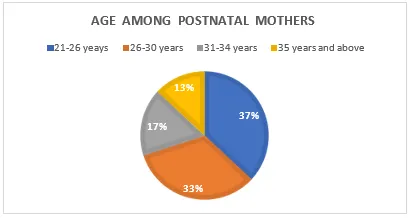
Figure 1: Percentage Distribution of Postnatal Mothers According to Age
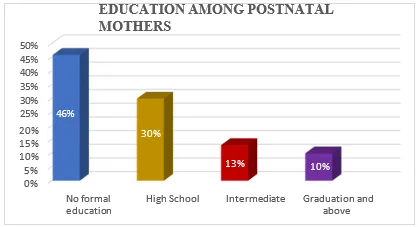
Figure 2 Percentage distribution of educational status of postnatal mothers
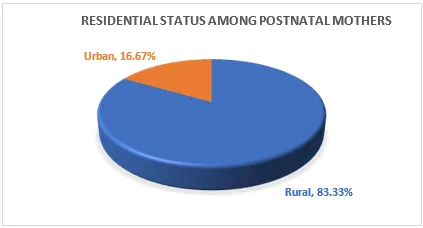
Figure 3 Percentage distribution of residential area of postnatal mother
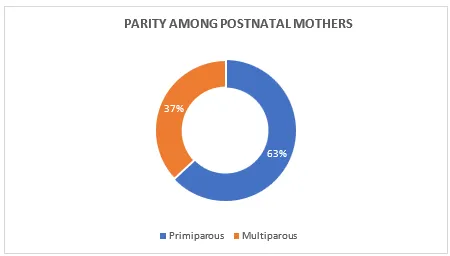
Figure 4 Percentage distribution of Parity among postnatal mothers
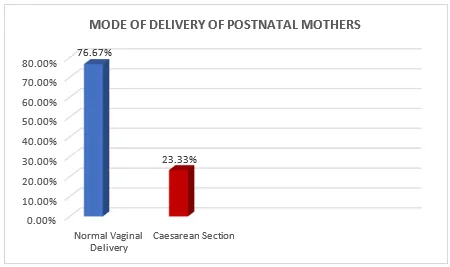
Figure 5 Percentage distribution of mode of delivery among postnatal mothers
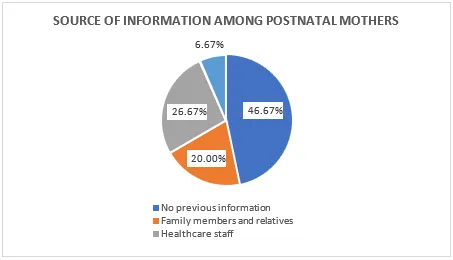
Figure 6 Percentage distribution of source of information among postnatal mothers
Table 1: Comparison of Mean Pre-Test and Post-Test Practice Scores Regarding Breastfeeding Technique Among Postnatal Mothers
| Level of practice | Mean | Standard Deviation | Degree of freedom | Calculated value | Table value | Level of Significant |
|---|---|---|---|---|---|---|
| Pre-test | 11.27 | 2.35 | 29 | 21.13 | 2.05 | Highly Significant |
| Post-test | 21.47 | 2.05 |
(p<0.05 significant)
The findings revealed that the mean pre-test score was 11.27 ± 2.35, whereas the mean post-test score was 21.47 ± 2.05. The mean difference was 10.20. The calculated t-value (21.13) is much higher than
the table value at 0.05 (2.756) level of significance with df=29. This indicates that the difference between pre-test and post-test practice scores is very highly significant (p<0.05).
CONCLUSION
The present study was undertaken to assess the effectiveness of demonstration method on practice regarding breastfeeding technique among postnatal mothers in Dharampur, Bareilly, U.P. The findings of the study revealed that the postnatal mothers had inadequate practice before the intervention, while a significant improvement was observed after the demonstration. This indicated that the demonstration method is an effective and practical teaching strategy in enhancing the breastfeeding practices of mothers.
IMPLICATIONS OF THE STUDY
1. Nursing Practice:
2. Nursing Education:
3. Nursing Research:
4. Nursing Administration:
LIMITATIONS
RECOMMENDATIONS
REFERENCES



Shraddha Joshua, Km. Shweta, Anurag Sharma, “A Pre-Experimental Study to Assess the Effectiveness of Demonstration Method on Practice Regarding Breastfeeding Technique Among Postnatal Mothers at Dharampur, Bareilly U.P.”, Int. J. Sci. R. Tech., 2026, 3 (10), 1268-1272. https://doi.org/10.5281/zenodo.23662813
 10.5281/zenodo.23662813