

We use cookies to ensure our website works properly and to personalise your experience. Cookies policy
Department of Pharmacology, Delight College of Pharmacy, Koregaon Bhima, Pune, Maharashtra, 412206
Diclofenac is a widely used non-steroidal anti-inflammatory drug (NSAID) with analgesic, anti-inflammatory and antipyretic properties. It is commonly prescribed for the management of various painful and inflammatory conditions, including musculoskeletal disorders, postoperative pain and dysmenorrhoea. Despite its therapeutic effectiveness, diclofenac is associated with adverse drug reactions (ADRs) that may affect multiple organ systems. This review aims to discuss the pharmacological properties, therapeutic applications and safety profile of diclofenac, with particular emphasis on its associated adverse drug reactions. It highlights commonly reported gastrointestinal disturbances as well as potentially serious cardiovascular, renal, hepatic, dermatological and hypersensitivity reactions. Factors influencing the occurrence of ADRs, including dose, duration of treatment, patient characteristics and concomitant medication use, are also discussed. In addition, the review examines clinically relevant drug interactions, measures to minimise ADR risks and the importance of pharmacovigilance in identifying, reporting and monitoring suspected adverse reactions. Appropriate patient assessment, rational prescribing, use of the lowest effective dose for the shortest necessary duration and timely reporting of suspected ADRs are essential for promoting the safe use of diclofenac. Overall, awareness of its potential risks is important to ensure that its therapeutic benefits are balanced against possible adverse effects.
Non-steroidal anti-inflammatory drugs (NSAIDs) are a widely used group of medications primarily employed for the management of pain, inflammation and fever. They play an important role in the treatment of various acute and chronic conditions, including musculoskeletal disorders, osteoarthritis, rheumatoid arthritis, postoperative pain and other inflammatory conditions. NSAIDs are commonly prescribed in clinical practice because of their analgesic, anti-inflammatory and antipyretic properties. [1,2]
The primary mechanism of action of NSAIDs involves the inhibition of cyclooxygenase (COX) enzymes, which are responsible for the conversion of arachidonic acid into prostaglandins, prostacyclins and thromboxanes. These substances play important roles in inflammation, pain transmission, regulation of body temperature and several physiological processes. By inhibiting COX enzymes, NSAIDs reduce prostaglandin synthesis, thereby producing analgesic, anti-inflammatory and antipyretic effects. [1,3]
Despite their therapeutic benefits, the use of NSAIDs is associated with several adverse drug reactions (ADRs), particularly when used at high doses, for prolonged durations or without appropriate medical supervision. Common adverse reactions include gastrointestinal disturbances such as nausea, vomiting, abdominal pain and dyspepsia. More serious complications may include gastrointestinal ulceration and bleeding, renal impairment, cardiovascular events, hepatic injury and hypersensitivity reactions. The risk of these adverse effects may vary depending on the specific NSAID, dosage, duration of treatment and individual patient characteristics. [1,4]
Diclofenac is a commonly used NSAID belonging to the phenylacetic acid derivative group. It possesses analgesic, anti-inflammatory and antipyretic properties and is used in the management of various painful and inflammatory conditions, including osteoarthritis, rheumatoid arthritis and acute musculoskeletal pain. Diclofenac exerts its pharmacological action mainly through the inhibition of COX-1 and COX-2 enzymes, resulting in decreased synthesis of inflammatory mediators. It is available in different pharmaceutical formulations, including oral tablets, topical gels, injections and eye drops. Although diclofenac is effective in relieving pain and inflammation, its use has been associated with clinically important adverse drug reactions involving multiple organ systems. Gastrointestinal complications, cardiovascular risks, renal effects, hepatic injury and skin-related reactions are among the important safety concerns associated with its use. In particular, diclofenac has been associated with an increased cardiovascular risk, especially with systemic use, making appropriate patient selection and monitoring important. [5,6]
Pharmacovigilance plays a significant role in identifying, monitoring, evaluating and preventing adverse drug reactions associated with medicines. The systematic collection and assessment of information regarding suspected ADRs help improve medication safety and promote the rational use of medicines. Patient awareness and reporting of suspected adverse effects are also important components of pharmacovigilance, as they contribute to the identification of potential medicine-related safety concerns.[7]
Therefore, the present review focuses on adverse drug reactions associated with diclofenac, including their types, possible mechanisms, risk factors, clinical manifestations and safety considerations. It also highlights the importance of pharmacovigilance in the identification, assessment and reporting of suspected adverse drug reactions to promote the safe and rational use of diclofenac.
3. CLASSIFICATION OF NON-STEROIDAL ANTI-INFLAMMATORY DRUGS (NSAIDS)
NSAIDs are a diverse group of medications that can be classified based on their chemical structure, mechanism of action and selectivity towards cyclooxygenase (COX) enzymes. Classification based on chemical structure helps in understanding the similarities and differences among individual drugs, whereas classification based on COX selectivity provides insight into their pharmacological actions and potential adverse effects. [8,9]
3.1. Classification based on chemical structure
NSAIDs can be classified into several chemical classes based on their structural characteristics. Salicylic acid derivatives include aspirin, diflunisal, and salsalate. Propionic acid derivatives comprise ibuprofen, naproxen, ketoprofen, and flurbiprofen, whereas acetic acid derivatives include diclofenac, indomethacin, sulindac, and ketorolac. Another important group is the fenamic acid derivatives (fenamates), represented by mefenamic acid and meclofenamic acid. Enolic acid derivatives, also known as oxicams, include piroxicam, meloxicam, and tenoxicam. Pyrazolone derivatives are represented by phenylbutazone and metamizole. In addition, selective cyclooxygenase-2 (COX-2) inhibitors, commonly referred to as coxibs, include celecoxib, etoricoxib, and parecoxib. This classification is widely used because it reflects differences in chemical structure, pharmacokinetic properties, therapeutic applications, and adverse effect profiles among NSAIDs. [10]
3.2. Classification based on cyclooxygenase (COX) selectivity
Based on their ability to inhibit cyclooxygenase enzymes, NSAIDs are classified into three major groups:
Diclofenac belongs to the acetic acid derivatives, specifically the phenylacetic acid group. It is a traditional NSAID with preferential COX-2 inhibitory activity. [3,11]
3.3. Classification of NSAIDs based on duration of action
NSAIDs may also be classified according to their plasma elimination half-life. Short-acting NSAIDs have a relatively shorter elimination half-life. Examples include ibuprofen and diclofenac. Long-acting NSAIDs have a relatively longer elimination half-life. Examples include naproxen and piroxicam. The duration of action varies according to the formulation, dosage, and pharmacokinetic characteristics of the drug. [9,12]
3.4. Position of diclofenac in NSAID classification
Diclofenac is classified as a nonsteroidal anti-inflammatory drug (NSAID) belonging to the acetic acid derivative group, specifically the phenylacetic acid derivative subgroup. Pharmacologically, it exhibits preferential inhibition of cyclooxygenase-2 (COX-2) compared with cyclooxygenase-1 (COX-1), contributing to its anti-inflammatory, analgesic, and antipyretic effects. In terms of pharmacokinetics, diclofenac has a relatively short plasma elimination half-life, although its therapeutic effects may persist longer due to tissue distribution and accumulation at sites of inflammation. This combination of pharmacological and pharmacokinetic properties makes diclofenac one of the most widely used NSAIDs for the management of pain, inflammation, and fever. [13]
4. OVERVIEW OF DICLOFENAC
Diclofenac is a widely used non-steroidal anti-inflammatory drug (NSAID) belonging to the acetic acid derivatives, specifically the phenylacetic acid group. It possesses analgesic, anti-inflammatory and antipyretic properties and is commonly used for the management of pain and inflammatory conditions. Diclofenac was first synthesized in 1973 and has become an important therapeutic agent in the treatment of various musculoskeletal and inflammatory disorders. [14]
Diclofenac acts primarily by inhibiting cyclooxygenase (COX-1 and COX-2) enzymes, which are involved in the synthesis of prostaglandins. Prostaglandins are important mediators of inflammation, pain and fever. By reducing prostaglandin production, diclofenac helps relieve pain, reduce inflammation and lower fever. It is available in different pharmaceutical formulations, including oral tablets, capsules, topical gels, transdermal patches, injections, suppositories and ophthalmic preparations. The different formulations allow its administration through oral, topical, parenteral, rectal and ophthalmic routes, depending on the therapeutic requirement. [15]
Diclofenac is commonly prescribed for conditions such as osteoarthritis, rheumatoid arthritis, ankylosing spondylitis, acute musculoskeletal pain, sprains and other inflammatory conditions. It is also used for the management of postoperative pain and certain acute painful conditions. [16]
Despite its therapeutic effectiveness, diclofenac is associated with several adverse drug reactions involving different organ systems. These include gastrointestinal disturbances, cardiovascular complications, renal impairment, hepatic injury and hypersensitivity reactions. The occurrence of adverse effects may depend on the dose, duration of treatment, route of administration and individual patient-related factors. Therefore, understanding its safety profile and monitoring its use are important aspects of pharmacovigilance. [16–18]
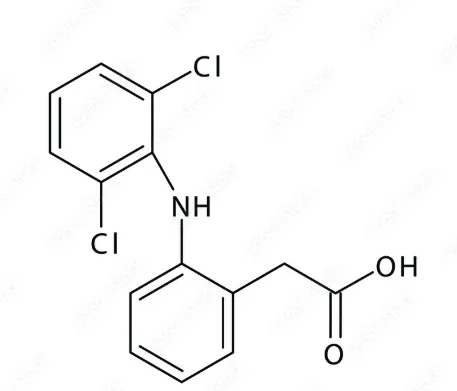
Figure 1: Structure of Diclofenac [19]
5. PHARMACOLOGICAL MECHANISM
Diclofenac is a non-steroidal anti-inflammatory drug (NSAID) that produces analgesic, anti-inflammatory and antipyretic effects primarily by inhibiting cyclooxygenase (COX) enzymes. It inhibits both cyclooxygenase-1 (COX-1) and cyclooxygenase-2 (COX-2), thereby reducing the synthesis of prostaglandins and other prostanoids involved in pain, inflammation and fever.
The mechanism of action of diclofenac involves the following processes:
1. Inhibition of Cyclooxygenase Enzymes
Diclofenac inhibits COX-1 and COX-2 enzymes, which are responsible for converting arachidonic acid into prostaglandin precursors. COX-1 is involved in normal physiological functions, including gastric mucosal protection, platelet function and renal blood flow, whereas COX-2 is primarily associated with inflammatory responses.
2. Reduction in Prostaglandin Synthesis
Inhibition of COX enzymes reduces the production of prostaglandins, particularly prostaglandin E2 (PGE2), which plays an important role in inflammation and pain sensitization. Reduced prostaglandin synthesis decreases inflammatory responses and helps relieve pain.
3. Analgesic Effect
Prostaglandins increase the sensitivity of peripheral pain receptors to inflammatory mediators such as bradykinin. By reducing prostaglandin production, diclofenac decreases peripheral pain sensitivity and produces an analgesic effect.
4. Anti-inflammatory Effect
The reduction in prostaglandin synthesis decreases inflammation, swelling and associated tissue discomfort. This contributes to the therapeutic effectiveness of diclofenac in inflammatory and musculoskeletal condition.
5. Antipyretic Effect
Prostaglandin E2 is involved in the regulation of body temperature during fever. By inhibiting prostaglandin synthesis, diclofenac helps reduce elevated body temperature.
Although inhibition of prostaglandin synthesis provides therapeutic benefits, it can also contribute to adverse effects. Reduced protective prostaglandins in the gastrointestinal tract may increase the risk of gastric irritation, ulceration and gastrointestinal bleeding. Similarly, reduced prostaglandin synthesis in the kidneys may affect renal blood flow and kidney function. Inhibition of vascular prostacyclin production may also contribute to cardiovascular risks associated with diclofenac. [5,11,14]
6. THERAPEUTIC APPLICATIONS
Diclofenac is a non-steroidal anti-inflammatory drug (NSAID) widely used for its analgesic, anti-inflammatory and antipyretic properties. It is prescribed for the management of various acute and chronic conditions associated with pain and inflammation. Its therapeutic applications depend on the formulation, route of administration and clinical condition.
6.1. Musculoskeletal Disorders
Diclofenac is commonly used to relieve pain and inflammation associated with musculoskeletal conditions, including Osteoarthritis, Rheumatoid arthritis, Ankylosing spondylitis, Acute musculoskeletal injuries, sprains and strains. [20]
6.2. Postoperative and Acute Pain
Diclofenac is used for the short-term management of acute pain following surgical procedures and dental treatments. It may also be prescribed for pain associated with injuries and other inflammatory conditions. [18]
6.3. Menstrual Pain (Dysmenorrhoea)
Diclofenac helps relieve primary dysmenorrhoea by reducing prostaglandin synthesis, which contributes to uterine contractions and menstrual pain. [21]
6.4. Dental Pain
Diclofenac is used to manage dental pain and inflammation, including pain following dental procedures and tooth extraction. [22]
6.5. Migraine
Diclofenac, particularly in certain oral formulations, may be used for the acute treatment of migraine attacks to reduce headache intensity and associated pain. [23]
6.6. Topical Pain and Inflammation
Topical diclofenac preparations, such as gels and patches, are used to provide local relief from pain and inflammation, particularly in osteoarthritis affecting superficial joints and minor musculoskeletal injuries. [16]
6.7. Ophthalmic Applications
Diclofenac eye drops are used in selected ophthalmic conditions to reduce inflammation and pain, including postoperative ocular inflammation and discomfort following certain eye procedures. [24]
Diclofenac has several therapeutic applications, mainly in the management of pain and inflammatory disorders. Although it is effective, its use should be guided by the patient's clinical condition, appropriate dose and duration, and potential risk of adverse drug reactions.
7. ADVERSE DRUG REACTIONS
Diclofenac’s uses are associated with several adverse drug reactions (ADRs), which may affect different organ systems. These reactions can range from mild and temporary symptoms to serious complications requiring medical attention. The occurrence and severity of ADRs may depend on the dose, duration of treatment, route of administration, age, medical history and concurrent use of other medications. It inhibits cyclooxygenase (COX-1 and COX-2) enzymes, reducing prostaglandin synthesis. Although this action provides analgesic and anti-inflammatory effects, it may also interfere with the normal protective functions of prostaglandins in the gastrointestinal tract, kidneys and cardiovascular system.
7.1. Common Adverse Drug Reactions
A comprehensive review of over-the-counter NSAIDs reported that these agents are associated with a wide range of adverse drug reactions, particularly involving the gastrointestinal, cardiovascular, and renal systems. Gastrointestinal complications, including irritation, ulceration, and bleeding, are among the most frequently recognized adverse events, while cardiovascular and renal toxicities may also occur, especially in susceptible patients.[25] In addition to well-recognized upper gastrointestinal toxicity, NSAIDs can cause significant lower gastrointestinal adverse events, including intestinal inflammation, ulceration, bleeding, perforation, protein loss, and strictures. lower gastrointestinal complications are often underrecognized but contribute substantially to NSAID-associated morbidity and hospitalization. These adverse effects may occur with both short- and long-term NSAID use and can present with serious clinical consequences, underscoring the need for greater awareness, early detection, and careful risk assessment when prescribing NSAIDs. [26]
NSAIDs inhibits chaperone-mediated autophagy and induces hepatic lipid accumulation demonstrated that NSAIDs can promote hepatic lipid accumulation (hepatic steatosis) and hepatotoxicity by disrupting cellular lipid homeostasis. Previous study showed that all tested NSAIDs induced lipid accumulation in hepatocytes, with diclofenac exhibiting the strongest effect. Mechanistically, NSAIDs inhibited chaperone-mediated autophagy through degradation of LAMP2A, resulting in impaired clearance of lipid-associated proteins and subsequent hepatic fat accumulation. These findings provide mechanistic evidence that NSAID exposure, particularly diclofenac, may contribute to liver injury, hepatic steatosis, and hepatotoxicity, highlighting the liver as an important target organ for NSAID-related adverse effects.[27]
A prospective observational study of diclofenac users reported 561 adverse drug reactions (ADRs) among 943 patients, identifying 34 different ADR types affecting multiple organ systems. Gastrointestinal reactions were the most common (48%), followed by skin, central nervous system, renal, and cardiovascular effects. Frequently reported ADRs included abdominal pain/cramps, rash, nausea and vomiting, indigestion, peptic ulceration, and edema. Although abdominal pain was the most common reaction, peptic ulceration accounted for the greatest disability burden, measured using Days Lost due to Disability (DLD), followed by rash and edema. Serious but less frequent ADRs such as acute renal failure, Stevens-Johnson syndrome, heart failure, and anaphylaxis were also observed. The findings demonstrate that diclofenac has a broad and complex safety profile, with gastrointestinal toxicity, particularly peptic ulceration and bleeding, contributing substantially to morbidity and reinforcing the need for careful monitoring and pharmacovigilance during diclofenac therapy. [28]
Another prospective community-pharmacy study found that 33.3% of patients receiving ibuprofen or diclofenac reported suspected adverse drug reactions (ADRs), highlighting that NSAID-related adverse events are common in routine clinical use. Among 347 self-reported ADRs, nearly half were assessed as probable or possible drug-related reactions, with adverse events most frequently affecting the mental health, upper respiratory (nose/throat/voice), and gastrointestinal systems. Diclofenac users reported a higher average number of suspected ADRs than ibuprofen users, emphasizing the potential for significant adverse event burden among NSAID-treated patients. These findings underscore the importance of active pharmacovigilance and community-based monitoring, as spontaneous reporting alone may underestimate the true incidence of NSAID-associated adverse events. [29]
Another review of topical diclofenac for osteoarthritis and soft-tissue injuries highlighted that while oral NSAIDs are commonly associated with serious gastrointestinal bleeding, gastric ulceration, and renal adverse effects, topical diclofenac provides comparable pain relief with a substantially lower risk of systemic toxicity. Nevertheless, adverse events were still reported with topical formulations, most commonly local skin reactions such as pruritus, rash, and application-site irritation, along with occasional gastrointestinal symptoms such as nausea. These findings suggest that although topical diclofenac may reduce the risk of severe systemic NSAID-related adverse events, careful monitoring for both local and systemic adverse reactions remain important in clinical practice. [30]
Diclofenac has been associated with an increased risk of myocardial infarction and other adverse cardiovascular events, including atherothrombotic complications, in both patients with pre-existing cardiovascular risk factors and otherwise healthy individuals. Evidence from large retrospective analyses indicated that diclofenac exhibits a cardiovascular risk profile similar to that of some selective COX-2 inhibitors, potentially increasing the likelihood of arterial thrombosis. [31]
8. RISK FACTORS
Several patient-related factors can increase the risk of developing adverse reactions during diclofenac therapy. Advanced age is an important risk factor because elderly individuals are more susceptible to gastrointestinal bleeding, renal impairment and cardiovascular complications. [32] Patients with a previous history of peptic ulcers, gastrointestinal bleeding or other gastrointestinal disorders may have an increased risk of ulceration and bleeding. Similarly, individuals with pre-existing cardiovascular conditions such as hypertension, ischaemic heart disease, heart failure or a history of stroke may be more vulnerable to cardiovascular complications associated with diclofenac. [17]
Pre-existing renal and hepatic disorders are also important risk factors. Patients with impaired kidney function may be more susceptible to diclofenac-induced renal toxicity because inhibition of prostaglandin synthesis can reduce renal blood flow. Individuals with liver disease may require additional precautions, as diclofenac can cause elevations in liver enzymes and, rarely, clinically significant liver injury. Furthermore, patients with a history of hypersensitivity to diclofenac, aspirin or other NSAIDs may develop allergic reactions, including skin rashes, urticaria, angioedema and bronchospasm. [33]
Treatment-related factors also influence the occurrence of ADRs. Higher doses and prolonged use of diclofenac may increase the risk of gastrointestinal, cardiovascular, renal and hepatic complications. Dehydration and reduced circulating blood volume may further increase the possibility of kidney injury, particularly in elderly patients and individuals with pre-existing renal disorders.[34] Lifestyle factors such as smoking, excessive alcohol consumption, diabetes mellitus, hypertension and hyperlipidaemia may also contribute to the overall risk profile, especially in relation to cardiovascular and gastrointestinal complications.[35]
9. DRUG INTERACTIONS
Diclofenac may interact with several medications, potentially increasing toxicity or altering their therapeutic effects. Concomitant administration of diclofenac with anticoagulants such as warfarin may increase the risk of bleeding, particularly gastrointestinal bleeding. Similarly, concurrent use with antiplatelet agents such as aspirin and clopidogrel may increase bleeding complications. [36] The combination of corticosteroids like prednisolone with other medications, particularly those that increase the risk of gastrointestinal bleeding, can further elevate the risk of ulceration and bleeding. Studies have shown that corticosteroids can increase the risk of gastrointestinal bleeding or perforation by 40%, with the increased risk being statistically significant for hospitalized patients only. For patients in ambulatory care, the total occurrence of bleeding or perforation was very low, and the increased risk was not statistically significant. This highlights the importance of monitoring and managing patients on corticosteroid therapy, especially when combined with other medications that may exacerbate the risk of gastrointestinal complications. [37] The simultaneous use of diclofenac with other NSAIDs, including ibuprofen and naproxen, is generally discouraged because it may increase gastrointestinal and renal toxicity without providing significant additional therapeutic benefits.[38]
Diclofenac may also interact with antihypertensive medications, including angiotensin-converting enzyme (ACE) inhibitors and angiotensin receptor blockers (ARBs). This interaction may reduce their blood pressure-lowering effects and increase the risk of renal impairment, particularly when used together with diuretics. The combination of an NSAID, an ACE inhibitor or ARB, and a diuretic is commonly known as the triple whammy and is associated with an increased risk of acute kidney injury. [39] Additionally, diclofenac may reduce the renal clearance of lithium, resulting in increased plasma lithium concentrations and a potential risk of lithium toxicity.[40]
The drug has 542 known drug interactions, including 102 major, 423 moderate, and 17 minor interactions. The page notes that diclofenac can also interact with certain medical conditions and lifestyle factors, listing 11 disease interactions such as asthma, kidney toxicity, liver toxicity, gastrointestinal bleeding risk, fluid retention, and thrombosis, as well as 2 alcohol/food interactions. Commonly checked medications include aspirin, celecoxib, antidepressants such as sertraline and fluoxetine, metoprolol, semaglutide (Ozempic), acetaminophen (Tylenol), and alprazolam (Xanax). The site emphasizes that interaction classifications are only guidelines and that patients should consult a healthcare professional before starting, stopping, or combining medications with diclofenac. [41]
Other clinically significant interactions include those with methotrexate, cyclosporine and digoxin. Concurrent administration with methotrexate may increase methotrexate exposure and the risk of toxicity, particularly at higher doses or in patients with impaired renal function. [42] Combination with cyclosporine may increase the risk of nephrotoxicity, while diclofenac may increase serum digoxin concentrations and prolong its elimination. [43] Certain CYP2C9 enzyme inhibitors, such as voriconazole, may also increase diclofenac plasma concentrations by reducing its metabolism.[44]
10. MEASURES TO MINIMISE THE RISK OF ADVERSE DRUG REACTIONS
The risk of diclofenac-associated ADRs can be reduced through appropriate prescribing practices and patient monitoring. Diclofenac should be administered at the lowest effective dose for the shortest necessary duration. Before initiating treatment, healthcare professionals should evaluate the patient's medical history, particularly gastrointestinal, cardiovascular, renal and hepatic conditions. A thorough medication review is also important to identify potential drug interactions and avoid unnecessary combinations with other NSAIDs. Monitoring of blood pressure, renal function and liver function may be considered, particularly during prolonged treatment or in high-risk patients. Patients should also be educated about warning signs such as black stools, vomiting blood, chest pain, breathing difficulty and jaundice so that appropriate medical attention can be obtained promptly.[45]
11. PHARMACOVIGILANCE
Pharmacovigilance plays an important role in monitoring diclofenac-associated adverse drug reactions, particularly because some serious complications may not be fully identified during pre-marketing clinical trials. [7] Clinical trials generally involve a limited number of participants and controlled study conditions, whereas post-marketing surveillance provides information about medicine safety during routine clinical use. Continuous monitoring helps identify uncommon or delayed adverse reactions, evaluate potential risk factors and generate safety signals requiring further investigation. [46]
11.1. Adverse Drug Reaction Reporting
Adverse drug reaction reporting is an essential activity of pharmacovigilance through which suspected reactions associated with medicines are documented and communicated to the appropriate regulatory authorities. Healthcare professionals, including doctors, pharmacists and nurses, play an important role in identifying and reporting suspected ADRs. Patients and consumers can also contribute by reporting suspected adverse reactions through available reporting mechanisms. [47]
In the case of diclofenac, suspected ADRs such as gastrointestinal bleeding, skin reactions, increased blood pressure, renal impairment and liver injury should be documented and reported through appropriate pharmacovigilance channels. Reports generally include information about the suspected medicine, dosage, route of administration, duration of treatment, description of the reaction, time of onset, relevant medical history and outcome of the reaction. [48]
11.2. Methods of ADR Monitoring
Different methods are used in pharmacovigilance to identify and evaluate adverse drug reactions. Spontaneous reporting involves the voluntary submission of suspected ADR reports by healthcare professionals and consumers. Active surveillance involves systematic monitoring of patients to identify adverse reactions during medicine use. Cohort studies and case-control studies are used to investigate associations between medicines and adverse health outcomes. [49] Prescription event monitoring evaluates adverse events occurring after patients receive a particular medicine. These methods contribute to the identification of potential risks and the evaluation of medicine safety. [50]
11.3. Role of Pharmacovigilance in Promoting the Safe Use of Diclofenac
Pharmacovigilance contributes to the safe use of diclofenac by facilitating early identification and reporting of suspected adverse reactions. Analysis of ADR reports helps healthcare professionals and regulatory authorities understand its safety profile and identify patient groups who may require additional precautions. [51] It also supports the development of appropriate prescribing guidelines, patient counselling recommendations and risk-minimisation measures. Educating patients about possible adverse reactions and encouraging them to report unusual symptoms can further strengthen pharmacovigilance activities. [52]
CONCLUSION
Diclofenac is a widely used non-steroidal anti-inflammatory drug (NSAID) with significant analgesic, anti-inflammatory and antipyretic properties. It is commonly prescribed for the management of various acute and chronic painful and inflammatory conditions. Despite its therapeutic effectiveness, diclofenac is associated with several adverse drug reactions affecting multiple organ systems, particularly the gastrointestinal, cardiovascular, renal, hepatic and dermatological systems. The occurrence and severity of these reactions may depend on factors such as dosage, duration of treatment, age, pre-existing medical conditions and concomitant medication use. Drug interactions with anticoagulants, antiplatelet agents, corticosteroids, antihypertensive medicines and other NSAIDs may further increase the risk of complications.
Therefore, the safe and rational use of diclofenac requires careful patient assessment, appropriate dose selection, avoidance of unnecessary prolonged treatment and monitoring of patients who are at increased risk of adverse reactions. Pharmacovigilance plays a crucial role in the early identification, documentation, reporting and evaluation of suspected adverse drug reactions, thereby contributing to improved medication safety. Increased awareness among healthcare professionals and patients regarding the potential risks associated with diclofenac, along with active participation in adverse drug reaction reporting programmes, can help minimise preventable complications. Overall, although diclofenac remains an important therapeutic option for pain and inflammatory conditions, its benefits should always be balanced against its potential risks to ensure effective and safe patient care.
REFERENCES


Harshvardhan Singh Chouhan, Mahadev D. Mundhe, Dr. Sampat D. Navale, A Review of Adverse Drug Reactions Associated with Diclofenac, a Non-Steroidal Anti-Inflammatory Drug, Int. J. Sci. R. Tech., 2026, 3 (11), 1128-1138. https://doi.org/10.5281/zenodo.24469069
 10.5281/zenodo.24469069