

We use cookies to ensure our website works properly and to personalise your experience. Cookies policy
School of Pharmacy, R.K. University, Rajkot, Gujarat.
Mucoadhesion is the ability of a formulation to stick to a mucosal surface and remain there for a longer time. It has become an important approach in drug delivery because it helps improve drug retention and allows the medicine to be released gradually. The effectiveness of mucoadhesive formulations depends on factors such as the type of mucosal tissue, polymer properties, and the composition of the formulation. This review discusses the basic concept of mucoadhesion, the materials used, factors affecting adhesion, and methods used to evaluate it. It also covers different mucoadhesive drug delivery systems, including buccal, nasal, ocular, gastrointestinal, vaginal, and rectal formulations.
Periodontal diseases affect the gingiva and the supporting structures of the teeth. Periodontitis is linked to a dysbiotic subgingival microbial community and a dysregulated host inflammatory response. If the inflammation is chronic then clinical attachment loss, formation of periodontal pockets and alveolar bone resorption will occur. In advanced cases this can lead to tooth mobility and ultimately tooth loss [1,2]. The approach to management is to provide oral hygiene instruction, undertake professional mechanical disruption of the biofilm, control the risk factors and then provide periodontal maintenance. A local antimicrobial system should be regarded as an adjunct to appropriate periodontal therapy rather than a replacement for diagnosis or for mechanical therapy [1,2].
Local delivery can be an attractive proposition in that an active agent can be positioned right at the site of disease with minimal systemic exposure. The problem with conventional formulations is that they can be removed by saliva, tongue movement, swallowing and gingival crevicular fluid. Mucoadhesive polymers may help with contact and control of release but the requirements for a gel applied to the gingival mucosa are very different from those for a gel which is injected into a periodontal pocket [4,5].
Plant based materials are being looked at for use in the oral cavity as the polyphenols, flavonoids and volatile constituents of such plants may have antimicrobial or anti-inflammatory activity. The activity and safety of any botanical product will be a function of its identity, the method of extraction, its composition and concentration and its formulation. This review collates the documents supplied on herbal periodontal treatments, mucoadhesive systems and oral gels with some of the work on guava leaf and clove. It makes a clear distinction between evidence of direct periodontal activity and evidence of formulation activity for other plants or other oral conditions.
• Available marketed herbal formuations:
| No. | Product / brand | Dosage form | Reported herbal ingredients / actives | Periodontal / oral-health relevance | Mucoadhesive-delivery status | Ref. |
|---|---|---|---|---|---|---|
| 1. | Curenext® | Topical oral / dental gel | Curcuma longa (turmeric) extract; reported concentration 10 mg/g | Reported for plaque-associated gingivitis and periodontal symptoms; curcumin is associated with anti-inflammatory and antioxidant activity. | A marketed topical herbal gel; the cited review does not establish that it is a purpose-designed mucoadhesive periodontal-pocket system. | [5] |
| 2. | Periocare® Gum Massage Powder | Gum massage powder | Multi-herbal formulation; the clinical paper evaluates the commercial powder but the abstract does not provide a complete ingredient list. | A clinical study evaluated its effect on plaque and gingival inflammation in people with gingivitis. | Not a gel, film, or pocket-insert; no mucoadhesive delivery mechanism established. | [6] |
| 3. | Tau-Marin® Mucoadhesive Gel (AL0019) | Mucoadhesive oral lipogel | Aloe vera leaf extract, blueberry extract, and mallow leaf extract, incorporated into an oily mucoadhesive polymer base. | A botanical mucoadhesive oral gel formulation described in a product-focused research paper; potentially relevant as an oral-retention technology benchmark. | The paper describes a mucoadhesive product/formulation, but it is not established there as a periodontal-pocket therapeutic product. Avoid claiming proven periodontitis efficacy. | [5] |
| 4. | Osheeka™ Advance Herbal Tooth Gel | Herbal tooth gel / dentifrice | Manufacturer-listed ingredients include amla, haritaki, bibhitaki, clove, cinnamon, miswak, neem and other ingredients. | Manufacturer lists gum-related claims including gingivitis and plaque/tartar control; these are product claims, not proof of clinical periodontal-pocket efficacy. | A tooth gel for routine oral care; no documented periodontal-pocket mucoadhesion identified. | [5] |
Table 1: Available Marketed Herbal Formuations
2. PERIODONTAL DISEASE: PATHOPHYSIOLOGY AND TREATMENT RATIONALE:
Dental plaque is basically a sticky film of microbes. When this film gets out of balance, the microbes and our own immune system can cause ongoing gum inflammation. Immune cells like neutrophils and macrophages release substances that fight infection, but these can also damage connective tissue and bone. Things like how well you clean your teeth, smoking, and diabetes all play a role in how the disease develops [1,2].
The main goal of treatment isn't just to kill specific germs. We need to break down the biofilm, calm the inflammation, and keep the gums healthy. Deep cleaning, like scaling and root planing, is still the core treatment. Sometimes, after a dentist checks things out, they might use antimicrobial treatments directly in specific stubborn spots. What they choose depends on the spot, research, the patient, and local guidelines [2].
A herbal gel might offer some local antimicrobial or anti-biofilm effects. However, it needs to be tested against common gum bacteria and, ideally, against mixtures of microbes. Just showing it can stop bacterial growth on an agar plate isn't enough to know if it will work in the mouth. The gel also needs to be gentle, consistent, and not harm the normal tissues or microbes in the mouth.
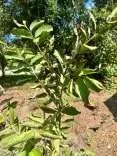
Figure 1: Guava Plant
3. PHYTOCHEMICAL PROFILE OF GUAVA LEAF:
Table 2: Phytochemical Profile of Guava Leaf
| Sr. No. |
Common name |
Scientific Name |
Family | Chemical constituents |
Additional uses |
References |
|---|---|---|---|---|---|---|
| 1. | Guava Leaves, Amrood |
Psidium guajava |
Myrtaceae | Flavonoids, Triterpinoids, Steroids, Carbohydrate, Oils, Lipids, Glycosides, Alkaloids, Tannins, And Saponins. |
Periodontal preparations, Antimalarial, anthelmintic, antiulcer, antispasmodic, Analgesic Properties |
[11,12] |
3.A. POTENTIAL BIOLOGICAL ACTIVITIES:
• Mechanism of action of guava leaf:
Guava leaf extract
↓
Antimicrobial + antiproteolytic + antioxidant/anti-inflammatory effects
↓
Inhibition of periodontal pathogens, particularly Porphyromonas gingivalis and Aggregatibacter actinomycetemcomitans
↓
↓ bacterial burden and virulence
↓
↓ inflammatory stimulation of gingival tissues
↓
Reduction of gingival inflammation and support of tissue healing
3.B. STANDARDIZATION REQUIREMENTS OF GUAVA LEAF:
| Sr. No. | Standardization parameter |
Methods | Ref. |
|---|---|---|---|
| 1 | Botanical authentication | Confirm scientific identity (Psidium guajava L.), plant part, macroscopic and microscopic characters; retain an authenticated reference/voucher specimen where feasible. |
[1, 3, 5] |
| 2 | Raw-material quality and traceability |
Record source, collection location/date, supplier or batch, plant part, appearance and handling history; inspect for foreign matter and adulteration. |
[1, 3, 5] |
| 3 | Drying and particle-size control |
Document drying conditions and final moisture control; specify the sieve or particle-size range used before extraction. | [3, 5] |
| 4 | Extraction method and extract yield | Report solvent composition, drug-to-solvent ratio, extraction technique, time, temperature, filtration and concentration conditions. Yield (%) = (weight of dried extract ÷ weight of dried leaf powder) × 100. |
[4, 5, 6] |
| 5 | Preliminary phytochemical screening |
Screen for relevant classes such as phenolics, flavonoids and tannins using suitable qualitative methods; report methods and controls. |
[1, 4, 5] |
| 6 | Total phenolic and flavonoid content | Quantify total phenolic and/or total flavonoid content using validated colorimetric methods; report reference standard and units. |
[4, 5, 7] |
| 7 | HPTLC/HPLC fingerprinting |
Develop a reproducible chromatographic fingerprint using suitable reference standards; report chromatographic conditions, characteristic bands/peaks and batch-to-batch similarity. |
[4, 7, 8] |
| 8 | Marker-compound analysis | Consider guaijaverin as a candidate marker where a suitable analytical method and reference standard are available; justify the marker and validate method specificity, precision and accuracy. |
[7, 8] |
| 9 | Microbial and contaminant testing |
Assess microbial quality and relevant contaminants, including heavy metals and pesticide residues, according to supply- chain risks and intended oral use. |
[3, 9] |
| 10 | Storage and stability | Specify packaging and storage conditions; monitor moisture, appearance and chromatographic/marker profile over time. For finished gel, assess formulation stability and microbial quality. |
[6, 9] |
Table 3: Standardization Requirements of Guava Leaf
4. PHYTOCHEMICAL PROFILE OF CLOVE:
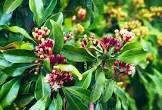
Figure 2: Clove Plant
Table 4: Phytochemical Profile of Clove
| Sr. No. | Common name | Scientific name | Family | Chemical constituents | Additional uses | References |
|---|---|---|---|---|---|---|
| 1 | Clove | Dried flower buds of Syzygium aromaticum | Myrtaceae | Eugenol, eugenyl acetate, β caryophyllene, tannins, flavonoids and other phenolic compounds | Periodontal research, dental applications, antimicrobial, antioxidant, anti inflammatory, food and fragrance industries | [7] |
4.A. POTENTIAL BIOLOGICAL ACTIVITIES:
• Mechanism of action of clove:
Clove → Eugenol
↓
Interacts with bacterial cell membrane
↓
Increased membrane permeability
↓
Leakage of intracellular proteins/nucleic acids
↓
Loss of membrane integrity
↓
Bacterial death/inhibition.
4.B. STANDARDIZATION REQUIREMENTS OF CLOVE:
Table 5: Standardization Requirements of Clove
| No. | Standardization parameter |
Recommended assessment / method | Ref. |
|---|---|---|---|
| 1 | Botanical identity and authentication |
Confirm Syzygium aromaticum (family Myrtaceae), exact plant part and authenticated source. Retain voucher specimen or supplier authentication where feasible. |
[7] |
| 2 | Plant part, source and traceability | Record bud versus leaf material, supplier, geographical origin, batch number, date of purchase/collection, processing and storage history. Keep bud oil and leaf oil as separate material specifications. |
[7] |
| 3 | Macroscopic and organoleptic characters |
For dried buds: record colour, shape, size, surface and characteristic aroma. For oil: record appearance, colour and odour. Compare with authenticated reference material and document observations. |
[2] |
| 4 | Moisture / loss on drying | Determine moisture or loss on drying for dried buds using an appropriate official method. Do not apply a crude-drug moisture test directly to essential oil; select oil-specific tests for oil material. |
[2] |
| 5 | Volatile-oil content in dried buds | Where dried buds are the starting material, determine volatile-oil content by a suitable official distillation method and report the result with units and calculation basis. Confirm the current pharmacopoeial monograph before setting limits. |
[2] |
| 6 | Eugenol identification and assay | Identify eugenol in the selected clove oil and quantify it using a validated method suitable for volatile constituents, preferably GC-FID or GC-MS. State reference standard, sample preparation, conditions and result (% or concentration). |
[7] |
| 7 | Extraction / distillation record and yield | If prepared in-house, document plant-part mass, particle size, extraction/distillation method, time, operating conditions, solvent/water, oil yield and storage. Report the yield calculation and batch details. |
[2] |
| 8 | Microbial quality | Assess microbial quality of the raw material/extract according to intended oral use and applicable official requirements. Test the finished gel separately using suitable microbial limits/preservative-efficacy procedures where applicable. |
[8,9,1 1] |
| 9 | Contaminants and residues | Assess relevant heavy metals, pesticide residues and other supply-chain risks according to official guidance and intended oral use. Do not invent numerical acceptance limits. |
[7] |
| 10 | Storage and stability of clove material | Use tightly closed, compatible containers and protect essential oil from excessive heat, light and air. Monitor appearance, odour, eugenol assay and chromatographic profile over the proposed storage period. |
[7,2]. |
5. RATIONALE FOR A GUAVA–CLOVE POLYHERBAL COMBINATION:
Table 6: Rationale for a Guava–Clove Polyherbal Combination
| No. | Rationale | Scientific explanation | Ref. |
|---|---|---|---|
| 1 | Guava leaf contribution | Guava leaves contain polyphenols and flavonoids, including guaijaverin and quercetin-related compounds. These have been discussed in relation to antimicrobial, antiplaque, antioxidant and inflammation-modulating activities relevant to periodontal research. | [2,8] |
| 2 | Clove / eugenol contribution | Eugenol from clove-leaf essential oil has shown antibacterial and antibiofilm activity against Porphyromonas gingivalis under laboratory conditions, supporting further investigation as a local antimicrobial candidate. | [9] |
| 3 | Potential complementar y action | Guava leaf offers a polyphenol/flavonoid profile with reported antiplaque and antioxidant/inflammation-modulating potential, while clove-derived eugenol has a separate laboratory-supported antibacterial/antibiofilm rationale. Combining them may be worth testing. | [2,,8] |
| 4 | Mucoadhesive vehicle | A mucoadhesive polymer system may improve contact with oral mucosa and prolong local residence, potentially allowing constituents to be released near the target site. Retention in a periodontal pocket must be demonstrated under relevant fluid-flow conditions. | [4,5] |
| 5 | Formulation compatibility | Clove oil is hydrophobic and volatile. It may separate from aqueous gel or affect polymer structure, hydration, extract stability and marker release. Assess uniform dispersion, phase separation, content uniformity, rheology and stability. | [9,4,5] |
| 6 | Synergy is unproven | The combination may be synergistic, additive, indifferent or antagonistic. A larger inhibition zone alone cannot establish synergy, particularly because essential-oil diffusion can affect agar-based results. | [2,4,7] |
| 7 | Required experimental groups | Compare (i) gel base alone, (ii) guava-extract gel, (iii) clove/eugenol gel, (iv) combination gel and (v) an appropriate positive control. Match active concentrations and assay conditions as closely as possible. | [2,4] |
6. BIOADHESIVE AND MUCOADHESIVE ORAL GEL SYSTEMS:
Mucoadhesion describes the interaction of a material with a mucosal surface or mucus layer. A simplified sequence includes wetting and close contact, followed by polymer-chain interpenetration and interfacial interactions such as hydrogen bonding or electrostatic attraction. Adhesion depends on polymer chemistry, molecular weight, concentration, hydration, ionic strength , pH, contact time and the properties of the biological surface [4,5]. A high laboratory adhesion value is not sufficient on its own: the gel must also be easy to apply, release the active constituents and remain tolerable.
6.A. FORMULATION VARIABLES:
Important variables include polymer type and concentration, guava-extract loading, eugenol or clove-oil concentration, pH, neutralisation conditions where applicable, mixing order, mixing speed, hydration time, dispersion system, preservative choice, packaging and storage. Increasing polymer concentration may improve viscosity or retention but can make the gel difficult to extrude and may slow release excessively. Increasing essential-oil concentration may improve laboratory antimicrobial activity while worsening irritation, taste or physical stability. These trade-offs should be explored systematically, ideally using a factorial or other design-of-experiments approach when resources permit [8,10].
6.B. LOCAL DELIVERY CONSIDERATIONS:
The intended target must be defined before selecting the dosage form. A gel applied to gingival mucosa requires mucosal adhesion and tolerability assessment. A gel intended for a periodontal pocket must also be deliverable through a suitable applicator, distribute within the pocket and resist displacement by gingival crevicular fluid. Syringeability, extrusion force, residence under fluid flow, release kinetics and practical removal or biodegradation should be assessed. The periodontal-gel study identifies high mucoadhesion, controlled release and ease of pocket delivery as useful design goals[8]. The formulation should not obstruct routine periodontal treatment or be represented as a substitute for professional debridement.
6.C. POLYMER SELECTION:
Table 7: Polymer Selection
| No. | Polymer / component | Proposed role in the gel | Evidence and reason for selection | Formulation-development decision | Ref. |
|---|---|---|---|---|---|
| 1 | Carbopol 940 (carbomer) | Primary gel-forming polymer; contributes viscosity, gel structure and mucoadhesive behaviour. | Aslani et al. used Carbopol 940 in a periodontal gel. The formulation containing 1% Carbopol 940 with 3% sodium CMC showed greater viscosity and mucoadhesion, and slower release than a comparator containing less Carbopol. | Include as a principal candidate. Use 1% only as a literature-based starting reference, not as a confirmed optimum for guava–clove gel. Optimise concentration and neutralisation/pH. | [10] |
| 2 | Sodium carboxymethyl cellulose (sodium CMC) | Hydrophilic polymer that modifies hydration, viscosity, gel consistency and marker release. | Used with Carbopol 940 in the Aslani periodontal-gel study. The reported 1% Carbopol 940 + 3% sodium CMC formulation showed higher viscosity and mucoadhesion and slower release than the lower-Carbopol comparator. | Include as a co-polymer candidate. The 3% level is a reported study composition, not a validated level for the proposed botanical combination. | [10] |
| 3 | HPMC K4M | Hydrophilic viscosity-enhancing and release-modifying polymer; may help adjust gel consistency and hydration. | HPMC K4M was among the polymers used/considered in the supplied Aslani periodontal-gel study. The supplied information does not state a specific concentration or establish it as the best-performing polymer. | Retain as an alternative or additional polymer for screening. Select its level experimentally based on viscosity, syringeability, mucoadhesion and release. | [10] |
| 4 | Chitosan | Candidate mucoadhesive polymer; its cationic character may promote interaction with negatively charged mucin. | Chitosan is discussed as a mucoadhesive candidate in the supplied polymer-selection rationale. Performance depends on polymer grade and formulation pH. | Consider as an alternative or blend polymer. Screen grade, concentration, solubility and pH compatibility; confirm mucosal adhesion and cytocompatibility. | [7,10,11] |
| 5 | Chitosan + CMC polymer blend | Potential polymer combination to tune gel/film formation, adhesion, hydration and mechanical behaviour. | A recent experimental herbal mucoadhesive film study used chitosan and CMC with design-of-experiments optimisation and evaluated adhesion and cytocompatibility. Its botanical ingredients differed from guava and clove. | Use as a development concept only. The film study supports a structured optimisation approach, not proof that this blend is optimal for the proposed gel. | [12] |
7. CRITICAL QUALITY ATTRIBUTES AND EVALUATION METHODS:
Critical quality attributes should be selected according to the intended route, the nature of the botanical materials and the stage of development. Tests must use stated methods, replicates, controls and acceptance criteria justified by the formulation and relevant standards; arbitrary limits should not be presented as universal requirements.
Table 8: Critical Quality Attributes and Evaluation Methods
| Quality tests | Purpose | Key considerations |
|---|---|---|
| Appearance, homogeneity and phase separation | Identify lumps, precipitation, oil separation or non- uniformity. |
Inspect across batches and during stability testing. |
| pH | Assess suitability for the intended oral site and compatibility with actives/polymers. | Report method and justify the target range; pH should not be selected arbitrarily. |
| Viscosity and rheology | Characterise flow, handling and resistance to clearance. | Record instrument, spindle/geometry, speed, temperature and shear conditions. |
| Spreadability / extrudability / syringeability |
Determine ease of application or periodontal-pocket delivery. | Use the intended container or applicator where possible. |
| Mucoadhesive strength and residence | Estimate attachment and retention at a relevant mucosal surface. |
Report substrate, hydration, contact time, force method and test conditions. |
| Extract/marker content and uniformity | Confirm reproducible botanical loading and batch consistency. | Use a justified validated analytical method; HPLC/HPTLC is preferable where available. |
| In-vitro release | Characterise release of selected markers or eugenol from the gel. | Choose a suitable medium and sampling schedule; demonstrate analytical specificity. |
For a crude plant extract, nonspecific UV absorbance may not reliably measure release of a particular active constituent. A marker-based analytical method is preferable where feasible. Essential oils can diffuse poorly in agar, so an inhibition zone alone may underestimate or misrepresent activity; broth-based susceptibility and biofilm methods should be considered where the laboratory has the capability. The supplied hydrogel and herbal-film studies illustrate additional approaches such as rheology, mucoadhesion, release, morphology and cytocompatibility, but their results cannot be transferred directly to the guava–clove formulation [9,10].
8. EVIDENCE GAPS AND FUTURE RESEARCH:
Further research is required to establish the effectiveness of guava–clove mucoadhesive gel for periodontal therapy. The major research gaps include:
Future Perspective:
Direct experimental and clinical evidence for the combined guava–clove mucoadhesive gel remains insufficient. Guava evidence is preliminary [6], while clove-derived eugenol is mainly supported by laboratory studies [7]. Therefore, further investigations are necessary to establish the formulation's safety, stability, antimicrobial activity and clinical potential. Synergistic effects and therapeutic effectiveness should not be claimed without appropriate scientific validation.
CONCLUSION:
Guava leaf and clove-derived eugenol offer a scientifically plausible starting point for investigating a local herbal formulation for periodontal applications. Guava leaf contains polyphenols and flavonoids with reported antiplaque, antimicrobial, antioxidant and inflammation-modulating potential, while eugenol has demonstrated laboratory antibacterial and antibiofilm activity against P. gingivalis. Mucoadhesive polymers such as carbopol, sodium CMC, HPMC and chitosan provide candidate platforms for increasing local retention and controlling release. Nevertheless, the combined formulation remains a proposed research concept rather than an established treatment. Its development requires standardised extracts, optimised polymer and essential-oil levels, validated content and release methods, antimicrobial and antibiofilm testing, cytocompatibility and stability assessment, followed by appropriately designed clinical studies. It must be investigated only as a potential adjunct to standard periodontal care.
REFERENCES





Krunal Siddhpura, Arshad Vala, Aneth Mwakipesile, Dr. Pratik Vediya, Dr. Malaykumar Chotaliya, A Review on Mucoadhesive Herbal Gels for Periodontal Therapy: Therapeutic Potential of Guava and Clove, Int. J. Sci. R. Tech., 2026, 3 (11), 520-529. https://doi.org/10.5281/zenodo.24158960
 10.5281/zenodo.24158960