

We use cookies to ensure our website works properly and to personalise your experience. Cookies policy
Department of Pharmacy , JES’s SND College Of Pharmacy Babhulgaon (Yeola),India
Artificial intelligence (AI) is developing as a powerful tool for improving the efficiency, predictability, and reliability of pharmaceutical formulation development. Conventional trial-and-error methods are often laborious, expensive, and not good enough for addressing the complicated interactions among active pharmaceutical ingredients, excipients, process variables, and product performance. This review deliberate the application of AI, machine learning, deep learning, and artificial neural networks across major stages of formulation development, as well as preformulation studies, drug–excipient compatibility assessment, formulation optimization, process control, and dosage-form design. The role of AI in nanomedicine, liposomes, hydrogels, solid dosage forms, corneal drug delivery, and pharmaceutical three-dimensional printing is also examined. Moreover, the integration of AI with Qbd, Process Analytical Technology, real-time release testing, scale-up, and continuous manufacturing is emphasizing. AI-based models can assist prediction of solubility, dissolution, stability, particle characteristics, encapsulation efficiency, and drug-release behavior while reducing experimental requirements. Nevertheless, challenges involving data quality, model interpretability, external validation, regulatory acceptance, ethical considerations, and limited generalizability remain. Future developments are anticipate to focus on explainable AI, digital twins, automated laboratories, and closed-loop formulation systems. Overall, AI should be viewed as a complementary decision-support technology that improve, rather than exchange, experimental pharmaceutical development.
Pharmaceutical formulation development is a fundamental component of pharmaceutical sciences, focusing on the design and optimization of suitable dosage forms. The primary objective is to achieve an appropriate balance of safety, therapeutic efficacy, physical and chemical stability, and patient acceptability while meeting the specific requirements of a particular disease condition or therapeutic application.Traditionally, pharmaceutical formulations have been developed primarily through empirical approaches and repeated trial-and-error experimentation, often requiring substantial time, resources, and laboratory effort, with a considerable risk of failure. The increasing complexity of modern therapeutic agents, including poorly water-soluble drugs, biologics, and targeted drug-delivery systems, has further exposed the limitations of conventional formulation strategies. Consequently, there is a growing need for advanced and efficient approaches capable of processing complex datasets and generating reliable predictions to support formulation development [1]. The pharmaceutical industry typically requires an extensive and expensive drug development pathway before a new medicine can be introduced to the market. Developing a single drug often involves investments reaching billions of dollars and may require a decade or longer to progress from discovery to commercial availability. The application of artificial intelligence (AI) offers a promising approach to addressing these limitations by improving the efficiency and accuracy of drug development processes, thereby increasing the likelihood of successful development outcomes [2].
Artificial intelligence (AI) refers to the use of computer-based systems designed to replicate aspects of human intelligence. The field was formally introduced in 1956 at a conference associated with pioneers such as Marvin Minsky and John McCarthy. A standard AI development workflow generally involves four major stages: data acquisition and preprocessing, AI model development, simulation and testing, and final deployment[3]. Artificial intelligence (AI) is a broad field within computer science that encompasses several advanced technologies, including machine learning, deep learning, computer vision, and natural language processing (NLP). Collectively, these approaches enable computer systems to replicate aspects of human intelligence and support the execution of complex tasks with increasing levels of automation and accuracy[4].
Artificial intelligence (AI) approaches can broadly be classified into two major categories. The first encompasses rule-based technologies, including expert systems, which emulate human decision-making by applying predefined rules to available information. The second category involves computational methods inspired by the structure and functioning of the human brain, particularly artificial neural networks (ANNs). A key advantage of ANNs is their ability to generalize patterns from existing data and apply them to new situations. This capability makes them particularly useful for addressing complex formulation-related problems, including the prediction and optimization of pharmaceutical product formulations[2].
Deep learning approaches, particularly Convolutional Neural Networks (CNNs) and Recurrent Neural Networks (RNNs), including Long Short-Term Memory (LSTM) architectures, play an important role in modern data analysis. CNNs are especially effective for processing structured and image-based data, making them valuable in medical image analysis, disease detection, diagnosis, and drug repurposing applications[5].
Table 1: Provides an Overview of the Major AI Techniques, Their Applications, and the Relevant Supporting Literature.
| AI Technique | Use in Drug Formulation | Reference |
|---|---|---|
| Artificial Neural Networks (ANNs) | Prediction of solubility, dissolution rates, encapsulation efficiency, drug-to-excipient ratios, and estimation of pharmacokinetic parameters. |
6 |
| Deep Learning (DL, CNN/GNN) | Predicting particle size, polydispersity index (PDI), and drug release requires the use of models that can capture complex, nonlinear relationships in formulation datasets. | 7,8 |
| Recurrent Neural Networks (RNNs) | RNNs are widely used for sequence-related tasks in drug development, including protein structure prediction, genomic data analysis, and peptide sequence design. | 9 |
| Long Short-Term Memory Network(LSTMs) | Long Short-Term Memory (LSTM) networks are a specialized form of recurrent neural networks (RNNs) designed to capture and learn patterns across sequential data. In pharmaceutical research, LSTM models have been applied in pharmacokinetic and pharmacodynamic analyses to predict drug concentration–time profiles and assess therapeutic responses. | 9 |
| Support Vector Machine (SVM),Multivariate Data Analysis |
Classification,Improved quality control, optimized scale-up processes, and reduced consumption of raw materials. | 1,10 |
| Random Forest | Selection of suitable compounds, identification of relevant features, and assessment of batch quality. | 11 |
Fundamental of artificial intelligence
Artificial intelligence Overview
AI refers to robots' capability to perform tasks that typically need human intelligence—such as learning from data, recognizing patterns, making decisions, and solving complex problems. In the pharmaceutical sector, AI is widely applied to analyze large datasets, uncover relationships among formulation factors, and produce precise predictions. Clustering methods organize compounds into groups according to their chemical characteristics, which aids in spotting promising drug candidates. Principal component analysis (PCA) compresses the number of variables while retaining key information, exposing patterns that inform the drug discovery process[1,5]. Deep learning models, including convolutional and recurrent neural networks, have been applied in pharmaceutical research for tasks related to solid dosage form development — for example, spotting tablet defects, forecasting storage stability, estimating particle flowability, and predicting drug dissolution behavior[3].
Machine Learning
Machine Learning (ML) is a branch of AI that develops algorithms allowing systems to learn from data and generate predictions or decisions. It encompasses supervised learning, which trains models using labeled examples, and unsupervised learning, which discovers structure in unlabeled datasets[12]. In supervised learning, algorithms learn from examples by forming general rules that map inputs to the appropriate outputs. The training set contains input–output pairs where the outputs are the correct responses, often called "targets." The model's goal is to generate predictions that closely match these target values.Machine learning techniques have found diverse applications in pharmaceutical sciences, including the use of fuzzy logic-based algorithms for handling complex and uncertain pharmaceutical data[13]. Machine learning allows models to infer relationships from experimental data and forecast pharmaceutical attributes like solubility, dissolution behavior, stability, particle properties, and drug–excipient compatibility. Supervised, unsupervised, and reinforcement learning methods are used for making predictions, classifying data, uncovering patterns, and optimizing pharmaceutical processes[14].
Deep Learning
DL (deep learning) is a branch of machine learning that focuses on learning useful representations of data. Recent progress in neural network research drives the current state of the art in deep learning. Compared with traditional artificial neural networks, deep learning models typically use many more hidden layers—commonly exceeding three—and each layer contains a substantially larger number of neurons[13]. DL algorithms enable precise optimization of taste-masked pediatric formulations, helping to improve medication adherence. These models evaluate how formulation components interact to identify strategies that effectively reduce bitterness. Integrated, high-throughput methods—such as electroencephalography for assessing taste intensity, bioelectronic tongues, and taste organoids on chips—speed screening, while techniques like fluorescence spectroscopy, surface plasmon resonance, and molecular docking provide deeper insight into taste mechanisms. The accuracy of these models depends on large, diverse datasets of taste profiles. Although this computational approach could greatly transform pediatric formulation design, clinical studies are still needed before it can be widely adopted[12]. Deep learning employs artificial neural networks composed of multiple nonlinear processing layers to manage and interpret large volumes of experimental data[15].
Artificial Neural Networks (ANN)
Artificial neural networks are computational systems inspired by the workings of the brain. They emulate the brain’s information-processing capabilities. The human brain contains billions of neurons, which are densely linked by countless synapses that connect one neuron to others[13]. Artificial neural networks (ANNs) can represent complex input–output behaviors and capture nonlinear relationships in data. By learning patterns directly from datasets, they can handle certain types of variability more effectively. In pharmaceutical development, ANNs have become useful complementary tools for modeling complicated systems, including formulation optimization and process control. One of the earliest notable uses was reported in 1991, when researchers applied ANNs to model and optimize controlled-release hydrophilic matrix capsules made from blends of anionic and nonionic cellulose ether polymers[16]. Artificial neural networks (ANNs) are widely utilized to establish complex relationships between formulation variables and critical performance characteristics, including drug release, solubility, and formulation stability. Artificial neural networks were also used to develop in vitro–in vivo correlations (IVIVC). For example, a 1999 study employed dissolution data from two extended-release formulations to forecast their in vivo pharmacokinetic profiles [17,16]. ANNs adjust based on prior examples and errors to reach desired outputs, similar to how mammalian neurons adapt[15]. Common parts of an ANN model are: input nodes representing formulation variables, hidden layers that perform processing and learning, and an output layer that provides the predicted response. ANNs are highly capable due to their strong predictive accuracy and flexibility, especially with complex datasets[1].
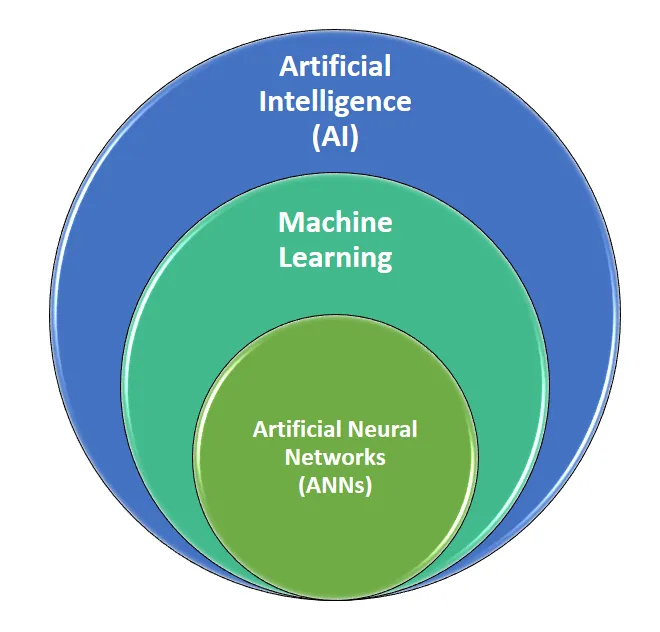
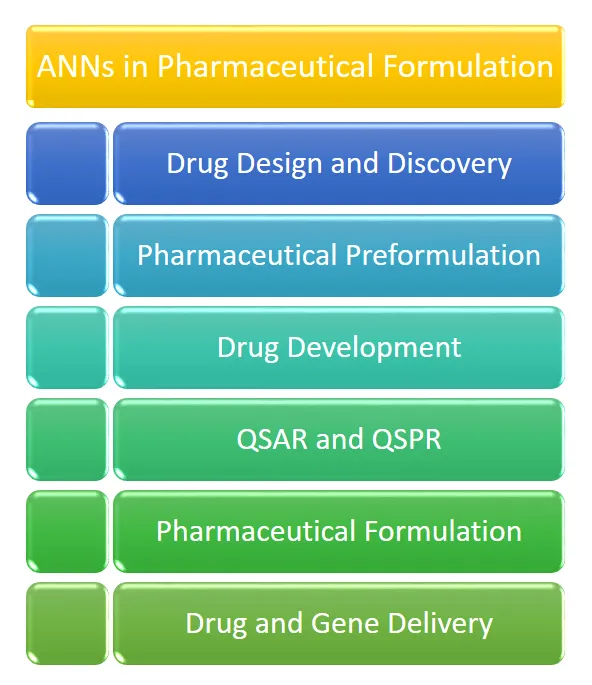
Figure 1: Schematic Showing the Relationship Between AI, Machine Learning, and Artificial Neural Networks (Left, Nested), and a Number of Applications of Artificial Neural Networks in Pharmaceutical Formulations (Right).
Role of AI In Pharmaceutical Formulations Development
AI has become fundamental to modern formulation development, allowing data-driven optimization across the development workflow. Instead of relying solely on traditional, time-consuming DoE trial-and-error approaches, formulators can use machine learning and predictive tools to screen many excipient–API combinations, assess compatibility, and fine-tune formulation variables before running laboratory experiments.Several machine-learning approaches—including random forest regressors, support vector machines, and deep neural networks—have been shown capable of forecasting key formulation properties such as solubility, dissolution rate, hygroscopicity, and polymorphic behavior[6].
Pre formulations Studies
AI integration into pre-formulation research offers a revolutionary method for tackling complex challenges[12]. Preformulation research—often called "learning before doing"—became recognized as a formal scientific field in the mid-1900s and expanded rapidly through the 1950s and 1960s. These early-stage studies are essential to drug development because they provide key information about the active pharmaceutical ingredients'[18].Preformulation is the drug development phase where a compound’s physicochemical characteristics are evaluated. Assessing these properties is crucial because they influence factors like solubility, stability, compatibility with excipients, and, ultimately, bioavailability. Measuring a new compound’s aqueous solubility is a fundamental initial task in preformulation[13].
Traditional preformulation methods often require significant time, money, and manual effort. Integrating AI into preformulation work offers a valuable alternative: it can enhance prediction accuracy, reduce material consumption, and accelerate development schedules. AI-driven predictive models are being applied in pharmaceutical development to support tasks like formulation design, assessing drug–excipient compatibility, enhancing solubility and bioavailability, and streamlining experimental planning[19].
Drug Exicipient Compatibility Predictions
Predicting drug–excipient compatibility is an important aspect of preformulation in which artificial intelligence has shown significant potential. Incompatibility between drugs and excipients may lead to chemical degradation, reduced therapeutic efficacy, or alterations in drug bioavailability. Machine-learning algorithms trained on previously generated formulation data can be used to identify and classify excipients as compatible or incompatible with a particular drug. Such predictive models may incorporate molecular interaction patterns together with environmental parameters, including temperature and humidity, to provide a more comprehensive assessment of compatibility[19].
A key part of designing a dosage form is selecting excipients that are compatible with the drug to prevent stability problems during development and after market release. Instability often arises from excipient–excipient or drug–excipient interactions. For instance, croscarmellose sodium interacting with basic excipients can slow the dissolution of an acid-sensitive drug[20].
Formulation Optimization
A crucial part of developing a successful pharmaceutical formulation is choosing and optimizing excipients, since they strongly influence patient acceptability, drug stability, bioavailability, and the ease of manufacturing[19].
Traditional optimization methods, such as Design of Experiments (DoE), often require substantial time and resources because they involve multiple experimental trials. In contrast, AI-based approaches like genetic algorithms and artificial neural networks can speed up optimization by evaluating several variables simultaneously. These models can predict how formulation factors influence outcomes such as stability, bioavailability, and drug release.
AI-driven optimization is particularly valuable for complex formulations where nonlinear interactions between variables make conventional methods difficult to apply[1].
Process Optimization
Process Analytical Technology
Process Analytical Technology (PAT) is a framework introduced by the U.S. Food and Drug Administration in 2004 to advance pharmaceutical manufacturing. It focuses on real-time monitoring and control of critical process parameters to maintain product quality. This approach aligns with the Quality by Design principles described in ICH Q8, which emphasize understanding and managing variability in manufacturing processes. By using advanced analytical tools, PAT moves quality assurance from final product testing to continuous process monitoring, helping to shorten production time, reduce waste, and improve overall efficiency[21].
Real-time release testing (RTRT) can be applied when there is strong understanding of the process and product, along with effective real-time monitoring and control, so that quality assurance can be achieved during manufacturing. Together with the progress in data processing and automation, the concepts of QbD, PAT, and RTRT are essential for creating agile and innovative manufacturing systems, and their adoption may ultimately enable smart and even fully autonomous pharmaceutical factories[22].
Quality By Design
Quality by Design (QbD) is a modern approach that standardizes product development, supports problem-solving, and reduces the need for manual testing through automation[23]. Quality by Design (QbD) focuses on designing pharmaceutical products and processes so that quality is inherent from the start, rather than being verified only by testing the finished product. Within this approach, stability under ICH long-term, intermediate, and accelerated conditions is essential for determining shelf life, choosing packaging, and maintaining product quality over its lifecycle. New AI and machine-learning methods can assist stability evaluation by examining formulation factors, storage conditions, and past degradation data to predict physicochemical changes and refine stability study plans. When validated experimentally, these tools can help prioritize tests, shorten development time, and serve as a valuable supplement to traditional stability studies[17].
Quality by Design (QbD) is an approach to creating and developing pharmaceutical formulations and manufacturing methods that ensures the final product meets predefined quality attributes.Implementing Quality by Design (QbD) in pharmaceutical product development begins with defining the desired final-product characteristics, known as the Quality Target Product Profile (QTPP). These targets then guide the identification of Critical Quality Attributes (CQAs) that must be controlled to ensure product quality. Based on prior literature and expert judgment, the Critical Material Attributes (CMAs) and Critical Process Parameters (CPPs) that may influence the CQAs are compiled. Because the number of potential factors can be large, a risk-assessment step is used to screen and prioritize them. Through screening and risk evaluation, a reduced set of key factors is selected for further study. An experimental design (Design of Experiments, DoE) is then constructed by assigning levels to these variables, and the resulting experiments are analyzed statistically to establish relationships between the selected factors and the CQAs. This analysis enables the definition of a design space—acceptable operating ranges for each variable within which product quality remains unaffected—and supports subsequent optimization. Finally, based on the findings, appropriate control strategies are established to ensure consistent and continuous manufacturing of the pharmaceutical product [24].
Application Of AI In Different Dosage Form
Traditionally, prototype formulation and development have depended on trial-and-error approaches to improve robustness. Unit operations such as mixing, filtration, and homogenization are critical for maintaining consistency during scale-up to commercial manufacturing. Leveraging data from earlier formulations helps refine scale-up strategies, thereby enhancing process efficiency and reliability. Finalizing the prototype involves confirming process stability through thorough batch performance assessments and real-time monitoring. Conventional methods prioritize formulation optimization before large-scale production, using experimental studies and retrospective analyses to meet quality and regulatory requirements. Artificial neural networks (ANNs) strengthen the formulation process by accelerating data analysis,optimizing key parameters, and minimizing reliance on empirical trial-and-error experimentation. AI-driven models exploit large datasets to forecast formulation outcomes, which improves reproducibility and process robustness. This data-driven automation facilitates more efficient scale-up, reduces costs, and increases precision in pharmaceutical manufacturing[25].
AI In Nanomedicine
Artificial intelligence in nanomedicine offers substantial potential to transform healthcare by enabling precise, targeted therapeutic strategies at the nanoscale . Nanoparticles are widely used for targeted drug delivery, diagnostic imaging, and biosensing. AI algorithms can support the design and optimization of these nanocarriers by predicting their physicochemical properties, stability, and therapeutic efficacy. Nevertheless, fully realizing this integration faces challenges. Despite the numerous advantages, the inherent complexity of biological systems must be accounted for, as it can influence the performance of nanomedicine-based interventions. This predictive capability enables researchers to engineer nanoparticles with tailored characteristics for specific biomedical applications[11]. One of the most significant applications of these approaches is the rational design of targeted nanocarriers[10].
AI in Hydrogel
To develop a hydrogel-based pharmaceutical product using the Quality by Design (QbD) approach, it is essential to understand its core elements and principles. An ideal hydrogel drug delivery system should meet a defined set of characteristics, referred to as the Quality Target Product Profile (QTPP). These QTPPs serve as the foundational design criteria guiding product development[24].
AI In Liposomes
Liposomes can carry a wide range of therapeutics—hydrophilic or lipophilic, including small molecules, peptides, and nucleic acids—but designing them is challenging because outcomes depend on lipid selection, drug properties, and manufacturing conditions. Conventional development typically involves many iterative experiments to tune encapsulation, size, surface charge, and release profiles. Machine learning methods help streamline this by mapping formulation inputs to key outputs, thus cutting down the number of wet-lab iterations. As an example, SVM and RF models have been used to predict encapsulation efficiency from variables such as solubility, lipid-to-drug ratio, hydration method, and pH gradients, achieving predictive performance close to experimental measurements and guiding parameter selection prior to scale-up [26].
AI In Solid Dosage Form
In recent years, artificial intelligence–based modeling approaches have been effectively employed to support the development of pharmaceutical solid dosage forms[3]. During the training phase, a mathematical relationship between the input variables and the target output is learned and iteratively optimized until the model attains the required predictive accuracy. In the development of solid dosage forms, a variety of supervised learning algorithms—including linear regression, logistic regression, decision trees, K-Nearest Neighbors (KNN), Random Forest, XGBoost, LightGBM, and Support Vector Machines—have been widely applied to construct predictive models for formulation design and optimization[27,28].
AI In Corneal Drug Delivery Systems
One of the most impactful uses of AI in drug delivery is optimizing complex formulations, especially in corneal delivery where experiments are costly and datasets are small. Data-efficient strategies—training machine learning models on a limited set of experiments and then using them to pinpoint high-performing regions of the formulation space—are therefore preferred over exhaustive factorial designs[29].
AI In 3D Printing Dosage Form
3D printing, also known as additive manufacturing, is a modern fabrication method that builds three-dimensional objects sequentially, layer by layer, from a digital computer-aided design (CAD) model. Within the pharmaceutical 3D-printing research community, we have deployed the study's optimized machine-learning models in an open-source web tool that predicts filament mechanical properties, extrusion and printing temperatures, printability, and drug-release behavior. Because our in-house formulations lacked dissolution measurements, the release-profile predictions rely on models developed in our earlier work[30].
Recent Trends
Recent advances through 2026 have moved the field away from modeling single properties in isolation toward fully integrated, multi-system approaches. A central element of this shift is the adoption of Explainable AI (XAI) methods—particularly SHAP (SHapley Additive exPlanations) and LIME (Local Interpretable Model-agnostic Explanations)—as highlighted by Thomas and Moore. These techniques provide granular insight into how specific formulation components and process parameters influence final product quality. By making model-driven decisions transparent and auditable, this progress directly addresses a major regulatory challenge: ensuring that AI-based conclusions can be understood, verified, and justified under quality-by-design and compliance frameworks[31]. AI-powered models are increasingly used to optimize formulations for 3D printing (additive manufacturing), supporting on-demand production of patient-tailored medicines . The growth of 3D printing creates opportunities to manufacture individualized dosage forms, with AI algorithms assisting in dose selection, excipient choice, and tablet geometry design . For example, AI-based design models can forecast key performance attributes of 3D-printed tablets—such as disintegration time, mechanical strength, and drug-release kinetics—thereby accelerating development and reducing experimental iterations[6].AI algorithms combined with computer vision are used to examine tablet images, allowing automated and efficient identification of defects such as cracks, chips, discoloration, and deviations in shape or size. By training these models on large, labeled image datasets, the system learns to reliably recognize and categorize various defect types, delivering high precision and recall in quality inspection[9].
Challenges And Limitations
AI models encounter significant transparency challenges, largely because they rely on complex, often opaque algorithms that are difficult to interpret[25].AI models rely on complex algorithms and are frequently described as “black boxes” because their internal decision-making processes are hard to interpret. This opacity complicates regulatory approval of AI-enabled tools for drug development, since it becomes difficult to demonstrate that the model’s predictions are accurate, reliable, and scientifically justifiable[9]. Ethical issues—such as data privacy, algorithmic bias, and the responsible deployment of AI—are now widely acknowledged as essential considerations in pharmaceutical applications[17]. A key limitation of current AI models in pharmaceutics is their limited generalizability across chemical space; performance typically declines when they are applied to compounds that are structurally or physicochemically dissimilar to those in the training set[32].Several strategies can be used to overcome the challenges that artificial intelligence encounters in the field of chemical medicine[33].
Future Prospective
Prospects for AI in pharmaceutical formulation and development are increasingly favorable. Continued evolution of AI is expected to enhance its impact on drug development, enabling researchers to more effectively identify new drug targets, assess potential drug interactions, and target treatments to patient populations with the highest likelihood of benefit[34]. Although current pharmaceutical development continues to depend largely on conventional trial-and-error approaches, we anticipate that an integrated methodology combining experimental work, theoretical frameworks, and task-driven or data-driven AI will substantially advance pharmaceutical science[15]. To enable professionals to work productively alongside AI systems, substantial investment in education and skill development is indispensable[5]. Computational load can be mitigated through green AI strategies like introducing sparsity in neural architectures, implementing quantization, and using low-precision arithmetic. Embedding tools such as CarbonTracker and CodeCarbon within AI workflows enables the measurement of energy expenditure, facilitating more sustainable AI operations[25]. Future advances in AI-driven formulation development are likely to focus on closed-loop, autonomous systems that integrate digital twins, robotics, and real-time analytical capabilities[19]. As automated laboratories and real-time monitoring platforms advance in sophistication, the scalability of GEM technology is expected to increase. AI-engineered smart polymers will provide fine-tuned regulation of microbial behavior, opening up novel applications in healthcare, agriculture, and industrial processes[11]. Although the future applications of AI in pharmaceutical product development are highly promising, its successful implementation will depend on overcoming persistent concerns regarding the reliability of available data, the development of appropriate regulatory standards, and the establishment of clear ethical principles[9].
CONCLUSION
Artificial intelligence is emerging as a powerful tool for transforming pharmaceutical formulation development from a predominantly empirical, trial-and-error process into a predictive, data-driven, and patient-centred discipline. Machine learning, deep learning, artificial neural networks, and related techniques can support preformulation studies, drug–excipient compatibility assessment, formulation optimization, process monitoring, quality control, nanocarrier design, and the development of advanced dosage forms such as liposomes, hydrogels, solid formulations, and 3D-printed medicines. When integrated with Quality by Design, Process Analytical Technology, and real-time release testing, AI can reduce experimental requirements, improve process understanding, and enhance product consistency. However, its reliable adoption requires high-quality standardized datasets, transparent and interpretable models, robust experimental and clinical validation, suitable infrastructure, and clearly defined regulatory and ethical frameworks. Future progress will depend on collaboration among pharmaceutical scientists, data specialists, manufacturers, and regulators. Thus, AI should complement rather than replace scientific expertise, enabling safer, faster, more efficient, and increasingly personalized pharmaceutical product development.
REFERENCES

Nikita Chavan, Ramdas Darade, Manoj Garad, Vikram Saruk, Pranjal Deore, “Artificial Intelligence in Pharmaceutical Formulation Development: Recent Trends and Future Prospectives”, Int. J. Sci. R. Tech., 2026, 3 (10), 1436-1445. https://doi.org/10.5281/zenodo.23762170
 10.5281/zenodo.23762170