

We use cookies to ensure our website works properly and to personalise your experience. Cookies policy
Department of Pharmacognosy, Dr. Babasaheb Ambedkar Technological University, Pune, Maharashtra, India, 412216
The aim of the present study was to develop and evaluate a topical gel containing curcumin. Curcuma longa (turmeric) is a commonly used medicinal plant belonging to the Zingiberaceae family. Turmeric contains curcumin Topical drug delivery means applying a medicine directly to the skin to treat skin problems such as acne or skin symptoms caused by diseases such as psoriasis. The main purpose of topical drug delivery is to deliver the drug to the skin surface or into the skin so that it can produce its desired effect. Semi-solid formulations are the most commonly used forms for topical drug delivery, while other forms such as foams, sprays, medicated powders, solutions, and medicated adhesive systems are also used. Desmethoxycurcumin (DMC), and bisdemethoxycurcumin (BDMC), with several natural plant compounds and nutrients, including about 6.3% proteins, 5.1% fats, 3.5% minerals, and 5% coloring substances called curcuminoid are constituents of turmeric. The rhizomes, which have orange-colored pulp, contain natural sugars such as arabinose (1%), fructose (12%), and glucose (2%). They also contain starch grains called zingiberous starch, which are about 30–60 ?m in size. The rhizomes are rich in curcuminoids, mainly curcumin, demethoxycurcumin, bisdemethoxycurcumin, 5?-methoxycurcumin, and dihydrocurcumin. These compounds are collectively known as curcuminoids and are known for their anti-inflammatory properties. In this study, Carbopol 934P and Carbopol 940P were used as gelling agents to prepare the topical gel formulations. The prepared gel formulations were evaluated for drug–excipient compatibility, drug content, viscosity, spreadability, in vitro drug diffusion, and anti-inflammatory activity. The prepared topical gel formulations were found to be free from skin irritation. However, the use of curcumin in clinical treatment is limited because it has poor solubility in water, is quickly broken down in the body, and has low bioavailability. To overcome these problems, the different drug delivery systems like topical gels are used to improve the stability and effectiveness of curcumin. When curcumin is used in the form of a topical gel, it can be applied directly to the skin, avoiding some of the problems associated with oral administration. This allows curcumin to act locally on skin conditions such as wounds, infections, and inflammation. Curcumin gels are also easy to apply, absorb quickly, and do not leave a greasy feeling on the skin, making them convenient for regular use.
Topical gel formulations have an important advantage because they can release the drug quickly and directly at the affected area. They can provide effective drug delivery to the site of action and may be less affected by the water solubility of the drug compared with creams and ointments.
The main aim of any drug delivery system is to deliver the right amount of medicine to the correct site in the body so that the desired effect can be achieved quickly and maintained for a suitable period. The method by which a drug is given to the body can greatly affect its therapeutic effect. In topical drug delivery, the medicine is applied directly to the skin to treat skin conditions such as inflammation redness etc. [1-6]
The drug is intended to act mainly on the surface of the skin or within the skin. Semi-solid preparations, such as gels and creams, are commonly used for topical drug delivery. Other forms, including foams, sprays, medicated powders, solutions, and medicated adhesive systems, are also used. [1-3]
Overall, herbal gels provide a useful approach for topical drug delivery because they combine the therapeutic benefits of herbal ingredients with the convenient properties of a gel formulation. The effectiveness of an herbal gel depends on several factors, such as the type and concentration of the herbal extract, the choice of gelling agent, pH, viscosity, stability, drug release, and the ability of the active compounds to penetrate the skin. Proper preparation and storage are also important because natural ingredients may be sensitive to light, temperature, moisture, and oxidation. [1-4, 7]
Advantages of Curcumin Gel Formulation
Inflammation
Inflammation is the body's protective biological response to harmful stimuli, such as pathogens, damaged cells, or irritants.
It is a highly coordinated defense mechanism involving immune cells, blood vessels, and molecular signals, aimed at eliminating the initial cause of cell injury, clearing out dead cells and tissues, and initiating tissue repair. [9-10]
Mechanism of Inflammation
Cell damage releases arachidonic acid from cell membrane phospholipids. The enzymes COX-1 (everyday maintenance) and COX-2 (emergency response) quickly convert this acid into prostaglandins. These Prostaglandins act as chemical alarms that trigger local blood vessel widening, swelling, and pain. [9,10]
Some Important inflammatory mediators:
1. Histamine (The First Responder): Released instantly by mast cells during injury or allergy.
2. it acts like a valve opener, widening blood vessels and making them leaky so fluid and immune cells can rush in.
3. Prostaglandins (The Alarm & Pain Signals): Created by COX enzymes from cell walls. They cause long-lasting blood vessel widening, trigger swelling, and hyper-sensitive nearby nerves to cause the feeling of pain.
4. Leukotrienes (The Troop Recruiters): Powerful chemical magnets that pull white blood cells into the injured area to fight off germs. In the lungs, they also tighten airways (which happens during asthma attacks).
5. Cytokines (The Project Managers): Small proteins (like IL-1, IL-6, and TNF-alpha) that coordinate the whole immune response. They can signal the brain to cause a fever, or tell the liver to make protective proteins.
6. Bradykinin (The Pain Amplifier): A small protein formed in the blood during injury.
7. Like histamine, it widens blood vessels, but its primary job is directly stimulating nerve endings to cause intense pain.
8. Chemokines (The GPS Traffic Directors): A specific sub-group of cytokines. Their sole job is to create a chemical trail that guides white blood cells directly to the exact site of tissue damage.
9. Complement Proteins (The Germ Destroyers): A team of over 30 blood proteins that activate in a chain reaction. They punch holes in bacterial cell walls, mark germs for destruction, and amplify the chemical alarm.
10. Nitric Oxide (The Vessel Relaxer): A gas released by blood vessel linings and immune cells. It forces blood vessels to relax and open up, heavily increasing blood flow to the injured area.
11. Platelet-Activating Factor (PAF) (The Clot Initiator): Released by damaged cells to make blood platelets sticky. It traps white blood cells at the injury site and starts blood clotting to seal open wounds.
Herbal Drugs Used as Anti-inflammatory Agents
1) Turmeric (Curcuma longa)
A) Role of herbal medicine (curcuma longa):
Curcumin has demonstrated anti-inflammatory potential in laboratory studies and clinical investigations. Research has examined its effect on inflammatory mediators and its possible role in several inflammatory conditions:
Curcumin – Pharmacognostic Profile
1. Synonyms
2.Biological Source
3.Family
4. Active Constituents
The major active constituents of turmeric are curcuminoids:
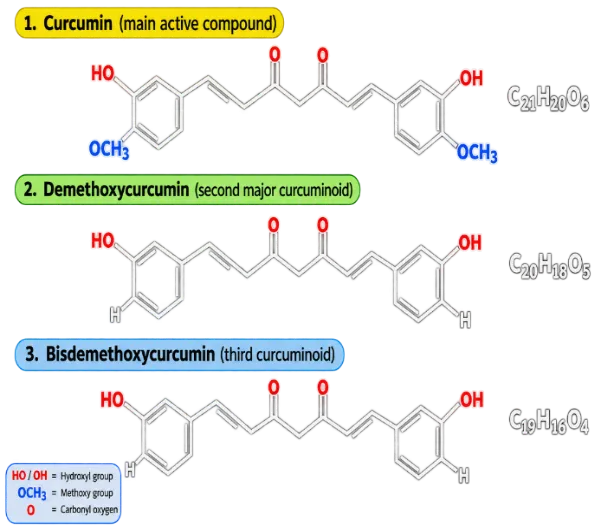
Figure 1: Structure of Curcumin and Other Associated Compounds
Geographical Source
Turmeric is widely cultivated in the following countries:
Table 1: Characteristic Features of Curcumin
| Characteristic | Description |
|---|---|
| Colour | Bright yellow to orange-yellow |
| Odour | Characteristic, aromatic and slightly spicy |
| Taste | Slightly bitter, pungent and spicy |
| Appearance | Yellow-orange crystalline powder |
| Texture | Fine powder |
| Solubility | Poorly soluble in water; more soluble in alcohol and some organic solvents |
| Nature | Polyphenolic compound |
| Melting point | Approximately 183°C |
| Stability | Sensitive to light, heat and alkaline conditions |
Uses of Curcumin
Ingredients/Excipients Used in Herbal Gel
A) Active Ingredient
1.Curcumin:
Used in concentrations ranging from 0.1% to 5% w/w, depending on the therapeutic purpose.
Curcumin is the main active compound found in turmeric (Curcuma longa), a plant belonging to the Zingiberaceae family. It has anti-inflammatory and antioxidant properties that help reduce inflammation and protect cells from damage. In an herbal gel, curcumin is used to help manage skin inflammation and support wound healing. However, curcumin does not dissolve well in water and may not easily pass through the skin, so a suitable gel formulation is needed to improve its effectiveness. [1-4, 16-18, 21, 22]
B) Excipient’s
Excipients are substances added to an herbal gel to improve its thickness, stability, spread ability, and ease of application. In a curcumin-based anti-inflammatory gel, each excipient has a specific function.
Functions of Excipients
Improve stability: Increase the shelf life of medicines.
Improve solubility: Help the drug dissolve properly.
Improve taste: Make medicines more palatable.
Improve appearance: Give suitable colour, shape, and texture.
Control drug release: Help in immediate or sustained drug release.
Improve absorption: Help the drug get absorbed into the body.
Prevent microbial growth: Protect formulations from microorganisms.
Improve manufacturing: Make tablets, capsules, and other dosage forms easier to prepare. [1,2]
| Excipient category | Examples | Main function |
|---|---|---|
| Gelling agents | Carbopol, HPMC, sodium CMC | Provide thickness and consistency |
| Humectants | Glycerin, propylene glycol | Retain moisture |
| Preservatives | Methylparaben, propyl paraben | Prevent microbial growth |
| Penetration enhancers | Propylene glycol, ethanol | Support skin penetration |
| pH adjusters | TEA, sodium hydroxide, citric acid | Adjust pH |
| Solvents | Purified water, ethanol | Dissolve or disperse ingredients |
| Stabilizers | Suitable antioxidants | Help maintain stability |
Table. 2. List of Excipients
1. Gelling Agents
Gelling agents are used to make the gel thick, smooth, and easy to apply to the skin.
Examples: Carbopol 934, Carbopol 940, HPMC (hydroxypropyl methylcellulose), and sodium CMC (sodium carboxymethyl cellulose).
2. Humectants
Humectants help retain moisture in the gel and prevent the skin from becoming dry.
Examples: Glycerin and propylene glycol.
3. Preservatives
Preservatives help prevent the growth of bacteria and fungi, improving the microbial quality and storage life of the gel.
Examples: Methylparaben, propylparaben, and other suitable preservatives.
4. Penetration Enhancers
Penetration enhancers help the active ingredient pass through the outer layer of the skin. Their suitability and concentration must be carefully evaluated.
Examples: Propylene glycol, ethanol, and certain other skin-compatible enhancers. [3-5, 7, 8]
5. pH Adjusters
pH adjusters help maintain the required pH of the gel for suitable consistency, stability, and skin compatibility. Examples: Triethanolamine (TEA), sodium hydroxide, and citric acid, depending on the formulation.
6. Solvents
Solvents help dissolve or disperse the active ingredient and other components in the formulation. Curcumin has poor water solubility, so a suitable solvent system may be needed.
Examples: Purified water, ethanol, and propylene glycol. [11, 15, 16]
7. Stabilizers
Stabilizers help maintain the physical and chemical stability of the gel during storage and reduce unwanted changes in its appearance or consistency.
Examples: Suitable antioxidants, such as sodium metabisulfite or tocopherol, depending on the formulation and compatibility. [2-4, 7]
Advantages of Herbal Anti-inflammatory Gel
• Easy application
• Localized drug action
• Reduced systemic exposure
• Good patient acceptability
• Potentially fewer systemic adverse effects
Limitations of Herbal Anti-inflammatory Gel
Future Perspectives of Herbal Curcumin Gel
1. Improved Drug Delivery: Future research may help improve the delivery of curcumin into the skin and increase its effectiveness. [3-5,7,8]
2. Enhanced Stability: New formulation techniques may protect curcumin from light, heat, and degradation, improving its stability and shelf life. [2-4,7]
3. Advanced Formulations: Nanogels, nanoemulgels, liposomal gels, and other advanced delivery systems may improve curcumin's solubility, stability, and skin penetration. [2-5,7,8]
4. Wound Healing: Curcumin gel may have potential applications in wound healing due to its reported anti-inflammatory and antioxidant properties. [17-25]
5. Treatment of Skin Diseases: Further studies may explore its use in inflammatory skin conditions, acne, and other skin disorders. [3, 5-7]
6. Antimicrobial Applications: Research may investigate the potential of curcumin gel against certain microorganisms and its possible role in managing skin infections. [10-12]
7. Use of Natural Ingredients: Future formulations may combine curcumin with suitable herbal ingredients to develop effective topical products. [1-4]
8. Controlled Drug Release: Advanced gel formulations may provide sustained and controlled release of curcumin at the application site.
9. Clinical Studies: More clinical trials are needed to confirm the safety, effectiveness, suitable dosage, and long-term use of curcumin gel in humans. [6,7,13]
10. Commercial Development: With further research, quality control, and regulatory approval, curcumin gel may have potential for development into affordable herbal skincare and wound-care products.
CONCLUSION:
The findings of this review show that curcumin herbal gel is a promising formulation for topical drug delivery because curcumin has anti-inflammatory, antioxidant, and wound-healing properties. The reviewed studies suggest that gel formulations may help deliver curcumin directly to the affected area and reduce some of its limitations, such as poor water solubility, low stability, and limited bioavailability. The use of suitable polymers and other ingredients can improve the gel's thickness, spreadability, drug release, and stability. Curcumin gel may be useful in skin treatments, wound healing, and dental care. However, further research and clinical trials are needed to confirm its safety, effectiveness, and long-term benefits. Overall, curcumin herbal gel has good potential as a topical treatment, but more scientific evidence is needed to confirm its benefits in clinical use. [1-4, 7, 8, 11, 13, 16-18, 20-22, 25]
The selection of appropriate excipients plays an important role in preparing a stable and effective herbal gel. Gelling agents such as Carbopol 934P and Carbopol 940P help provide suitable thickness and consistency, while humectants, preservatives, solvents, penetration enhancers, and pH adjusters improve the overall quality of the formulation. Proper evaluation of parameters such as drug content, viscosity, spreadability, pH, drug-excipient compatibility, in-vitro drug diffusion, and stability is also necessary to ensure the quality and performance of the prepared gel. [6, 13, 25]
REFERENCES


Siddharth D. Dahibhate, Mahadev D. Mundhe, Dr. Sampat D. Navale, Formulation and Evaluation of Curcumin-Based Topical Gel for Anti-Inflammatory Activity, Int. J. Sci. R. Tech., 2026, 3 (11), 1067-1073. https://doi.org/10.5281/zenodo.24464320
 10.5281/zenodo.24464320