We use cookies to ensure our website works properly and to personalise your experience. Cookies policy
Department of Pharmacognosy, Sree Abirami College of Pharmacy, Coimbatore, Tamil Nadu, India
Cutaneous fungal infections continue to be a widespread dermatological problem, and the rising resistance of pathogenic fungi to synthetic antimycotics, together with their attendant side effects, has renewed interest in plant-derived alternatives. The present work describes the development and evaluation of a polyherbal topical gel incorporating hydro-ethanolic extracts of Leucas aspera (Lamiaceae) and Psidium guajava (Myrtaceae), two species with a long-standing ethnomedicinal record of antimicrobial and wound-healing use. Authenticated plant material was shade-dried, powdered and subjected to cold maceration in 70% ethanol, giving extractive yields of 30.11% w/w for L. aspera and 28.22% w/w for P. guajava. Preliminary phytochemical screening of both extracts indicated the presence of alkaloids, flavonoids, phenolic compounds, tannins, saponins, terpenoids and glycosides. Four gel bases (F1-F4) differing only in Carbopol 940 content were prepared and compared for appearance, homogeneity, pH, viscosity, spreadability and extrudability; formulation F4, containing 1.25% w/v Carbopol, gave the most balanced physicochemical profile (pH 5.8, viscosity 5000 cP, spreadability 7.2 g·cm/s) and was selected as the optimized batch. When tested by the agar-well diffusion method against Aspergillus niger and Aspergillus flavus, F4 produced dose-related zones of inhibition of 11-16 mm, performing comparably to a 25 µg fluconazole disc, with A. flavus showing greater susceptibility than A. niger. These findings suggest that the L. aspera-P. guajava combination gel is a stable, skin-compatible and pharmacologically active candidate for topical antifungal use.
Superficial fungal infections of the skin, hair and nails are among the most frequently encountered dermatological complaints worldwide, with dermatophytes, yeasts and moulds accounting for the majority of cases. Factors such as a hot and humid climate, occlusive clothing, excessive perspiration, poor hygiene, immunosuppression and the indiscriminate use of antibiotics have all contributed to a steady rise in the prevalence of these infections. Synthetic antifungal agents, although effective, are increasingly limited by the emergence of resistant fungal strains, recurrent relapses, and adverse effects ranging from local irritation to hepatotoxicity on prolonged systemic use. This has prompted a search for safer, cost-effective and sustainable alternatives, with medicinal plants offering an attractive resource because of their multi-component, multi-target mode of action and generally favourable safety profile.
Herbal drugs owe their therapeutic versatility to a wide array of secondary metabolites-flavonoids, tannins, alkaloids, terpenoids and phenolic acids-that individually and synergistically interfere with fungal cell membrane integrity, ergosterol biosynthesis and other essential metabolic pathways. Polyherbal formulations, in which two or more plant extracts are combined, are often reported to produce an additive or synergistic therapeutic response that exceeds the activity of either component alone, while simultaneously broadening the spectrum of action.
Leucas aspera (Willd.) Link, a member of the family Lamiaceae and commonly known as Thumbai, is a widely distributed wayside herb of peninsular India traditionally applied to wounds, skin eruptions and insect bites. Its aerial parts are reported to contain flavonoids, phenolics, tannins, saponins, terpenoids and triterpenoids such as oleanolic and ursolic acid, constituents that underlie its documented antimicrobial, anti-inflammatory, antioxidant and wound-healing properties. Psidium guajava L. (Myrtaceae), the common guava, is similarly valued in folk medicine; its leaves are rich in flavonoids such as quercetin and guaijaverin, tannins and polyphenolic acids, and have been repeatedly shown to possess broad-spectrum antimicrobial, antidiarrhoeal and antioxidant activity.
Topical gels are a preferred dosage form for the management of localized cutaneous infections because they are non-greasy, easily spreadable, cosmetically acceptable, and deliver the active constituents directly to the site of infection while minimizing systemic exposure. Against this background, the present study was undertaken to develop a polyherbal antifungal gel combining ethanolic extracts of L. aspera and P. guajava, and to evaluate its physicochemical characteristics and in-vitro antifungal efficacy against Aspergillus niger and Aspergillus flavus, with the broader aim of validating a safe and effective plant-based topical option for superficial fungal infections.
AIM AND OBJECTIVES
The study aimed to formulate and evaluate a polyherbal antifungal topical gel using extracts of Leucas aspera and Psidium guajava, with the specific objectives of
(i) preparing the two plant extracts by a suitable extraction method (ii) incorporating them into an appropriate gel base, and (iii) evaluating the formulated gel for physicochemical parameters-appearance, homogeneity, pH, viscosity, spreadability and extrudability-and for in-vitro antifungal activity.
II. MATERIALS AND METHODS
Collection and Authentication of Plant Material
Fresh aerial parts of Leucas aspera and fresh leaves of Psidium guajava were collected locally and identified and authenticated by the Botanical Survey of India, Southern Regional Centre, Coimbatore (authentication reference nos. BSI/SRC/5/23/2025-26/Tech./1092 for L. aspera and BSI/SRC/5/23/2025-26/Tech./1094 for P. guajava). Voucher specimens were preserved in the departmental herbarium. The collected material was washed under running tap water followed by distilled water to remove adhering soil and debris, shade-dried at ambient temperature away from direct sunlight to protect thermolabile constituents, and then mechanically ground to a coarse powder that was passed through sieve no. 60 and stored in airtight, amber-coloured containers until further use.
Preparation of Extracts
The powdered plant materials were extracted separately by the cold maceration technique using 70% v/v ethanol as solvent. Each powder was soaked in the solvent for 48-72 hours at room temperature with intermittent shaking, after which the macerate was filtered successively through muslin cloth and Whatman filter paper. The filtrates were concentrated under reduced pressure on a rotary evaporator at a controlled temperature, and the resulting semi-solid extracts were dried, weighed and stored separately in airtight labelled containers. Percentage yield was calculated as the ratio of the weight of dried extract to the weight of powdered plant material taken, expressed as a percentage.
Preliminary Phytochemical Screening
Both extracts were subjected to standard qualitative tests to detect the major phytoconstituent classes: alkaloids (Dragendorff's test), flavonoids (alkaline reagent test), tannins (ferric chloride test), saponins (foam test), terpenoids (Salkowski test), phenolic compounds (ferric chloride test), anthraquinone glycosides (Borntrager's test), steroids (Liebermann-Burchard test), lipids (Sudan III test), amino acids (ninhydrin test) and proteins (biuret test), following conventional phytochemical procedures.
Formulation of the Polyherbal Gel
Carbopol 940 was selected as the gelling agent, and four formulations (F1-F4) were prepared by varying its concentration while keeping the quantity of extract and other excipients constant, as summarised in Table 1.
|
Ingredient |
F1 |
F2 |
F3 |
F4 |
|
Leucas aspera extract |
1 g |
1 g |
1 g |
1 g |
|
Psidium guajava extract |
1 g |
1 g |
1 g |
1 g |
|
Carbopol 940 |
0.5 g |
0.75 g |
1 g |
1.25 g |
|
Propylene glycol |
5 mL |
7.5 mL |
10 mL |
12.5 mL |
|
Methyl paraben |
0.1 g |
0.1 g |
0.1 g |
0.1 g |
|
Triethanolamine |
0.5 mL |
0.5 mL |
0.5 mL |
0.5 mL |
|
Glycerin |
5 mL |
5 mL |
5 mL |
5 mL |
|
Ethanol |
2 mL |
2 mL |
2 mL |
2 mL |
|
Distilled water |
q.s. |
q.s. |
q.s. |
q.s. |
Table 1: Composition of polyherbal antifungal gel formulations (F1-F4)
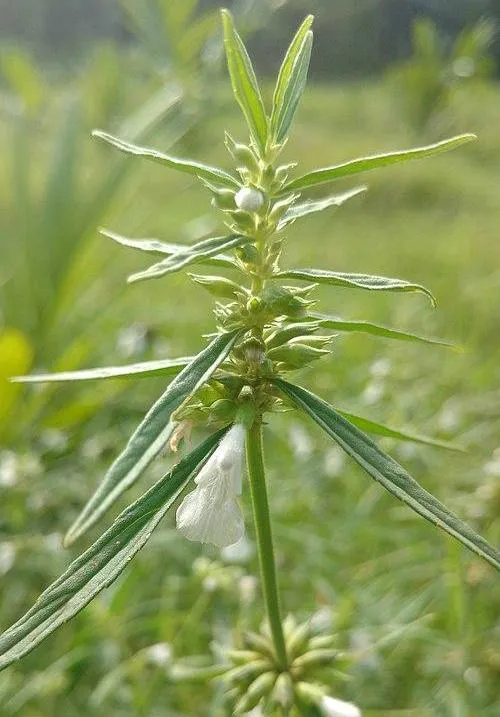
Fig. 1: Leucas aspera (aerial parts with flower)
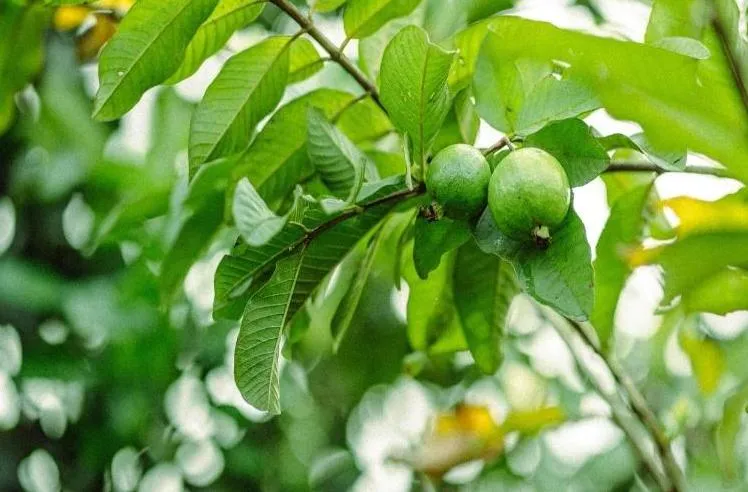
Fig. 2: Psidium guajava (leaves and fruit)
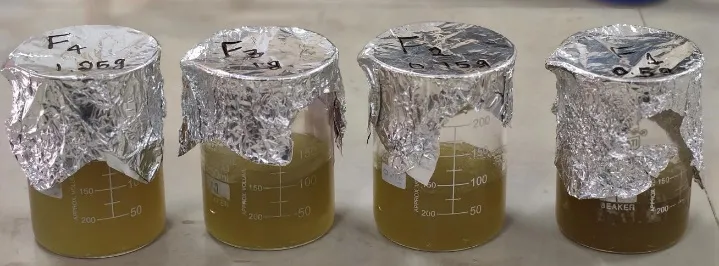
Fig. 3: Prepared polyherbal gel formulations F1-F4 (left to right)
Carbopol 940 was dispersed in about 60-70% of the required distilled water and allowed to hydrate for 30-60 minutes, after which it was stirred to a uniform dispersion. The two plant extracts were separately dissolved/dispersed in propylene glycol, and glycerin was added to improve moisturizing and spreading properties. Methylparaben, pre-dissolved in a small quantity of propylene glycol, was incorporated as preservative. This extract mixture was blended into the hydrated Carbopol dispersion with continuous gentle stirring, the volume was made up with distilled water, and triethanolamine was added dropwise until a gel of suitable consistency and skin-compatible pH was obtained. The finished gel was allowed to stand to allow entrapped air to escape before evaluation.
Evaluation of the Formulated Gel
The four gels were assessed for physical appearance (colour, odour, texture, clarity, phase separation), homogeneity (visual and tactile inspection for lumps/coarse particles), and grittiness. pH was measured with a calibrated digital pH meter on a 1% w/v aqueous dispersion of the gel. Viscosity was determined with a Brookfield viscometer at a fixed spindle speed and temperature. Spreadability was calculated from the time taken for a fixed weight to separate two glass slides enclosing a measured quantity of gel over a set distance, using S = M × L / T, where S is spreadability, M the weight applied, L the distance moved, and T the time taken. Extrudability was judged from the ease with which gel could be expressed from a collapsible tube under a fixed load, and washability from the ease of removal of the applied gel with water.
Selection of the Optimized Formulation
The four batches were compared across all the above parameters; F4 (1.25% w/v Carbopol 940) showed the most favourable overall balance of consistency, spreadability and extrudability and was therefore selected as the optimized formulation for antifungal screening.
In-vitro Antifungal Activity
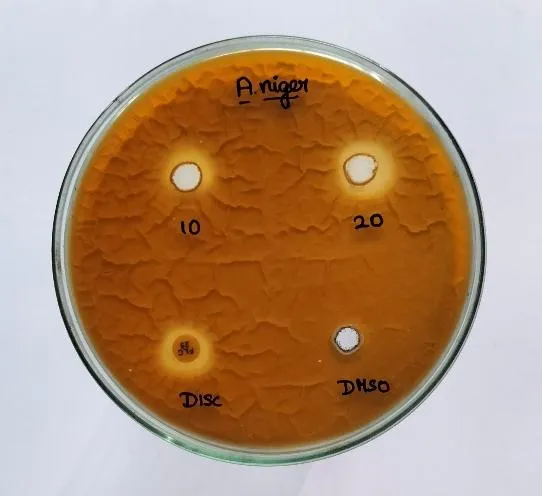
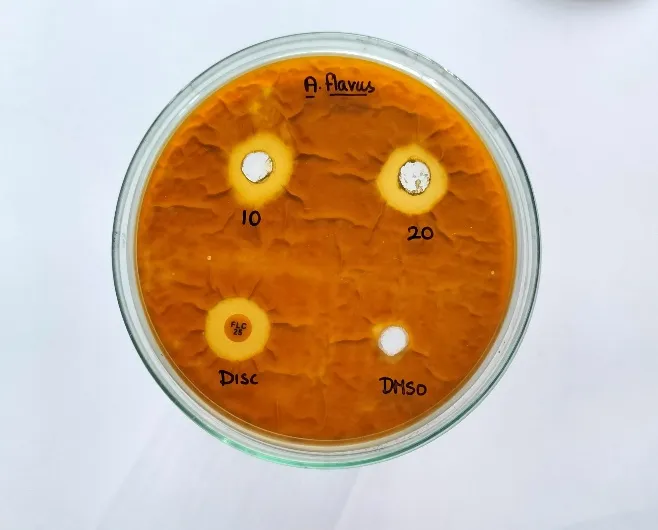
Antifungal activity of the optimized gel (F4) was assessed by the agar-well diffusion method against Aspergillus niger and Aspergillus flavus. Malt agar medium (45 g/L) was sterilized by autoclaving (121°C, 15 psi, 15 min) and poured into sterile Petri plates. After solidification, 80 µL of an actively growing fungal suspension was spread uniformly over each plate with a sterile cotton swab. Wells were bored with a sterile cork borer, and 10 µL and 20 µL volumes of the gel were introduced into separate wells; a 25 µg fluconazole disc served as the standard and DMSO as the negative control. Plates were incubated at 30°C for 2-3 days, after which the diameter of the zone of inhibition around each well was measured in millimetres using a Himedia zone scale.
III. RESULTS AND DISCUSSION
|
Plant Extract |
Solvent (Ethanol:Water) |
Powder Taken (g) |
Extract Obtained (g) |
% Yield |
|
Leucas aspera |
308:132 mL |
44 |
13.25 |
30.11% |
|
Psidium guajava |
350:150 mL |
50 |
14.11 |
28.22% |
Table 2: Extractive yield of Leucas aspera and Psidium guajava (70% ethanol, maceration)
|
Phytoconstituent |
Leucas aspera |
Psidium guajava |
||
|
Alkaloids |
+ |
+ |
||
|
Flavonoids |
+ |
+ |
||
|
Phenols |
+ |
+ |
||
|
Tannins |
+ |
+ |
||
|
Saponins |
+ |
+ |
||
|
Terpenoids |
+ |
+ |
||
|
Glycosides |
+ |
+ |
||
|
Amino acids |
+ |
+ |
||
|
Proteins |
- |
- |
||
|
Steroids |
- |
- |
||
|
Lipids |
- |
- |
||
|
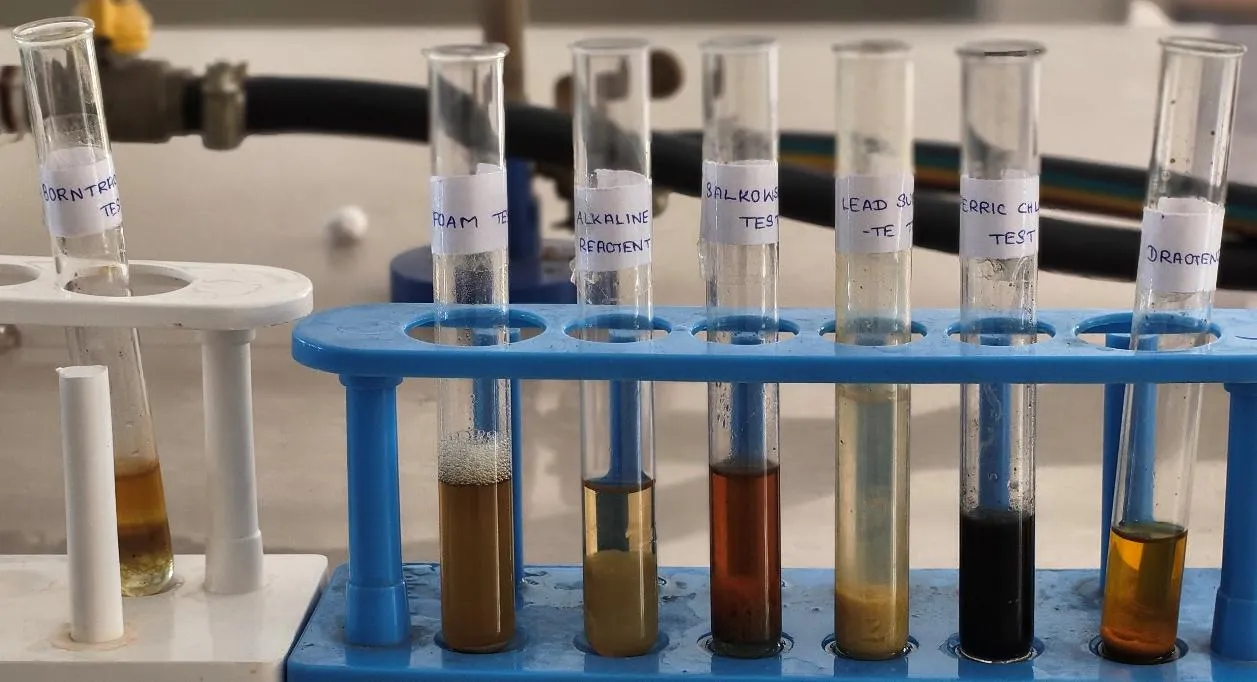
Fig. 4: Phytochemical screening of L. aspera extract |
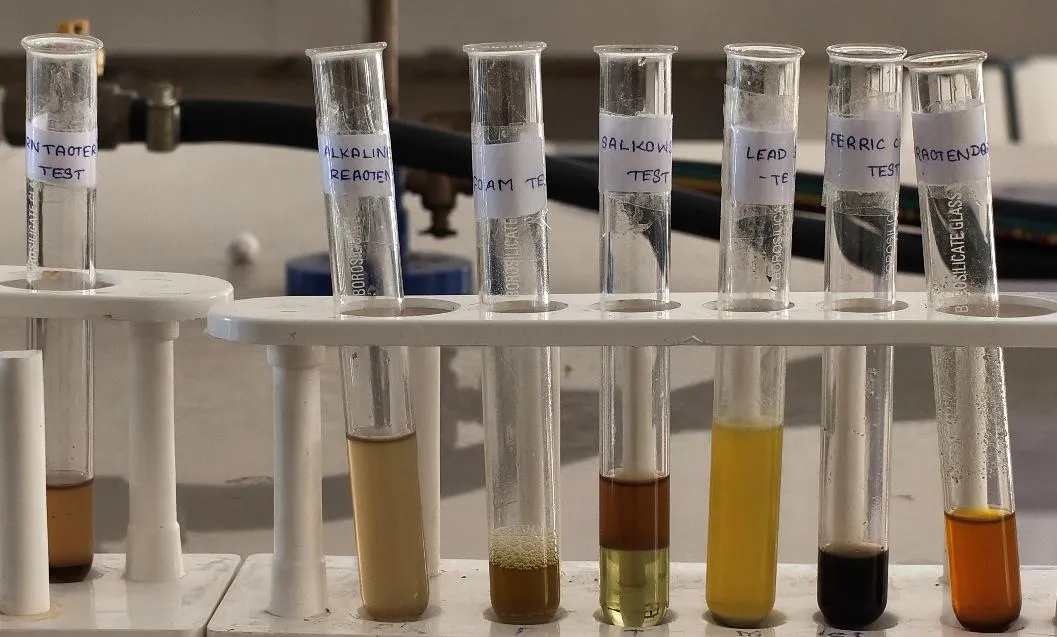
Fig. 5: Phytochemical screening of P. guajava extract |
|
||
Table 3: Preliminary phytochemical screening of the two extracts (+ present, - absent)
|
Parameter |
Result (Formulation F4) |
|
Colour |
Pale green |
|
Odour |
Pleasant, characteristic |
|
Appearance |
Smooth and elegant |
|
Clarity |
Clear |
|
Homogeneity |
Good |
|
Lumps |
Absent |
|
Air bubbles |
Absent |
|
Spreadability |
7.2 g·cm/sec |
|
Extrudability |
Good |
|
Viscosity |
5000 cP |
|
Washability |
Easily washable |
|
Grittiness |
Absent |
|
pH |
5.8 |
Table 4: Physicochemical evaluation of the optimized formulation (F4)
|
Test Organism |
10 µL Gel |
20 µL Gel |
Fluconazole Disc (25 µg) |
DMSO |
|
|
Aspergillus niger |
11 mm |
13 mm |
10 mm |
Nil |
|
|
Aspergillus flavus |
14 mm |
16 mm |
13 mm |
Nil |
|
|
Fig. 6: Agar-well diffusion assay - Aspergillus niger |
Fig. 7: Agar-well diffusion assay - Aspergillus flavus |
||||
Table 5: Zone of inhibition (mm) of the optimized gel (F4) against Aspergillus niger and Aspergillus flavus
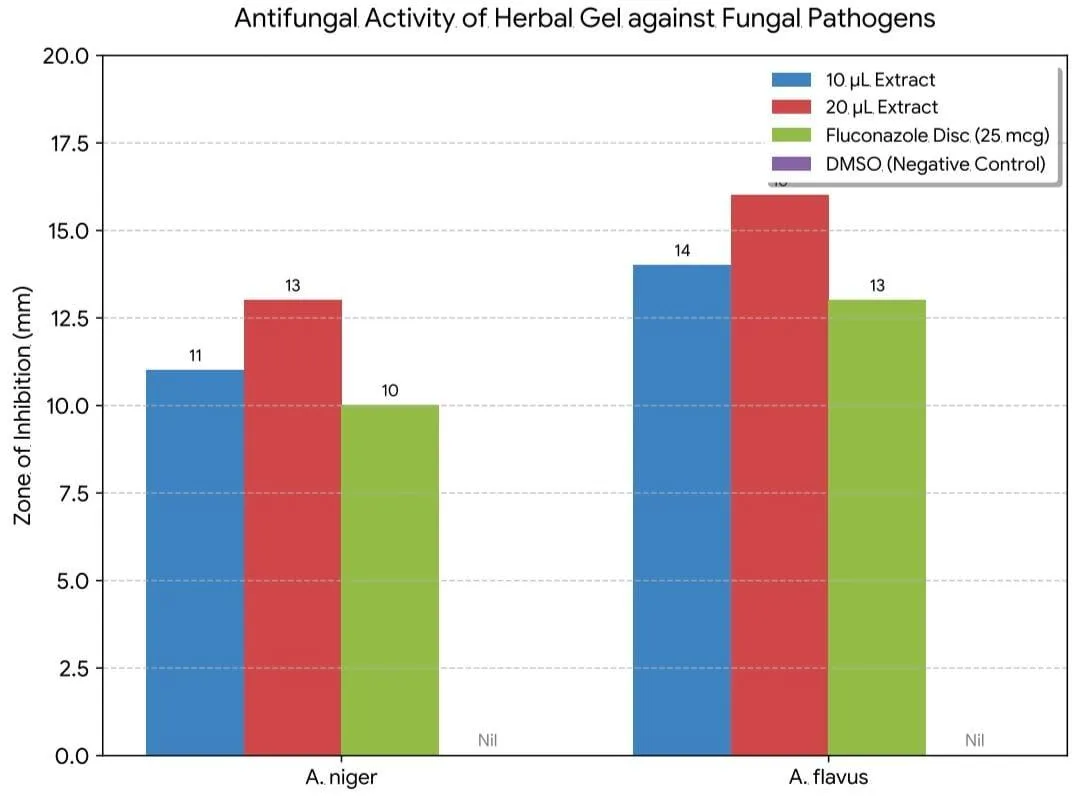
Fig. 8: Zone of inhibition of the optimized gel (F4) against A. niger and A. flavus
Cold maceration in 70% ethanol furnished extractive yields of 30.11% w/w for L. aspera and 28.22% w/w for P. guajava (Table 2), indicating that the hydro-ethanolic solvent system was efficient at solubilising the polar-to-moderately-polar metabolites typically implicated in antifungal action.
Phytochemical screening (Table 3) confirmed the presence of alkaloids, flavonoids, phenolic compounds, tannins, saponins, terpenoids, glycosides and amino acids in both extracts, while proteins, steroids and lipids were not detected. The consistent presence of flavonoids, tannins and terpenoids in both plants is noteworthy, since these classes are widely reported to compromise fungal cell membrane integrity and interfere with ergosterol biosynthesis, and their co-occurrence in the two extracts provides a plausible chemical basis for an additive or synergistic antifungal effect in the combined formulation.
All four gel bases (Table 1) were physically acceptable, but they differed in consistency as the Carbopol 940 concentration was increased from 0.5% to 1.25% w/v. Formulation F4 gave the best overall combination of viscosity, spreadability and extrudability and was accordingly selected as the optimized batch. On detailed evaluation (Table 4), F4 was a pale green, smooth, clear gel free of lumps, air bubbles and grittiness, with good homogeneity and easy washability. Its spreadability (7.2 g·cm/s) and extrudability indicate suitability for convenient topical application, while a viscosity of 5000 cP is consistent with a semi-solid preparation that will remain at the site of application without excessive run-off. The measured pH of 5.8 lies close to the normal physiological pH of human skin (approximately 4.5-6.0), suggesting a low likelihood of irritation on repeated topical use.
In the agar-well diffusion assay (Table 5), formulation F4 produced clear, concentration-dependent zones of inhibition against both test organisms. At the lower test volume (10 µL) the zones were 11 mm against A. niger and 14 mm against A. flavus, increasing to 13 mm and 16 mm respectively at 20 µL. These values compare favourably with the 25 µg fluconazole standard, which produced zones of 10 mm and 13 mm against the same organisms, while the DMSO control produced no zone of inhibition, confirming that the observed activity originated from the herbal constituents of the gel rather than the vehicle. A. flavus was consistently more susceptible than A. niger across both test volumes, and the increase in inhibition with increasing gel volume points to a concentration-dependent antifungal effect, plausibly arising from the combined action of the flavonoid, tannin and terpenoid constituents contributed by both plant extracts.
Taken together, these results indicate that combining L. aspera and P. guajava extracts in a Carbopol-based gel yields a stable, cosmetically acceptable and skin-compatible topical preparation with antifungal efficacy approaching that of a standard synthetic agent, while offering the additional safety and acceptability generally associated with herbal formulations.
CONCLUSION
A polyherbal antifungal topical gel combining Leucas aspera and Psidium guajava extracts was successfully formulated and optimized using Carbopol 940 as the gelling agent. The optimized formulation (F4) exhibited satisfactory physicochemical characteristics-including a skin-compatible pH of 5.8, appropriate viscosity, and good spreadability, extrudability and homogeneity-along with a rich phytochemical profile encompassing flavonoids, tannins, terpenoids and phenolic compounds known to contribute to antifungal action. The formulation displayed significant, concentration-dependent antifungal activity against Aspergillus niger and Aspergillus flavus, comparable to standard fluconazole, supporting a synergistic contribution from the two plant extracts. These findings substantiate the traditional antimicrobial use of both plants and identify the developed gel as a promising, safe and effective natural alternative for the topical management of superficial fungal infections; further work on long-term stability, dermal irritation and clinical efficacy is warranted before therapeutic application.
REFERENCES

Kavidha A.*, Nivetha S., Archana M., Vishwa Ragavan M., Swetha T., Mohamed Riswan N., Formulation And Evaluation Of Polyherbal Antifungal Topical Gel, Int. J. Sci. R. Tech., 2026, 3 (10), 423-430. https://doi.org/10.5281/zenodo.23210246
 10.5281/zenodo.23210246