

We use cookies to ensure our website works properly and to personalise your experience. Cookies policy
Department of Computer Science and Engineering, MGM University, Chhatrapati Sambhajinagar, Maharashtra, India
Diabetes management depends heavily on regular blood glucose monitoring, but conventional measurement methods generally require invasive or minimally invasive procedures that may cause discomfort, expense, and reduced user compliance. This paper presents the design of a hardware-based non-invasive glucose measurement research prototype that combines multi-spectral optical sensing, photoplethysmography (PPG), bioimpedance, temperature measurement, pressure sensing, inertial motion detection, and ambient-light compensation. The proposed device is based on an ESP32-S3 microcontroller and integrates an AS7265x 18-channel multi-spectral sensor, MAX86176 PPG sensor, AD5940 bioimpedance analog front end, MAX30205 temperature sensor, FSR402 pressure sensor, ICM-42688 inertial measurement unit, and TSL2591 ambient-light sensor. The collected multi-modal signals are processed using preprocessing, feature extraction, feature fusion, and personalized machine learning techniques. Random Forest and XGBoost are considered as baseline predictive models, with per-user calibration intended to address individual variation in skin properties, tissue characteristics, and physiological conditions. A reference glucometer is used during calibration and validation sessions to obtain paired reference glucose measurements. The proposed research methodology emphasizes measurement quality, motion and contact-artifact rejection, personalized calibration, and clinically informed evaluation using Mean Absolute Relative Deviation (MARD) and Clarke or Consensus Error Grid analysis. The proposed device is positioned strictly as a research prototype and not as a certified diagnostic or medical-reference instrument. The main contribution of the project is the integration of complementary sensing modalities into an accessible hardware platform for investigating non-invasive glucose estimation.
Diabetes mellitus is a major healthcare challenge requiring continuous monitoring and management of blood glucose levels. Effective glucose monitoring is essential for identifying abnormal glucose conditions and supporting timely intervention. Conventional glucose measurement commonly relies on finger-prick blood sampling and enzymatic test strips. Although these techniques are widely used, repeated invasive measurements can result in discomfort, additional consumable cost, and reduced willingness to measure frequently.
Continuous glucose monitoring systems have improved the availability of glucose information by providing more frequent measurements, but many existing systems remain minimally invasive because they depend on subcutaneous or interstitial sensing components. These limitations have motivated extensive research into non-invasive glucose measurement using optical, electrical, thermal, and electromagnetic sensing techniques.
Research in non-invasive glucose sensing has explored near-infrared and mid-infrared spectroscopy, photoplethysmography, bioimpedance, optical spectroscopy, and combinations of physiological signals. However, a major challenge remains the indirect relationship between measured physiological signals and actual glucose concentration. Optical measurements can be influenced by skin characteristics, tissue composition, hydration, perfusion, ambient illumination, and motion. Similarly, electrical measurements may be affected by tissue hydration, temperature, and electrode contact.
Madhuri Kawarkhe and Parminder Kaur investigated machine learning approaches for diabetes prediction using ensemble classifiers and reported an accuracy of 90.62% using a preprocessed PIMA dataset [1]. Although diabetes prediction from clinical variables and non-invasive glucose estimation are different problems, the work demonstrates the potential of machine learning and ensemble techniques in diabetes-related analysis.
The proposed Non-Invasive Glucose Measurement Device addresses the sensing challenge through a hardware-based multi-modal architecture. Instead of relying on a single optical measurement, the system combines multi-spectral optical information with PPG, bioimpedance, temperature, pressure, motion, and ambient-light measurements. The resulting system is designed to investigate whether complementary sensing modalities and personalized machine learning can improve glucose estimation robustness.
The objective of this work is therefore not to claim a clinically certified replacement for a glucometer. Instead, the objective is to design and investigate an accessible research prototype capable of synchronized multi-sensor data acquisition, quality control, feature extraction, personalized machine learning, and quantitative validation against a reference glucose measurement device.
2. Related Work
Non-invasive glucose measurement has been investigated using several sensing mechanisms. Among these, optical spectroscopy has received considerable attention because glucose interacts with electromagnetic radiation at specific wavelengths. However, the strength of glucose-related signals can be small compared with the effects of water, tissue composition, skin characteristics, and other physiological variables.
Lubinski et al. [2] investigated a mid-infrared non-invasive glucose monitor based on a Quantum Cascade Laser and photothermal detection, combined with machine learning and per-patient calibration. Their study demonstrated the feasibility of non-invasive glucose analysis using mid-infrared spectroscopy and photothermal detection. The work also highlights the use of patient-specific models for glucose estimation.
Visible-light PPG techniques represent another research direction. PPG sensors measure variations in blood volume using light absorption and reflection. These signals provide cardiovascular information and can potentially contain features correlated with glucose-related physiological changes. However, PPG is strongly affected by motion, perfusion, skin characteristics, sensor placement, and ambient illumination.
Near-infrared optical systems provide another potential solution because compact LEDs, photodiodes, and spectroscopic sensors can be integrated into portable hardware. Sensors such as the AS7265x provide multiple spectral channels and therefore contain richer information than a single-wavelength optical measurement. Nevertheless, the glucose specificity of near-infrared measurements is lower than that of mid-infrared molecular absorption measurements.
Bioimpedance techniques measure changes in the electrical properties of tissue. Since glucose concentration can influence physiological and electrical properties indirectly, bioimpedance can potentially provide complementary information to optical measurements. However, bioimpedance is sensitive to hydration, temperature, electrode placement, and contact impedance and is therefore more appropriate as a complementary sensing modality rather than a standalone predictor.
Machine learning provides an important mechanism for combining signals from multiple sensors. Different algorithms can learn relationships between measured physiological features and reference glucose values. Ensemble approaches such as Random Forest and XGBoost can model nonlinear relationships while offering relatively practical computational requirements compared with more complex deep learning architectures.
The literature therefore indicates that individual non-invasive sensing modalities have significant limitations. This motivates a sensor-fusion architecture in which multiple signals are collected simultaneously and combined with contextual physiological information.
Table I: Comparison of Non-Invasive Glucose Sensing Approaches
| Sr. No. | Technology / Approach | Main Principle | Major Advantage | Major Limitation |
|---|---|---|---|---|
| 1 | Mid-Infrared Spectroscopy | Molecular absorption characteristics of glucose | Higher molecular specificity | Expensive and difficult to miniaturize |
| 2 | Visible-Light PPG | Optical blood-volume variation | Compact and low-cost sensing | Sensitive to motion and perfusion |
| 3 | Near-Infrared Sensing | Multi-wavelength optical absorption | Portable multi-band sensing | Lower glucose specificity |
| 4 | Bioimpedance | Electrical tissue-property variation | Complementary non-optical information | Sensitive to hydration and electrode contact |
| 5 | Sensor Fusion | Combination of multiple modalities | Can compensate for limitations of individual sensors | Requires synchronized acquisition and robust ML models |
The most important observation from the literature is that sensing specificity and measurement robustness strongly influence glucose-estimation performance. The proposed device therefore uses a combination of optical, electrical, thermal, mechanical, and motion-related measurements.
3. Research Gap
The review of existing approaches identifies several research gaps relevant to an accessible hardware-based system.
First, highly accurate non-invasive approaches may require specialized mid-infrared hardware that is expensive and difficult to reproduce in student or laboratory environments.
Second, compact consumer optical devices generally use a small number of wavelengths and may therefore provide limited information for direct glucose estimation.
Third, many approaches depend on a single sensing modality. A single modality is vulnerable to interference from skin properties, hydration, motion, temperature, sensor contact, and ambient illumination.
Fourth, physiological context such as meal state, time since meal, activity level, and sleep may influence the interpretation of sensor signals but is not always incorporated into the prediction pipeline.
Finally, individual differences between users make generalized glucose estimation difficult. Per-user calibration and adaptive machine learning may therefore be necessary to account for variation in tissue and physiological characteristics.
The proposed device attempts to address these gaps through multi-sensor fusion, signal-quality assessment, synchronized data logging, and personalized calibration.
4. Proposed System
4.1 Design Rationale
The proposed system combines an accessible multi-spectral sensor with complementary physiological sensors. The main sensing unit is based on the AS7265x, which provides 18 spectral channels covering approximately 410–940 nm. PPG data are obtained from the MAX86176, while tissue electrical characteristics are measured using the AD5940 bioimpedance analog front end.
Temperature measurement is included for compensation of temperature-dependent physiological and optical changes. The FSR402 pressure sensor determines whether the user's finger is positioned consistently and whether sufficient contact pressure is available. The ICM-42688 IMU is used to detect motion artifacts, while the TSL2591 provides ambient-light information for environmental compensation.
All sensors are coordinated through the ESP32-S3 microcontroller. The microcontroller manages sensor communication, data synchronization, timestamping, initial feature processing, and storage.
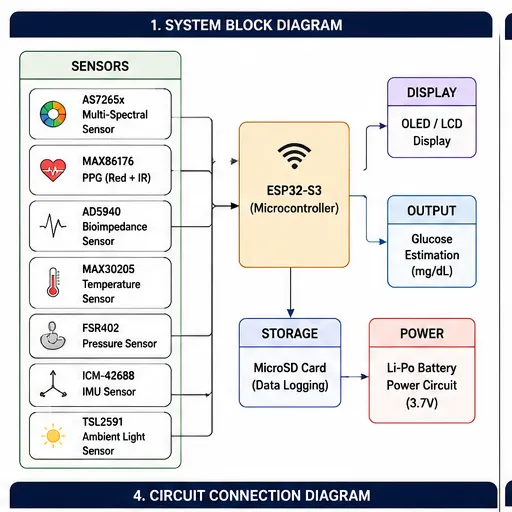
Figure 1: Proposed System Block Diagram of the Non-Invasive Glucose Measurement Device.
4.2 Hardware Architecture
The core hardware components and their functions are summarized in Table II.
Table II: Hardware Components and Functions
| Sr. No. | Component | Function in System |
|---|---|---|
| 1 | SparkFun Triad AS7265x | 18-channel multi-spectral optical sensing |
| 2 | MAX86176 | PPG and optical physiological signal acquisition |
| 3 | AD5940 | Bioimpedance measurement |
| 4 | MAX30205 | Skin temperature measurement and compensation |
| 5 | FSR402 | Finger contact and pressure-quality detection |
| 6 | ICM-42688 | Motion and artifact detection |
| 7 | TSL2591 | Ambient-light measurement and compensation |
| 8 | ESP32-S3 | Sensor control, synchronization, processing, and connectivity |
| 9 | MicroSD Module | Local storage of raw and processed data |
| 10 | Li-Po Battery and Charging Circuit | Portable power supply |
| 11 | Reference Glucometer | Paired ground-truth glucose measurements |
| 12 | 3D-Printed Finger Enclosure | Repeatable sensor positioning and mechanical contact |
The selected components create a heterogeneous sensor platform in which different sensors capture complementary properties of the fingertip. The system is intended to minimize dependence on any single signal and improve the robustness of subsequent machine-learning analysis.
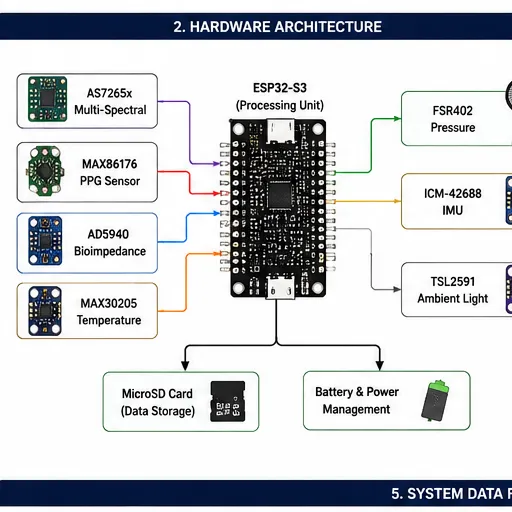
Figure 2: Hardware Architecture of the Proposed Non-Invasive Glucose Measurement Device.
4.3 Sensor Placement
The sensing components are arranged around the fingertip so that optical, electrical, thermal, and mechanical information can be obtained simultaneously.
The optical sensing window is positioned so that the AS7265x and PPG sensor can interact with tissue under controlled geometry. Bioimpedance electrodes are positioned to provide electrical measurements through the finger tissue. The temperature sensor is placed near the measurement region to capture local skin temperature, while the pressure sensor verifies physical contact.
The enclosure is designed to provide repeatable placement of the finger and reduce variation caused by manual repositioning.
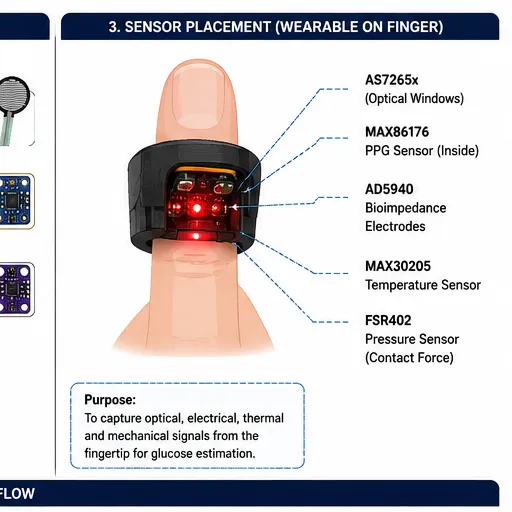
Figure 3: Proposed Sensor Placement Arrangement for Fingertip Measurement.
4.4 Circuit Connection and Data Acquisition
The ESP32-S3 acts as the central processing and communication unit. Each sensor communicates with the microcontroller through the appropriate digital sensor interface. The microcontroller coordinates acquisition and timestamps the resulting samples.
The pressure and IMU sensors provide measurement-quality information in addition to their physiological role. A reading can therefore be rejected or flagged when excessive motion or poor contact is detected. Ambient-light information is simultaneously recorded to identify environmental illumination conditions.
The collected information is stored locally on a MicroSD card, allowing raw sensor data and processed features to be retained for subsequent analysis.
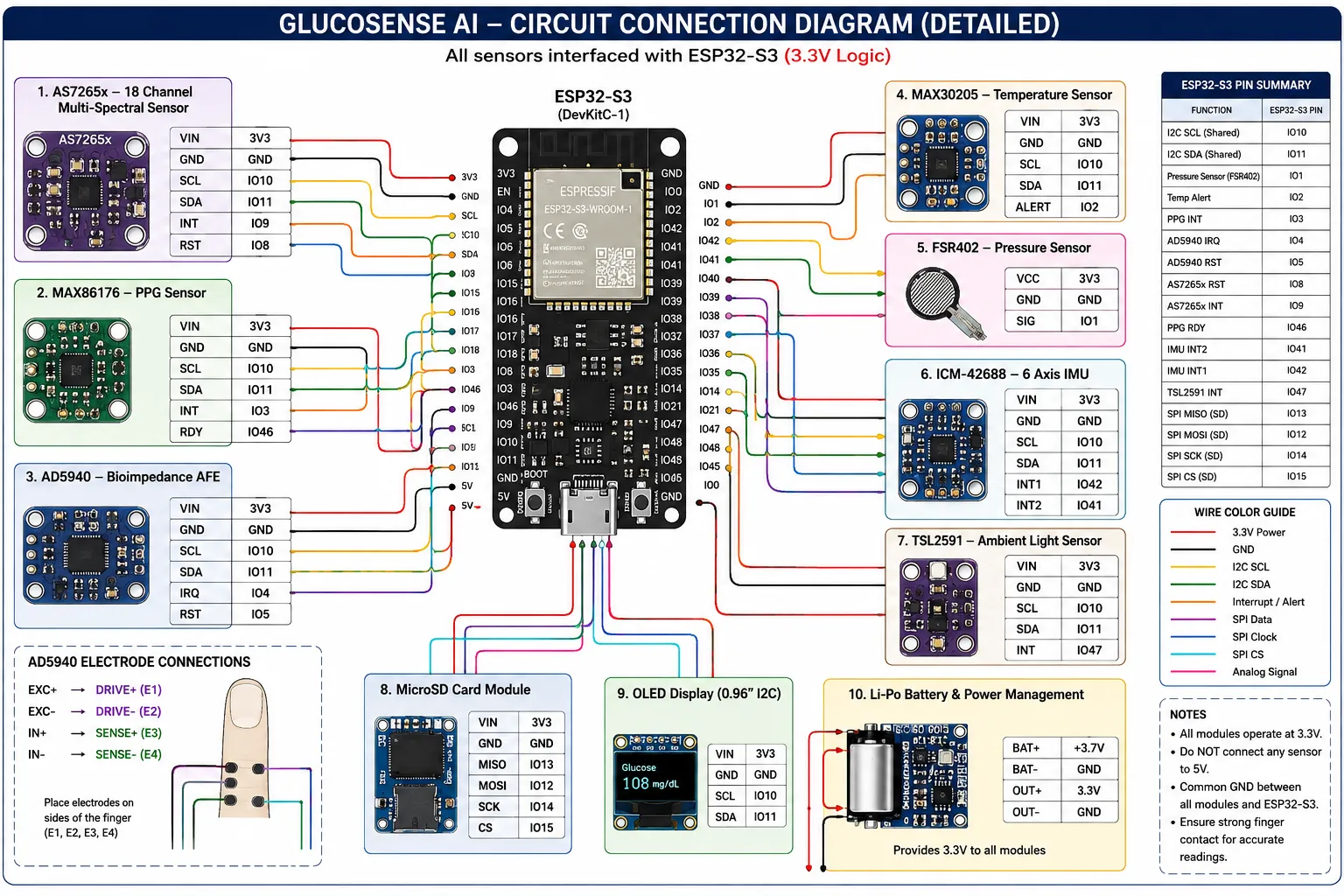
Figure 4: Circuit Connection and Sensor Interfacing Architecture.
4.5 System Data Flow
The overall processing pipeline consists of data acquisition, preprocessing, feature extraction, sensor fusion, machine learning, personalized calibration, and glucose estimation.
During acquisition, all relevant sensor signals are synchronized. The preprocessing stage removes or reduces signal noise and artifacts. Measurements affected by excessive motion or insufficient contact are rejected using the quality-control sensors.
Features are then extracted from individual sensor channels. These features are combined to form a multi-modal representation of the user's physiological state.
The machine-learning model uses these features to estimate glucose concentration. During calibration sessions, reference glucometer measurements are paired with sensor measurements and used to train or adapt the personalized model.
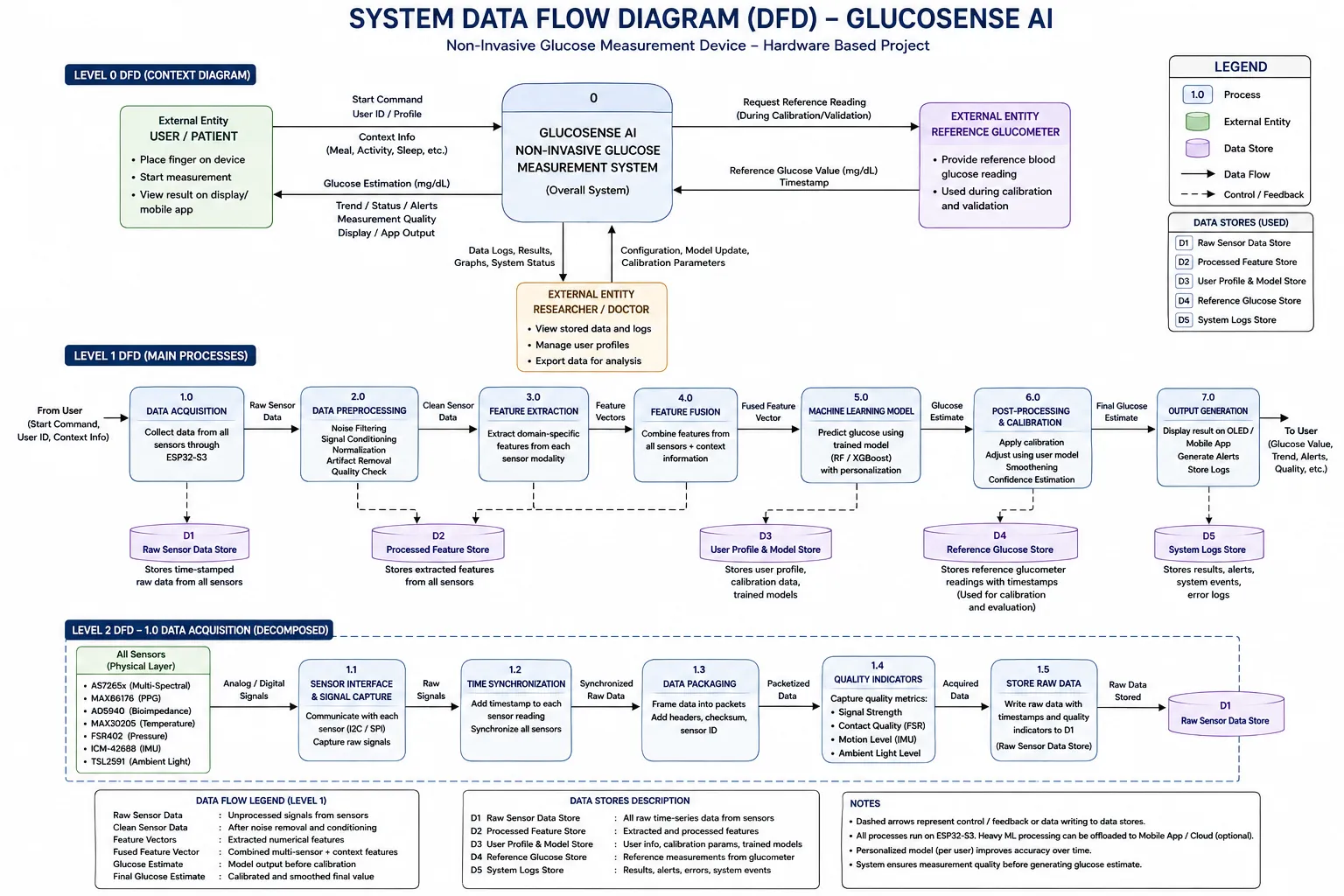
Figure 5: System Data-Flow Pipeline from Sensor Acquisition to Glucose Estimation.
METHODOLOGY
5.1 Data Collection Protocol
The proposed data collection protocol is adapted from research methodologies used for evaluating non-invasive glucose sensing systems. A calibration session begins with baseline measurement conditions, followed by controlled changes in glucose-related physiological state.
For each observation, the sensor platform records synchronized multi-sensor measurements. A reference glucometer reading is recorded at approximately the same time. Contextual information such as meal state, time since meal, activity level, and sleep may also be recorded.
The data collection procedure must be conducted only with informed consent and appropriate supervision. The prototype is not intended to replace medical measurements during the research process.
Measurements associated with poor sensor contact, excessive motion, or clearly corrupted signals are flagged and excluded from model training where appropriate.
5.2 Preprocessing
Raw signals cannot be directly provided to the machine-learning models because they contain sensor-specific noise and environmental variation.
The preprocessing stage therefore includes:
1. Noise filtering.
2. Signal conditioning.
3. Normalization.
4. Detection and removal of motion artifacts.
5. Detection of poor sensor contact.
6. Ambient-light compensation.
7. Synchronization of multi-sensor measurements.
8. Outlier detection.
Signal-quality gating is particularly important for PPG and optical signals because motion and contact variation can significantly alter the measured waveform.
5.3 Feature Extraction
Features are extracted separately from each sensor modality before fusion.
For the AS7265x, spectral-channel ratios and normalized spectral features are considered rather than relying only on raw intensity values.
For PPG, features such as AC/DC ratios, pulse characteristics, heart rate, pulse transit-related measurements, and heart-rate-variability-related features can be derived.
Temperature features include the instantaneous temperature and its temporal variation.
Bioimpedance features include impedance magnitude and phase-related characteristics.
Pressure measurements are used primarily as contact-quality indicators, while IMU measurements are used to detect motion-related artifacts.
Contextual variables such as meal state, elapsed time after a meal, activity level, and sleep can be normalized and incorporated into the feature vector.
5.4 Feature Fusion
After preprocessing and feature extraction, the signals from the different sensor modalities are combined into a single multi-modal feature representation.
The purpose of sensor fusion is to exploit complementary information. For example, optical measurements may vary with skin and illumination conditions, while bioimpedance provides an electrically independent measurement and temperature provides an environmental or physiological correction factor.
The fused feature vector is then supplied to the machine-learning model.
5.5 Machine Learning Model
Random Forest and XGBoost are selected as baseline machine-learning models because they can model nonlinear relationships among heterogeneous features and are practical for structured feature datasets.
The first training stage uses a generalized model to establish a performance baseline. Subsequent development can incorporate personalized models in which each user's historical calibration data are used to adapt the prediction model to individual physiological characteristics.
The personalized approach is motivated by the observation that skin composition, tissue thickness, perfusion, hydration, and other physiological variables differ between individuals.
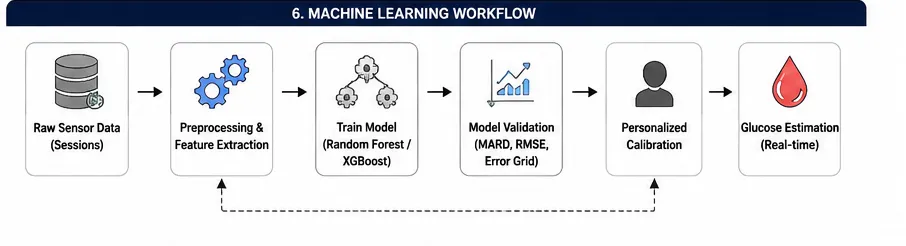
Figure 6: Machine-learning Workflow for Personalized Glucose Estimation.
5.6 Personalized Calibration
During calibration, the system records paired readings from the non-invasive sensor platform and the reference glucometer.
These paired observations are used to establish a relationship between the multi-sensor feature space and the corresponding reference glucose values.
The calibration process is user-specific and may be periodically updated as additional measurements become available. This approach is intended to compensate for inter-person variability that cannot be completely eliminated using hardware alone.
5.7 Validation Methodology
Evaluation should be performed using session-aware validation to reduce information leakage between temporally adjacent observations.
A leave-one-session-out strategy can be applied for each participant, ensuring that the samples from the evaluation session are not used directly during training.
Performance should be quantified using Mean Absolute Relative Deviation (MARD) against reference glucometer measurements.
In addition, prediction results should be visualized using a Clarke Error Grid or Consensus Error Grid to examine the clinical relevance of prediction errors.
The proposed validation strategy is intended to provide a more meaningful evaluation than reporting classification accuracy alone.
6. Limitations
The proposed system has several important limitations.
First, a student-scale or laboratory-scale dataset is expected to be substantially smaller than datasets used in large clinical studies. This limits statistical confidence and generalizability.
Second, near-infrared and visible optical sensing do not provide the same molecular specificity as mid-infrared measurements. Consequently, sensor fusion and machine learning cannot completely eliminate the physical limitations of the sensing modality.
Third, physiological factors such as hydration, skin temperature, perfusion, recent exercise, and tissue characteristics can introduce variability into the measurements.
Fourth, the effectiveness of personalized calibration depends on obtaining a sufficient number of representative paired reference measurements.
Finally, the prototype has not undergone formal regulatory approval or clinical-trial validation and must not be presented as a certified medical diagnostic device.
7. Future Scope
The system can be extended in several directions.
The first direction is increasing the participant population and the number of recorded sessions to improve model generalizability.
The second direction is incorporating additional physiological information, including long-term heart-rate variability trends and potentially biochemical signals such as sweat-based biomarkers.
The third direction is extending the model from point glucose estimation to short-term glucose trend forecasting, including 30-, 60-, and 90-minute prediction horizons.
The fourth direction is investigating advanced sensor technologies, including compact mid-infrared and photonic spectroscopy components, which may offer greater glucose specificity.
Finally, the hardware and personalized machine-learning framework can be subjected to formal clinical evaluation and regulatory testing once sufficient technical and experimental maturity has been achieved.
CONCLUSION
This paper presented the design of a hardware-based non-invasive glucose measurement research prototype integrating multi-spectral optical sensing, photoplethysmography, bioimpedance, temperature measurement, contact-pressure monitoring, inertial motion sensing, and ambient-light compensation.
The proposed ESP32-S3-based architecture provides a centralized platform for synchronized data acquisition, local storage, preprocessing, feature extraction, sensor fusion, and machine-learning-based glucose estimation. Random Forest and XGBoost are proposed as baseline models, while personalized calibration is introduced to address inter-user physiological variation.
The major contribution of the proposed work is the integration of complementary sensing modalities into an accessible research platform and the use of clinically informed validation metrics such as MARD and Clarke or Consensus Error Grid analysis.
At the present stage, the system should be considered a research prototype rather than a clinically validated medical device. Future work will focus on hardware validation, participant-based data collection, personalized model development, quantitative performance evaluation, and eventual clinical validation.
Author Contribution
The authors contributed to the work according to their project responsibilities.
Ganesh Bhagyawant: Hardware architecture, sensor integration, embedded-system development, and hardware experimentation.
Sarthak Salunke: Literature research, data-collection methodology, research analysis, and documentation.
Parth Gohil: Literature research, machine-learning analysis, feature-development support, and experimental analysis.
Rushikesh Jadhav: System architecture, workflow design, system integration, and project coordination.
Funding
No external research funding is reported for this project.
Conflict of Interest
The authors declare no conflict of interest.
REFERENCES



Ganesh Bhagyawant, Sarthak Salunke, Parth Gohil, Rushikesh Jadhav, Non-Invasive Glucose Estimation Device: A Hardware-Based Research, Int. J. Sci. R. Tech., 2026, 3 (10), 1408-1418. https://doi.org/10.5281/zenodo.23761716
 10.5281/zenodo.23761716