

We use cookies to ensure our website works properly and to personalise your experience. Cookies policy
Child Health Nursing Department Driems University, School Of Nursing Kotasahi, Tangi, Cuttack, Odisha 754022
Angelman syndrome (AS) is a rare neurogenetic disorder characterized by developmental delay, intellectual disability, severe impairment of speech, problems with movement and balance, seizures, and a characteristic behavioral pattern. Most cases are associated with loss of function of the maternally inherited UBE3A gene on chromosome 15. Children may also have sleep disturbances, feeding difficulties, microcephaly, frequent smiling or laughter, and a happy, excitable personality. Diagnosis is mainly based on clinical features and confirmed through genetic testing. There is no specific cure for Angelman syndrome; therefore, management is supportive and focuses on controlling seizures, improving mobility and communication, maintaining adequate nutrition, managing sleep problems, and promoting development and quality of life. Nursing care plays an important role in continuous assessment, seizure safety, nutritional support, developmental stimulation, prevention of complications, parent education, and emotional support.
Angelman syndrome is a rare genetic neurological disorder affecting the nervous system and development. It is usually recognized during infancy or early childhood when developmental delay becomes evident. Children with Angelman syndrome commonly have severe speech impairment, intellectual disability, problems with balance and movement, seizures, and characteristic behavioral features1. The condition requires lifelong supportive care. Management involves a multidisciplinary team including pediatricians, neurologists, physiotherapists, speech and language therapists, occupational therapists, dietitians, psychologists, special educators, and nurses. Angelman syndrome is a rare neurogenetic disorder characterized by developmental delay, intellectual disability, severe speech impairment, problems with movement and balance, seizures, and characteristic behavioral features, usually resulting from loss of function of the maternally inherited UBE3A gene in chromosome 15.2,3,4
2. Literature Review
In this review we summarize the clinical and genetic aspects of Angelman syndrome (AS), its molecular and cellular underpinnings, and current treatment strategies. AS is a neurodevelopmental disorder characterized by severe cognitive disability, motor dysfunction, speech impairment, hyperactivity, and frequent seizures. AS is caused by disruption of the maternally expressed and paternally imprinted UBE3A, which encodes an E3 ubiquitin ligase. Four mechanisms that render the maternally inherited UBE3A nonfunctional are recognized, the most common of which is deletion of the maternal chromosomal region 15q11-q13. Remarkably, duplication of the same chromosomal region is one of the few characterized persistent genetic abnormalities associated with autistic spectrum disorder, occurring in >1-2% of all cases of autism spectrum disorder. While the overall morphology of the brain and connectivity of neural projections appear largely normal in AS mouse models, major functional defects are detected at the level of context-dependent learning, as well as impaired maturation of hippocampal and neocortical circuits. While these findings demonstrate a crucial role for ubiquitin protein ligase E3A in synaptic development, the mechanisms by which deficiency of ubiquitin protein ligase E3A leads to AS pathophysiology in humans remain poorly understood. However, recent efforts have shown promise in restoring functions disrupted in AS mice, renewing hope that an effective treatment strategy can be found.4,8
3. Etiology
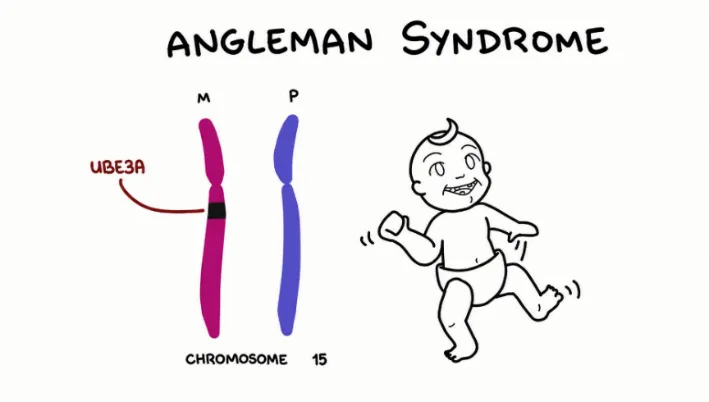
The major cause of Angelman syndrome is loss of function of the maternal UBE3A gene in a specific region of chromosome 15.
The important genetic mechanisms include:
➢ Deletion of the maternal chromosome 15 region containing UBE3A.
➢ Mutation or pathogenic variant in the maternal UBE3A gene.
➢ Paternal uniparental disomy, in which both chromosome 15 copies are inherited from the father.
➢ Abnormal genomic imprinting causing the maternal UBE3A gene to be inactive.
➢ In some children, the exact genetic mechanism may not be identified.
The UBE3A gene is particularly important for normal functioning of neurons in the brain.3,4,8
4. Incidence
Angelman syndrome is a rare neurogenetic disorder. It affects approximately 1 in 12,000 to 20,000 people, although the exact prevalence may vary between populations and some cases may remain undiagnosed. The condition occurs in both males and females and does not have a strong sex predilection. Because Angelman syndrome is rare and can initially resemble other developmental disorders, accurate diagnosis often requires clinical assessment followed by molecular and genetic testing.3,4
5. Risk factors
Angelman syndrome is primarily a genetic disorder, so conventional environmental risk factors are not established.
Possible factors associated with the occurrence include:
➢ Previous child with a genetic abnormality involving chromosome 15.
➢ A known familial UBE3A pathogenic variant.
➢ Chromosomal or imprinting abnormalities.
➢ Genetic rearrangements involving chromosome 15.
➢ Rarely, a parent may carry a genetic alteration that increases the recurrence risk.
Note: Most children with Angelman syndrome have no previous family history of the disorder.3,4
6. Pathophysiology
Genetic abnormality involving chromosome 15
↓
Loss of normal maternal UBE3A function
↓
Abnormal UBE3A protein function in neurons
↓
Altered neuronal development and synaptic function
↓
Abnormal nervous system functioning
↓
Developmental delay + intellectual disability
↓
Speech impairment + movement and balance problems
↓
Seizures + behavioral and sleep abnormalities
↓
Dependence on caregivers and need for lifelong supportive care.4,8
7. Clinical manifestations
A. Developmental features
➢ Developmental delay.
➢ Intellectual disability.
➢ Delayed sitting, crawling, standing, and walking.
➢ Delayed achievement of developmental milestones.
B. Speech and communication
➢ Severe speech impairment.
➢ Limited vocabulary or absence of meaningful speech.
➢ Difficulty communicating needs.
➢ Better understanding than ability to express verbally in many children.
C. Neurological manifestations
➢ Seizures.
➢ Abnormal EEG findings.
➢ Tremors or jerky movements.
➢ Problems with balance and coordination.
➢ Ataxic gait.
➢ Difficulty walking independently.
D. Behavioral manifestations
➢ Frequent smiling and laughter.
➢ Happy and excitable behavior.
➢ Hyperactivity.
➢ Short attention span.
➢ Hand-flapping or other repetitive movements.
➢ Excitability and increased interest in surroundings.
E. Sleep disturbances
➢ Difficulty falling asleep.
➢ Reduced sleep duration.
➢ Frequent waking during the night.
➢ Irregular sleep pattern.
F. Feeding and nutritional problems
➢ Difficulty sucking or feeding in infancy.
➢ Chewing and swallowing difficulties in some children.
➢ Poor weight gain in some cases.
➢ Constipation or gastrointestinal problems may occur.
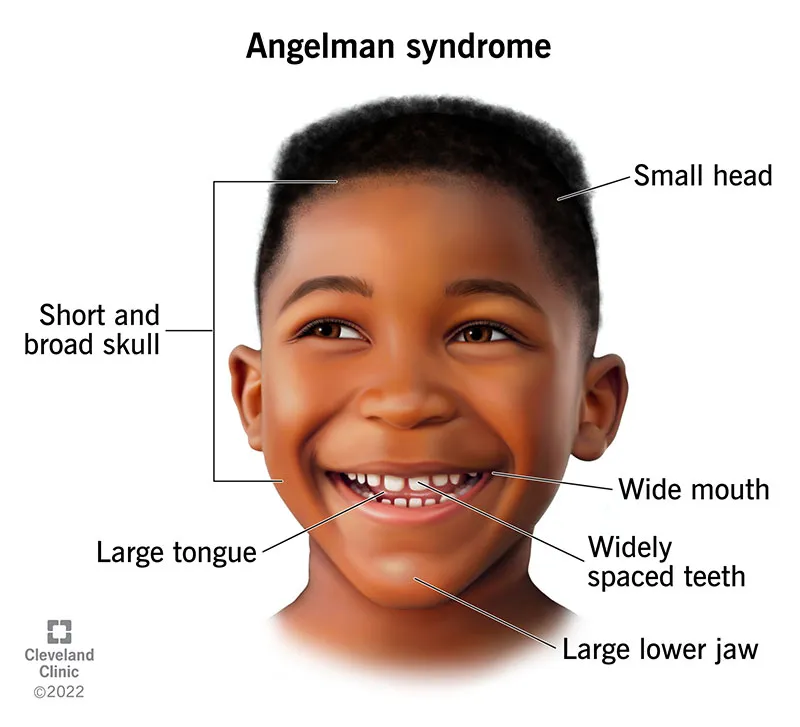
G. Physical features
➢ Microcephaly may develop.
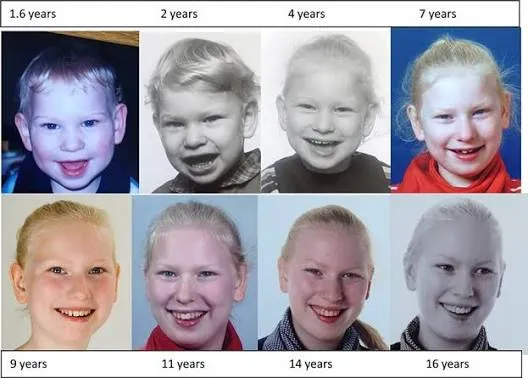
➢ Wide mouth and widely spaced teeth may be present.
➢ Protruding tongue may occur.
➢ Lighter pigmentation of the skin, hair, or eyes may occur in some individuals.
➢ Scoliosis may develop during childhood or adolescence.3,4,6
8. DIAGNOSTIC EVALUATION
Diagnosis is based on clinical assessment and genetic investigation.
A. Clinical assessment
➢ Detailed developmental history.
➢ Assessment of developmental milestones.
➢ Neurological examination.
➢ Assessment of speech and communication.
➢ Assessment of gait, coordination, and balance.
➢ Evaluation of behavior and sleep pattern.
B. Genetic testing
Genetic testing may include:
➢ DNA methylation testing.
➢ UBE3A gene sequencing.
➢ Chromosomal microarray.
➢ Testing for chromosome 15 abnormalities.
➢ Other molecular genetic tests when required.
C. Other investigations
➢ EEG for seizure assessment.
➢ Brain imaging when clinically indicated.
➢ Hearing and vision assessment.
➢ Nutritional assessment.
➢ Assessment for scoliosis.
➢ Sleep assessment when significant sleep problems are present.4,7
9. MANAGEMENT
There is currently no specific cure for Angelman syndrome. Treatment is mainly supportive and aims to improve development, safety, independence, and quality of life.
A. Seizure management
➢ Antiepileptic medicines are administered as prescribed.
➢ Observe and document seizure characteristics.
➢ Maintain seizure precautions.
➢ Monitor medication effectiveness and adverse effects.
➢ Regular neurological follow-up is required.
B. Physiotherapy
➢ Encourage physiotherapy.
➢ Provide exercises to improve balance and coordination.
➢ Promote mobility and muscle strength.
➢ Use appropriate walking or mobility aids when required.
C. Speech and communication therapy
➢ Speech therapy should be started early.
➢ Alternative and augmentative communication methods may be used.
➢ Picture cards, gestures, communication boards, or electronic communication devices may help the child express needs.
D. Nutritional management
➢ Assess nutritional status.
➢ Monitor weight and growth.
➢ Provide appropriate feeding assistance.
➢ Manage swallowing difficulties when present.
➢ Treat constipation and other gastrointestinal problems as indicated.
E. Sleep management
➢ Establish a regular sleep routine.
➢ Maintain a calm sleeping environment.
➢ Identify factors interfering with sleep.
➢ Medical management may be required in severe cases.
F. Orthopedic management
➢ Regular assessment for scoliosis.
➢ Physiotherapy and positioning.
➢ Orthopedic referral when required.
G. Developmental and educational support
➢ Early intervention programs.
➢ Special education.
➢ Occupational therapy.
➢ Structured activities appropriate to developmental level.
➢ Encourage social interaction and independence.4,7
10. NURSING MANAGEMENT
I. Assessment
The nurse should:
➢ Assess developmental status.
➢ Monitor vital signs.
➢ Assess neurological status.
➢ Observe for seizures.
➢ Assess gait, balance, and coordination.
➢ Assess feeding and swallowing.
➢ Monitor weight and growth.
➢ Assess bowel and bladder patterns.
➢ Assess sleep pattern.
➢ Assess communication ability.
➢ Observe behavioral changes.
➢ Assess for falls and injury risk.
➢ Assess family understanding and coping.
Nursing Interventions
➢ Maintain a safe environment to prevent falls and injuries.
➢ Implement seizure precautions.
➢ Observe and document seizure activity accurately.
➢ Administer prescribed antiepileptic medication.
➢ Monitor for adverse effects of medications.
➢ Assist the child during feeding.
➢ Maintain appropriate positioning during meals.
➢ Monitor weight and nutritional intake.
➢ Encourage adequate fluid intake.
➢ Assist with physiotherapy and developmental activities.
➢ Encourage appropriate communication methods.
➢ Provide opportunities for play and social interaction.
➢ Establish a consistent daily routine.
➢ Promote good sleep hygiene.
➢ Monitor for constipation and other gastrointestinal problems.
➢ Observe for signs of scoliosis or abnormal posture.
➢ Maintain accurate documentation.
➢ Educate parents regarding home care and safety.
➢ Provide emotional support to the child and family.2,7
11. Parent education
Parents should be taught:
➢ Angelman syndrome is a genetic neurological condition.
➢ The child requires long-term supportive care.
➢ Medicines should be administered exactly as prescribed.
➢ Parents should know basic seizure first-aid and when emergency care is required.
➢ The child's environment should be made safe to prevent falls.
➢ Regular physiotherapy and developmental therapy should be encouraged.
➢ Communication should not depend only on spoken language.
➢ Picture cards, gestures, signs, and communication devices can be used.
➢ Adequate nutrition and hydration should be maintained.
➢ A regular sleep routine should be encouraged.
➢ Regular follow-up with pediatric, neurological, developmental, and other specialists is important.
➢ Parents should receive genetic counseling regarding recurrence risk.
➢ Parents should be encouraged to participate actively in the child's development and care.4,7
12. Prognosis
Angelman syndrome is a lifelong condition. Intellectual disability, speech impairment, and neurological difficulties generally persist throughout life. However, appropriate early intervention, seizure control, physiotherapy, communication support, nutritional care, educational intervention, and family support can significantly improve the child's functional abilities and quality of life. Many affected individuals can live into adulthood and require varying degrees of lifelong support.3,4,7
13. Prevention
Because Angelman syndrome is a genetic disorder, there is no general method to prevent all cases. Prevention and risk reduction mainly involve:
14. Nursing diagnoses
15. NURSING CARE PLAN
| Sl.no | Assessment | Nursing Diagnosis | Goals / Expected Outcomes | Nursing Interventions | Rationale | Evaluation |
|---|---|---|---|---|---|---|
| 1. | Child has feeding difficulty / inadequate intake | Imbalanced nutrition: less than body requirements related to feeding difficulty | Child will maintain adequate nutritional intake and appropriate weight gain | Monitor intake and weight; Provide appropriate feeding assistance Maintain upright position during feeding Refer to dietitian when needed |
Adequate nutrition supports growth and development and reduces complications | Child maintains adequate intake and weight |
| 2. | Child demonstrates difficulty walking and maintaining balance | Impaired physical mobility related to neuromuscular impairment | Child will demonstrate improved mobility according to ability | Assist with prescribed physiotherapy Encourage safe movement Provide mobility aids if required Use appropriate positioning |
Physiotherapy promotes mobility, balance, and functional independence | Mobility and balance improve according to baseline |
| 3. | Child has poor sleep pattern | Disturbed sleep pattern related to neurological dysfunction | Child will achieve improved sleep pattern | Establish regular bedtime routine Reduce environmental stimulation Maintain consistent sleeping schedule Report persistent sleep problems |
Consistent routines promote better sleep | Child demonstrates improved sleep |
| 4. | Child has limited speech and difficulty expressing needs | Impaired verbal communication related to neurological impairment | Child will communicate basic needs using an appropriate method | Encourage gestures, picture cards and communication boards Use simple words Allow adequate response time Collaborate with speech therapist |
Alternative communication reduces frustration and promotes interaction | Child communicates basic needs using gestures/pictures |
| 5. | Child has unsteady gait and poor balance | Risk for injury related to impaired coordination and seizures | Child will remain free from injury | Maintain safe environment Remove obstacles Provide supervision during walking Implement seizure precautions |
Reduces risk of falls and injury | Child remains free from injury |
| 6. | Parents show concern regarding long-term care | Caregiver role strain related to increased caregiving demands | Parents will verbalize understanding and demonstrate effective coping | Provide emotional support Educate parents Involve parents in care Provide information regarding available support services |
Education and support improve confidence and coping | Parents demonstrate understanding and confidence in care |
CONCLUSION
Angelman syndrome is a rare neurogenetic disorder that significantly affects the child's development, communication, movement, behavior, and neurological functioning. Although there is no definitive cure, early diagnosis and comprehensive supportive management can improve functional abilities and quality of life. Nurses have an important role in monitoring neurological status, maintaining seizure and environmental safety, supporting nutrition and mobility, promoting communication and development, educating parents, and coordinating multidisciplinary care. Continuous family support and appropriate genetic counseling are also essential components of holistic care.2,7
REFERENCES





Asima Arundhati Bindhani, Sheeba Anitha Rani, Yerni Jyothi Kolli, Tadi Priyanka, Prathima Prakasam, The Journey of Neurodevelopmental Discovery and Human Resilience: Management of a Child with Angelman Syndrome – A Case Report, Int. J. Sci. R. Tech., 2026, 3 (10), 1151-1158. https://doi.org/10.5281/zenodo.23593663
 10.5281/zenodo.23593663