

We use cookies to ensure our website works properly and to personalise your experience. Cookies policy
1*Department Of Pharmaceutical Chemistry, Jagannath University, Chaksu, Jaipur
2Department of Zoology, Seth G.B. Podar College, Nawalgarh, Rajasthan
3Institute of Pharmaceutical Sciences, University of Lucknow
4Department of Pharmacology, Jagannath University, Chaksu, Jaipur
The escalating incidence of antimicrobial resistance (AMR) among clinically relevant bacterial pathogens has intensified the search for novel chemotherapeutic scaffolds with improved efficacy and reduced susceptibility to existing resistance mechanisms [1–4]. Among heterocyclic pharmacophores, the thiazole and triazole nuclei have independently demonstrated broad-spectrum antimicrobial potential, and their molecular hybridisation has emerged as a promising medicinal chemistry strategy for generating structurally novel lead compounds. This review consolidates literature on thiazole–triazole and related hybrid derivatives, examining their design rationale, synthetic strategies (including click chemistry), structure–activity relationships (SAR), and antimicrobial performance against drug-resistant Gram-positive and Gram-negative bacterial strains, supported by quantitative data (MIC values and docking binding energies) and molecular docking studies. The review concludes by identifying research gaps and future directions for rational design of next-generation hybrids.
Antimicrobial resistance (AMR) is recognised by the World Health Organization (WHO) as a top global public health priority [1,3]. Bacterial AMR was associated with an estimated 4.71 million deaths globally in 2021, including 1.14 million deaths directly attributable to it [6], and cumulative AMR-related deaths between 2020 and 2050 could reach 39.1 million in the absence of further policy intervention, with an additional 169 million lives potentially lost indirectly to AMR-related complications [5]. The WHO Bacterial Priority Pathogens List (BPPL), updated in 2024, reaffirms carbapenem-resistant Acinetobacter baumannii and carbapenem/third-generation cephalosporin-resistant Enterobacterales as critical priorities, and adds rifampicin-resistant Mycobacterium tuberculosis to the list [4,7]. Low- and middle-income countries continue to bear a disproportionate burden of AMR due to weaker health systems and limited diagnostic and surveillance capacity [5,6].
Against this backdrop, heterocyclic compounds continue to occupy a central position in medicinal chemistry owing to their structural versatility and broad pharmacological profile [8–11]. Among these, the thiazole ring (a five-membered heterocycle containing both nitrogen and sulfur) and the triazole ring (a five-membered heterocycle containing three nitrogen atoms) are privileged scaffolds found in numerous clinically approved antimicrobial and antifungal agents [8,10,15,17]. In recent years, molecular hybridisation of thiazole and triazole pharmacophores into a single molecular framework has attracted considerable research interest, on the rationale that combining two bioactive scaffolds may yield synergistic or complementary biological activity, improved target binding, and reduced susceptibility to resistance mechanisms [15,18,22].
This review consolidates current knowledge on thiazole–triazole and closely related hybrid derivatives with a specific focus on their antimicrobial potential against drug-resistant bacterial strains, covering design strategies, click-chemistry and conventional synthetic approaches, structure–activity relationships, quantitative antimicrobial and docking data, and computational studies providing mechanistic insight into their mode of action.
2. Antimicrobial Significance of the Thiazole Nucleus
The thiazole ring is a core structural component of several clinically important antimicrobial and antifungal agents [8,9]. A structure–activity relationship overview covering antimicrobial thiazoles clubbed with various heterocycles (2017–2023) reports that substitution pattern and the identity of the clubbed heterocycle strongly influence antimicrobial potency, reinforcing thiazole as a privileged scaffold for antimicrobial hybrid design [8]. A related review on functionalised thiazoles (2021–2023) similarly summarises synthetic methodologies, in vitro antimicrobial screening outcomes, and docking simulations for thiazole-based heterocycles and their hybrids relative to standard reference drugs [9].
Primary synthetic studies support these trends: a series of thiazole derivatives bearing hydrazone and bromothiophene moieties, characterised by ¹H NMR, ¹³C NMR and HRMS, showed the most significant antibacterial activity for two lead compounds in agar diffusion assays, with one compound displaying MIC values of 125, 250 and 500 µg/mL against representative Gram-positive, Gram-negative and fungal strains respectively [12]. Separately, a two-step synthesis of thiazole derivatives (yields up to 98%) identified individual lead compounds with significant activity against Staphylococcus aureus (compared with ampicillin) and Klebsiella pneumoniae (compared with gentamicin), supported by DFT and in-silico ADMET evaluation [13]. Molecular docking analyses in these and related studies have frequently implicated fungal lanosterol 14α-demethylase as a plausible target underlying thiazole antifungal activity [14].
3. Antimicrobial Significance of the Triazole Nucleus
The 1,2,3-triazole and 1,2,4-triazole rings are widely regarded as versatile bioisosteres in drug design, valued for metabolic stability, hydrogen-bonding capacity, and ease of synthesis via copper-catalysed azide–alkyne cycloaddition (CuAAC, 'click chemistry') for 1,2,3-triazoles [24,26,27]. A comprehensive review of 1,2,3-triazole hybrids as antibacterial agents (2000–2019) reports several derivatives with potency comparable to first-line antibacterial agents against both drug-sensitive and drug-resistant pathogens, with well-documented SAR guiding further hybrid development [16]. 1,2,4-Triazole derivatives have similarly been evaluated extensively for antibacterial activity using standard agar disc-diffusion methods against Gram-positive and Gram-negative reference strains, with particular emphasis on resistant strains including MRSA and VRE, and antitubercular potential in selected series [17].
4. Rational Design of Thiazole–Triazole Hybrids
Molecular hybridisation in medicinal chemistry involves the covalent linkage of two or more pharmacophoric units, often via a spacer or bridging group, to achieve improved or dual biological activity. Reported design strategies for thiazole–triazole and related hybrids include:
Reviews of benzimidazole–triazole hybrid systems, which share design logic closely related to thiazole–triazole hybrids, report that certain electron-withdrawing substituents and additional heterocyclic rings (including thiazole itself) on the core scaffold increase antimicrobial activity, and that a sulfur- or oxygen-containing bridge connecting the two ring systems generally enhances potency further [15]. These findings provide a rational structural framework extendable to the design of novel thiazole–triazole hybrid candidates.
5. Synthetic Approaches Reported in the Literature
Across the reviewed literature, thiazole–triazole and related hybrids have typically been synthesised through the following routes:
Several recent studies emphasise click chemistry specifically for its mild, high-yielding, and functional-group-tolerant character, making it a particularly attractive route for rapid generation of triazole-hybrid compound libraries for antimicrobial screening [24,25,29–31].
6. Antimicrobial Activity Against Drug-Resistant Strains: Literature Findings
A series of triazole–thiadiazole hybrid derivatives bearing an acetamide linker exhibited potent activity against Escherichia coli, with the most active compound showing an MIC of 3.90 µg/mL, alongside moderate antifungal activity against resistant Candida strains; in silico ADMET profiling indicated favourable drug-likeness and low predicted cardiotoxicity for the lead compound [19].
Quinoline–thiazole hybrids displayed potent antibacterial and antibiofilm activity specifically against multidrug-resistant staphylococcal infections, including MRSA, methicillin-susceptible S. aureus (MSSA), and vancomycin-resistant S. aureus (VRSA) [22]. Triazolo-thiadiazole derivatives in another study demonstrated antibacterial activity exceeding that of reference drugs ampicillin and streptomycin against all tested bacterial strains, including resistant isolates, and antifungal activity up to eighty-fold higher than ketoconazole for certain compounds; selected derivatives also inhibited Pseudomonas aeruginosa biofilm formation with potency comparable to ampicillin [20].
Chalcone–triazole hybrids screened against WHO priority-list resistant bacterial strains showed that several derivatives potentiated the activity of co-administered antibiotics in resistant strains, suggesting a possible adjuvant role via inhibition of bacterial efflux pump mechanisms and biofilm formation [23]. In the click-chemistry domain, 1,2,3-triazole/benzimidazole hybrids showed enhanced antibacterial activity against Pseudomonas aeruginosa, Staphylococcus aureus and Candida albicans, with a lead compound also showing favourable Lipinski/Swiss-ADMET drug-likeness parameters [24]. Triazole-fused chromene–glucose conjugates identified a lead compound with an MIC of 25 µg/mL against both E. coli and S. aureus, correlating with strong in-silico DNA-gyrase inhibition [25]. Ciprofloxacin-linked 1,2,3-triazole conjugates, evaluated against nine pathogenic Gram-positive and Gram-negative strains (including clinical isolates), were highlighted as a hybrid strategy intended to reduce anticipated resistance emergence relative to the parent fluoroquinolone [28].
Collectively, these findings indicate that thiazole- and triazole-containing hybrid scaffolds are capable of both direct antimicrobial action and resistance-modulating (adjuvant) activity, reinforcing the therapeutic versatility of this compound class.
7. Quantitative Summary of Reported Antimicrobial and Docking Data
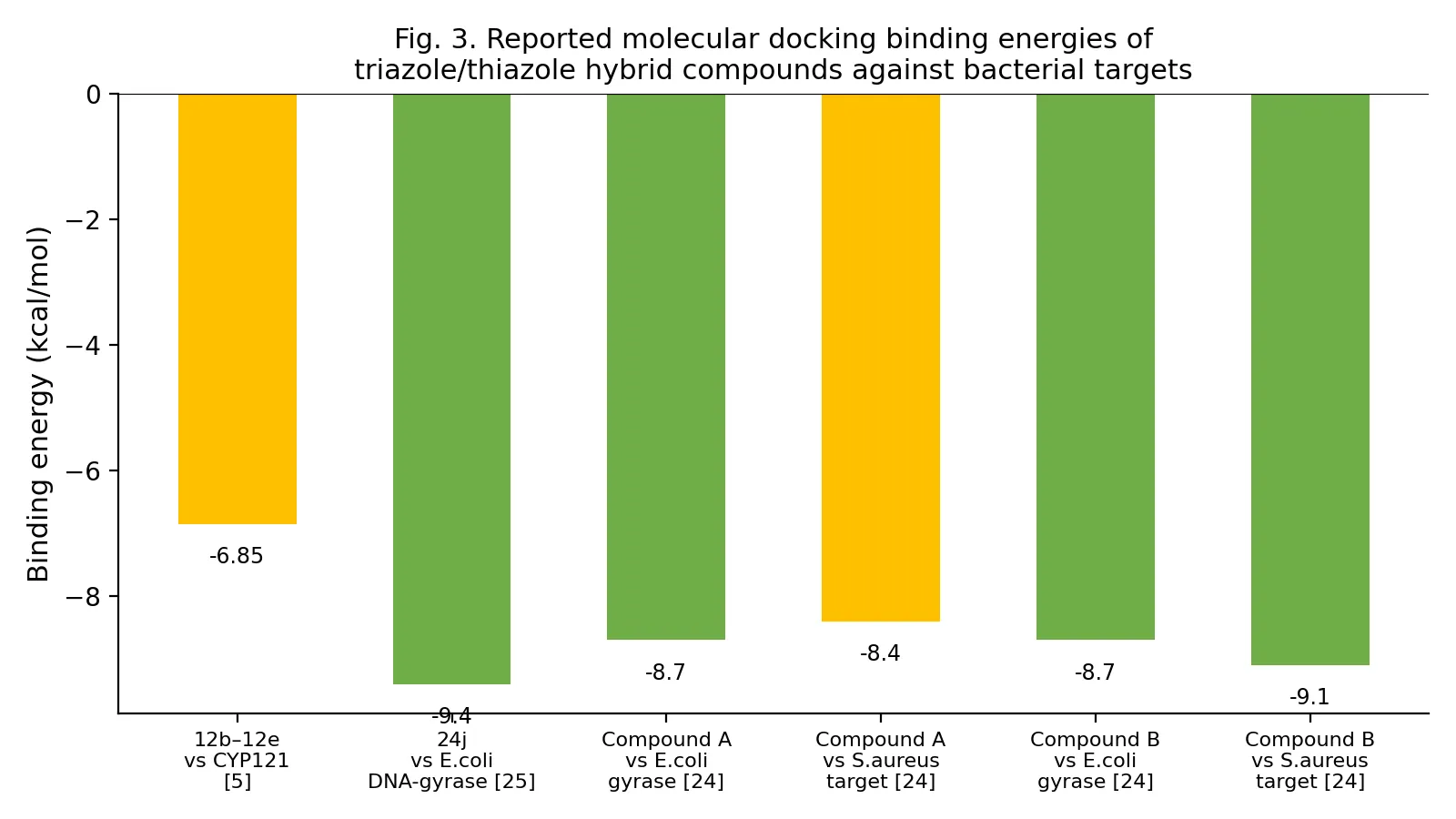
Table 1 and Table 2 consolidate quantitative findings — MIC values and molecular docking binding energies — as reported in the primary studies discussed above, to allow direct comparison across hybrid classes. Figures 1–4 present the same literature-derived data graphically.
Table 1: Reported in vitro antimicrobial activity of selected thiazole/triazole hybrid compounds against resistant strains.
| Hybrid class | Lead compound(s) | Test organism | Reported activity | Ref. |
|---|---|---|---|---|
| Triazole–thiadiazole (acetamide) | 7a / 7b / 7e | E. coli | MIC 3.90 / 7.81 / 31.25 µg/mL | [19] |
| Triazole–thiadiazole (acetamide) | 7a | C. krusei / C. albicans (resistant) | Antifungal activity confirmed (moderate) | [19] |
| Triazolo-thiadiazole (cyclised) | 2, 3, 6, 7, 19 | Gram +ve / −ve resistant panel | More potent than ampicillin & streptomycin | [20] |
| Triazolo-thiadiazole (cyclised) | Selected actives | Resistant fungal strains | Up to 80× more active than ketoconazole | [20] |
| Quinoline–thiazole | Lead series | MRSA / MSSA / VRSA | Potent antibacterial & antibiofilm activity | [22] |
| Chalcone–triazole | 1,2,4,5,7,9 | WHO priority resistant strains | Antibiotic-potentiating (adjuvant) effect | [23] |
| 1,2,3-Triazole/benzimidazole (click) | 4a–c (lead 4b) | P. aeruginosa, S. aureus, C. albicans | Enhanced antibacterial activity | [24] |
| Triazole-fused chromene–glucose (click) | 24j | E. coli / S. aureus | MIC 25 µg/mL (both strains) | [25] |
| Thiazole (hydrazone-bromothiophene) | 2e | Gram +ve/−ve & fungal panel | MIC 125 / 250 / 500 µg/mL | [12] |
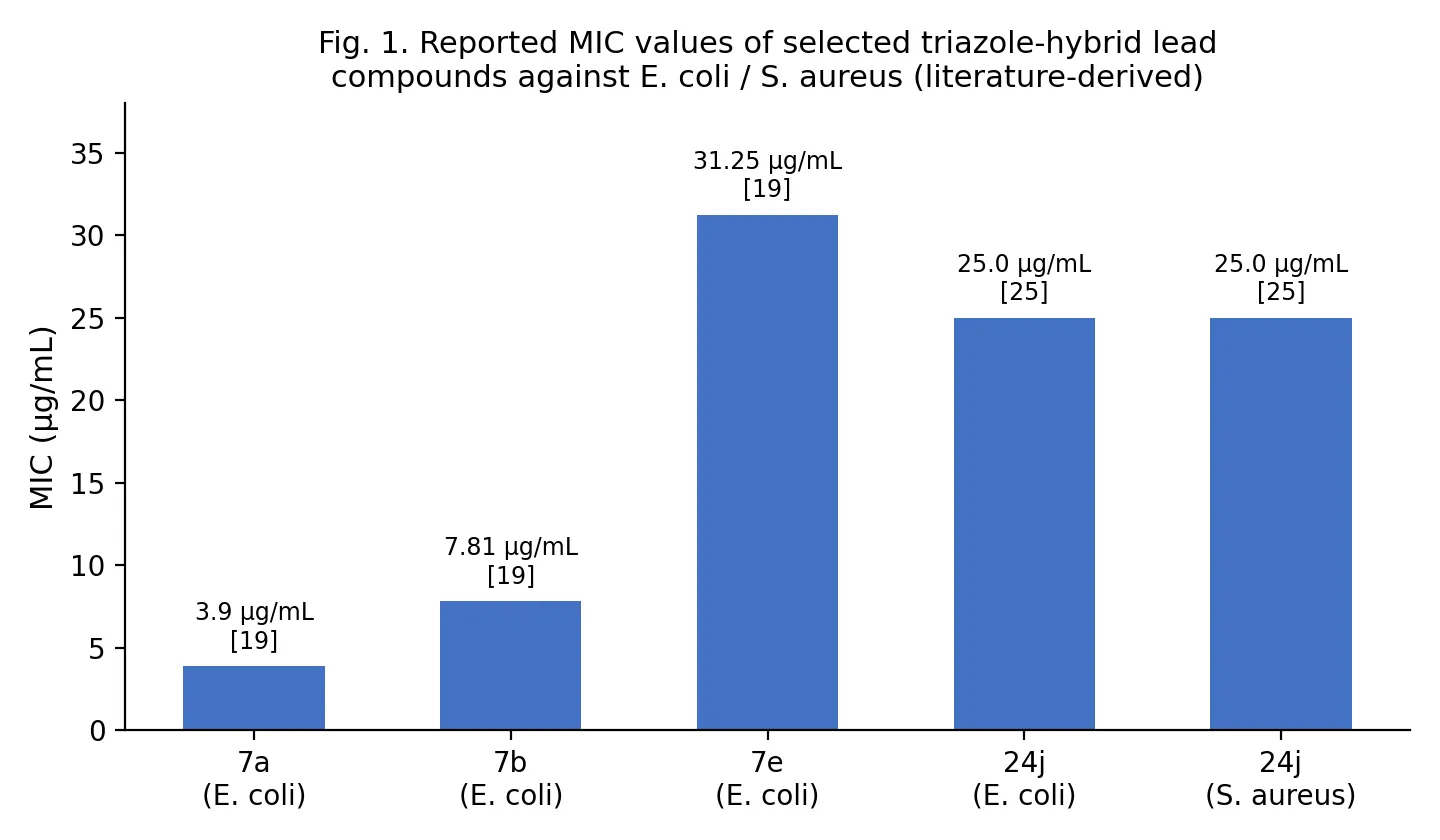
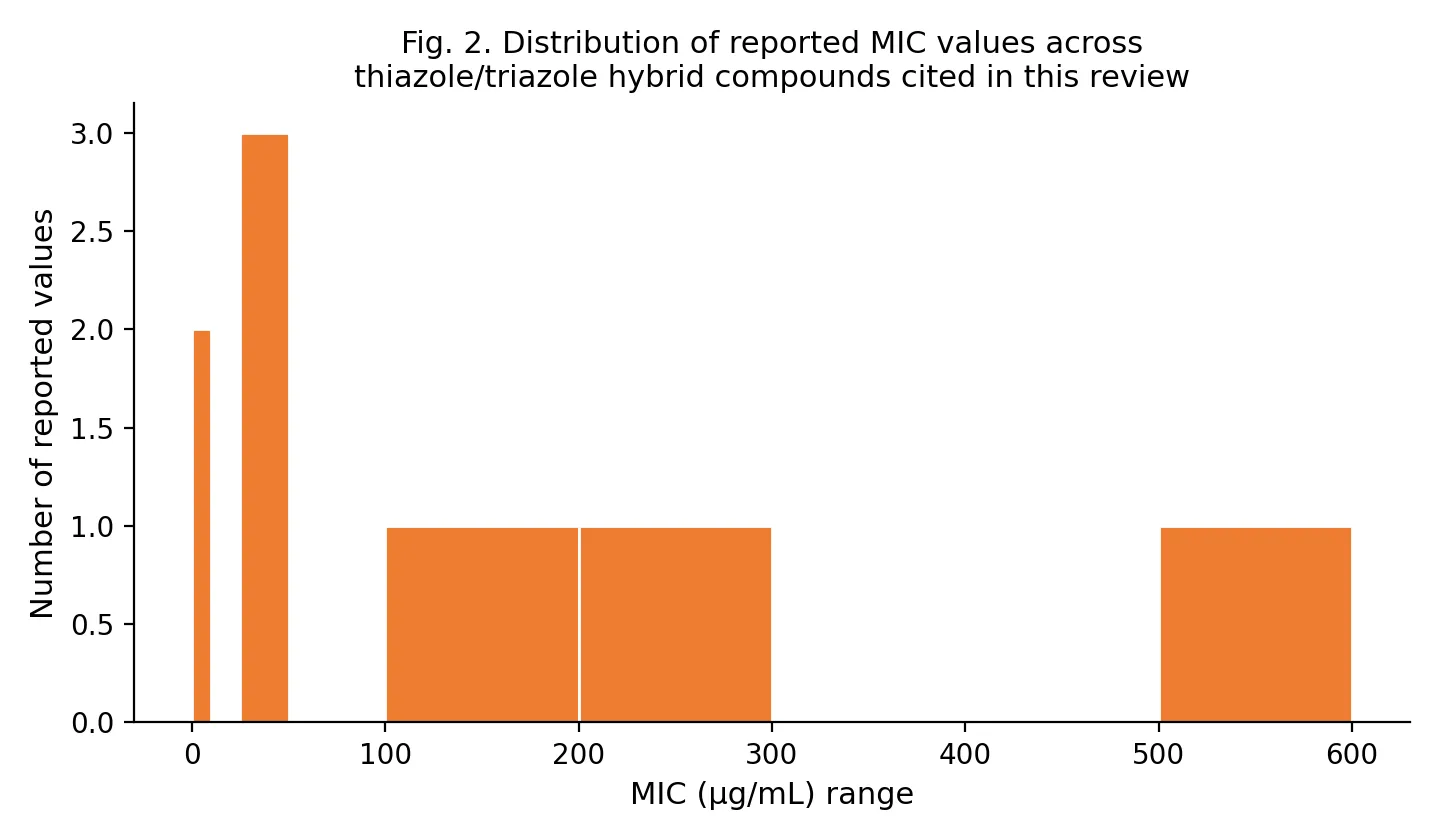
Table 2: Reported molecular docking outcomes for triazole/thiazole hybrid compounds against proposed antimicrobial targets.
| Hybrid class | Compound(s) | Docking target | Binding energy / outcome | Ref. |
|---|---|---|---|---|
| Triazole–coumarin–thiazole | 12b, 12d, 12e | CYP121 (PDB: 4G2G) | ΔG ≈ −6.5 to −7.2 kcal/mol; H-bond with Gln385 | [18] |
| Triazolo-thiadiazole | Active series | E. coli MurB | Predicted antibacterial target enzyme | [20] |
| Triazolo-thiadiazole | Active series | CYP51 | Predicted antifungal mechanism target | [20] |
| 1,2,3-Triazole/benzimidazole (click) | 4b | DNA gyrase B (4duh); AcrB (4dx5) | Superior binding affinity vs reference drug | [24] |
| Triazole-fused chromene–glucose | 24j | E. coli DNA-gyrase | −9.4 kcal/mol | [25] |
| Triazole fused tetrahydrochromeno-isoindole | Lead compounds | E. coli / S. aureus receptor targets | −8.7/−8.4 and −8.7/−9.1 kcal/mol | [25] |
8. Composition of the Reviewed Literature
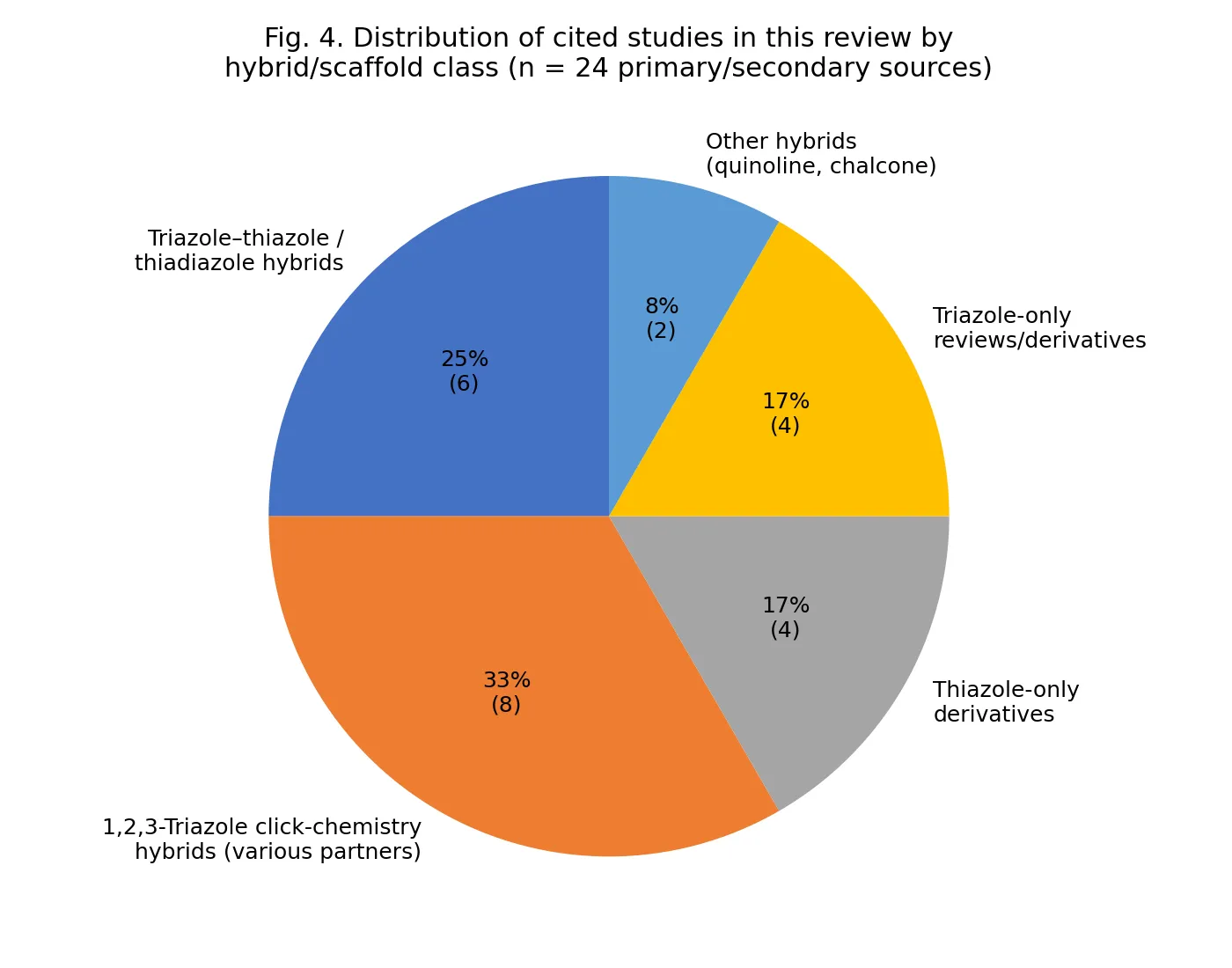
To characterise the scope of the literature synthesised in this review, the primary and secondary sources directly discussing thiazole-, triazole-, or hybrid-scaffold antimicrobial chemistry (Sections 2–6) were classified by hybrid/scaffold class, as summarised in Figure 4.
9. Structure–Activity Relationship (SAR)
Across the reviewed studies, several recurring SAR trends emerge for thiazole- and triazole-containing hybrids:
These trends collectively provide a rational basis for the design of new thiazole–triazole hybrid analogues with optimised antimicrobial potential.
10. Molecular Docking and Mechanistic Insights
Computational docking studies have been widely employed alongside in vitro screening to rationalise the observed antimicrobial activity of thiazole- and triazole-based hybrids. Docking against the antibacterial target CYP121 showed the most active triazole–coumarin–thiazole hybrids exhibiting favourable binding energies (approximately −6.5 to −7.2 kcal/mol), forming key hydrogen-bonding, halogen, and π–π stacking interactions [18]. The bacterial enzyme MurB has been identified as a probable antibacterial target for triazolo-thiadiazole derivatives, while CYP51 (lanosterol 14α-demethylase) has been implicated in the antifungal activity of related systems [14,20]. Click-chemistry-derived 1,2,3-triazole/benzimidazole hybrids showed superior in-silico binding affinity to DNA gyrase B and the multidrug transporter AcrB compared with a reference drug [24], while triazole-fused chromene–glucose conjugates showed strong E. coli DNA-gyrase inhibition (binding energy −9.4 kcal/mol), correlating well with observed in vitro potency [25].
These computational findings, when concordant with in vitro biological results, strengthen the mechanistic rationale for continued development of thiazole–triazole hybrids as antimicrobial candidates and provide a framework for structure-based design of future analogues.
11. Research Gaps and Future Directions
Despite substantial progress, several gaps remain in the existing literature on thiazole–triazole hybrids:
Future research addressing these gaps — particularly rationally substituted thiazole–triazole hybrids incorporating validated SAR trends, supported by robust in silico target validation and evaluated against clinically relevant resistant isolates — is likely to accelerate identification of viable lead candidates for antimicrobial drug development.
CONCLUSION
Thiazole–triazole hybrid derivatives represent a chemically versatile and pharmacologically promising class of compounds in the ongoing effort to counter antimicrobial resistance. The molecular hybridisation strategy, supported by consistent SAR trends and corroborating molecular docking evidence, offers a rational pathway for designing novel antimicrobial agents active against drug-resistant bacterial strains. Continued interdisciplinary research combining synthetic chemistry (including click chemistry), in vitro screening, and computational target validation will be essential to translate this promising scaffold class into clinically viable antimicrobial candidates.
REFERENCES


Ankita Thakur, Neha, Amrita Thakur, Shivansh Mishra, Saloni Jaiswal, Thiazole–Triazole Hybrid Derivatives as Emerging Antimicrobial Agents Against Drug-Resistant Bacterial Strains: a Review, Int. J. Sci. R. Tech., 2026, 3 (10), 539-546. https://doi.org/10.5281/zenodo.23256158
 10.5281/zenodo.23256158