

We use cookies to ensure our website works properly and to personalise your experience. Cookies policy
Kalyani Charitable Trust's Ravindra Gambhirrao Sapkal College Of Pharmacy Nashik.
Suzetrigine (VX-548; marketed in the United States as Journavx) is a first-in-class non-opioid analgesic that selectively inhibits the voltage-gated sodium channel NaV1.8 in peripheral sensory neurons. The U.S. Food and Drug Administration approved oral suzetrigine in January 2025 for moderate-to-severe acute pain in adults [1,2]. Although an oral tablet is available, lipid-based nanocarriers may warrant investigation only if a specific, measurable biopharmaceutical limitation is demonstrated. Solid lipid nanoparticles (SLNs) comprise a solid lipid matrix stabilized by surfactants and may influence drug dispersion, release and interaction with gastrointestinal fluids. Their performance is formulation-specific and cannot be assumed to improve absorption for every active pharmaceutical ingredient. Quality by Design (QbD), described in ICH Q8 (R2) and supported by ICH Q9 (R1) and Q10, provides a systematic framework for defining the quality target product profile (QTPP), critical quality attributes (CQAs), critical material attributes (CMAs), critical process parameters (CPPs), and a control strategy [7–9]. This review summarizes suzetrigine’s pharmacological context, SLN architecture and preparation, QbD-led development, analytical characterization, stability, biorelevant testing and the evidence needed to test a potential bioavailability benefit. A proposed development pathway is presented, including preformulation screening, design of experiments (DoE), digestion studies and comparative pharmacokinetics. Key challenges include drug–lipid compatibility, possible drug expulsion during lipid crystallization, scale-up, excipient tolerability and gastrointestinal precipitation. The central conclusion is that QbD-guided suzetrigine-SLNs are a plausible research hypothesis, but their value must be established experimentally against an appropriate reference rather than inferred from the general advantages of nanocarriers.
Pain management remains an important clinical need, particularly when non-opioid options are desirable. Suzetrigine inhibits NaV1.8, a voltage-gated sodium channel involved in action-potential signaling in peripheral nociceptive neurons. The FDA approved oral suzetrigine (Journavx, 50 mg tablets) on 30 January 2025 for moderate-to-severe acute pain in adults [1,2]. Its peripheral mechanism distinguishes it from opioid-receptor agonists and makes it a notable addition to acute-pain pharmacotherapy.
The existence of an approved oral formulation does not itself demonstrate poor oral bioavailability or a need for a nanocarrier. A rational formulation proposal should first identify a measurable limitation such as dissolution under relevant conditions, food-related variability, formulation constraints or stability using current label information and experimental data. If a limitation is established, lipid-based systems can be compared with other suitable formulation strategies.
SLNs are colloidal carriers in which the dispersed matrix remains solid at room and physiological temperatures. They commonly contain a physiologically acceptable solid lipid, a stabilizing surfactant and an aqueous phase. They may alter drug dispersion, release or interaction with gastrointestinal fluids, but outcomes depend on drug solubility in the lipid, partitioning, matrix crystallinity, particle size, digestion and excipient composition [3–6]. QbD connects the intended product profile with CQAs, material attributes, process parameters, risk assessment, designed experiments and lifecycle control [7–9].
This review critically summarizes the pharmacological and formulation context for suzetrigine and proposes a QbD-led strategy to test whether SLNs offer a measurable advantage over the conventional oral product. Established evidence is separated from hypotheses requiring laboratory and pharmacokinetic confirmation.
Review Scope and Literature Approach
This is a narrative, mechanism-informed review, not a systematic review or meta-analysis. Sources were selected around four themes: suzetrigine’s regulatory and pharmacological profile; foundational SLN structure, preparation and limitations; QbD/DoE for lipid-based nanocarriers; and regulatory guidance for pharmaceutical development and risk management. Priority was given to official FDA/ICH documents, PubMed-indexed articles and open-access texts available through PubMed Central or publisher pages.
Search concepts included combinations of “suzetrigine” or “VX-548” with “oral”, “pharmacokinetics” and “Journavx”; “solid lipid nanoparticles” with “preparation”, “characterization”, “oral delivery” and “stability”; and “quality by design”, “design of experiments”, “critical quality attributes” and “lipid nanoparticles”. The search is transparent but not claimed to be exhaustive or sufficient to prove that no suzetrigine-SLN study exists. No experimental data or numerical improvement in bioavailability has been invented.
Drug Profile: Suzetrigine
| Parameter | Summary |
|---|---|
| Generic / development name | Suzetrigine / VX-548 |
| Brand / marketed presentation | Journavx; 50 mg oral tablets in the United States |
| Class / mechanism | Non-opioid analgesic; selective NaV1.8 inhibitor |
| FDA approval | 30 January 2025 |
| Approved indication | Moderate-to-severe acute pain in adults |
| Formulation question | Can an SLN formulation demonstrate an advantage over the approved oral product? |
1. Mechanism of action
NaV1.8 contributes to electrical signaling in peripheral pain-sensing neurons. Inhibiting this channel reduces pain-signal transmission in the peripheral nervous system before signals reach the brain [1,2]. Current prescribing details, dose instructions, interactions, warnings and clinical pharmacology should be checked in the latest official label. A new formulation’s clinical effect would depend on the amount of pharmacologically available drug reaching systemic circulation and the exposure–response relationship.
2. Biopharmaceutical relevance
Before selecting SLNs, review the current official label and public pharmacokinetic evidence to determine whether a formulation problem exists. Preformulation should measure drug solubility in candidate lipids and surfactants, apparent solubility in aqueous media, pH-dependent stability, solid-state behavior and excipient compatibility. Unknown properties should be reported as unknown rather than estimated. Lipid digestion may improve drug solubilization, have no effect, or promote precipitation; high encapsulation efficiency or faster in-vitro release alone cannot prove higher oral bioavailability.
Solid Lipid Nanoparticles
1. Structure and composition
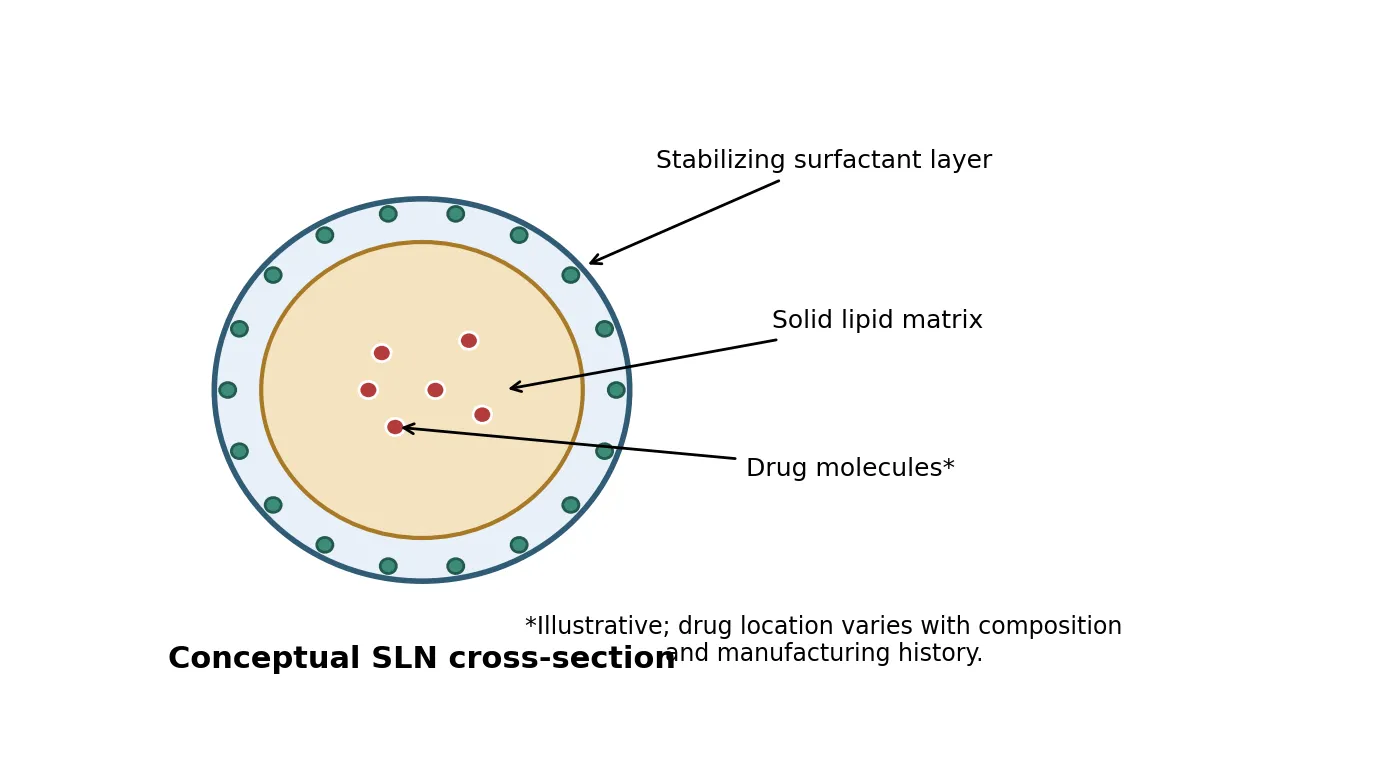
Figure 1: Conceptual SLN cross-section.
SLNs are submicron colloidal dispersions containing a solid lipid matrix, a stabilizing surfactant layer and drug incorporated within or associated with the matrix. Lipid classes investigated in SLNs include triglycerides, partial glycerides, fatty acids and waxes. Selection should depend on drug solubility, melting behavior, safety, regulatory acceptability and manufacturing needs [3–6]. Surfactants stabilize newly created interfaces but may introduce tolerability or product-complexity concerns.
2. Advantages and limitations
3. Preparation methods
| Method | Principle | Key variables / risks |
|---|---|---|
| Hot homogenization | Drug-containing lipid melt dispersed in a heated aqueous surfactant phase, homogenized and cooled. | Temperature, pressure, cycles, surfactant; heat-related degradation. |
| Cold homogenization | Drug-containing melt cooled, milled and homogenized in a cold or controlled dispersion. | Cooling rate, milling and particle-size distribution. |
| High-shear mixing / sonication | Shear or acoustic energy reduces droplet size before solidification. | Speed, time, amplitude, heating and possible probe contamination. |
| Solvent emulsification–evaporation | Lipid/drug solution emulsified, then solvent removed. | Residual solvent, solvent choice and scale-up controls. |
| Microemulsion-based | Warm microemulsion diluted under controlled conditions. | Composition window, dilution rate, temperature and surfactant load. |
Quality by Design Framework
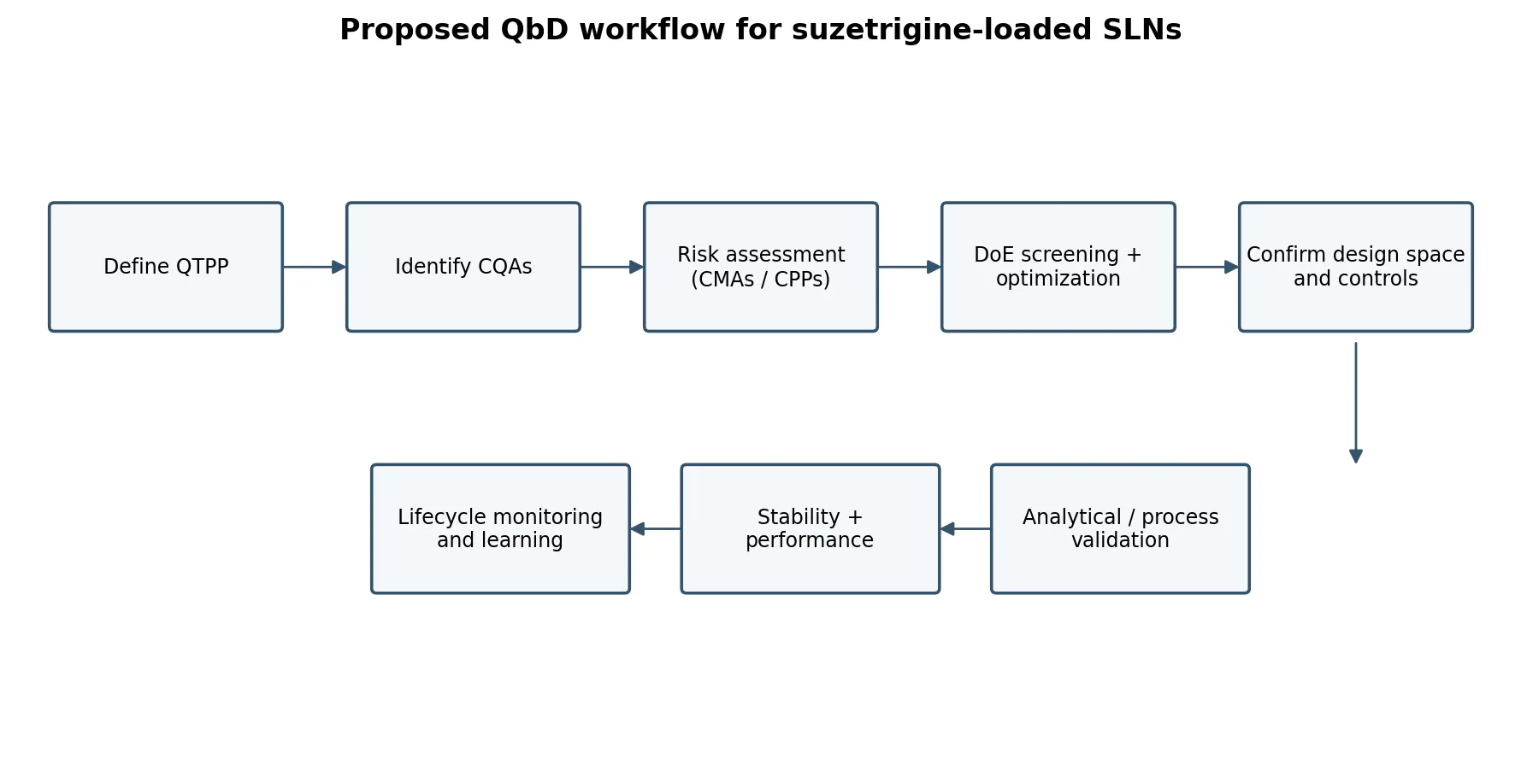
Figure 2: Iterative QbD workflow proposed for suzetrigine-SLNs, based conceptually on ICH Q8 (R2), Q9 (R1) and Q10.
ICH Q8 (R2) describes pharmaceutical development and QbD principles; ICH Q9 (R1) addresses quality risk management; ICH Q10 describes a pharmaceutical quality system across the lifecycle [7–9]. These guidelines support a structured development strategy but do not prescribe one formula or universal numerical specifications.
1. Quality Target Product Profile (QTPP)
| Element | Proposed target / rationale |
|---|---|
| Route and dosage form | Oral dispersion or suitable oral unit dose; select after feasibility and dose assessment. |
| Dose delivery | Deliver a justified suzetrigine dose; do not assume direct conversion from marketed tablet. |
| Release behavior | Reproducible release and gastrointestinal availability; do not claim sustained release unless intended and shown. |
| Stability | Maintain assay, impurities, particle attributes and redispersibility over proposed shelf life. |
| Excipient safety | Use justified, pharmaceutically acceptable excipients at suitable exposure levels. |
| Performance objective | Show a pre-specified, reproducible improvement if baseline evidence justifies the objective. |
| Manufacturability | Robust process with acceptable variability and a plausible scale-up route. |
2. CQAs, CMAs and CPPs
Candidate CQAs include particle size, polydispersity index (PDI), zeta potential where informative, drug content, encapsulation efficiency (EE%), drug loading, free-drug fraction, release, residual solvent if applicable, lipid crystallinity, redispersibility and physical/chemical stability. Numerical acceptance limits should be justified by development data, analytical capability and product intent—not copied uncritically from unrelated studies.
Potential CMAs include lipid identity/grade/melting range/polymorphic form, drug solubility in the lipid, surfactant identity and concentration, drug solid form/purity/moisture, and aqueous-phase pH or ionic strength. Potential CPPs include melting temperature and hold time, addition sequence, phase temperatures, homogenization pressure/cycles, rotor speed, sonication energy, cooling rate, dilution and post-processing hold time.
3. Risk assessment and DoE
A preliminary risk assessment can use an Ishikawa diagram, failure mode and effects analysis (FMEA) or risk-ranking matrix to link CMAs/CPPs to CQAs. Rankings are hypotheses that must be updated with data. Sequential DoE is preferable to unstructured one-factor-at-a-time experimentation: screening designs can identify influential factors, followed by response-surface designs (for example, Box–Behnken or central composite) where suitable [11,12].
Candidate factors include lipid concentration, surfactant concentration, drug-to-lipid ratio, homogenization pressure/cycles, sonication energy and cooling rate. Responses may include size, PDI, EE%, loading, free-drug fraction and release. Model adequacy should be checked using residual diagnostics, prediction uncertainty and independent confirmation batches. Minimizing particle size alone is not a valid optimization objective.
4. Control strategy and lifecycle
The control strategy should connect incoming-material specifications, in-process monitoring, analytical procedures, finished-product testing and stability monitoring to identified risks. PAT or in-process measurements may be useful where feasible. Trend data, deviations and changes should be assessed through an appropriate pharmaceutical quality system [7–9].
MATERIAL AND METHODS
1. Materials and preformulation
Obtain a suzetrigine reference standard and, if legally and practically available, an appropriate comparator product; candidate pharmaceutically acceptable solid lipids and surfactants; purified water; analytical-grade solvents/buffers; and excipients required for optional drying. Record supplier, grade, batch number, certificate of analysis and storage conditions.
a. Establish a suitable stability-indicating chromatographic assay for suzetrigine and relevant degradants.
b. Screen drug solubility in candidate molten lipids and surfactants at controlled temperatures; quantify recovery rather than relying on visual clarity.
c. Assess drug–excipient compatibility with complementary techniques such as DSC and FTIR; use XRD when a solid-state question justifies it.
d. Study stability under proposed temperature, time, pH and light conditions.
e. Assess drug solubility, precipitation and recovery in relevant aqueous and biorelevant media.
2. Proposed preparation workflow
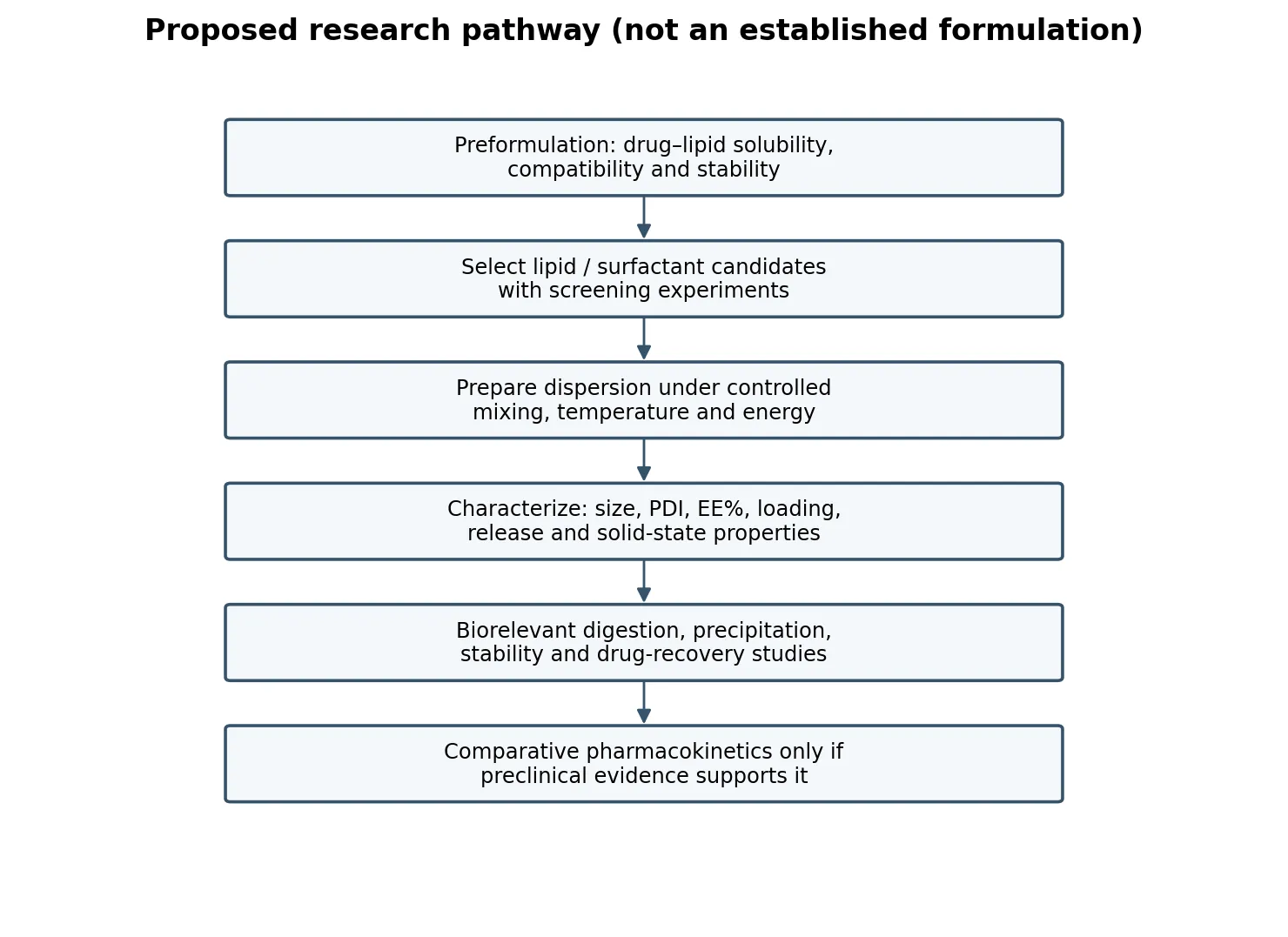
Figure 3: Proposed formulation and evaluation pathway; not a validated manufacturing process.
If the drug and materials tolerate heat, a candidate hot-homogenization workflow may be screened: melt the selected lipid under controlled conditions; incorporate the drug based on measured solubility; prepare an aqueous surfactant phase at a suitable temperature; combine under controlled mixing; homogenize at defined pressure/cycles; then cool under controlled agitation to form SLNs. Consider cold homogenization or solvent-based approaches if thermal stability, loading or scale-up makes the hot process unsuitable.
3. Characterization methods
| Test | Suggested method | Key caution |
|---|---|---|
| Size / PDI | Dynamic light scattering (DLS) | Control dilution and temperature; report replicates; aggregates can bias results. |
| Zeta potential | Electrophoretic light scattering | Interpret with surfactant type and ionic strength; not a universal stability predictor. |
| Morphology | TEM or SEM | Drying/staining can introduce artefacts; microscopy complements, not replaces, DLS. |
| Assay / impurities | Validated HPLC/UPLC or justified stability-indicating method | Demonstrate specificity, accuracy, precision, range and robustness as appropriate. |
| EE% / free drug | Separate free drug using a justified method and assay free and total drug | Confirm mass balance; investigate membrane/filter binding and incomplete separation. |
| Drug loading | Drug associated with recovered nanoparticle fraction relative to defined nanoparticle mass | Define calculation convention explicitly. |
| Solid state | DSC; XRD when needed | Assess crystallinity and possible drug expulsion; no single method is definitive. |
| Release | Validated in-vitro release with suitable sampling/separation | Check sink conditions, recovery and method discrimination. |
| Biorelevant digestion | In-vitro lipolysis/digestion with phase distribution and drug recovery | Digestion can increase solubilization or cause precipitation. |
| Stability | Long-term/accelerated studies under justified conditions | Track assay, impurities, size/PDI, appearance, release and redispersibility. |
4. Calculations
Encapsulation efficiency (EE%) = [(total drug added − free/unencapsulated drug measured) / total drug added] × 100, provided separation and assay are suitable. Drug loading (%) = [drug mass associated with recovered nanoparticle fraction / mass of recovered nanoparticle material] × 100. Define the numerator and denominator because conventions differ across publications. For release testing, report cumulative drug released relative to analytically measured drug content and correct for sample withdrawal/replacement where appropriate.
5. Oral performance and comparative pharmacokinetics
Separate characterization from proof of an oral exposure benefit. First compare release and solubilization under conventional and biorelevant conditions; then examine digestion, drug precipitation and phase distribution. Only if these results support a rationale should a comparative pharmacokinetic study be planned against the approved oral product or another justified reference. Animal studies require institutional ethics approval and a justified model; human studies require applicable regulatory and ethics approvals.
Potential pharmacokinetic endpoints include AUC and Cmax, with Tmax and terminal half-life interpreted as appropriate. Study design, dose normalization, fed/fasted state, sampling, bioanalytical method, sample size and statistical analysis must be prospectively justified. Do not claim improved bioavailability unless comparative exposure data support the claim; a higher encapsulation efficiency or higher in-vitro release is not enough.
Challenges and Limitations
1. Drug-specific uncertainty
The public literature may not resolve suzetrigine’s drug–lipid partitioning, optimal lipid composition or digestion behavior. These properties must be measured. A nanocarrier should not be selected solely because similar carriers improved exposure for unrelated drugs.
2. Crystallinity and drug expulsion
Highly ordered lipid crystals can exclude incorporated drug during storage, leading to expulsion or altered release. A less ordered matrix may improve loading but reduce physical stability. The balance is composition- and process-dependent and requires solid-state characterization and stability data [3–6].
3. Reproducibility and scale-up
Particle size and distribution may shift with equipment geometry, batch volume, energy density, cooling rate and material lot. Laboratory sonication time does not translate directly to manufacturing scale. Scale-up must be based on relevant process variables and confirmed batches.
4. Digestion, precipitation and safety
Gastrointestinal fluids digest lipids, dilute surfactants and change drug partitioning. High pre-dose EE% may not predict the drug fraction available for absorption. Surfactants and other excipients require route- and exposure-appropriate justification; increasing systemic exposure may also change adverse-effect or interaction risks.
5. Analytical and evidence limitations
Nanoparticle assays can be biased by incomplete separation, adsorption to filters/membranes, matrix interference, dilution and recovery loss. Methods should be qualified or validated for their intended use, with mass balance where feasible. This narrative review reports no new experimental data and does not establish improved bioavailability or clinical superiority for suzetrigine-SLNs.
Future Perspectives
1. Compare SLNs with NLCs and other justified approaches after drug–lipid solubility and solid-state screening.
2. Use sequential DoE and risk assessment to quantify composition–process interactions and confirm the optimum independently.
3. Develop biorelevant digestion, precipitation and drug-recovery methods that complement conventional release testing.
4. Build a stability-indicating assay and use orthogonal particle/solid-state methods to detect chemical and physical changes.
5. Evaluate scale-up, drying and redispersion only when required by the intended dosage form.
6. Conduct comparative pharmacokinetics only after a strong mechanistic rationale, suitable product quality and ethical/regulatory approvals.
CONCLUSION
Suzetrigine is an FDA-approved non-opioid NaV1.8 inhibitor for moderate-to-severe acute pain in adults, while SLNs are an established platform for investigating selected drugs. QbD can improve the rigor of development by connecting the target product profile with material attributes, process parameters, CQAs, risk assessment, DoE and lifecycle controls. However, the general benefits of SLNs cannot be assumed to apply to suzetrigine. A credible programme must first demonstrate a relevant limitation of the conventional oral product, establish drug–lipid compatibility, characterize particles and digestion behavior, and test any proposed advantage through comparative pharmacokinetics. Until such data exist, enhanced oral bioavailability must remain the hypothesis under investigation—not an established outcome.
REFERENCES

Dr. Pravin P. Gadakh, Sejal Prakash Shimpi, Application of Quality by Design (QbD) for the Formulation and Evaluation of Solid Lipid Nanoparticles (SLNs) of Suzetrigine to Enhance Oral Bioavailability, Int. J. Sci. R. Tech., 2026, 3 (10), 1381-1387. https://doi.org/10.5281/zenodo.23690889
 10.5281/zenodo.23690889