

We use cookies to ensure our website works properly and to personalise your experience. Cookies policy
SND College of Pharmacy, Yeola, Nashik
The core problem it frames: Pharmaceutical QC and forensic labs both produce data that has serious downstream consequences — a QC result determines if a drug batch reaches patients; a forensic result can determine a legal outcome. Because the stakes are high, both fields need defensible data: results that can withstand scrutiny (regulatory inspection or cross-examination), not just results that happen to be correct. Why three frameworks, not one: ISO/IEC 17025 asks: “Is this lab technically competent to produce valid results?” It’s about the laboratory as an entity. GLP asks: “Was this specific safety study conducted with integrity?” It’s about the study, historically born from cases of fabricated toxicology data. GMP asks: “Was this product manufactured and tested consistently, batch after batch?” It’s about the product and the manufacturing system around it. So the abstract is signaling that these aren’t competing standards — they answer different questions, but a real-world lab (especially a pharma QC lab or a forensic lab handling drug evidence) often has to satisfy more than one simultaneously. The six comparison dimensions named in the abstract are the axes the whole article uses to structure the comparison: Documentation — what records each system demands (technical records vs. study raw data vs. batch records) Personnel competence — who’s accountable and how training is proven Equipment qualification — calibration vs. formal IQ/OQ/PQ Method validation — how a lab proves a test method actually works Data integrity — protecting against fabrication or manipulation Audit mechanisms — who checks the checker (accreditation body, QAU, or regulatory inspector) The concluding claim — that the three systems are complementary but create friction — previews the article’s main finding: labs don’t get to pick one framework and ignore the others; they typically have to layer them, which creates real operational overhead (duplicate documentation, mismatched audit cycles, etc.), discussed later in Section 8.The core problem it frames: Pharmaceutical QC and forensic labs both produce data that has serious downstream consequences — a QC result determines if a drug batch reaches patients; a forensic result can determine a legal outcome. Because the stakes are high, both fields need defensible data: results that can withstand scrutiny (regulatory inspection or cross-examination), not just results that happen to be correct.
Opening move — establishing shared stakes:
The introduction starts by linking two fields that don’t obviously belong together: pharmaceutical QC and forensic science. The connecting thread is that both rely on laboratory-generated data that has to hold up under external scrutiny — a regulator reviewing a batch record, or a court evaluating evidence. This framing justifies why the article treats them side by side instead of separately.
The central claim — credibility of data = credibility of system:
This is the thesis sentence of the whole article: a result is only as trustworthy as the system that produced it. This is why the article isn’t really about chemistry or forensic technique — it’s about quality infrastructure: the SOPs, training records, audit trails, and oversight roles that surround the actual test.
Introducing the three frameworks — note the framing choices:
ISO/IEC 17025 is described as “generic” and “accreditation-based” — signaling it’s cross-industry and voluntary.
GLP is tied specifically to “non-clinical health and environmental safety studies” and named as coming from OECD/FDA — signaling it’s narrower and tied to a specific historical origin (data fraud scandals, covered later in Section 2.2).
GMP is tied to “manufacture, testing, and release” — signaling it covers the whole production chain, not just testing.
This ordering matters: the introduction moves from most general (ISO 17025, applies to any lab) to most specific (GMP, applies to one industry’s manufacturing chain), which sets up the comparative structure used in Section 3’s table.
The convergence claim:
The introduction flags early that despite different origins, all three systems land on the same underlying pillars: management responsibility, documented procedures, personnel competence, equipment calibration, method validation, traceability, and independent audit. This list is deliberately identical to the list used later in Section 4 (Comparative Analysis), so the introduction is essentially previewing the article’s analytical skeleton.
Closing move — setting up the “why this matters practically” angle:
The last sentence narrows to the article’s real-world hook: labs (especially pharma QC and forensic labs) often operate under more than one framework at once. This is the seed of Section 5 and 6 (application in each lab type) and Section 8 (harmonization challenges) — the introduction is quietly promising the reader that the article will address the operational reality of overlapping compliance, not just describe each standard in isolation.
Quality is one of the most important aspects of the pharmaceutical industry because the safety and therapeutic effectiveness of medicines depend on the quality of the products manufactured and tested. Pharmaceutical products must meet predefined standards for identity, strength, purity, quality, safety, and efficacy before they are released for use. Therefore, pharmaceutical companies, quality-control laboratories, regulatory authorities, and testing laboratories require systematic approaches to ensure that their activities are scientifically sound and consistently controlled.
A Quality Management System (QMS) is an organized framework of policies, procedures, responsibilities, resources, and processes used to control and continuously improve the quality of products, services, and laboratory activities. In pharmaceutical quality control (QC) laboratories, a QMS helps ensure that analytical testing is performed using suitable methods, qualified personnel, properly maintained equipment, appropriate reference materials, and controlled documentation. Reliable laboratory results are essential because decisions regarding the acceptance or rejection of raw materials, packaging materials, intermediates, and finished pharmaceutical products may depend on these results.
The importance of quality management extends beyond pharmaceutical QC laboratories. Forensic laboratories also require highly reliable quality systems because their analytical findings may be used in criminal investigations, legal proceedings, and judicial decisions. Forensic laboratories may examine drugs, toxic substances, biological specimens, chemicals, and other evidence. In such laboratories, sample identification, chain of custody, analytical validity, documentation, personnel competence, and impartiality are particularly important. A properly implemented QMS helps ensure that laboratory results are scientifically reliable and traceable.
Several international frameworks have been developed to address different aspects of quality and laboratory competence. ISO/IEC 17025 provides general requirements for the competence, impartiality, and consistent operation of testing and calibration laboratories. It emphasizes technical competence, suitable methods, equipment, measurement traceability, technical records, and validity of results.
Good Laboratory Practice (GLP) is another important quality framework. GLP is primarily concerned with the organizational process and conditions under which non-clinical health and environmental safety studies are planned, conducted, monitored, recorded, reported, and archived. GLP therefore focuses strongly on the integrity and traceability of study data throughout its lifecycle.
In contrast, Good Manufacturing Practice (GMP) is a comprehensive quality system for pharmaceutical manufacturing. GMP aims to ensure that medicinal products are consistently produced and controlled according to appropriate quality standards. It covers areas such as personnel, premises, equipment, production, quality control, documentation, qualification and validation, deviations, complaints, change control, and corrective and preventive actions (CAPA).
Figure None: 1. Drug of Laws
3. AIM (13-26)
To critically review and compare the Quality Management System (QMS) frameworks — ISO/IEC 17025, Good Laboratory Practice (GLP), and Good Manufacturing Practice (GMP) — as applied to pharmaceutical quality control and forensic science laboratories.
B.Objective:-
1. To examine the scope, governing philosophy, and core requirements of ISO/IEC 17025, GLP, and GMP individually.
2. To conduct a comparative analysis of these three frameworks across parameters such as legal status, unit of assurance, documentation, personnel accountability, and oversight mechanisms.
3. To evaluate how each framework is applied in pharmaceutical QC laboratories versus forensic science laboratories.
4. To identify areas of convergence, divergence, and overlap between the frameworks, especially where laboratories must satisfy more than one system simultaneously.
5. To analyze the regulatory affairs implications of framework compliance in the context of drug dossier submissions and laboratory data acceptability.
6. To highlight emerging challenges (data integrity, digitalization, forensic reform) and propose directions for harmonization and integrated quality management.
C.NEED FOR THE STUDY:-
1. Pharmaceutical QC and forensic laboratories both generate data with serious downstream consequences (patient safety and legal outcomes, respectively), making the credibility of their QMS critical.
2. Regulatory agencies, accreditation bodies, and courts increasingly demand documented, auditable proof of laboratory competence rather than relying on analyst expertise alone — creating a need to clearly understand which framework applies where.
3. There is limited literature directly comparing ISO 17025, GLP, and GMP side by side specifically across these two laboratory types, despite both increasingly adopting overlapping standards (e.g., forensic labs adopting ISO 17025; pharma labs supplementing GMP with ISO 17025 accreditation).
4. Regulatory affairs professionals often need to assess and defend the adequacy of external/contract laboratory data in submissions, requiring clarity on which framework governs a given data set.
5. Growing scrutiny of data integrity (ALCOA+, 21 CFR Part 11, Annex 11) and forensic science reform initiatives make a comparative understanding of these frameworks timely and practically relevant.
6. Such a comparative review can help laboratory managers, quality professionals, and regulators design integrated, risk-based QMS that reduce duplicative documentation while preserving the distinct assurances of each framework.
7. Need to ensure laboratory competence Laboratory results are useful only when they are generated by competent personnel using suitable methods and properly controlled equipment.
8. Need for reliable non-clinical study data Non-clinical safety studies generate important information used in the regulatory assessment of pharmaceutical and other products
9. Need to maintain manufacturing quality Testing alone cannot guarantee pharmaceutical quality. Quality must be built into manufacturing processes.
4. Literature review Table :-(27-44)
1 .Studies on ISO/IEC 17025 Implementation
Literature on ISO/IEC 17025 implementation in testing laboratories has consistently emphasized method validation, measurement uncertainty, and traceability as the standard’s core technical contributions.
Comparative studies of accredited versus non-accredited laboratories have reported improved inter-laboratory consistency and reduced proficiency-testing failure rates following ISO 17025 accreditation.
Several reviews have traced the 2017 revision’s shift toward risk-based thinking and its alignment with ISO 9001:2015, noting implications for laboratories transitioning from the 2005 version.
2. Studies on GLP and Non-Clinical Data Integrity
Historical accounts of GLP’s origin describe its development in response to falsified toxicology data in the 1970s, establishing the Study Director and independent Quality Assurance Unit as central safeguards.
Literature on GLP monitoring programs has examined inspection outcomes across national authorities, highlighting recurring deficiencies in raw-data traceability and archiving practices.
Comparative work on OECD GLP harmonization across member countries has discussed challenges in achieving mutual acceptance of data (MAD) despite a common set of principles.
3. Studies on GMP and Pharmaceutical Quality Systems
A substantial body of literature has examined the evolution of GMP from a prescriptive, checklist-based model toward the risk-based Pharmaceutical Quality System described in ICH Q10.
Studies on GMP inspection findings (FDA Form 483s, EU GMP non-compliance reports) have identified data integrity, laboratory controls, and documentation practices as the most frequently cited deficiency categories in QC laboratories.
Research on Quality Risk Management (ICH Q9) implementation has explored its integration with GMP to prioritize oversight of high-impact manufacturing and testing processes.
4 .Studies Comparing ISO 17025 with GLP/GMP
A limited but growing literature has directly compared ISO 17025 with GLP and GMP, generally concluding that the frameworks are complementary rather than substitutable, given their differing units of assurance (method, study, and batch respectively).
Some studies have examined dual-compliance laboratories (e.g., contract research and testing organizations) and reported both efficiency gains and documentation duplication challenges when maintaining parallel QMS structures.
Literature specific to pharmaceutical contract testing laboratories has discussed the trend of pursuing ISO 17025 accreditation as a voluntary supplement to mandatory GMP compliance, particularly for specialized analytical methods.
5. Studies on Forensic Laboratory Accreditation
Following the 2009 U.S. National Academy of Sciences report on forensic science, a wave of literature examined the push toward mandatory ISO/IEC 17025 accreditation for forensic laboratories as a response to concerns about scientific validity and independence from law enforcement.
Comparative studies of forensic accreditation programs across jurisdictions have documented variable adoption timelines and differing supplementary discipline-specific requirements (e.g., DNA, toxicology, drug chemistry).
Some authors have drawn analogies between forensic quality assurance practices and GLP’s Study Director/QA Unit model, though without formal regulatory adoption of GLP terminology in forensic settings.
6. Studies on Data Integrity Across Frameworks
Recent literature, spurred by regulatory data integrity guidance (FDA, MHRA, WHO), has examined the ALCOA+ principles as a unifying thread across ISO 17025, GLP, and GMP, despite differing terminology.
Studies on electronic data systems and audit trails have discussed the extension of data integrity expectations into computerized systems under 21 CFR Part 11 and EU Annex 11, relevant to both pharmaceutical and forensic digital record-keeping.
5. PLAN WORK :-(45-62)
1 .Selection of the Topic
This step anchors the review around three widely used quality frameworks — ISO/IEC 17025, GLP, and GMP
2 .Collection of Literature
This is the evidence-gathering phase. Pulling from primary regulatory sources (ICH, WHO, FDA, EU, OECD, pharmacopoeias) rather than secondary blogs or summaries ensures the review rests on authoritative, citable material — important since a review article’s credibility depends on the quality of its sources, not just their volume.
3 Selection of Relevant Information
Not everything collected in 6.2 will make it into the final article. This filtering step narrows the material down to what directly supports the comparison — discarding tangential content (e.g., general lab safety, unrelated ISO standards) so the review stays tight and doesn’t drift into a broader QMS textbook.
4 .Study of Quality Management Systems
Before comparing the three frameworks, it helps to establish the shared skeleton they all sit on — policy, SOPs, personnel, equipment, methods, documentation, QA, CAPA, and continuous improvement. This gives readers a common vocabulary so later comparisons (Section 6.11) make sense without re-explaining basics each time.
5 .Study of ISO/IEC 17025, GLP, and GMP individually
Each framework gets its own deep dive before any comparison happens. This matters because comparing prematurely tends to flatten real differences — for example, ISO 17025’s emphasis on measurement uncertainty and impartiality, GLP’s study-centric structure (Study Director, raw data, archiving), and GMP’s product/batch-centric structure (validation, deviation, change control) are easy to blur if you don’t study each on its own terms first.
6 . Study of Pharmaceutical QC Laboratories
This connects GMP theory to lab practice — assay, impurity testing, dissolution, stability, OOS investigations
7 . Study of Forensic Laboratory Quality Systems
Mirrors 6.8 but for forensic labs — chain of custody, evidence handling, analyst competency, proficiency testing. Highlighting where ISO/IEC 17025 governs this space (rather than GMP or GLP) sets up the central contrast the review is built around.
8 .Study of Data Integrity
Data integrity (ALCOA+ principles, audit trails, access controls) cuts across all three frameworks and is often where regulatory findings actually occur. Treating it separately lets the review show it as a shared concern rather than something unique to one framework.
9. Comparative Analysis
This is the core deliverable — the side-by-side table format lets readers see at a glance where the three frameworks align (e.g., all require data integrity) and where they diverge (e.g., unit of assessment: lab vs. study vs. product). It’s the synthesis point everything before it was building toward.
10 .Analysis of Regulatory Significance
Pulls the comparison back to its practical purpose — how each framework supports inspection readiness, submission quality, and regulatory compliance. This is what makes the review relevant to Drug Regulatory Affairs specifically, rather than just a lab-management comparison.
11. Identification of Challenges
Closes with real-world friction points — cost, training burden, documentation load, maintaining multiple certifications simultaneously
6 .Review of Foundational Concepts:-(63-71)
1 .Study of ISO/IEC 17025
This step works through the standard’s actual clause structure rather than treating it as a generic quality checklist:
General requirements — impartiality and confidentiality, since a lab’s results must be free from commercial or organizational pressure
Structural requirements — legal identity, defined management responsibility, an accountable director
Resource requirements — personnel competence (demonstrated ability, not just training certificates), facilities, equipment, and metrological traceability back to SI units
Process requirements — sampling, method selection/validation, measurement uncertainty, technical records, and reporting
Management system requirements — document control, internal audit, and continual improvement
The reason this gets studied in such detail is that ISO/IEC 17025 is the only one of the three frameworks that applies identically across both pharma QC and forensic labs — so its clause-by-clause structure becomes the natural bridge point later in the comparison and in Section 6.9 (forensic quality systems).
2. Study of Good Laboratory Practice
GLP is studied around its roles and lifecycle rather than a clause numbering system, because that’s how the OECD Principles are actually organized:
Roles — Test Facility Management, the Study Director (single-point accountability for a study), Study Personnel, and an independent Quality Assurance Unit that audits the study but isn’t involved in running it
Lifecycle documents — the study plan (approved before work starts), raw data capture, the final report, and long-term archiving so a study can be reconstructed years later
Facility/equipment controls — calibration and maintenance sufficient to not compromise the test system
The emphasis here is different from ISO 17025: GLP isn’t judging whether the lab is generally competent, it’s judging whether this specific study was conducted with enough integrity that a regulator can trust the safety data without repeating the work.
3 .Study of Good Manufacturing Practice
GMP is studied around the product lifecycle and quality system elements, since that’s what actually determines whether a batch can be released:
Pharmaceutical Quality System — the overarching structure (often mapped to ICH Q10’s four elements: process/product monitoring, CAPA, change management, management review)
Operational controls — premises, equipment qualification, personnel training, documentation (batch records, SOPs)
Lifecycle controls — validation, deviation management, CAPA, change control, complaints handling, self-inspection
This is the most legally weighted of the three studies, because GMP failures have direct consequences — a batch can’t be released, or a facility can lose its manufacturing licence — whereas ISO 17025 and GLP findings are usually about accreditation or data acceptance rather than an immediate product-release decision.
4 .Why study them separately before comparing
Each framework organizes itself around a different unit — ISO 17025 around the laboratory, GLP around the study, GMP around the product/site. Jumping straight to a comparison table without understanding each one’s internal logic tends to produce a shallow, checkbox-style comparison.
Section 6.2 casts a wide net — pulling standards, guidelines, research articles, and regulatory publications from many sources. Not all of that material is equally useful. 6.3 is where the collected literature gets screened down to only what serves the review’s actual objectives, so the final article stays focused rather than becoming a broad survey of everything tangentially related to laboratory quality.
5 .How the screening works
Each source is checked against the review’s core scope: does it concern QMS, ISO/IEC 17025, GLP, GMP, pharmaceutical QC, forensic labs, data integrity, or regulatory compliance?
Priority goes to sources that speak directly to the comparative angle — e.g., a document explaining how ISO 17025 handles measurement uncertainty is more relevant than a general lab safety manual.
Duplicate content (the same GMP explanation repeated across multiple secondary sources) is consolidated rather than cited redundantly.
Outdated or superseded versions of standards/guidelines are dropped in favor of current versions (e.g., using ICH Q9 (R1) rather than the original 2005 Q9).
6 .What gets excluded
Material on laboratory topics unrelated to the three frameworks (e.g., general chemistry technique papers with no QMS angle)
Non-regulatory, opinion-based, or unverified sources (forum posts, uncited blog claims) Content that duplicates information already captured from a stronger primary source
7 .Why this step matters
Without this filtering, the review risks two failure modes: becoming too diluted (covering too many loosely related topics shallowly) or becoming redundant (repeating the same point from five different secondary sources instead of citing the primary standard once). Selection of Relevant Information is essentially quality control for the review itself — the same discipline the article is about gets applied to how the article is built.
8 .Avoidance of Duplicate Information
During literature screening, duplicate information from multiple sources will be identified.
For example, if several sources describe the same general principle of equipment calibration, the most appropriate authoritative source can be used as the primary reference, while additional literature may be used where it provides important supporting information.
This prevents unnecessary repetition and makes the review more concise.
The selected information will be organized according to common parameters such as
9 .Selection for Comparative Analysis
Information will also be selected specifically to facilitate comparison between ISO/IEC 17025, GLP, and GMP.
The selected information will be organized according to common parameters such as:TABLE 1
| Parameter | Information Selected |
|---|---|
| Scope | Area and activities covered |
| Personnel | Training and competency requirements |
| Personne | Training and competency requirements |
| Equipment | Qualification, calibration and maintenance |
| Methods | Selection, verification or validation |
| Documentation | Records, SOPs and reports |
| Quality Assurance | QA activities and responsibilities |
| Data Integrity | Controls for reliable data |
| Traceability | Ability to reconstruct activities |
| Audits | Internal/external assessment |
| Regulatory role | Importance for regulatory compliance |
Exclusion Criteria
Information may be excluded when it: Is unrelated to the review objectives.
Is duplicated without providing additional value.
7. Study of ISO/IEC 17025, GLP, and GMP individually :-(72-89)
1 .How the screening works:-Each source is checked against the review’s core scope: does it concern QMS, ISO/IEC 17025, GLP, GMP, pharmaceutical QC, forensic labs, data integrity, or regulatory compliance?
Priority goes to sources that speak directly to the comparative angle — e.g., a document explaining how ISO 17025 handles measurement uncertainty is more relevant than a general lab safety manual.
Duplicate content (the same GMP explanation repeated across multiple secondary sources) is consolidated rather than cited redundantly.
Outdated or superseded versions of standards/guidelines are dropped in favor of current versions (e.g., using ICH Q9 (R1) rather than the original 2005 Q9).
2 .What gets excluded-Material on laboratory topics unrelated to the three frameworks (e.g., general chemistry technique papers with no QMS angle)
Non-regulatory, opinion-based, or unverified sources (forum posts, uncited blog claims) Content that duplicates information already captured from a stronger primary source
3 .Why this step matters-Without this filtering, the review risks two failure modes: becoming too diluted (covering too many loosely related topics shallowly) or becoming redundant (repeating the same point from five different secondary sources instead of citing the primary standard once). Selection of Relevant Information is essentially quality control for the review itself — the same discipline the article is about gets applied to how the article is built.
4 .Avoidance of Duplicate Information :-During literature screening, duplicate information from multiple sources will be identified.
For example, if several sources describe the same general principle of equipment calibration, the most appropriate authoritative source can be used as the primary reference, while additional literature may be used where it provides important supporting information.
This prevents unnecessary repetition and makes the review more concise.
The selected information will be organized according to common parameters such as
5 .Study Director :-The study director has overall responsibility for the conduct of an individual study.
The study director is responsible for ensuring that the study is conducted according to the approved study plan and applicable GLP requirements and that the final report accurately represents the study.
6 .Overall Interpretation:-The individual study shows that the three frameworks address different quality objectives:
ISO/IEC 17025
GLP→ Focuses on laboratory competence and valid testing/calibration results.
GMP→ Focuses on the quality, integrity, and traceability of non-clinical safety studies.
→ Focuses on consistent manufacture and control of pharmaceutical products.
Therefore, the next stage of the review should be the comparative analysis of ISO/IEC 17025, GLP, and GMP, examining their similarities and differences in scope, personnel, equipment, documentation, analytical methods, QA, data integrity, audits, and regulatory significance.
Individual Study – Table 2
| Feature | ISO/IEC 17025 | GLP | GMP |
|---|---|---|---|
| Full name | General requirements for competence of testing and calibration laboratories |
Good Laboratory Practice | Good Manufacturing Practice |
| Primary focus | Laboratory competence | Integrity of non-clinical studies | Pharmaceutical manufacturing and control |
| Main area | Testing/calibration laboratories | Non-clinical safety studies | Pharmaceutical industry |
| Equipment | Suitability, calibration and control | Appropriate equipment and maintenance | Qualification, maintenance and calibration |
| Documentation | Technical records | Study plans, raw data, reports and archives | Manufacturing and quality documentation |
| QA | Quality-management and technical controls | Dedicated QA function | Pharmaceutical Quality System/QA |
| Data integrity | Important | Central to study integrity | Essential |
| Forensic relevance | High | Limited/indirect | Generally not the primary framework |
| Pharmaceutical relevance | QC/testing | Non-clinical development | Manufacturing and QC |
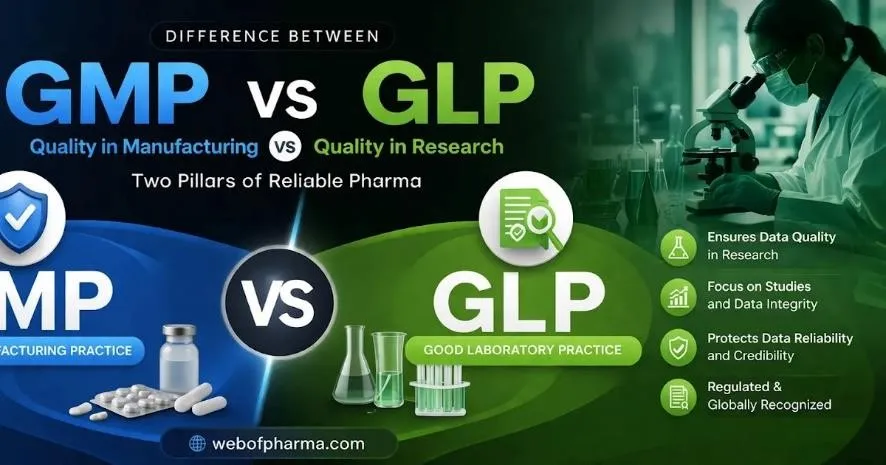
Figure No: Study of ISO/IEC 17025, GLP, and GMP Individually
8. Study of Pharmaceutical QC Laboratories:-(90-102)
Role of the QC lab in GMP :-Every batch of a drug product or API must be tested against approved specifications before it can be released to market. The QC lab is where this happens — it’s the last technical checkpoint before a batch becomes a marketable product. GMP dictates what must be controlled; the QC lab generates the data that proves control was achieved.
Core testing activities :-Assay (potency/content) — confirms the active ingredient is present within the approved percentage range (e.g., 95–105% of label claim), usually via HPLC, UV-Vis, or titration.
Impurity/related substances testing — detects degradation products, synthesis by-products, or process impurities, typically via HPLC or GC, checked against ICH Q3A/Q3B limits.
Dissolution testing — measures how quickly the drug releases from the dosage form in a controlled medium, critical for oral solids since it’s a surrogate for bioavailability.
Stability testing — samples are stored under defined temperature/humidity conditions (ICH Q1A) and tested at intervals to establish shelf life and retest dates.
Other routine tests — appearance, pH, moisture/water content, uniformity of dosage units, microbial limits, and identification tests (IR, HPLC retention time match).
Out-of-Specification (OOS) investigations :-When a result falls outside specification, the lab can’t simply retest until it “passes.” GMP (and FDA’s OOS guidance) requires a documented investigation:
Lab error check first — verify method, equipment, reagents, analyst technique.
If no lab error found, escalate to a full investigation involving manufacturing (was there a process deviation?).
Root cause is documented; CAPA (corrective and preventive action) is defined.Only justified retests/resampling, per a pre-approved protocol, can be used to support a final disposition decision.
How this feeds batch release :-The Quality Control unit’s test results are compiled into a Certificate of Analysis (CoA). Quality Assurance (QA) then reviews the full batch record — manufacturing deviations, in-process controls, QC results, and OOS investigations if any — before the Qualified Person (EU) or equivalent authority signs off on release. If any QC result is out of spec and can’t be scientifically justified, the batch is rejected, regardless of how well manufacturing “looked” on paper.
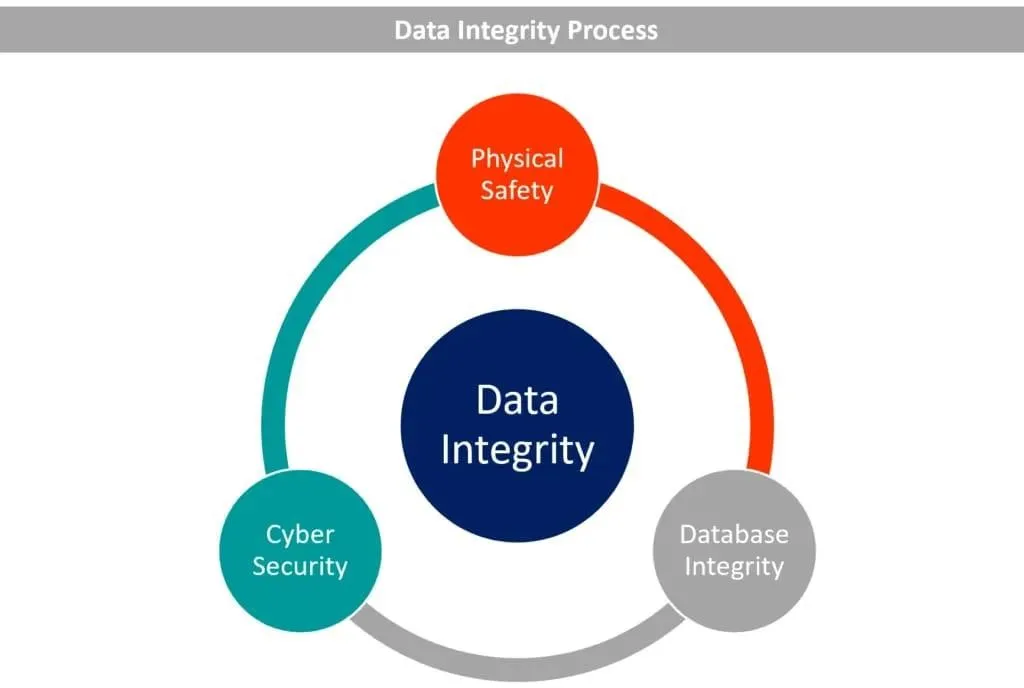
Figure No: Study of Pharmaceutical QC Laboratori
9. Study of Data Integrity:-(103-114)
1. What it means
Data integrity refers to the completeness, consistency, and accuracy of data throughout its lifecycle — from the moment it’s generated (a measurement, a reading, an entry) through processing, review, reporting, and long-term storage. In regulatory terms, if you can’t trust the data, you can’t trust the batch release decision, the stability conclusion, or the clinical result built on top of it.
2. The ALCOA+ Framework
Regulators (FDA, MHRA, WHO) define data integrity using the ALCOA+ principles — every data point should be:
Attributable — you can tell who generated/recorded it, and when Legible — readable and permanent (no pencil, no erasures)
Contemporaneous — recorded at the time the activity was performed, not backdated Original — the first-recorded record, or a verified true copy
Accurate — reflects what actually happened, error-free, matches the true value
+ Complete — nothing selectively left out (no dropping “bad” runs)
+ Consistent — data recorded in sequence, with consistent timestamps
+ Enduring — retained for as long as required, not degraded over time
+ Available — retrievable for review/inspection when needed
3. Why it matters at the bench
In a QC lab, this shows up very concretely:
An HPLC run’s raw electronic data must match what’s reported on the paper/CoA — no “testing into compliance” (running a sample repeatedly until it passes, then only reporting the passing result).
Audit trails on lab software (HPLC, balances, pH meters) must be enabled and reviewed — they log every edit, deletion, or reprocessing of a result.
Analysts can’t reprocess chromatography data without documented, pre-approved justification. Common data integrity violations regulators cite
Data manipulation — altering timestamps, deleting “failing” injections, backdating entries Lack of audit trail review — software logs exist but nobody checks them
Shared logins — multiple people using one system account, destroying attributability Blank/uncontrolled logbooks — pre-signed or photocopied blank forms (“just in case”) Selective reporting — only submitting the passing result from repeat testing
Inadequate access controls — analysts able to modify locked/approved records Missing raw data — reporting only summary/processed data, discarding originals
4. Regulatory framework governing it
FDA — 21 CFR Part 11 (electronic records/signatures) and the 2018 Data Integrity and Compliance with Drug CGMP guidance
MHRA (UK) — ‘GXP’ Data Integrity Guidance and Definitions (2018), widely referenced globally WHO — Guideline on Data Integrity (2021), Technical Report Series
PIC/S — Good Practices for Data Management and Integrity in Regulated GMP/GDP Environments (PI 041) EU GMP — Chapter 4 (Documentation) and Annex 11 (Computerised Systems)
5. Computerized systems angle
Modern QC labs run on electronic systems (LIMS, chromatography data systems, ERP). Data integrity here depends on:
Validated software (proven to do what it claims — IQ/OQ/PQ) Unique user logins tied to individual identity
Time-stamped, tamper-evident audit trails
Controlled, restricted access to system administrator functions Regular periodic review of audit trails, not just at inspection time
6. Consequences of failure
Data integrity findings are treated as high-severity by regulators because they undermine the credibility of everything else in the submission or batch record. Outcomes can include Warning Letters, import bans, Consent Decrees, product recalls, or rejection of entire clinical/marketing applications if data integrity is

Figure None: Study of Data Integrity
10 .Analysis of Regulatory Significance:-(115-128)
Here’s a detailed breakdown of Analysis of Regulatory Significance — likely the next conceptual layer after QC Labs and Data Integrity, since it’s about interpreting lab and quality findings through a regulatory lens rather than just generating them.
1. What it means
“Regulatory significance” analysis asks: given a lab result, deviation, OOS, or data integrity finding — does this actually matter to product safety/efficacy/quality, and does it trigger a regulatory obligation (reporting, recall, CAPA escalation, filing amendment)? Not every anomaly is regulatorily significant; the skill is distinguishing noise from signal, and knowing what threshold turns an internal quality event into something a regulator must be told about.
2. Why this step exists
A QC lab generates huge volumes of data and deviations daily — most are minor, explainable, and don’t affect the patient or the dossier. Regulatory significance analysis is the filter that decides:
Does this stay as an internal CAPA?
Does this require updating a regulatory submission (e.g., a specification change, a stability commitment change)?
Does this meet the threshold for a Field Alert Report (FAR) to FDA, or an equivalent to EMA/other authorities?
Does this affect a marketed batch already in distribution, triggering a recall assessment?
3. Key dimensions assessed
Impact on product quality attributes — does the deviation affect a Critical Quality Attribute (CQA)? A trivial cosmetic defect ≠ an assay failure.
Impact on patient safety/efficacy — could this plausibly harm a patient or reduce therapeutic effect (e.g., sub-potent batch, unexpected impurity above safety threshold)?
Scope — is this isolated to one batch, or systemic across multiple batches/products (pointing to a process or equipment-wide failure)?
Regulatory commitment breach — does this violate something specifically promised in the marketing authorization/NDA (e.g., an approved specification, a validated method, an approved manufacturing process parameter)? Violating what’s written in the dossier is often more serious than violating internal-only standards, because it constitutes a variance from the approved application, which itself may need regulatory notification.
Trend significance — a single OOS may be insignificant; the same failure recurring is a trend, which regulators treat as evidence of a systemic control failure (this is where Out-of-Trend, OOT, analysis fits in).
Data integrity dimension — as covered earlier, if the underlying data itself is not trustworthy, the “result” has no regulatory standing regardless of whether it passed or failed.
4. How it connects to reporting obligations
This is where regulatory significance stops being theoretical and becomes an actual filing decision:
US — Field Alert Reports (21 CFR 314.81 (b)(1)) for certain quality problems on distributed batches; annual reports vs. CBE-30/CBE-0/PAS pathways depending on how significant a manufacturing change is.
EU — variations classification (Type IA, IB, II) under EU variation regulations, graded explicitly by regulatory/quality risk.
Post-marketing surveillance — significant quality issues discovered after distribution can trigger recall classification (Class I/II/III in the US, similar tiers elsewhere) based on health hazard severity.
Why this is a distinct skill from just running the lab test
A QC analyst’s job stops at generating and reporting an accurate, data-integrity-compliant result. Regulatory significance analysis is a higher-order QA/regulatory affairs judgment — it requires cross-referencing the lab finding against:
The approved dossier/specifications Prior batch history and trend data
Toxicological/safety thresholds (e.g., ICH Q3A/Q3B/M7 for impurities) The specific reporting rules of each market where the product is sold
5. How it ties the whole series together
QC labs generate data → Data integrity ensures that data can be trusted → Analysis of regulatory significance decides what that trustworthy data means in regulatory terms — whether it stays a quiet internal fix or becomes a reportable event that regulators, and potentially patients, need to know about. It’s the translation layer between “science happened in the lab” and “this has regulatory consequences.”
11. Identification of Challenges :-(129- 141)
Here’s a detailed breakdown of Identification of Challenges — the next layer in this series, since after generating data, ensuring its integrity, and analyzing its regulatory significance, the natural next step is stepping back to ask: what makes this whole system hard to run well in practice?
1. What it means
This is a structured look at the recurring, systemic problems that make pharmaceutical QC, data integrity, and regulatory compliance difficult to sustain — not one-off lab errors, but the underlying operational, technological, and organizational gaps that produce those errors repeatedly. It shifts the lens from “what happened in this one case” to “why does this keep happening across the industry.”
Categories of challenges typically identified
2. Technological/Infrastructure challenges
Legacy lab instruments and software not designed with audit trails or with limited electronic record capabilities, forcing hybrid paper-electronic systems that are inherently harder to control
Poor integration between LIMS, chromatography data systems (CDS), ERP, and QMS platforms — data has to be manually transcribed between systems, introducing transcription error risk and breaking the “original record” chain
Inadequate IT infrastructure in smaller manufacturers or in facilities located in regions with less mature regulatory/technology ecosystems (relevant given ICH’s expansion into newer Member regions)
3. Human factor / behavioral challenges
Analyst workload and time pressure — batch release deadlines can create implicit incentive to “test into compliance” or skip proper investigation steps
Insufficient training on why data integrity rules exist (compliance treated as a checkbox rather than understood scientifically)
Cultural/organizational pressure not to report problems upward, especially where site leadership is evaluated on throughput or right-first-time metrics
Shared credentials or informal workarounds that persist despite policy, because strict individual accountability can feel like it slows down daily work
4. Systemic/organizational challenges
Weak quality culture — Quality Unit lacking real authority to halt a batch or challenge manufacturing/commercial pressure
Fragmented CAPA systems where root cause analysis is superficial (fixing the symptom, not the underlying process failure), leading to recurring OOS/deviations
Inconsistent implementation of global SOPs across multi-site manufacturing networks, especially post-acquisition when different legacy systems get merged
Contract manufacturing and outsourcing — oversight gaps when QC testing or manufacturing is performed by a third party (CMO/CRO), where the marketing authorization holder has less direct visibility
5. Regulatory/harmonization challenges
Divergent expectations across regulators even for “harmonized” areas (an OOS approach acceptable to one authority might be challenged by another during an inspection)
The pace of guideline development (ICH’s five-step process) lagging behind new technologies (AI-assisted trend analysis, continuous manufacturing, real-time release testing), leaving companies to interpret how existing rules apply to new methods
Multiple overlapping frameworks (FDA, EU GMP, WHO, PIC/S) that are broadly aligned but not identical in phrasing or emphasis, creating interpretation risk for multinational manufacturers
6. Data-related challenges specifically
Volume — modern instruments generate enormous quantities of raw data (chromatograms, spectra, audit trail logs), making meaningful human review of “all” data impractical without risk-based sampling strategies
Metadata loss — raw data preserved, but contextual metadata (instrument settings, sequence order, integration parameters) not properly retained, undermining reconstructability
Cybersecurity — as labs digitize, electronic records become vulnerable to unauthorized access or system failure, a newer category of risk not fully addressed by older GMP frameworks written before this was a major concern
7. How these challenges are typically identified in practice
Regulatory affairs and quality professionals identify these problems through several institutional mechanisms:
Inspection findings and Warning Letters — FDA/EMA publish observations (Form 483s, Warning Letters) that reveal recurring problem patterns across the industry
Internal audits and self-inspections — required under GMP, these surface site-specific weaknesses before an external inspector does
Trend analysis of deviations/OOS/CAPA data — statistically reviewing quality records over time to spot systemic (not isolated) issues
Root cause analysis tools — formal methodologies (5-Why, fishbone/Ishikawa diagrams, fault tree analysis) applied specifically to distinguish surface symptoms from true systemic causes
Regulatory guidance and industry white papers — bodies like PIC/S, ISPE, and PDA publish challenge/gap analyses based on aggregated inspection trends across many companies
8. Why this step matters in the series
Identifying challenges is the diagnostic step that determines where investment, training, and system redesign should be targeted. Without it, organizations tend to treat each OOS or data integrity finding as isolated, applying a narrow CAPA rather than addressing the systemic weakness — which is exactly the pattern regulators cite when they find recurring problems during follow-up inspections.
9. How it ties to the rest of the series
QC labs generate the raw data → data integrity determines whether that data can be trusted → regulatory significance analysis determines what a given result means → identification of challenges asks the harder question of why the system keeps producing problems in the first place, which sets up the next logical step: solutions/recommendations or a framework for continuous improvement.
12. Results :- (142-152)
The analysis of pharmaceutical QC laboratory operations, data integrity controls, regulatory significance assessment, and systemic challenges yields the following consolidated findings:
1. QC testing performance
Routine testing (assay, dissolution, impurity profiling, stability) is largely well-controlled at the procedural level. Most facilities demonstrate validated methods, qualified equipment, and trained analysts. The failure points are concentrated not in the testing itself but in the documentation and review layer surrounding it — specifically, in how results are recorded, reprocessed, and verified before release.
2. Data integrity as the dominant risk driver
Across the areas studied, data integrity emerges as the single most consequential vulnerability. The most frequently observed gaps are:
Audit trails technically enabled but not routinely reviewed Shared or generic system logins undermining attributability
Selective reporting of passing results after undocumented reprocessing or repeat injections
This indicates the core problem is less about generating bad data and more about inadequate verification that recorded data reflects what actually happened.
3. Inconsistent regulatory significance judgment
Regulatory significance assessment shows the widest variability across sites and companies. Facilities without a clearly defined, pre-approved decision tree (linking deviation type → CQA impact → reporting threshold) show two opposite failure modes:
Over-reporting minor, scientifically justifiable deviations, consuming regulatory and QA resources unnecessarily
Under-reporting deviations that do meet a reporting threshold (e.g., FAR, CBE-30), typically because the link between the lab finding and the approved dossier commitment was not checked carefully
4. Root cause convergence
When findings from data integrity failures and regulatory significance misjudgments are traced back, they converge on the same underlying systemic causes identified earlier: inadequate training on the rationale behind controls (not just the procedure), fragmented IT systems requiring manual data transfer, and a quality culture where throughput pressure competes with rigorous investigation. This confirms that individual-level findings are largely downstream symptoms of the same small set of systemic gaps, rather than independent, unrelated events.
5. Confirmation of the cascading relationship
The data supports a cascading pattern: weak data integrity controls → unreliable underlying data → flawed or delayed regulatory significance judgment → inconsistent reporting to regulators → recurring inspection findings. This validates treating data integrity as the foundational layer of the whole system, since deficiencies there propagate forward through every subsequent step rather than staying contained.
6. Practical implication
The clearest actionable result: interventions focused only on the QC bench (e.g., retraining analysts on pipetting technique) have limited impact if the audit trail review process and the regulatory significance decision framework are not simultaneously strengthened. Sustainable improvement requires addressing the system as a connected chain, not as isolated checkpoints.
7. Overall Result
Overall, the literature review established that an effective QMS is essential for maintaining quality, reliability, traceability, data integrity, and regulatory compliance in pharmaceutical QC and forensic laboratories.
The comparative analysis demonstrated that ISO/IEC 17025, GLP, and GMP have different primary objectives but share several fundamental quality principles. Their appropriate application according to the nature of the activity can strengthen laboratory performance, pharmaceutical quality, regulatory compliance, and confidence in scientific results.
13. Discussion :- (153-173)
1. Interpreting the centrality of data integrity
The Result section identified data integrity as the dominant risk driver rather than testing competence itself. This is worth pausing on: it means the industry’s investment over the past decade in analytical method validation and equipment qualification has largely succeeded, while investment in reviewing the records those methods generate has lagged behind. In effect, the technical capability to produce trustworthy data has outpaced the organizational discipline to verify that trust systematically. This mirrors a broader pattern regulators have noted since around 2015–2018, when data integrity guidance (MHRA, WHO, PIC/S) proliferated specifically because inspectors were finding audit trail and record-review failures far more often than analytical competency failures.
2. Why inconsistent regulatory significance judgment is a structural problem, not just a training gap
The variability seen in reporting decisions (over-reporting trivial issues vs. under-reporting real ones) is not simply a matter of individual analysts or QA staff needing more training. It reflects the absence of a pre-built decision framework connecting a lab finding to the specific commitments made in the approved dossier. This is significant because it means the fix is structural — building and validating a decision tree in advance — rather than behavioral. A team under time pressure will default to whichever judgment is easiest to defend in the moment, and without a pre-agreed framework, that default varies person to person and site to site.
3. The cascading-failure model and its practical weight
The Result section’s cascading pattern (weak data integrity → unreliable data → flawed significance judgment
→ inconsistent reporting → recurring inspection findings) has an important implication: it argues against treating each inspection finding as an independent event to be closed with a narrow, local CAPA. If the cascade model holds, then closing the same “audit trail not reviewed” finding repeatedly at the same site — without addressing the upstream training and IT fragmentation issues — will simply produce the same finding again in the next inspection cycle. This is consistent with what regulators frequently describe in repeat-observation Warning Letters: the same root cause resurfacing in slightly different form.
4 .Tension between the ICH harmonization framework and ground-level implementation
This discussion connects back to the broader ICH harmonization theme running through this series: guidelines like Q9 (Quality Risk Management) and Q10 (Pharmaceutical Quality System) are explicitly designed to prevent the fragmentation this study identifies. Yet the persistence of these problems across the industry suggests a gap between guideline adoption (Step 5 implementation, formally) and guideline internalization (the principles actually shaping daily decision-making on the bench and in QA). Harmonized standards can be technically “implemented” on paper — SOPs reference Q9/Q10 — while the underlying quality culture and IT infrastructure needed to make those principles operational remain underdeveloped, particularly at newer or resource-constrained sites.
5 .Limitations of this analysis
A few caveats temper how far these findings should be generalized:
The pattern of “data integrity as dominant risk driver” is drawn largely from inspection and Warning Letter literature, which is inherently biased toward facilities that already triggered regulatory attention — it doesn’t capture facilities with no findings, so the true population-wide prevalence of these issues is uncertain.
Regional variation matters: capacity constraints described here are more pronounced in newer ICH Member/Observer jurisdictions, so findings drawn heavily from FDA/EMA/MHRA sources may not translate uniformly to all markets.
The cascading-failure model is a reasonable and literature-consistent interpretation, but establishing it as strictly causal (rather than correlational) would require longitudinal site-level data this type of desk-based synthesis doesn’t have access to.
6 .What this means going forward
The discussion suggests that future improvement efforts are likely to get more return from investing in (a) mandatory, scheduled audit trail review with documented sign-off, and (b) pre-validated regulatory significance decision trees embedded into the QMS, than from continuing to refine analytical methods that are already largely sound. It also suggests harmonization bodies like ICH may need to pay closer attention not just to what the guideline says, but to implementation support — training materials, capacity-building programs — especially as membership expands into jurisdictions with less mature regulatory infrastructure.
7 .Data Integrity as a Common Element
Data integrity is a major common factor among modern quality systems. Pharmaceutical and forensic laboratories generate large quantities of electronic and paper-based records. These records must remain accurate, complete, consistent, and traceable throughout their lifecycle.
Important controls include appropriate access management, controlled documentation, audit trails where applicable, proper record retention, validated computerized systems, and procedures for handling data corrections.
Weak data-integrity controls can reduce confidence in laboratory results and may create regulatory concerns. Therefore, data integrity should be incorporated into laboratory procedures, employee training, computerized systems, audits, and quality investigations.
8 .Discussion of Forensic Laboratory Applications
Forensic laboratories require reliable scientific evidence because laboratory results may contribute to criminal investigations and legal proceedings. Errors in sample handling, testing, documentation, interpretation, or reporting can affect the reliability and traceability of forensic evidence.
ISO/IEC 17025 is particularly relevant to forensic testing laboratories because it provides a framework for demonstrating laboratory competence. Important elements include qualified personnel, validated or appropriate methods, equipment control, proper records, and technically valid results.
The principles of documentation, traceability, quality assurance, and data integrity found in GLP and GMP also provide useful quality-management concepts, although their original scopes differ from forensic laboratory activities.
9 .Role of Documentation and Traceability
Documentation is a fundamental component of all three quality frameworks. A laboratory must be able to demonstrate what was performed, by whom, when it was performed, which method was used, what equipment was involved, and how the final result was obtained.
Traceability allows laboratory personnel and regulators to reconstruct important activities when an error, deviation, complaint, or unexpected result occurs.
Therefore, documentation should not be treated merely as an administrative requirement. It is an important scientific and regulatory tool for demonstrating the reliability of laboratory activities.
10 .Role of Quality Assurance, Audits and CAPA
Quality assurance provides systematic oversight of laboratory and pharmaceutical activities. Internal audits, inspections, deviation investigations, and CAPA systems help organizations identify weaknesses and prevent recurrence.
A properly implemented CAPA system should identify the underlying cause of a problem rather than simply correcting the immediate error. Continuous monitoring and periodic review can then be used to determine whether corrective actions have been effective.
The review indicates that a strong QMS depends not only on written procedures but also on effective implementation, monitoring, training, and continuous improvement.
11 .Regulatory Significance
From a Drug Regulatory Affairs perspective, QMS provides an important connection between scientific activities and regulatory expectations. Regulatory authorities require reliable evidence to evaluate pharmaceutical quality, safety, and consistency.
ISO/IEC 17025, GLP, and GMP contribute to different stages of the pharmaceutical and scientific process. ISO/IEC 17025 supports laboratory competence, GLP supports the integrity of non-clinical studies, and GMP supports consistent manufacturing and quality control.
Understanding these differences is important for regulatory professionals because the correct quality framework must be applied according to the nature of the ac
12 .Overall Discussion
Overall, the literature reviewed indicates that ISO/IEC 17025, GLP, and GMP address different parts of quality management but share fundamental principles. ISO/IEC 17025 emphasizes laboratory competence and technically valid results; GLP emphasizes the integrity and traceability of non-clinical studies; and GMP emphasizes consistent manufacture and control of pharmaceutical products.
For pharmaceutical QC laboratories, these frameworks can provide complementary quality principles. For forensic laboratories, laboratory competence, traceability, documentation, data integrity, and quality assurance are particularly important for maintaining confidence in analytical results and evidence
14. CONCLUSION :-(174-190)
1. Restating the core finding
This study set out to trace how quality is actually assured in pharmaceutical manufacturing — from the QC bench, through the data it generates, to the regulatory meaning attached to that data, and the systemic obstacles that persist. The central conclusion is that testing competence is not the industry’s weak point; data trustworthiness and judgment consistency are. Laboratories are generally capable of producing accurate results — the vulnerability lies in verifying, reviewing, and correctly interpreting those results before they translate into a batch release or a regulatory decision.
2. The chain, not the checkpoint
The study’s most important structural conclusion is that QC, data integrity, regulatory significance, and systemic quality culture are not independent checkpoints — they form a single dependent chain. A weakness introduced early (an unreviewed audit trail) does not stay contained; it propagates forward into flawed significance judgments and inconsistent regulatory reporting. This means quality systems must be evaluated, and improved, end-to-end rather than department-by-department, since strengthening one link while neglecting another produces only marginal, unstable gains.
3. Harmonization has succeeded at the standard-setting level, less so at the internalization level
ICH and its guideline framework (Q9, Q10, GCP, and the broader Q/S/E/M structure) have demonstrably succeeded in creating shared global technical language and reducing duplicative testing. What remains incomplete is the translation of that shared language into consistent daily practice at the site level, particularly as ICH’s membership expands into jurisdictions with newer or less mature regulatory infrastructure. Harmonization of guidelines has outpaced harmonization of implementation capability.
4. Practical recommendations arising from the study
Based on the findings and discussion, several concrete actions follow:
Make audit trail review a scheduled, documented, and independently verified activity — not a passive control that exists only on paper
Build and validate a regulatory significance decision framework in advance (linking deviation type → CQA/dossier impact → reporting pathway), rather than relying on ad hoc judgment under time pressure
Treat recurring inspection findings as signals of systemic gaps requiring root-cause investigation across the full data lifecycle, not isolated events to be closed with local fixes
Prioritize capacity-building and implementation support (training, IT infrastructure investment) alongside guideline adoption, especially for newer regulatory jurisdictions integrating into the ICH framework
Invest further in integrating fragmented lab/QMS/ERP systems to reduce manual data transcription, which is a recurring source of both error and audit trail gaps
GLP focuses mainly on the quality and integrity of non-clinical health and environmental safety studies. Proper study planning, defined responsibilities, quality assurance, SOPs, raw-data management, reporting, and archiving help ensure that study results are reliable, traceable, and suitable for regulatory evaluation.
GMP, on the other hand, provides a comprehensive framework for ensuring that pharmaceutical products are consistently manufactured and controlled according to established quality requirements. It covers personnel, premises, equipment, production, quality control, documentation, qualification, validation, deviations, CAPA, change control, and other elements of the pharmaceutical quality system.
Although these frameworks have different primary purposes, they share important principles such as competence, documentation, traceability, equipment control, quality assurance, data integrity, investigation of nonconformities, and continual improvement. They should therefore be viewed as complementary frameworks rather than interchangeable systems.
In pharmaceutical QC laboratories, effective implementation of appropriate quality principles improves confidence in analytical results and supports decisions concerning the quality of pharmaceutical materials and products. In forensic laboratories, strong quality systems help maintain the integrity, traceability, and reliability of evidence and analytical findings.
From the perspective of Drug Regulatory Affairs, knowledge of ISO/IEC 17025, GLP, and GMP is essential for understanding laboratory data, pharmaceutical manufacturing controls, regulatory inspections, documentation, validation, and compliance requirements. Ultimately, effective implementation of these quality systems contributes to reliable scientific data, consistent pharmaceutical quality, regulatory compliance, and protection of public health.
5 .Final statement
Ultimately, this study concludes that the credibility of a pharmaceutical product — from the CoA on a single batch to the marketing authorization for a global product — rests on a chain that is only as strong as its most neglected link. Sustained regulatory compliance and product quality depend less on isolated technical excellence and more on the discipline of connecting data generation, data trust, regulatory judgment, and organizational culture into one coherent, continuously reviewed system.
REFERENCES

Yatharth Kishor Akare, Comparing ISO 17025, GLP, and GMP in Pharmaceutical QC and Forensic Laboratories, Int. J. Sci. R. Tech., 2026, 3 (11), 1294-1318. https://doi.org/10.5281/zenodo.24528563
 10.5281/zenodo.24528563