

We use cookies to ensure our website works properly and to personalise your experience. Cookies policy
Yashodeep College Of Pharmacy Saralgaon – Nagaon Road, Saralgoan, Tal-Murbad, Dist. Thane-421401
Pharmacy is changing fast thanks to artificial intelligence and a bunch of other technologies—machine learning, deep learning, robotics, big data, IoT, blockchain, and digital health platforms. This review digs into how all these tools are shaking up things like drug discovery, personalized treatments, clinical drug management, pharmaceutical manufacturing, and the supply chain. The focus here is mainly on recent peer-reviewed work, plus a handful of major papers that really stand out.The big takeaways? AI shines brightest in molecular modeling, image-based diagnosis, and tasks where there’s lots of structured data to predict. The evidence isn’t as strong yet for robotics, blockchain, or telepharmacy—there’s hype, but not a ton of proven outcomes. There are some stubborn challenges too: poor data quality, biased models, not enough transparency, patchy regulation, risks to cybersecurity and privacy, and digital systems that aren’t evenly spread out.What does all this mean for pharmacists? Their jobs aren’t going away, but the role will look pretty different. Instead of being replaced, pharmacists need to get good at interpreting what algorithms spit out, keeping a close eye on automated systems, and making sure patient care stays front and center. The review also points out some key gaps and priorities—like making sure new solutions are really validated, deployed fairly, and backed by solid interdisciplinary education.
List of Abbreviations
1. INTRODUCTION
Pharmacy has always relied on putting knowledge into action—mixing, preparing, and making sure people use medicines the right way. For much of the twentieth century, pharmacists learned from textbooks, compounded medicines by hand, and kept records on paper. Things started changing fast in the last twenty years. Computers now help us spot patterns in data that no human could sift through alone.
When people talk about AI, they mean computer systems that handle tasks we used to think only humans could do—things like seeing the world, reasoning through problems, or learning from what’s happened before. Machine learning is a branch of AI. It’s about building models that get better at predicting things as they soak up more data. Deep learning goes even further, using layers of neural networks to make sense of raw data—like medical scans, gene sequences, or spectra—without much hand-holding.
Healthcare has probably felt these changes more than most other fields. There’s a growing number of clinical AI tools out there: reading images, predicting risks, automating paperwork, and guiding decisions. Honestly, new systems are popping up so quickly that the research can’t always keep up.
Pharmacy plays a unique role here. Pharmacists handle everything from the chemistry and biology behind drugs to the logistics of actually getting medicines into people’s hands safely. At every step—from discovering new molecules to dispensing drugs at the counter—huge, messy datasets pile up, and almost every decision along the way could benefit from smarter computational tools.
This review takes a close look at how AI and related tech are starting to shape the whole field of pharmacy, from early-stage drug discovery all the way to remote dispensing in the community. We’ll break down the main technologies and show where they fit in. We’ll take a hard look at what the evidence really says about their benefits. We’ll flag the technical, ethical, and regulatory roadblocks, and set out some priorities for research. Along the way, we’ll be honest about what pharmacists can actually do—and where the profession is heading—as healthcare becomes more and more digital. The review covers a wide range of topics, and the level of detail in each area matches how much reliable evidence we’ve got so far.
2. REVIEW OF LITERATURE
Here’s a look at the research that shapes this review. The studies were picked because they’re methodologically solid, directly relate to pharmacy or pharmaceutical science, and have influenced later research. I’ve broken the discussion up by theme, and you’ll find the main studies summarized in Table 1.
2.1 Foundations of Artificial Intelligence in Health Care
Reviews on artificial intelligence in health care show a field that’s rapidly evolving. Data-driven techniques now work alongside—sometimes even outperform—traditional, rule-based methods in certain areas. People credit this progress to big datasets, powerful computers, and smarter learning algorithms, which together made it possible to train deep neural networks on really complex data. Topol points out that these AI systems work best when clinicians use them as partners, interpreting the results within clinical context instead of letting algorithms make the call alone. Rajkomar’s team looked at how machine learning helps with prediction, diagnosis, and treatment. They make it clear that most clinical models need solid real-world validation before people can actually trust and use them in practice.
Some of the most striking early evidence for deep learning in medicine came from image-based diagnosis. Esteva and team trained a convolutional neural network on a huge set of skin lesion images—turns out, it could spot skin cancer about as well as board-certified dermatologists[3,1]. Gulshan’s group found something similar: their deep learning tool detected diabetic retinopathy in retinal images with high accuracy during validation. People often reference both studies as proof these methods have real potential[2]. Still, since they were retrospective and relied on carefully selected images, it’s not clear yet how well they’ll hold up in everyday clinical settings[1].When it comes to pharmacy, decision support has its own set of research. Studies on rule-based alerts for drug interactions are everywhere, but a common complaint is alert fatigue—pharmacists get so many pop-ups, they start ignoring them. This problem is pushing researchers toward predictive models that can assess risk for each patient, instead of sending the same alert for every possible interaction[4].
2.2 Diagnostic and Clinical Decision Support Studies
The first signs of deep learning making waves in medicine showed up in image-based diagnosis. Esteva’s team trained a convolutional neural network on a huge pile of clinical skin lesion photos and, honestly, the model could spot skin cancer almost as well as board-certified dermatologists[5]. Gulshan and his group did something similar — their deep learning system picked out diabetic retinopathy in retinal fundus photographs, and they managed high sensitivity and specificity when they tested it[6]. People often bring up these studies as proof that deep learning can work, but, let’s be real, both relied on carefully chosen images and were retrospective. So, we still don’t know for sure how well they’ll perform in everyday clinics.
Meanwhile, pharmacy has its own story. There’s a ton of research on rule-based alerts that warn about drug interactions. But one big problem keeps coming up: alert fatigue. Since these systems flag every possible interaction, people start ignoring them and overriding the alerts. That’s pushed researchers to build predictive models. Instead of throwing a warning for every case, these models rank how risky a drug interaction is for each patient. It’s a smarter way to help out in the real world[4].
2.3 Drug Discovery and Pharmaceutical Development
Vamathevan and his team took a broad look at how machine learning shows up throughout the drug discovery and development process—everything from picking out drug targets and designing compounds to finding biomarkers and improving clinical trials[7]. They pointed out just how many different algorithms people are using, from old-school stats models to cutting-edge deep learning. But they kept coming back to one thing: good data matters most. If the data’s bad or hard to get, even the most advanced model won’t help much[7].
Economically, these new methods make a lot of sense. Wouters and his group crunched the numbers on how much it costs to bring a new drug to market between 2009 and 2018. Their work really drives home why you need to make good decisions early—making the call to drop compounds that probably won’t work saves a ton of money in the long run. Hughes and colleagues talked through the basics of early drug discovery. They focused on things like making sure a target really makes sense and picking compounds that hit the sweet spot for potency, selectivity, and chemical properties. These are the ground rules, and any computational predictions have to fit inside this framework.
Structural biology looks totally different now, too. Jumper and his team built a deep learning system for protein structure prediction that’s nearly as good as experimental methods for a lot of proteins. This opens up way more options for designing drugs based on structure. Then there’s the work from Stokes and his colleagues—they trained a deep learning model on data about antibacterial activity and managed to find a compound that looks nothing like traditional antibiotics but works against several tough pathogens. That’s a real example of how AI can help chart new territory in chemical space[8-11].
2.4 Precision Medicine, Digital Health, and Pharmacy Operations
Collins and Varmus saw precision medicine as a way to use information about our genes, environments, and lifestyles to customize how we prevent and treat disease. It’s a big goal, and it needs lots of data and serious analytical power to pull off. Steinhubl and his team looked at mobile health a bit differently—they focused on gadgets like sensors and smartphones that constantly collect patient data. That opens the door for things like tracking medications or giving care from afar, but it also makes you wonder about how trustworthy the new data is and whether it’s really clinically useful[12-13].
On the flip side, there’s not nearly as much solid research on the nuts and bolts—automation, telepharmacy, and supply chain tech. Most of what’s out there is pretty basic: reports from just one location, technical “how we did this” writeups, or policy think pieces. We don’t see many controlled studies that really put these tools to the test, so it’s hard to know how well they actually work. That’s a real problem, especially since the tech discussed in Sections 8 through 11 is often hyped up based on evidence that just isn’t as solid as what we have for things like diagnostics or new drug discovery.
2.5 Summary of Key Studies
Table 1 summarizes the principal studies discussed in this section, together with the focus area, the principal contribution, and the limitations most relevant to pharmacy practice.
Table 1. Summary of key studies informing this review
|
Source |
Focus area |
Principal contribution |
Limitation relevant to pharmacy |
|
Topol [1] |
Human–AI collaboration |
Frames AI as augmenting clinicians rather than replacing them |
Conceptual; limited empirical testing |
|
Yu et al. [3] |
Clinical AI overview |
Maps data sources, methods, and clinical applications |
Rapidly outdated; uneven evidence grading |
|
Rajkomar et al. [4] |
Machine learning in medicine |
Summarizes prediction, diagnosis, and treatment use cases |
Validation requirements often unmet in practice |
|
Esteva et al. [5] |
Dermatology imaging |
Dermatologist-level skin lesion classification |
Retrospective; curated image datasets |
|
Gulshan et al. [6] |
Retinal screening |
High sensitivity and specificity for retinopathy detection |
Validation populations may not reflect routine care |
|
Vamathevan et al. [7] |
Drug discovery and development |
Broad survey of machine learning across pipeline stages |
Dependent on data quality; limited prospective evidence |
|
Wouters et al. [8] |
Drug development economics |
Quantifies the cost of bringing medicines to market |
Estimates sensitive to methodological assumptions |
|
Jumper et al. [10] |
Protein structure prediction |
Accuracy approaching experimental methods for many proteins |
Predicted structures still require experimental confirmation for many uses |
|
Stokes et al. [11] |
Antibiotic discovery |
Identified a structurally novel antibacterial compound |
Laboratory-stage evidence; clinical efficacy not established |
|
Collins and Varmus [12] |
Precision medicine |
Articulates a research framework for individualized care |
Policy vision rather than outcome evidence |
|
Steinhubl et al. [13] |
Mobile health |
Describes continuous sensing for patient monitoring |
Heterogeneous data quality and validation |
2.6 Research Gaps Identified in the Literature
Three main gaps keep showing up in the studies we looked at. Most of the research relies on retrospective data, while real-time, in-practice studies in pharmacies are rare. A lot of the reported results come from carefully chosen datasets that don’t always match what happens in daily pharmacy work, so it’s hard to tell how well these findings apply to everyone or to specific groups. Plus, most studies focus on how accurately these technologies predict outcomes, but barely touch on how they affect the pharmacy as a workplace—things like workload, staff responsibilities, or what actually matters to patients. The rest of this review dives into these problems and how we might start fixing them.
3. Evolution of Pharmacy Through Emerging Technologies
Pharmacy’s gone through some big tech changes over the years. First, pharmacists moved from mixing medicines by hand to using mass-produced, standardized pills and tablets. Then came computers—electronic prescribing and automated dispensing made everything easier to read and safer, with automatic checks to spot drug interactions. Now, things are getting really high-tech. Today’s pharmacy relies on massive streams of data, smart devices, and algorithms that sift through clinical and operational info in real time[12-13].
Each shift has opened up new roles for pharmacists and changed the kind of skills they need. Right now, precision medicine is shaping the field. Instead of finding treatments that work for most people, pharmacists aim to match therapies to each patient’s unique biology and circumstances. And with mobile and wearable tech, they can track everything from vital signs to medication habits, even outside the clinic. If you look at Table 2, you’ll see a breakdown of the main tech areas, the kinds of data they handle, and how pharmacies are using them.
Table 2. Principal emerging technologies in pharmacy and their representative applications
|
Technology domain |
Characteristic data |
Representative pharmacy applications |
|
Machine learning and deep learning |
Structured records, images, molecular graphs, sequences |
Compound prioritization, dose prediction, adverse event detection |
|
Robotics and automation |
Prescription orders, barcodes, inventory counts |
Automated dispensing, compounding, unit-dose packaging |
|
Big data analytics |
Electronic health records, claims, real-world data |
Population health, pharmacoepidemiology, outcomes research |
|
Internet of Things |
Sensor streams, device telemetry, environmental logs |
Smart dispensers, adherence monitoring, cold-chain surveillance |
|
Blockchain |
Transaction ledgers, serialized product identifiers |
Product traceability, counterfeit detection, custody records |
|
Digital health and telepharmacy |
Video, messaging, patient-reported outcomes |
Remote counselling, medication reviews, virtual clinics |
4. ARTIFICIAL INTELLIGENCE IN PHARMACY
AI shows up in pharmacy in a few different forms—some are old-school expert systems with typed-out rules, others use statistical learning, and now we have modern, data-hungry models. Rule-based decision support tools have flagged drug interactions for years, but because their logic comes from humans, it doesn’t always keep up or adapt when things change. Data-driven methods don’t just stick to rules—they learn patterns directly from real-world cases. That’s a big deal in pharmacy, where all kinds of risks and endless drug combinations make it tough to capture everything in hand-written rules[1-3].
When you look at the main ways pharmacy uses AI, you can usually sort them into four groups. First, there are predictive tools—they figure out the chance of something happening, like a patient getting readmitted, having a bad reaction to a medicine, or not following their prescription. Then there are generative systems that come up with new molecule designs or ways to make a drug. Perception systems are all about making sense of messy real-world info, like reading scribbled prescriptions or pulling a patient’s medication history from stacks of clinical notes[3]. Lastly, you’ve got optimization systems that help get the most out of limited resources, like making sure there’s enough stock on hand, balancing schedules, or streamlining manufacturing[14].
Recently, large language models have entered the mix. These can sum up drug information or help explain things to patients, but you still need to double-check everything. Sometimes their answers sound convincing, but they’re just plain wrong. In drug development, reviews show AI is taking off fast, but not every shiny new system gets properly tested outside the lab.
The biggest risk here isn’t just bad advice from an AI system—it’s the hidden ways it can mess up. A tool might seem perfect on paper or in a trial, but fall apart when you roll it out somewhere new, with different people or a different healthcare setup. That’s why regulators and professional organizations are pushing for ongoing oversight, local testing, and clear documentation so people know exactly how and where these tools should be used.
5. Machine Learning and Deep Learning in Pharmaceutical Sciences
Machine learning falls into three main buckets: supervised, unsupervised, and reinforcement learning. Supervised learning is really what drives most pharmaceutical applications—things like predicting bioactivity or classifying toxicity. It learns to connect the input data to labeled outputs, which makes it perfect for tasks where we already know the answers. Unsupervised methods are useful when those answers are missing; they dig around the data to find patterns, like clustering patients who share similar medication histories or grouping compounds by how chemically alike they are. Reinforcement learning is a bit different—it works by learning from rewards, kind of like training a dog. Researchers have played around with it for adaptive dosing and treatment sequencing, but honestly, it hasn’t made its way into regular clinical use yet[3,14]
Deep learning models have their own strengths, especially when it comes to messy, high-dimensional data. Convolutional networks shine at pulling out spatial patterns from images, so they’re often used in fields like histopathology and dermatology. When the data is sequential, like protein strings, clinical time series, or medical text, recurrent and transformer-based models step in. Graph neural networks are another cool tool—they treat molecules as graphs made up of atoms and bonds, which helps predict molecular properties. But none of these models work without enough good data. Deep learning thrives on big, clean datasets. If the data is limited, especially in pharma, simpler and well-regularized models often do better. Table 3 lays out these different approaches, noting where they’re usually used in pharma and what holds them back.
Table 3. Comparison of major machine learning approaches used in pharmaceutical sciences
|
Approach |
Typical input |
Pharmaceutical use cases |
Principal limitations |
|
Supervised ML (e.g., random forests, support vector machines) |
Tabular descriptors, labelled outcomes |
QSAR models, ADR signal detection, readmission risk |
Dependence on label quality; limited extrapolation |
|
Unsupervised ML (clustering, dimensionality reduction) |
Unlabelled patient or compound data |
Patient phenotyping, chemical library analysis |
Results sensitive to parameter choice; hard to validate |
|
Convolutional neural networks |
Images, spectra |
Histopathology, tablet defect inspection, retinal screening |
Large labelled datasets; dataset shift |
|
Graph neural networks |
Molecular graphs |
Property prediction, reaction outcome prediction |
Data scarcity for rare endpoints; interpretability |
|
Transformers and language models |
Sequences, clinical text |
Protein modelling, literature mining, label summarization |
Hallucination risk; privacy of training data |
|
Reinforcement learning |
Sequential states and rewards |
Adaptive dosing and treatment sequencing (investigational) |
Safety constraints; few prospective trials |
Methodological rigor is a central concern. Clinical prediction studies should report discrimination and calibration, not only accuracy, and should evaluate models on temporally or geographically separated cohorts [4]. Recent reviews have also stressed the importance of reporting standards that allow independent reproduction of results [4].
6. AI in Drug Discovery and Development
Drug discovery isn’t quick or simple—it’s a long process that starts with finding the right biological target. From there, scientists hunt for candidate molecules, tweak and improve them, and eventually test the most promising ones in the lab and, later, in humans[9]. At every step, lots of efforts fail, and all those false starts really drive up the final cost of new medicines[8].
AI is shaking things up here. For target identification, tools powered by network approaches and omics data—like genomics, transcriptomics, and proteomics—bring everything together to help rank the best targets[7]. Deep learning has also changed structure-based design: it predicts protein shapes pretty accurately now, making it possible to study targets nobody could before because there was no experimental structure to work from[10].
Hit discovery has sped up, too. Virtual screening powered by AI can scan through billions of molecules and pick out the most promising ones, so researchers don’t waste resources on endless laboratory tests[7]. Generative models play a role by dreaming up new molecules tailored to the properties we want, while deep learning lets us represent these molecules in ways that make them easier to optimize[16]. Even planning out how to make these compounds has become more efficient, as neural networks suggest possible synthetic routes for chemists to check[18].
Some of these computational predictions are now being proved out in experiments. Deep learning models have found new kinase inhibitors, and researchers have managed to confirm them in real life, cutting down the long timelines typical in early drug discovery[17]. In one case, an AI trained on antibacterial activity found a new compound that worked against tough, drug-resistant bacteria. There’s also a big push in drug repurposing—using old drugs for new diseases—thanks to AI that sifts through clinical and molecular data[11]. While this strategy looks promising, there’s still work to do before we know if these predictions hold up in people. The COVID-19 crisis sped things along—a new generation of AI models rapidly pointed researchers toward antiviral drugs worth testing, showing just how fast these tools can respond in emergencies[19-20].
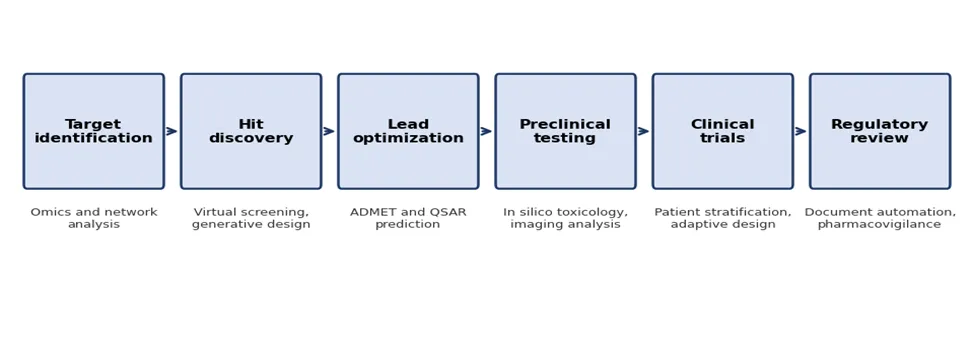
Figure 1. Stages of the drug discovery pipeline and representative AI applications
Table 4 summarizes representative AI applications across the pipeline. The evidence base differs markedly between stages. Target and hit identification have the largest volume of computational studies, whereas clinical-stage applications rely on fewer and more heterogeneous reports.
Table 4. Representative AI applications across drug discovery and development stages
|
Stage |
AI approach |
Reported benefit |
Evidence maturity |
|
Target identification |
Network and omics integration |
Improved target prioritization |
Moderate; mostly retrospective |
|
Hit discovery |
Deep virtual screening, generative design |
Larger chemical space explored at lower cost |
Moderate; a few experimental confirmations |
|
Lead optimization |
Graph neural networks for ADMET prediction |
Fewer synthesis cycles |
Moderate; benchmark dependent |
|
Preclinical testing |
Image analysis, in silico toxicology |
Earlier safety signal detection |
Limited; early-stage validation |
|
Clinical trials |
Patient stratification, adaptive designs |
Enrichment of responders |
Limited; few prospective trials |
|
Regulatory and pharmacovigilance |
NLP for document drafting and case processing |
Efficiency gains in reporting |
Emerging; largely operational data |
The most important unresolved question is whether AI will reduce the overall cost and duration of drug development, rather than merely accelerating individual steps. Clinical attrition is driven substantially by efficacy and safety problems that computational models have not yet resolved reliably, so the expected economic gain depends on improvements in late-stage prediction that have not yet been demonstrated at scale [8].
7. AI in Personalized Medicine and Precision Therapy
Personalized medicine is all about tailoring prevention, diagnosis, and treatment to each person by looking at their genetics, molecular makeup, environment, and lifestyle. Pharmacogenomics sits at the heart of this—it’s the field that studies how someone’s genetic inheritance affects the way they respond to drugs[12]. We’ve already seen real-world success here, like doctors using genetic info to fine-tune drug doses and pick the right medication for certain drug–gene pairs. Still, things aren’t perfect. Not all gene–drug links are strong, the guidelines don’t always get picked up across the board, and sometimes these findings don’t apply to every population equally[21].
AI is trying to push things further. Instead of focusing on just one or two big indicators, AI can pull together dozens of smaller signals: lab results, genetic data, medications someone’s already taking, and their medical history. The idea is to come up with a much more personal prediction about whether a treatment will work or could cause trouble. This approach is already making waves in fields like oncology and heart care, where models help doctors decide on the best therapies. The catch? Most of these models still need to be tested properly—randomized trials and real-world studies are mostly still to come.
Pharmacists are also jumping in, using software backed by machine learning or Bayesian statistics that suggests doses based on population models and patient-specific data. This is especially useful for drugs where hitting the right dose is tricky.
There’s a big hitch, though. These predictive models don’t always work the same way for everyone. A lot of training data leaves out large swaths of the population, so the people already getting less-than-ideal care might end up with the least accurate recommendations. That’s why it’s crucial to check how well these models perform across different ethnic and clinical groups—equity testing needs to be a standard part of the process[22].
8. Robotics and Automation in Pharmacy Practice
Robotic technology in pharmacies covers a range of machines—like automated dispensing cabinets, robots that pick and count pills, unit-dose packaging machines, IV compounding robots, and systems that store and retrieve medications automatically. These tools are meant to fix everyday problems, like the huge number of prescriptions that need filling, not enough staff, and the need to get sterile drugs just right every time. Pharmacies bring in these systems to cut down on errors when dispensing, speed up service, and let pharmacists spend more time working directly with patients. How much these benefits matter, though, really depends on how each pharmacy uses the technology.
Sterile compounding robots get a lot of attention, and for good reason—the manual process is risky and takes a lot of manpower. Robots can make sure doses are accurate and keep staff safer around dangerous drugs, but they come with their own requirements: you need to validate that they actually work, keep a close eye on the environment, and stick to strict maintenance routines, all of which line up with good manufacturing practices. Plus, automation changes people’s roles. Technicians stop doing hands-on compounding and instead focus on supervising the machines, managing anything unusual that pops up, and making sure quality stays high. That means training needs to change, too.
Right now, most of the evidence on pharmacy robots comes from studies done in single locations, which makes it tough to say the findings fit everywhere. There isn’t a lot of solid data comparing the effectiveness of these systems—especially when it comes to cost or how they affect patient outcomes. Going forward, researchers need to use standard measures for accuracy, near-miss mistakes, and how efficient workflows become, so it’s actually possible to compare how well these systems perform from one pharmacy to another.
9. Big Data Analytics in Healthcare and Pharmacy
Big data in health care is all about size, speed, variety, and trustworthiness. You see it everywhere—electronic health records, insurance claims, pharmacy and lab databases, genetic archives. Lately, there’s even more pouring in from wearables and things patients track themselves. Analytics platforms pull all this together and turn it into useful information for things like monitoring drug safety, comparing treatments, building formularies, and managing the health of whole populations[23].
For pharmacists, big data’s real strength shows up when you need to spot medication problems fast and at scale. The right tools can flag patients at high risk for adverse drug reactions, catch unexpected safety issues, and keep tabs on who’s actually taking their medication. Real-world evidence helps fill gaps left by clinical trials—showing how treatments work in day-to-day practice with all the messiness and variety of real life. But that means you need to be extra careful about confounding factors and make sure the data’s solid. It’s often a headache getting different records to fit together, since medical notes are often incomplete, coded in different ways, or stuck in systems that don’t talk to each other[24].
There’s also real concern around privacy. Even if you strip away names and other direct Ids, there’s still a risk someone could be identified, especially when you mix data from multiple places. Laws like HIPAA in the U.S. and GDPR in Europe spell out how health data should be handled, but honestly, it’s still unclear exactly how these rules fit with modern machine learning. The technology moves fast, and the legal side is still catching up.
10. Internet of Things (IoT) and Smart Pharmacy Systems
The Internet of Things describes networks of physical devices embedded with sensors, software, and connectivity that exchange data without direct human intervention [25]. In pharmacy, IoT applications include smart pill dispensers that record dose events and send alerts, temperature and humidity sensors that monitor cold-chain integrity, radio-frequency identification (RFID) tags that track individual packages, and connected inhalers and injection devices that capture usage data. Such systems offer continuous, objective information that may complement self-reported adherence, which is often inaccurate[25].
Smart dispensing devices have shown promise in improving adherence in selected groups, particularly when they are combined with reminders and clinician feedback. Cold-chain monitoring is especially relevant for biologics, vaccines, and temperature-sensitive medicines, where excursions can render products ineffective without visible signs. Automated logging can also support regulatory compliance by creating auditable records of storage conditions.
Important limitations apply. Device data may be inaccurate, sensors require calibration and maintenance, and the volume of alerts can overwhelm staff if thresholds are poorly set. Security is a further concern, as many IoT devices have limited built-in protection and may serve as entry points to wider networks. Interoperability standards, secure device management, and clear accountability for responding to alerts are prerequisites for safe deployment.
11. Blockchain Technology in Pharmaceutical Supply Chains
Blockchain works like a digital ledger that records transactions in blocks, all linked together securely and copied across everyone in the network. In the pharmaceutical world, permissioned blockchains—where only certain, trusted organizations get access—make more sense than public blockchains. The big promise here is a shared, tamper-evident log of where products go, which helps with tracking and stopping counterfeits[26]. You can see a basic setup for this kind of system in Figure 2, where sensor data and each handoff get written to the same ledger.
Counterfeit and low-quality medicines are still a big problem, especially where distribution is messy and hard to control. Some fixes for this include things like digital barcodes, special tags for checking authenticity, and systems that follow products from start to finish. Blockchain has been pitched as a way to tie all this data together across different companies[27]. Still, studies show that blockchain only really works if everyone agrees on the rules, people enter data honestly, and it connects smoothly with what’s already there for tracking medicines. A blockchain can’t fix bad data at the source—if someone puts in a false record right at the beginning, the ledger simply locks in that mistake[26].
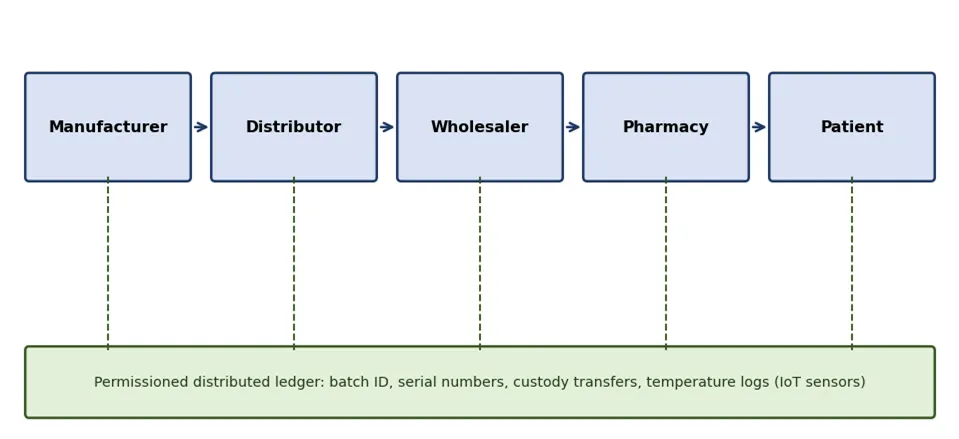
Figure 2. Simplified permissioned blockchain architecture for pharmaceutical traceability
Table 5 compares blockchain with conventional track-and-trace approaches and IoT-based monitoring. The comparison highlights that these technologies are complementary rather than substitutes, and that practical benefit depends on the quality of data capture at each node.
Table 5. Comparison of supply chain technologies for pharmaceutical traceability
|
Attribute |
Conventional serialization and track-and-trace |
IoT monitoring |
Blockchain (permissioned) |
|
Primary function |
Unique product identification and scanning |
Continuous condition monitoring |
Shared, tamper-evident transaction record |
|
Data integrity |
Depends on central database controls |
Depends on sensor calibration |
Strong against post-hoc alteration; not against false entry |
|
Interoperability |
Established standards exist |
Requires device standards |
Requires multi-party governance |
|
Implementation cost |
Moderate, often mandated |
Moderate to high |
High; intermediate maturity |
|
Main limitation |
Vulnerable to counterfeit packaging |
Sensor faults and false alarms |
Scalability, governance, and data entry quality |
12. Digital Health, Telepharmacy, and Remote Patient Care
Digital health is all about using technology—think computers, phones, or apps—to make healthcare better and more accessible. The World Health Organization has a global plan that leans on digital tools to strengthen health systems, help more people get care, and put patients at the center of things.
Telepharmacy is a great example. It connects patients and pharmacists remotely—over video calls, phone, or even messages. People can get medication counseling, have their prescriptions checked, or follow up after leaving the hospital, all without traveling far.
This kind of remote care really matters for folks living in rural areas, people who have trouble getting around, or anyone dealing with long-term health issues that need regular attention. We’ve seen that mobile health apps can help people stick to their treatment plans and manage their health better, though the impact isn’t always huge and a lot of studies are short-term. Still, when pharmacists keep an eye on patients using remote monitoring data, they can catch problems early—like spotting high blood pressure or unexpected weight gain if someone’s on diuretics.
But it’s not all smooth sailing. Rules around telepharmacy change from place to place—who’s allowed to do what, how services get paid for, and so on. Plus, not everyone has the devices or know-how to use these services. If we’re not careful, digital health can actually make gaps in care worse, not better. That’s why blending in-person visits with remote options makes sense, so nobody gets left behind.Digital health basically means using tech—anything from smartphones to video calls—to make healthcare better and easier to reach. The World Health Organization has a big plan for this: they want digital tools to help strengthen health systems, make care more accessible, and put people at the center of it all.
One way this shows up is telepharmacy. Instead of going to a pharmacy, you connect with pharmacists through video, phone, or chat. They can help you with medication advice, check what you’re taking, verify that meds are dispensed correctly, and follow up after you leave the hospital. It’s especially handy for folks in rural areas, people who can’t get around easily, and anyone with chronic health issues who needs regular check-ins.
Mobile health tools can help people manage their own care and stick with their meds. The actual impact varies, since most studies are short-term and results jump around, but there’s promising evidence. For example, when pharmacists use remote monitoring data—like seeing a patient’s blood pressure spike or noticing unexpected weight gain in someone taking diuretics—they can step in sooner.
Honestly, regulation makes things tricky. Rules about licensing, oversight, prescribing, and insurance coverage for telepharmacy aren’t the same everywhere and can change fast. Plus, you have to think about fairness—people who don’t have internet, devices, or digital know-how could get left behind. That’s why models that mix digital services with in-person care, making sure everyone has access, seem smarter than going all-in on remote care[28,13].
13. AI in Clinical Pharmacy and Medication Management
Clinical pharmacists have a huge impact on patient care. They catch harmful drug interactions, adjust doses, follow up on how treatments are working, and collaborate with doctors and nurses every day. Lately, AI decision support tools have joined the mix. These tools can flag dangerous drug combinations, alert pharmacists when a dose might be off (especially for patients with kidney or liver problems), and even help sort out which patients need urgent attention. Plug these tools into the regular prescription process, and you really lower the chances of mistakes. The downside? Too many pointless alerts. When software shouts “warning!” every five minutes, people just start ignoring it.
Hospitals are already using predictive models to spot patients at risk for ER visits or bad medication reactions. Some tech digs through messy doctors’ notes—using natural language processing—to pull out relevant medication histories. That’s a game changer because pharmacists can zero in on the people who actually need their help. Still, everyone needs to know why the AI is recommending something. Its limits should be spelled out, and decision-making responsibility can’t get blurred. Ethically, the idea isn’t to take away human judgment but to strengthen it. An AI’s output isn’t special—it should get the same careful review as anything else in a patient’s chart[29].
And now, there are even tools aimed directly at patients, like chatbots that answer questions about doses, side effects, or how to store medicine. They’re convenient, especially after hours. But let’s be honest—they’re not always right. It makes sense to use them for simple, clear-cut topics, stick with trusted content, and always give patients a way to reach an actual healthcare provider if something’s unclear.
14. Applications of Emerging Technologies in Pharmaceutical Manufacturing
Pharmaceutical manufacturing used to stick mostly to batch production and testing the final product. Then Quality by Design (QbD) and process analytical technology (PAT) came along, and everything got a bit smarter. Instead of just hoping for the best at the end, these methods built quality into the whole process, focusing on key parameters and real-time monitoring.
Now, AI and advanced analytics are pushing things even further. They make it possible to build complex models of the manufacturing process, create soft sensors that can estimate important quality measures just from basic inputs, and predict when equipment will need maintenance before it breaks down[30].
Continuous manufacturing is a big leap forward here. Running processes non-stop (instead of in batches) means more consistency, smaller factories, and the chance to test batches in real time—no waiting around for end-of-line results. Machine learning models trained on process data can help control systems respond on the fly to changes in raw materials. Digital twins—virtual replicas of production lines—let you experiment with changes safely on a computer before making them in the real world. And let’s not forget robotics and vision systems; they’re now inspecting tablets, capsules, and packaging for defects and catching problems people often miss.
Regulators want to see that these high-tech control systems actually work. So, companies need to prove their models are solid, well-understood, and properly updated when things change. Validating machine learning models in regulated environments is a hot topic right now. Methods that mix good old scientific know-how with data-driven tools often win out because they’re easier to explain and defend[31].
15. Benefits and Opportunities of AI in Pharmacy
The potential benefits of AI in pharmacy can be grouped into four overlapping domains. The first is accuracy and safety: computational tools can detect patterns that are difficult to recognize manually, including subtle signals of adverse drug reactions and unusual dispensing behaviours. The second is efficiency: automation of routine tasks, such as document processing and inventory forecasting, can release staff time for activities requiring professional judgement. The third is access: remote and digital services can extend pharmacy expertise to populations with limited geographical access. The fourth is discovery: AI can accelerate the identification of new molecules, indications, and manufacturing solutions.
Opportunities also arise at the level of the profession. Pharmacists with data literacy can participate in the design, evaluation, and governance of AI systems, a role that aligns with long-standing interests in medication safety and outcomes measurement. New service models, such as algorithm-assisted medication review for high-risk patients, could create sustainable revenue streams that support clinical roles. Realizing these opportunities will depend on the reliability of evidence, the willingness of payers to reimburse demonstrated value, and the capacity of institutions to implement change.
16. CHALLENGES AND LIMITATIONS
Despite promising results, several challenges constrain the responsible adoption of AI and emerging technologies in pharmacy. Data quality is a fundamental concern. Clinical and pharmacy datasets often contain missing values, measurement error, coding inconsistencies, and selection biases that propagate into model predictions. Algorithmic bias is equally important. A widely cited analysis of a commercial algorithm used to allocate care-management resources found that it systematically underestimated the health needs of Black patients, because it used healthcare expenditure as a proxy for need, which reflected unequal access to care [22]. Similar mechanisms could operate in pharmacy applications that rely on historical dispensing or utilization data.
Interpretability is a second challenge. Many high-performing models, particularly deep networks, offer limited insight into how their predictions are generated. This opacity complicates clinical acceptance, error analysis, and regulatory review, although post hoc explanation methods and inherently interpretable models are being developed. Generalizability is a third challenge, as models trained on one population or system may fail when applied elsewhere. Finally, cybersecurity, privacy, infrastructure limitations, workforce skills, and cost all influence whether technologies can be implemented equitably. Table 6 summarizes these challenges together with mitigation strategies discussed in the literature.
Table 6. Principal challenges in AI-enabled pharmacy and proposed mitigation strategies
|
Challenge |
Description |
Proposed mitigation |
|
Data quality and availability |
Incomplete, inconsistent, or unrepresentative records |
Data standards, curation, federated learning where feasible |
|
Algorithmic bias |
Systematic performance differences across subgroups |
Subgroup audits, fairness metrics, diverse training data [22] |
|
Limited interpretability |
Predictions difficult to explain to clinicians and patients |
Explainability tools, inherently interpretable models where adequate |
|
Generalizability |
Performance decline under dataset shift |
External and prospective validation, continuous monitoring |
|
Privacy and security |
Re-identification and system intrusion risks |
Privacy-preserving analytics, access control, security certification |
|
Regulatory uncertainty |
Unclear requirements for adaptive algorithms |
Lifecycle regulatory frameworks [32] |
|
Workforce and infrastructure |
Skill gaps and unequal digital access |
Training programmes, hybrid service models, investment in connectivity |
|
Evidence gaps |
Few prospective and comparative studies |
Pragmatic trials, standardized outcome reporting |
17. Ethical, Legal, and Regulatory Considerations
Using AI in pharmacy isn’t just about the tech—it comes down to basic ethics: doing good, avoiding harm, respecting people’s choices, making things fair, and taking responsibility. When you bring machine learning into the clinic, you can’t just plug it in and walk away. There are real questions about getting proper consent to use patient data, being upfront when algorithms help guide decisions, and making it clear who’s on the hook when something goes wrong. Patients deserve to know when machines are shaping their care, and doctors and pharmacists should always have the final say if they think the machine got it wrong[29].
Rules in this space are still shifting. In the U.S., the FDA wants a “total product lifecycle” strategy for AI medical software, which means companies can update their AI under certain checks without starting the whole review process over. Over in the EU, regulators focus on the level of risk when setting their rules for AI in medicine. Pharmacists also have to answer to laws about medicine safety, data privacy, and professional codes[32]. The problem is, each country does things its own way, so companies building for a global market face a maze of mismatched rules.
And there’s the question of liability: who pays when the algorithm messes up? That’s still a gray area. Fault might land on the people who built the software, those selling it, hospitals, or even individual clinicians. Pharmacists need clear guidance on where they stand if they trust—or ignore—an algorithm’s advice. Contracts with tech vendors need to spell out exactly who’s responsible for making sure these tools work properly, keep track of their performance, and tell someone when they break.
18. Future Perspectives and Emerging Trends
Over the next decade, pharmacy practice and research will shift in some big ways. One of the most promising changes comes from foundation models trained on huge biomedical datasets. They aren’t just for one thing—they help with everything from pulling insights out of the literature to protein modeling and answering clinical questions. But before they become mainstream, we’ll need to figure out some sticking points: making sure the facts are reliable, keeping data private, and nailing down better ways to measure these models’ performance.
Federated learning offers another path forward. Here, models train across several institutions without pooling all the raw data together. That lets researchers work with bigger, more diverse sets of data but still keeps a firm grip on who owns what.
Then there’s the idea of digital twins—virtual models of patients or even whole production systems. By combining complex models with real patient data, we might soon be able to simulate treatments before giving them for real. It’s a big swing at personalized care. Tying in multi-omic data and real-life info with pharmacology could also help us predict doses more accurately and spot safety problems before they happen. Meanwhile, new sensors—things like implants and wearables—will let us keep tabs on patients all the time, though they raise even more questions about privacy and data security.
AI and experimental automation are moving closer together, too. Think “self-driving labs” that can speed up each step in discovering new drugs.
What’s next for research? We need head-to-head trials of AI-powered pharmacy services, benchmarks that actually reflect what happens out in the real world, and studies that dig into whether these tools work equally well for everyone. It’s also important to look at how new tech changes a pharmacy’s day-to-day workflow and the roles of the people working there. Finally, smart economic studies—covering both the costs and real benefits to patients—will help leaders make better investing decisions.
19. Role of Pharmacists in the AI-Driven Healthcare System
The introduction of AI does not diminish the need for pharmacists; rather, it redefines the competencies that pharmacists must apply. Pharmacists possess training in pharmacology, pharmacokinetics, medication safety, and the interpretation of clinical evidence, all of which are central to evaluating algorithmic recommendations. In practice, pharmacists can act as clinical validators who assess whether an AI-generated suggestion is appropriate for a specific patient, as stewards who monitor the performance of deployed tools, and as educators who communicate the role and limitations of these tools to patients and colleagues.
Table 7 outlines how core pharmacy roles are expected to change across the AI-enabled care continuum. These shifts require new training in statistics, informatics, and digital communication, and they highlight the need for curricula that combine clinical pharmacology with data science fundamentals.
Table 7. Anticipated evolution of pharmacist roles in an AI-enabled health system
|
Domain |
Traditional emphasis |
Emerging emphasis |
|
Dispensing |
Manual verification and preparation |
Supervision of automated systems and exception management |
|
Clinical review |
Individual chart review |
Interpreting risk scores and validating algorithmic alerts |
|
Patient communication |
In-person counselling |
Hybrid counselling, digital education, and tool explanation |
|
Quality and safety |
Incident reporting after events |
Monitoring model performance and near-miss analytics |
|
Research and development |
Trial and pharmacovigilance support |
Data stewardship, algorithm evaluation, and real-world evidence |
|
Professional education |
Pharmacology and therapeutics |
Added training in data literacy and AI ethics |
Pharmacists are well placed to advocate for patient safety in the design and procurement of AI tools. Involvement in governance committees, validation projects, and vendor evaluation can help ensure that technologies are fit for local populations. Maintaining a human-centred focus, in which technology serves therapeutic relationships rather than substituting for them, is likely to remain the defining professional responsibility.
CONCLUSION
Artificial intelligence is starting to shake up pharmacy in all sorts of ways—from drug discovery to how meds get delivered. Right now, AI shows the most promise with things like predicting molecules, analyzing images, and estimating risk by crunching structured data. Stuff like robotics, blockchain, and telepharmacy? Those still need fair comparisons before anyone can really vouch for them.
Of course, none of these tech advances mean much unless the data gets better, bias in algorithms is actually checked, models are tested out in the real world and tracked as they go, and regulations keep up. Pharmacists are at the center of all this, making sure these systems don’t just work, but actually help patients safely and fairly.
In the end, it’ll take steady investment—both in gathering real evidence, bringing together people from different fields, and making sure new tools work for everyone—to see if AI can deliver on its big promises in pharmacy.
REFERENCES

Sunny Farde*, Nikita Phad, Dr. Shriram Bairagi, Exploring the Future of Pharmacy Through AI and Emerging Technologies, Int. J. Sci. R. Tech., 2026, 3 (11), 896-913. https://doi.org/10.5281/zenodo.24389014
 10.5281/zenodo.24389014