

We use cookies to ensure our website works properly and to personalise your experience. Cookies policy
Sim's College of Pharmacy, Mangaldas Nagar, Guntur, Andhrapradesh, India
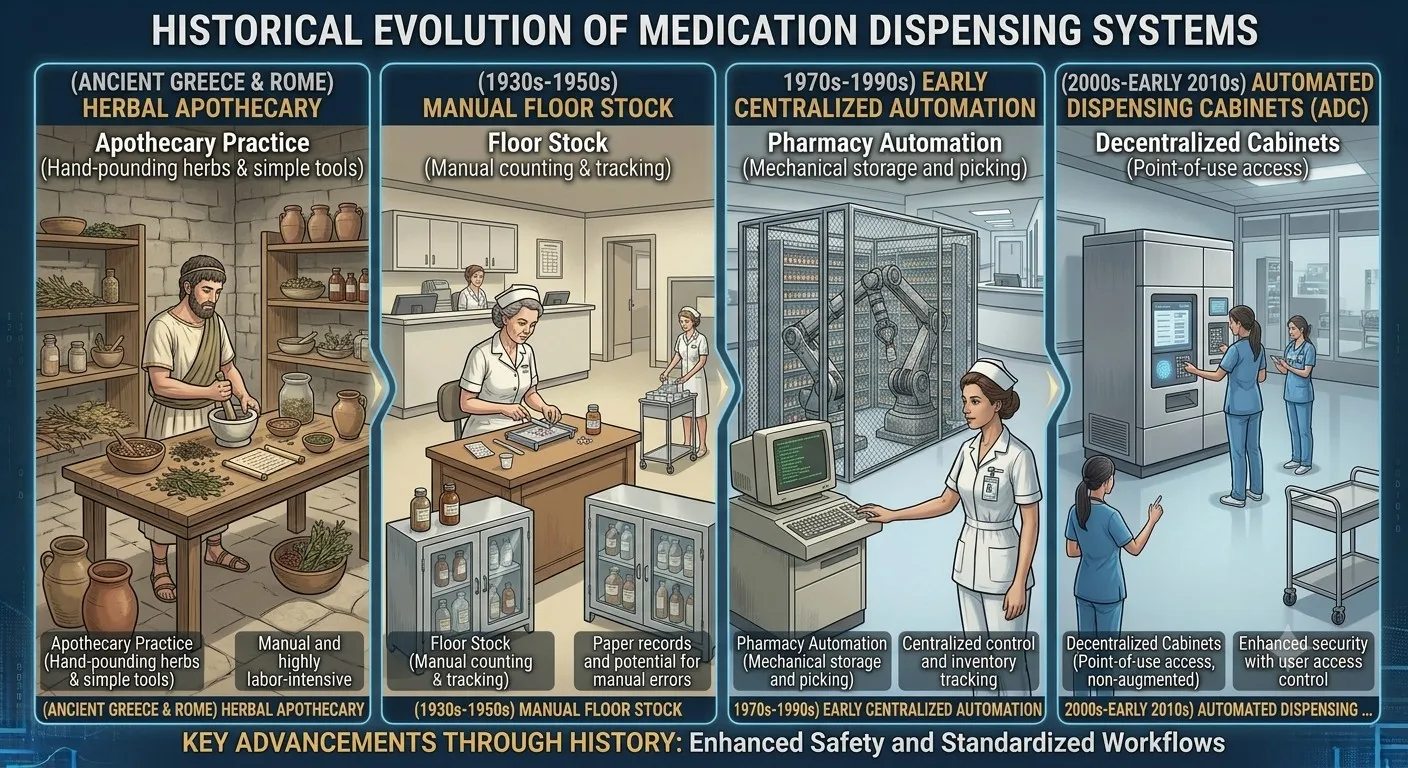
Hospital pharmacies are undergoing a major transition as treatment regimens grow increasingly complex and drug inventories expand. Historically, pharmacists and technicians relied almost entirely on manual labor to review prescriptions, pull medications from shelves, compound or label products, track inventory, and send supplies to hospital wards. While manual workflows are manageable at lower volumes, they quickly become error-prone bottlenecks as prescription loads surge. Consequently, hospitals are turning to integrated digital and automated tools—commonly known as smart dispensing systems—to keep operations safe and timely. These systems combine an array of modern technologies: automated dispensing cabinets (ADCs), robotic dispensing units, barcode verification, radio-frequency identification (RFID), comprehensive pharmacy information systems (PIS), and artificial intelligence (AI). Together, they assist teams with stock management, prescription verification, tracking, and recordkeeping. While speed is an obvious perk, the true value lies in embedding safety checkpoints throughout the medication-use process, reducing tedious manual steps, and giving clinical staff clear visibility into their inventory. However, adoption isn't without hurdles. Smart systems carry steep upfront costs and require robust infrastructure, ongoing maintenance, rigorous cybersecurity, and thoroughly trained staff. This review explores the mechanics, core technologies, practical applications, limitations, and future trajectory of smart dispensing. Ultimately, smart dispensing acts as a force multiplier for pharmacy professionals—enhancing safety and efficiency without replacing vital clinical judgment.
A medication's journey through a hospital involves multiple handoffs: prescribing, prescription review, item selection, dispensing, distribution, administration, and patient monitoring. Because a single mistake at any point can compromise patient care, every step demands meticulous attention.
For decades, this workload was carried manually. In a quiet facility, manual picking and labeling work fine, but in a high-volume hospital processing thousands of orders daily, it creates severe operational stress. Hospitals recognized early on that they needed technological assistance to maintain safety standards.
The transition started with basic computerization—replacing paper charts with electronic health records and pharmacy information systems. Over time, hardware solutions like barcode scanners and automated cabinets were introduced to handle physical stock. Today, these platforms seamlessly link together to form "smart dispensing" networks. In this context, "smart" doesn't always mean sophisticated AI; it simply means using connected digital information and automated verification to make drug handling traceable, organized, and far less prone to human error.
2. Evolution of Medication Dispensing in Hospital
3. What Is a Smart Dispensing System?
Smart dispensing isn't a single piece of hardware; it’s an ecosystem that blends automated machinery, real-time inventory software, and digital validation tools. The ideal setup varies depending on a hospital's specific size, patient load, and budget. A large trauma center might invest heavily in central robotics, whereas a community hospital might thrive on floor-level ADCs linked with barcode checks.
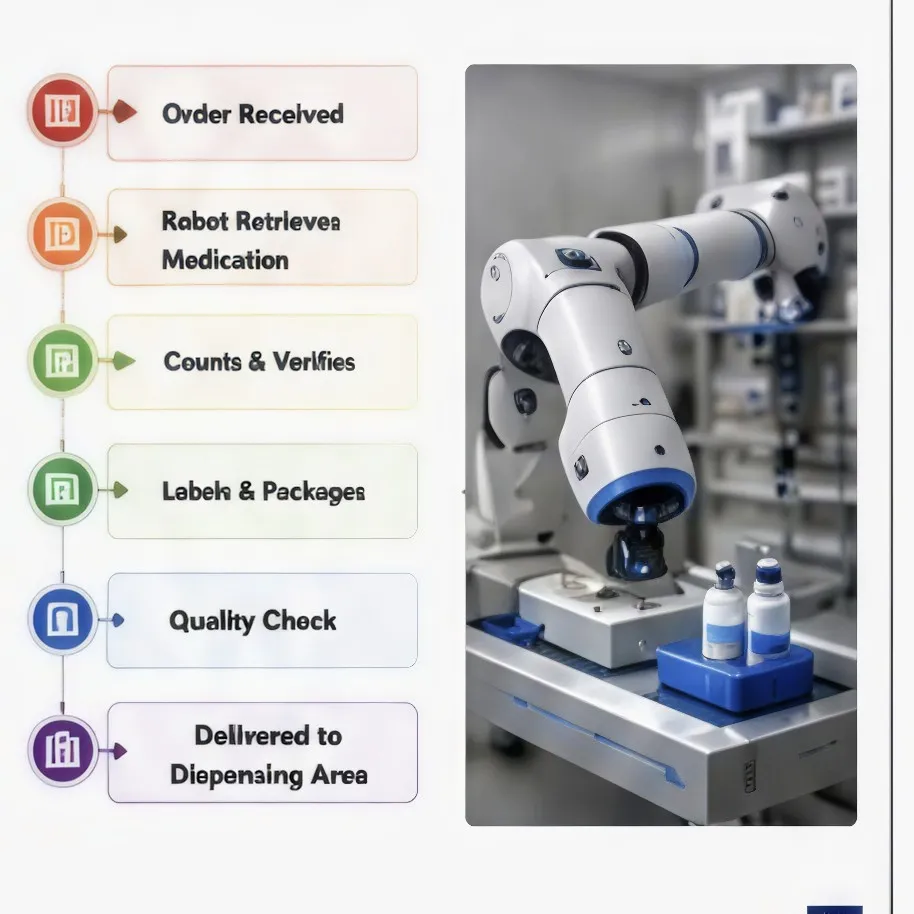
Typical Smart Dispensing Workflow:
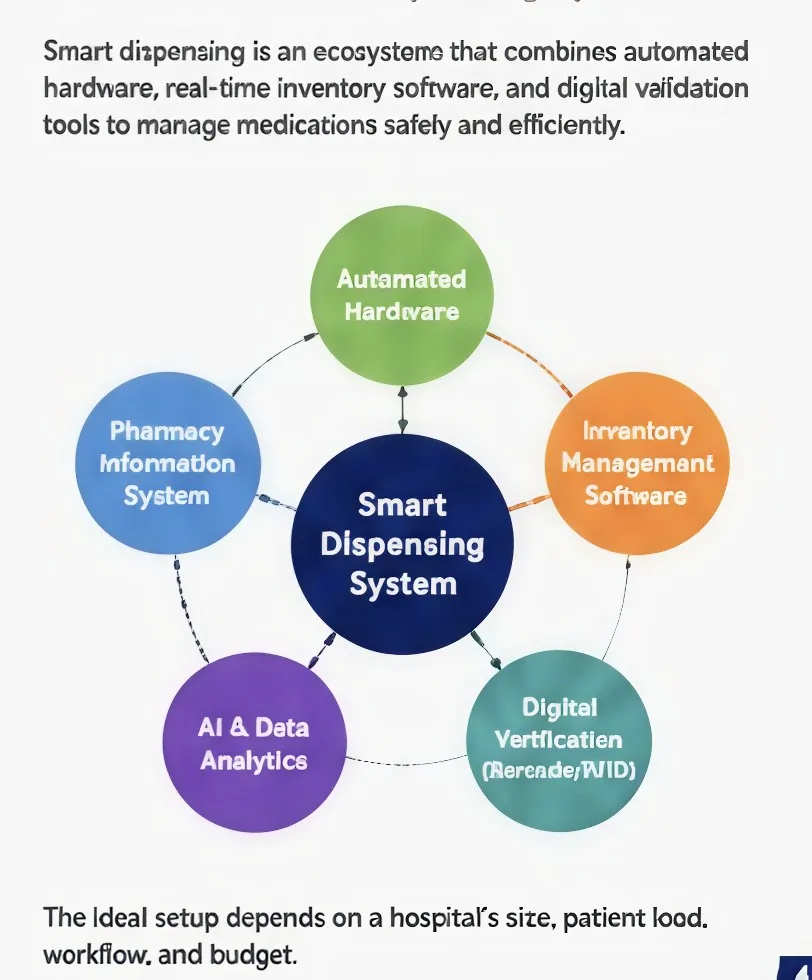
Importantly, technology takes care of repetitive mechanics, freeing up the pharmacist to focus on complex clinical decisions.
4. Core Technologies in Smart Dispensing
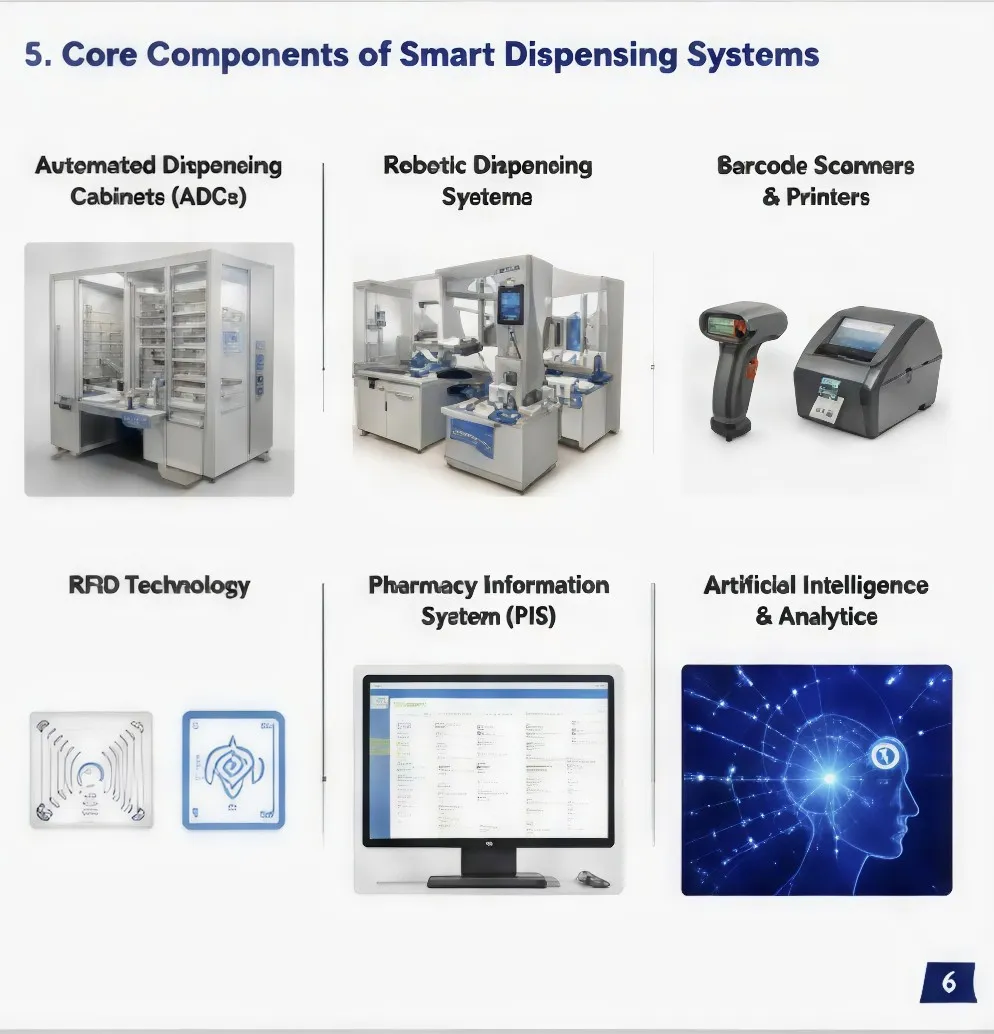
Figure B. AI-generated illustrative image showing core smart-dispensing technologies.
4.1 Pharmacy Information Systems (PIS)
The PIS serves as the central brain of digital pharmacy operations. It replaces scattered paper files with centralized digital records for patient history, order status, and live stock updates. Modern PIS setups automatically flag potential drug-drug interactions, allergy risks, or dosing anomalies. When fully integrated with a hospital's broader Electronic Health Record (EHR), data flows smoothly without requiring tedious re-entry.
4.2 Automated Dispensing Cabinets (ADCs)
ADCs are computerized "smart safes" located directly on patient care units (e.g., ER or ICU). When a nurse needs a stat medication, they authenticate at the cabinet, select the profile-assigned patient, and the cabinet opens only the specific drawer or bin containing that drug. Every access event—who opened it, what was pulled, for whom, and when—is logged instantly.
4.3 Robotic Dispensing Systems
Robotics excel in central pharmacies handling massive daily volumes. These automated units can locate, pick, count, and package standard pill bottles or unit-dose blisters continuously without fatigue. However, robots aren't a total solution; irregularly shaped items, liquid bottles, and refrigerated items still require manual handling by human technicians.
5. Barcode Technology
Barcode validation brings a simple yet critical double-check to dispensing. Instead of relying solely on a person reading a fine-print label, the technician or pharmacist scans the item's barcode against the digital order. If there is a mismatch in drug, strength, or form, the system immediately locks the process and flashes an alert.
6. Radio-Frequency Identification (RFID)
Unlike line-of-sight barcodes, RFID tags use radio signals to read multiple items instantaneously. In hospital pharmacies, RFID shines in high-level tracking:
7. Artificial Intelligence in Smart Dispensing
It's crucial to distinguish basic automation from genuine AI. Basic automation follows hardcoded rules (e.g., "dispense item X when button Y is pressed"). AI, by contrast, analyzes vast data sets to recognize trends and make intelligent forecasts. AI applications in pharmacy include:
â—Predictive Stocking: Analyzing historical prescribing trends, seasonal illness spikes, and admission rates to optimize stock levels and prevent shortages.
â—Anomalous Behavior Detection: Identifying unusual dispensing patterns that might signal medication diversion or prescribing errors.
â—Workload Prioritization: Auto-sorting queue orders based on patient acuity and unit urgency.
8. Practical Applications Across Pharmacy Operations
â— Prescription Processing: Streamlines orders instantly, eliminating illegible handwriting and manual re-typing.
â— Medication Selection: Guides staff directly to the exact bin location via "pick-to-light" hardware.
â— Inventory Management: Tracks precise reorder thresholds, tracks batch numbers, and highlights slow- moving or near-expiry stock.
â— Controlled Substance Tracking: Maintains unalterable digital audit trails of who handled narcotic inventory, significantly reducing diversion risks.
â— End-to-End Traceability: Tracks a medication's full lifecycle from hospital receiving dock down to the specific patient dose.
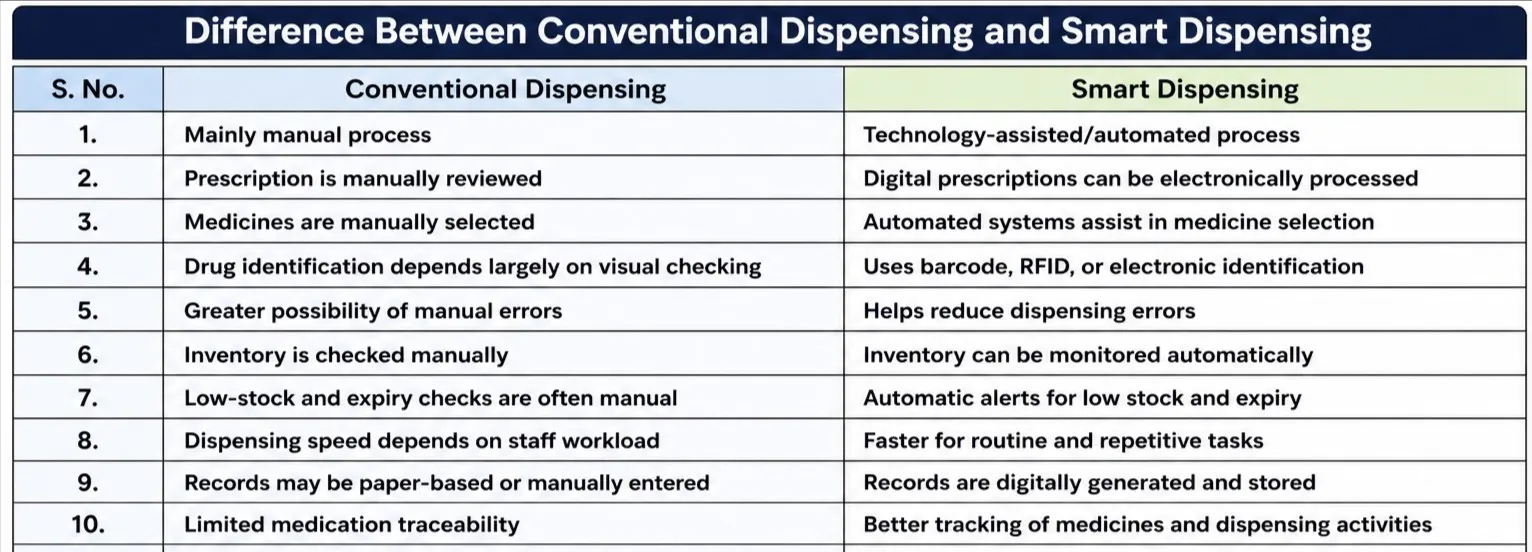
9. Conventional vs. Smart Dispensing: Key Differences
Key Outputs and Goal Completion:
Conventional Dispensing: Characterized by manual operation, fixed parameters, and limited data feedback. Often involves human intervention for adjustments and monitoring.
Smart Dispensing: Defined by automation, real-time data collection, adaptive control, and connectivity. Utilizes sensors, software, and potentially AI to optimize dispensing processes, reduce waste, and improve accuracy.
Goal Completion: The core differences have been clearly articulated, providing a foundational understanding of each system type
10. Benefits and Strategic Value
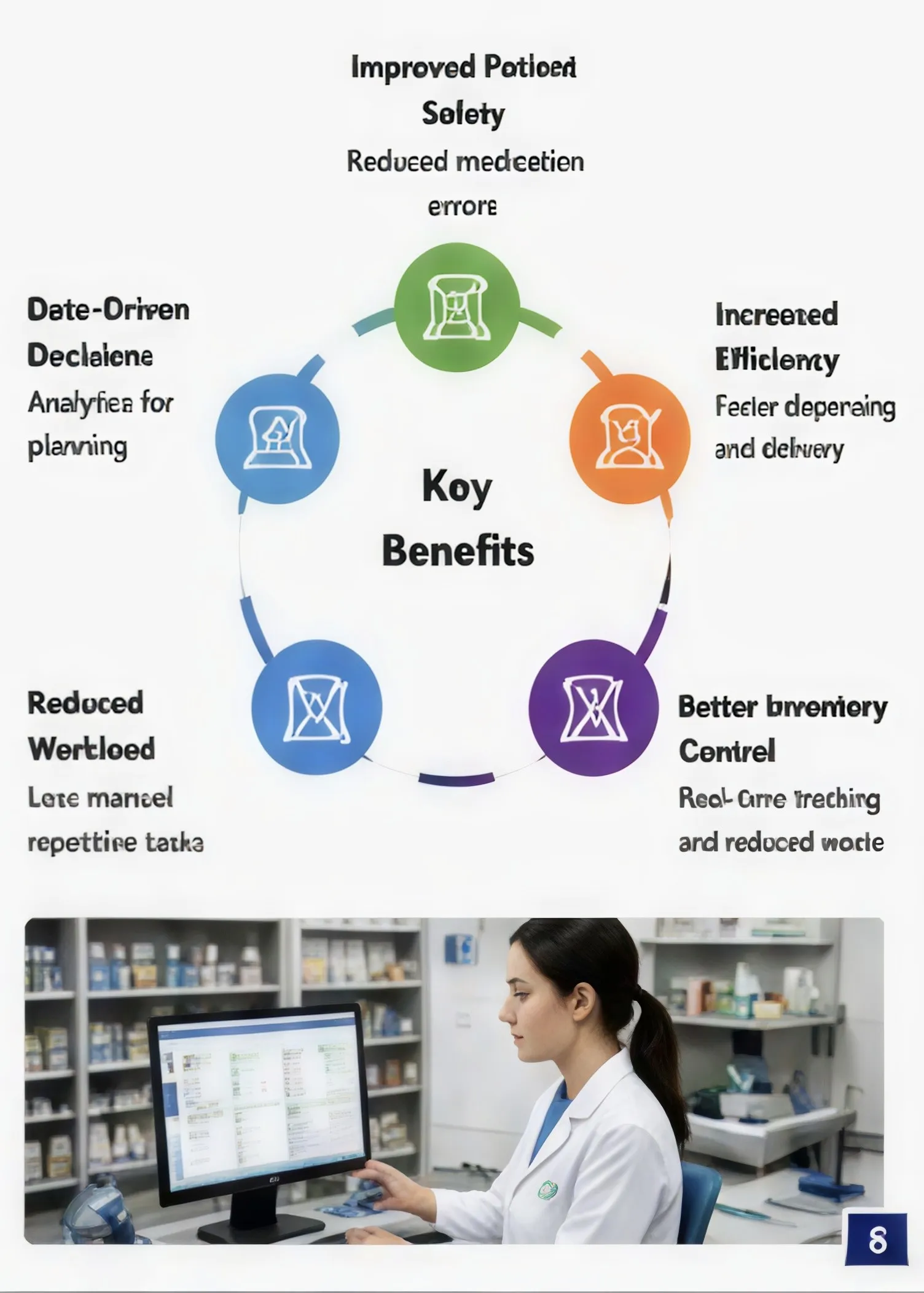
While hardware costs are high, smart systems pay dividends across several operational areas:
â— Dramatically Reduced Errors: Automated scanning catches wrong-dose or wrong-drug picks before they leave the pharmacy.
â— Lower Repetitive Stress: Staff spend far less time on tedious pill-counting and shelf-searching.
â— Optimized Cash Flow: Tight stock tracking reduces over-ordering and prevents costly drug expirations.
â— Expanded Clinical Presence: Pharmacists spend less time acting as logisticians and more time consulting on care teams, reviewing complex drug regimens, and counseling patients.
11. Implementation Challenges and Pitfalls
Deploying smart dispensing technology isn't plug-and-play; it comes with notable obstacles:
â— Capital Expense: High initial costs for hardware, software licensing, and network upgrades.
â— Technical Downtime: If a central robot or ADC network crashes, operations can grind to a halt without a well- practiced manual fallback plan.
â— Alert Fatigue: Excessive software warnings can lead busy staff to habitually dismiss pop-ups, missing critical safety alerts.
â— System Interoperability: Getting legacy EHRs, external vendors, and pharmacy software to talk to each other without glitches is notoriously difficult.
â— Cybersecurity Risks: Connected healthcare equipment presents an expanded attack surface for malware or ransomware.
12. Implementation Roadmap for Hospitals
A successful implementation of a smart dispensing system should be carried out in a planned and step-by-step manner. The following approach can help hospitals introduce the system smoothly while reducing possible problems:
Step 1: Identify Current Bottlenecks
Begin by looking at the existing dispensing process and identifying areas where delays, medication errors, workload, or inventory problems commonly occur.
Step 2: Define Clear and Measurable Goals
Set practical targets before introducing the system. For example, the hospital may aim to reduce dispensing errors, shorten waiting times, improve inventory control, or increase the number of prescriptions processed.
Step 3: Assess Cost and Infrastructure Requirements
Evaluate the overall cost of the system and check whether the hospital has the necessary infrastructure, such as suitable space, computer systems, network connectivity, and technical support.
Step 4: Conduct a Phased Pilot Project
Instead of introducing the system throughout the hospital at once, it is better to begin with a small area, such as a single ICU or pharmacy unit. The results from this pilot can help identify practical problems before wider implementation.
Step 5: Train Pharmacy and Healthcare Staff
Staff should receive proper training on operating the system, handling routine tasks, responding to alerts, and following procedures during system failures or downtime. This helps staff feel more confident when using the new technology.
Step 6: Expand the System and Monitor Performance
After successful pilot testing, the system can be gradually introduced to other departments. Its performance should be monitored continuously using data such as dispensing errors, processing time, inventory accuracy, and system downtime.
Step 7: Review, Improve, and Optimize
The final step is to assess whether the system has actually achieved the goals established at the beginning. The data collected during routine monitoring can show what has improved and where further problems remain. Feedback from pharmacists, nurses, other healthcare professionals, and patients can also provide useful information that may not be visible from numerical data alone.
This final review should consider both measurable results, such as reduced medication errors and improved dispensing speed, and practical experiences, such as staff satisfaction and ease of use. Based on these findings, necessary changes can be made to improve the system. Regular review and gradual improvement are important because hospital needs and workflows can change over time. This continuous approach helps ensure that smart dispensing remains useful, reliable, and suitable for the hospital's day-to-day operations.
13. Future Perspectives
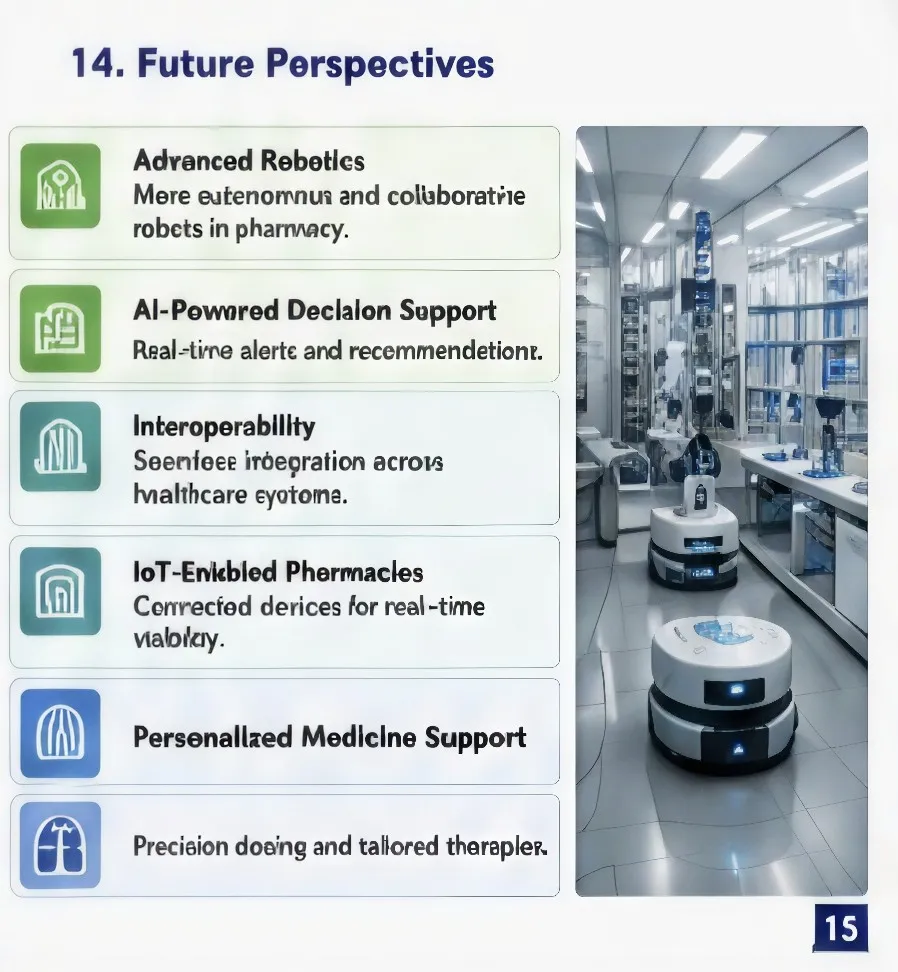
The next decade will see pharmacy automation become even more dynamic:
â— IoT Integration: Smart sensors continuously tracking temperature and humidity inside fridges and transport boxes to ensure drug integrity.
â— Advanced Robotics: Next-gen flexible grippers capable of handling odd-shaped IV bags, liquid vials, and delicate biologics.
â— Personalized Multi-Dose Packaging: Automated packaging tailored down to the individual patient’s specific daily schedule.
â— Cloud Ecosystems: Centralized health network databases enabling multi-hospital systems to balance drug inventory in real time.
CONCLUSION
Smart dispensing systems are becoming an important part of modern hospital pharmacy practice. By bringing together automated dispensing cabinets, robotic systems, barcode scanning, RFID, pharmacy information systems, and artificial intelligence, these systems can make the dispensing process more organized and easier to track. They can also reduce some of the repetitive work involved in selecting, checking, and managing medicines, while adding extra safety checks along the way.
At the same time, technology cannot replace the knowledge and judgment of a pharmacist. Pharmacists still need to review prescriptions, identify problems, handle unusual situations, and make decisions based on the individual needs of patients. In this way, smart dispensing works best as a support system for pharmacy professionals, rather than as a replacement for them.
Introducing these systems also requires careful planning. Hospitals need suitable infrastructure, reliable software and networks, trained staff, regular maintenance, and proper procedures for dealing with technical failures. Starting with a small pilot project and gradually expanding the system can make implementation easier and help identify problems before they affect the entire hospital.
Looking ahead, technologies such as AI, IoT, advanced robotics, personalized medication packaging, and cloud-based systems are likely to make hospital pharmacy automation even more useful. These developments may help pharmacies predict medication requirements, monitor medicines more closely, reduce wastage, and respond more quickly to changing patient and hospital needs.
Overall, the value of smart dispensing is not simply in making the pharmacy faster. Its greater importance lies in making medication use safer, improving the way pharmacy teams work, and giving pharmacists more time to focus on patient care. When technology and professional expertise are used together, smart dispensing systems can become a practical and valuable part of the future hospital pharmacy.
REFERENCES



Thota Srinivas, M. C. Nagamani*, L. Jayashwori Devi, K. Putalibai Devi, L. Dibiya Devi, Mamidi Santhosh Aruna, B. Thangabalan, Dispensing Systems With Smart Assistant, Int. J. Sci. R. Tech., 2026, 3 (8), 998-1007. https://doi.org/10.5281/zenodo.22111024
 10.5281/zenodo.22111024