

We use cookies to ensure our website works properly and to personalise your experience. Cookies policy
Dept. of Electrical and Electronics Engineering, K.Ramakrishnan College of Technology, Tiruchirappalli, Tamil Nadu-621112
The IV Drip Monitoring and Alert System is designed to monitor the fluid level in an IV drip bag automatically. In hospitals, nurses need to check the IV fluid level regularly. This system reduces the need for continuous manual checking. A load cell sensor is used to measure the weight of the IV drip bag. The HX711 module receives and converts the sensor signal into digital data. The ESP32 microcontroller processes the data and calculates the remaining fluid level. The fluid level is displayed on a 20×4 I2C LCD. When the fluid level becomes low, a 5V buzzer gives an alert to the medical staff. The system can also be connected to the Blynk mobile app using Wi-Fi. The Blynk app allows the fluid level and system status to be monitored remotely. This system provides real-time monitoring and helps medical staff respond quickly when the IV fluid becomes low. It is simple, low-cost, and useful for developing an automated IV drip monitoring prototype.
Intravenous (IV) therapy is an important method used in hospitals to provide fluids, medicines, nutrients, and other required substances directly into a patient's bloodstream. An IV drip consists of a fluid container connected to the patient through a tube and a drip set. During treatment, the amount of fluid in the container gradually decreases. Therefore, regular monitoring of the IV drip is necessary.
In the conventional method, nurses or medical staff manually observe the IV drip bag and check the remaining fluid. This method requires frequent attention and may become difficult when one nurse has to monitor several patients. There is also a possibility of missing the appropriate time to replace an IV bag. An automatic monitoring system can help reduce this problem by continuously checking the amount of fluid remaining in the bag.
The IV Drip Monitoring and Alert System is developed to provide automatic monitoring of the IV fluid level. The main principle of the system is based on measuring the weight of the IV drip bag. As the patient receives the fluid, the weight of the bag decreases. This change in weight can be detected using a load cell sensor.
The load cell sensor is placed below or attached to the IV drip bag support. It produces a small electrical signal according to the applied weight. Since this signal is very small, the HX711 converter module is used to amplify and convert the signal into digital data. The digital output from the HX711 is then given to the ESP32 microcontroller.
The ESP32 microcontroller acts as the main control unit of the system. It receives the weight information from the HX711 and processes the data. Based on the measured weight, the ESP32 estimates the remaining amount of IV fluid. A suitable threshold value can be set to identify when the fluid level becomes low.
A 20×4 LCD with I2C interface is used to display the measured weight, estimated fluid level, and system status. The I2C interface reduces the number of wires required for communication between the LCD and ESP32. This makes the circuit simpler and easier to assemble.When the IV fluid level reaches the predefined low-level limit, the ESP32 activates a 5V buzzer. The buzzer provides an audible warning to the medical staff. This allows them to check the IV bag and replace or manage it as required.
The system can also use the built-in Wi-Fi capability of the ESP32 to connect with the Blynk mobile application. The Blynk app can display information such as the current fluid weight, estimated fluid percentage, and system status. This provides convenient remote monitoring through a smartphone.
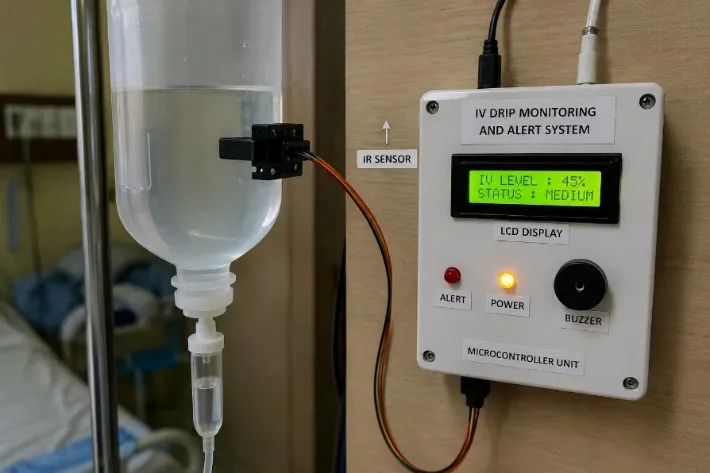
Figure 1: IV Drip Monitoring System
Figure 1.shows IV drip monitoring system The proposed system combines sensor technology, microcontroller control, display technology, alarm systems, and IoT-based monitoring. The combination of these technologies provides a simple method for monitoring IV fluid continuously.
The system is mainly intended as an educational and prototype paper to demonstrate automated IV fluid monitoring. It can reduce the need for frequent manual checking and provide an early warning when the fluid level becomes low. However, it should not replace trained medical staff or approved clinical monitoring equipment.In the future, the system can be improved by adding mobile notifications, cloud-based data storage, battery backup, multiple IV bag monitoring, and improved sensor calibration. These improvements can make the system more useful for hospital monitoring applications.
Overall, the IV Drip Monitoring and Alert System provides a simple and effective approach for automatic IV fluid monitoring. By using a load cell, HX711, ESP32, 20×4 I2C LCD, buzzer, and Blynk application, the system can continuously monitor the IV fluid level and provide a timely alert when the level becomes low.
LITERATURE SURVEY:
Sardana et al. (2019) have developed an internet-connected intravenous drip monitoring device for monitoring IV infusion parameters. The system used optical sensing for drop detection and capacitive sensing for liquid-level detection. A microcontroller and wireless communication system were used to transmit the monitored information to a remote platform. The study focused on reducing the dependence on continuous manual observation by nurses and improving the reliability of IV therapy monitoring. This work provides an important foundation for developing automated IV monitoring systems using sensors and wireless communication.
Singla and Konar (2023) have investigated an alarm system for monitoring intravenous infusion. Their work focused on providing an automatic warning when the IV infusion reaches a critical condition. The study demonstrated that an alarm-based monitoring approach can reduce the need for continuous visual observation of the IV bottle. This research supports the use of an automatic buzzer or alarm in the proposed IV Drip
Monitoring and Alert System.
Sriram et al. (2023) have proposed an IoT-based automatic intravenous bag monitoring and alert system. The system used a load cell to measure the weight of the IV fluid bottle and a low-power microcontroller to process the sensor information. The change in bottle weight was used to identify the remaining fluid level. The system could also send information to healthcare personnel through IoT communication. This study is highly relevant to the proposed system because it demonstrates the use of load-based measurement and IoT technology for automatic IV fluid monitoring.
Nandhini et al. (2024) have developed a smart intravenous drip monitoring system based on IoT. The system measured the weight of the IV bottle using a load cell and load-cell amplifier. When the liquid level reached a minimum value, the system provided an alert to medical staff through a GSM-based communication system. The study showed that weight measurement can be effectively used to estimate the amount of fluid remaining in an IV bottle. This work directly supports the load-cell-based monitoring method used in the proposed paper.
P. Sardana, M. Kalra and A. Sardana (2019) have developed an internet-connected intravenous drip monitoring device for continuous observation of IV fluid. The system focused on detecting changes in the IV drip condition and sending information through a connected monitoring system. This work showed the importance of replacing regular manual observation with an automated monitoring approach. The study provides a foundation for developing low-cost IoT-based IV drip monitoring systems.
H. Singla and S. Konar (2023) have evaluated the accuracy of the IV ALERT system for monitoring intravenous infusion. The system was designed to provide an alarm when the IV infusion reached a critical condition. Their study demonstrated that an automatic alarm can help reduce the need for continuous manual checking by healthcare staff. The work also highlighted the importance of accuracy and reliability in IV monitoring systems.
S. Sriram et al. (2023) have proposed an IoT-based automatic intravenous bag data logging, monitoring, and alert system. The system continuously monitors the IV bag and provides information about its condition. IoT connectivity allows the collected information to be monitored remotely. This research demonstrates how data logging and automatic alerts can improve IV fluid monitoring.
M. Nandhini et al. (2024) have presented a smart intravenous drip monitoring system based on IoT technology. The system was developed to monitor IV fluid continuously and provide alerts when necessary.
The authors of the 2022 CONIT study (2022) have developed a smart intravenous drip monitoring system with a bubble detection indicator using IoT. The system considered not only fluid-level monitoring but also bubble-related conditions. The research shows that multiple safety conditions can be incorporated into an automated IV monitoring system. Such additional monitoring can improve patient safety.
S. Vasundara et al. (2026) have proposed a low-cost IoT-based IV fluid monitoring and alert system. The study focused on developing an economical monitoring solution suitable for healthcare applications. IoT communication was used to provide monitoring and alert functions. The work supports the development of affordable IV monitoring systems using modern microcontrollers and sensors.
O. J. Abiodun et al. (2025) have developed an IoT-based intravenous fluid-level monitoring and alert system using an ESP32 microcontroller. The ESP32 provides processing and wireless communication capabilities in a compact platform. The study demonstrates the suitability of ESP32 for monitoring IV fluid levels and generating alerts. This work is closely related to the proposed ESP32-based IV drip monitoring system.
B. S. Pandian et al. (2026) have developed a real-time fluid monitoring prototype using a load sensor for intravenous infusion bottle replacement management. The study used the change in fluid weight to determine the condition of the IV bottle. Weight-based monitoring provides a simple method for identifying the reduction of IV fluid. This approach is directly relevant to the use of a load cell in the proposed system.
M. Kontamwar et al. (2026) have proposed an IoT-based smart saline drip monitoring system using a load cell. The load cell detects changes in the weight of the saline bottle as fluid is consumed. The measured information can be processed and monitored through an IoT system. The study supports the use of load-cell-based measurement for automatic saline monitoring.
M. B. Nafis, C. P. Dinus and S.-G. Wright (2025) have proposed a cost-effective real-time IV infusion anomaly detection system using IoT sensors and a hybrid deep-learning architecture. The system focuses on detecting abnormal conditions during IV infusion. Their work demonstrates the possibility of combining sensor-based monitoring with intelligent data analysis. Such techniques can be considered for future improvements of IV monitoring systems.
The authors of the Applied Sciences study (2021) have developed a remote monitoring system using optical sensors to prevent medical accidents during fluid treatment. The system focused on remotely observing fluid treatment conditions. Optical sensing provides a non-contact method for detecting changes in IV fluid conditions. This study demonstrates the importance of remote monitoring and automatic warning systems in healthcare.
T. A. Teguh and Yulkifli (2023) have designed an intravenous infusion monitoring system based on a wireless sensor network with smartphone display. The system allows IV infusion information to be monitored remotely using wireless communication. Smartphone-based monitoring improves accessibility for healthcare personnel. The study demonstrates the benefit of combining IV monitoring with wireless communication.
The authors of “IVigilance” (2024) have proposed an IoT-based intravenous drip monitoring and controlling system. The system combines automatic monitoring with IoT connectivity to improve the management of IV fluid. Real-time information and alerts can help healthcare personnel respond to changes in the IV condition. The work supports the development of integrated IoT-based IV monitoring systems.
S. Ravi Sankar et al. (2026) have developed an intravenous fluid monitoring system with real-time alert functionality. The system continuously observes the IV fluid condition and provides an alert when a critical level is detected. Real-time alerting can reduce delays in responding to an empty or low IV bag. This research supports the use of automatic alert mechanisms in the proposed system.
The authors of the Intelligent IoT-Based Alert System study (2026) have developed an IoT-based system for monitoring intravenous fluids and reverse blood flow. The research considered additional safety conditions beyond simple fluid-level monitoring. IoT communication allows monitoring information to be transferred to healthcare personnel. This work shows the possibility of expanding IV monitoring systems with multiple safety features.
The authors of the Adaptive Deep Learning study (2026) have proposed a real-time intravenous drip monitoring and alerting system using adaptive deep learning. The system focuses on intelligent detection of IV drip conditions and automatic alert generation. Advanced data-processing methods can improve the ability to identify abnormal infusion conditions. This research represents a future direction for intelligent IV monitoring systems.
P. Das, K. Gupta, A. Panda and Y. Panhale (2026) have developed “MedDrip,” an IoT-based intelligent saline monitoring system. The system was designed to continuously monitor saline administration and provide useful information to the user. IoT technology enables remote monitoring of the saline condition. The study supports the development of smart and connected IV fluid monitoring systems.
The authors of the IoT-Based Real-Time IV Fluid Monitoring and Alert System (2025) have proposed a system for continuously monitoring IV fluid and generating alerts when the fluid reaches a critical condition. The use of IoT provides remote access to monitoring information. The research emphasizes real-time monitoring and automatic notification. This approach is useful for reducing dependence on frequent manual observation.
The authors of the IoT-Based System for Monitoring an Intravenous Infusion Bottle (year not clearly specified in the supplied reference) described a system using a load cell, HX711, ESP8266, and Blynk for IV infusion monitoring. The load cell measures the weight of the IV bottle, while the HX711 processes the sensor signal. Blynk provides an IoT-based interface for remote monitoring. This architecture is highly relevant to the proposed system, although the year should be verified from the original patent/application before final submission.
The IoT-Based Smart Saline Drip Monitoring System Using Load Cell (2026) have describes a load-cell-based approach for monitoring saline drip levels. The system uses weight variation as an indication of remaining fluid. IoT technology can provide remote monitoring and alert functions. This study further supports the use of load-cell technology for developing a simple and economical IV drip monitoring system.
PROPOSED SYSTEM:
The proposed IV Drip Monitoring and Alert System is developed to automatically monitor the amount of fluid remaining in an intravenous (IV) drip bag. The main purpose of the system is to reduce the need for continuous manual checking of the IV fluid level and to provide an early warning when the fluid becomes low. The system uses a weight-based sensing method, which provides a simple and practical approach for an academic prototype.
A load cell sensor is used as the primary sensing element. The IV drip bag is placed on a suitable support connected to the load cell. As the IV fluid is delivered, the weight of the bag gradually decreases. The load cell detects this change in weight and produces a small electrical signal proportional to the applied load.
The output signal from the load cell is connected to the HX711 module. The HX711 provides signal amplification and high-resolution analog-to-digital conversion. It converts the small load-cell signal into digital data that can be read by the ESP32. performed using known weights so that the sensor reading can be converted into an approximate weight value.
The ESP32 microcontroller acts as the main processing unit of the proposed system. It receives the digital data from the HX711 and continuously processes the measured weight. Based on the programmed threshold value, the ESP32 determines whether the IV fluid level is normal or low. The ESP32 is also useful because it has built-in Wi-Fi, allowing the system to communicate with an IoT platform.
A 20×4 I2C LCD display is connected to the ESP32 to provide local monitoring. The LCD can display the measured weight, estimated remaining fluid level and system status. The I2C interface reduces the number of connections required between the LCD and ESP32, making the circuit simpler.
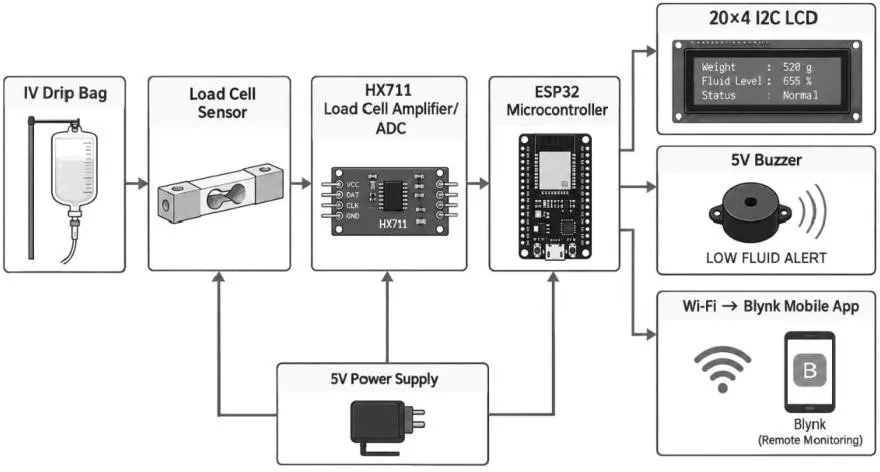
Figure 2: Block Diagram of IV Drip Monitoring System
Figure 2. shows Block diagram of IV Drip Monitoring System A 5V buzzer is provided as an automatic warning device. When the measured IV fluid level falls below the predefined threshold, the ESP32 activates the buzzer. This provides an audible indication to the nearby medical staff that the IV bag requires attention. The alert condition can be programmed according to the required prototype operating range.
The complete system therefore consists of Load Cell → HX711 → ESP32 → 20×4 I2C LCD + 5V Buzzer, with the ESP32 additionally connected to Blynk through Wi-Fi. The load cell performs sensing, the HX711 performs signal conditioning and conversion, the ESP32 performs processing and control, the LCD provides local information, the buzzer provides an audible warning, and Blynk provides remote monitoring.
The proposed system is designed to provide continuous monitoring rather than depending only on periodic visual checking. When the IV bag is full or at a normal level, the system displays the measured condition without activating the alarm. As the fluid is consumed, the weight decreases and the displayed value changes accordingly. When the measured value reaches the selected low-level threshold, the buzzer is activated and the status can also be updated on the Blynk application.
The system is intended as a low-cost educational prototype for demonstrating sensor-based monitoring and IoT technology in healthcare. It can be further improved by adding data logging, multiple patient monitoring, better calibration, battery backup, additional alerts and improved mechanical support for the IV bag. The prototype is not intended to replace clinically approved IV infusion monitoring equipment.
RESULTS AND DISCUSSION:
The developed IV Drip Monitoring and Alert System was tested to verify its ability to measure the changing weight of an IV drip bag and provide an automatic warning when the fluid level became low. The system successfully integrated the load cell, HX711 module, ESP32, 20×4 I2C LCD, 5V buzzer, and Blynk application into a single monitoring system.
During testing, the load cell detected the weight of the IV drip bag continuously. As the IV fluid decreased, the measured weight also decreased. The HX711 successfully converted the small load-cell signal into digital data, which was processed by the ESP32. After calibration, the measured values were displayed on the LCD.
The 20×4 I2C LCD displayed the current weight and system status clearly. This allowed the user to observe the IV fluid condition locally. When the measured value was above the selected threshold, the system indicated a normal condition and the buzzer remained OFF.
When the IV fluid level reached the predefined low-level threshold, the ESP32 activated the 5V buzzer. The audible alert indicated that the IV bag required attention. This demonstrated that the proposed system could automatically detect a low-fluid condition without requiring continuous manual observation.
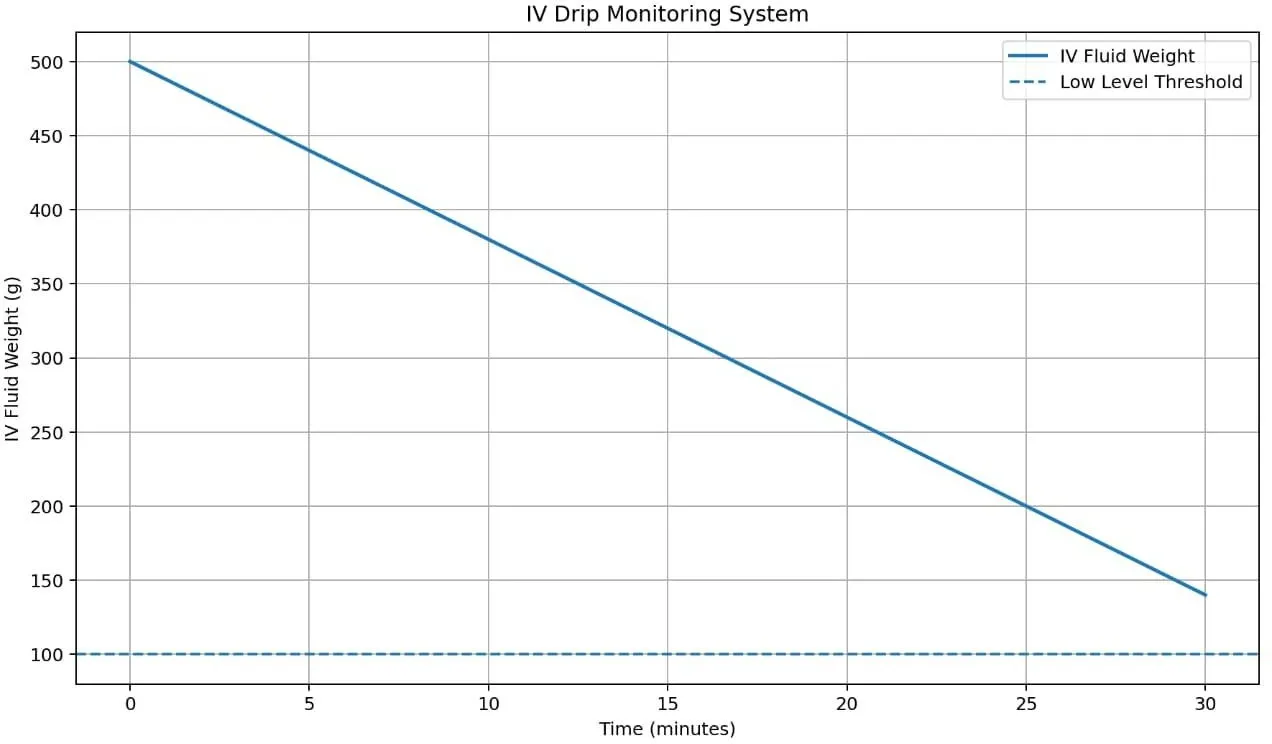
Figure 3: IV Drip Level Detection System
Figure 3. shows IV Drip Level Detection System. The ESP32 also transmitted the monitoring information through Wi-Fi to the Blynk application. The fluid status could therefore be viewed remotely on a smartphone. This IoT feature improved the flexibility of the system and demonstrated the possibility of remote IV fluid monitoring.
The overall experimental results showed that the proposed system could perform the basic functions of weight measurement, fluid-level estimation, LCD display, low-level alert generation, and remote monitoring. The load-cell-based method was simple and suitable for a prototype because the remaining fluid quantity could be estimated from the change in the IV bag's weight.
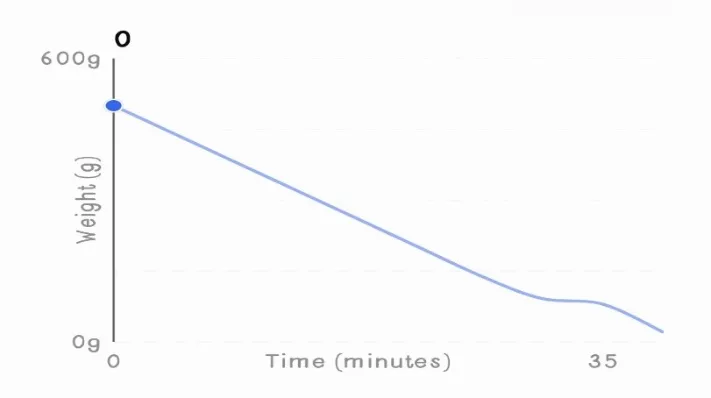
Figure 4: IV Fluid Weight vs Time
Figure 4. Shows IV Fluid Weight vs Time. The results indicate that the proposed system provides a simple and low-cost method for demonstrating automatic IV drip monitoring. However, the accuracy of the system depends on proper load-cell calibration, stable placement of the IV bag, mechanical support and electrical noise. Changes in the position of the bag or external forces on the load cell may affect the measured value.
Table 1: IV Drip Monitoring System – Simulation Results
| S.No | Time (min) | IV Fluid Weight (g) | Fluid Level | Buzzer | Status |
|---|---|---|---|---|---|
| 1 | 0 | 500 | High | OFF | Normal |
| 2 | 5 | 440 | High | OFF | Normal |
| 3 | 10 | 380 | Normal | OFF | Normal |
| 4 | 15 | 320 | Normal | OFF | Normal |
| 5 | 20 | 260 | Normal | OFF | Normal |
| 6 | 25 | 200 | Medium | OFF | Normal |
| 7 | 30 | 140 | Low | OFF | Normal |
| 8 | 34 | 92 | Very Low | ON | Alert |
| 9 | 35 | 80 | Very Low | ON | Alert |
| 10 | 40 | 20 | Very Low | ON | Alert |
Table 1.shows IV Drip Monitoring System – Simulation Results Overall, the developed prototype successfully demonstrates the concept of an automated IV Drip Monitoring and Alert System. The combination of load-cell sensing, HX711 signal conversion, ESP32 processing, LCD display, buzzer alert and Blynk-based monitoring provides both local and remote observation of the IV fluid condition. Further testing with different IV bag sizes and improved calibration can be carried out to increase the reliability of the prototype.
CONCLUSION:
The system uses a load cell sensor to measure the weight of the IV bag. The HX711 module amplifies and converts the sensor signal into digital data, which is processed by the ESP32 microcontroller. The measured fluid level is displayed on a 20×4 I2C LCD, allowing the user to easily observe the current status. When the fluid level falls below the predefined limit, the 5V buzzer is activated to provide an immediate warning. The system can also transmit the monitoring data through Wi-Fi to the Blynk application, allowing remote observation of the IV fluid status.
The proposed system reduces the need for frequent manual checking and helps provide an early indication when the IV fluid level becomes low. It combines sensor technology, embedded systems, LCD display, buzzer alerts, and IoT connectivity into a single monitoring system. The prototype is simple, compact, low-cost, and suitable for academic demonstration. With further development, the system can be improved by adding better calibration, more accurate fluid-level estimation, battery backup, improved mechanical support, and additional safety features. Overall, the paper demonstrates how IoT and sensor-based technology can be applied to improve the monitoring of IV fluid in healthcare environments.
REFERENCES


Ganish R., Pranavu R. A., Ragu S., Mohamed Faisal S., IV Drip Monitoring and Alarm System, Int. J. Sci. R. Tech., 2026, 3 (10), 671-678. https://doi.org/10.5281/zenodo.23279166
 10.5281/zenodo.23279166