View Article

Abstract

A simple, precise, and reliable reverse-phase high-performance liquid chromatography (RP-HPLC) method was successfully developed and optimized for the simultaneous estimation of Meloxicam and Rizatriptan in bulk and pharmaceutical dosage forms. Chromatographic separation was achieved using a Spurcil C18 column with a mobile phase of acetonitrile and phosphate buffer (60:40, pH 4.0), resulting in well-resolved peaks with good symmetry and acceptable retention times. System suitability parameters, including theoretical plate count, tailing factor, and resolution, were within prescribed limits, confirming the efficiency of the method. Validation studies demonstrated excellent linearity (R² > 0.999), high precision (%RSD < 2), and satisfactory accuracy with recovery values close to 100%. Sensitivity was established through low LOD and LOQ values, while robustness studies confirmed the reliability of the method under slight variations in chromatographic conditions. Forced degradation studies under acidic, basic, thermal, oxidative, and photolytic conditions revealed degradation of both drugs, but the method effectively separated degradation products from the main peaks, proving its stability-indicating capability. Overall, the validated RP-HPLC method is accurate, precise, sensitive, robust, and stability-indicating, making it suitable for routine quality control analysis of Meloxicam and Rizatriptan in pharmaceutical formulations.

Keywords

Meloxicam; Rizatriptan; RP-HPLC; Method development; Validation; ICH guidelines; Simultaneous estimation; Stability-indicating method; Quality control.

Introduction

× Popup Image

Pharmaceutical analysis is a critical branch of pharmaceutical sciences that focuses on the identification, quantification, and characterization of drug substances and formulations. It ensures that pharmaceutical products meet the required standards of quality, safety, and efficacy. Analytical methods are essential throughout the drug development process, from raw material testing to finished product evaluation and stability studies. (1–5).Among the various analytical techniques available, High-Performance Liquid Chromatography (HPLC) has emerged as one of the most reliable and widely used methods due to its high sensitivity, specificity, accuracy, and reproducibility. It is particularly useful in the analysis of complex mixtures, impurities, degradation products, and multi-component dosage forms.

MATERIALS AND METHODS:

The experimental work was carried out using various analytical instruments and high quality glassware  to ensure accuracy and precision. A waters 2690 HPLC System separation module and empower 2 software was employed for chromatographic analysis. Additional instruments included a Thermoscientific pH Meter, Dwaraka scientific Thermal Oven, Labman scientific india Ultra-Sonicator, Scaletec Electronic Balance.All volumetric flasks,Pippets and Buretts,Beakers used were of Borosil make.The chemicals used in the study were of analytical grade including Meloxicam and Rizatriptan procured from Qualigens,, Phosphate buffer, Acetic acid, Water, Acetonitrile for HPLC is provided by Qualigens, Methanol for HPLC from Rankem.

METHOD DEVELOPMET

Preparation of Standard Solution.

Accurately weigh and transfer 25mg of Meloxicam, Rizatriptan working standard into a 25ml clean dry volumetric flask add Diluents and sonicate to dissolve it completely and make volume up to the mark with the same solvent. (Stock solution).Further pipette 0.5ml of the above stock solution into a 10ml volumetric flask and dilute up to the mark with Diluents.

Optimization of Column:

SpurcilC18 Column, (250×4.6mm, 5µm) was found to be ideal as it gave good peak shape and resolution at 1.0 ml/min flow.

METHOD VALIDATION

preparation of buffer and mobile phase:

preparation of nah2po4 buffer ph 4.0:

To prepare NAH2PO4 Buffer solution, by adding 6.4Grams of Potassium dihydrogen orthophosphate in 1000ml water. Adjust this solution to pH 4.0 by using sodium hydroxide.

Preparation of mobile phase:

Mix a mixture of above ACN 600ml (60%), 400 ml NAH2PO4 (40%) and degas in ultrasonic water bath for 5 minutes. Filter through 0.45 µ filter under vacuum filtration.

Diluent Preparation:

ACN: NAH2PO4 PH 4 (600:400ml) ratio.

METHOD VALIDATION PARAMETERS:

System Suitability:

Procedure:

Inject 20 µL of the standard, sample into the chromatographic system and measure the areas for the Meloxicam and Rizatriptan peaks and calculate the % Assay by using the formulae.

LINEARITY:

Preparation of stock solution:

Preparation of Level – I-0.2ml Meloxicam and 0.1ml Rizatriptan

Preparation of Level – II-0.4ml Meloxicam and 0.2ml Rizatriptan

Preparation of Level – III-0.6ml Meloxicam and 0.3ml Rizatriptan

Preparation of Level – IV-0.8ml Meloxicam and 0.4ml Rizatriptan

Preparation of Level – V-0.10ml Meloxicam and 0.5ml Rizatriptan

Procedure:

Inject each level into the chromatographic system and measure the peak area.Plot a graph of peak area versus concentration (on X-axis concentration and on Y-axis Peak area) and calculate the correlation coefficient.

PRECISION:

Procedure:

The standard solution was injected for six times and measured the area for all six injections in HPLC. The %RSD for the area of six replicate injections was found to be within the specified limits.

INTERMEDIATE PRECISION/RUGGEDNESS:

Procedure:

The standard solution was injected for six times and measured the area for all six injections in HPLC. The %RSD for the area of six replicate injections was found to be within the specified limits.

ACCURACY:

preparation of 50-150% Sample solution

Accurately weigh and transfer 10 mg of Meloxicam and 5mg Rizatriptan (50%), 20 mg of Meloxicam and 10 mg Rizatriptan (100%), 30 mg of Meloxicam and 15mg Rizatriptane (150%), working standard into a 20ml clean dry volumetric flask add Diluents and sonicate to dissolve it completely and make volume up to the mark with the same solvent. (Stock solution). Further pipette 0.6ml of the above stock solution into a 10ml volumetric flask and dilute up to the mark with Diluents.

Procedure: Inject the standard solution, Accuracy -50%, Accuracy -100% and Accuracy -150% solutions.

Calculate the Amount found and Amount added for Meloxicam and Rizatriptan and calculate the individual recovery and mean recovery values.

RESULTS AND DISCUSSION
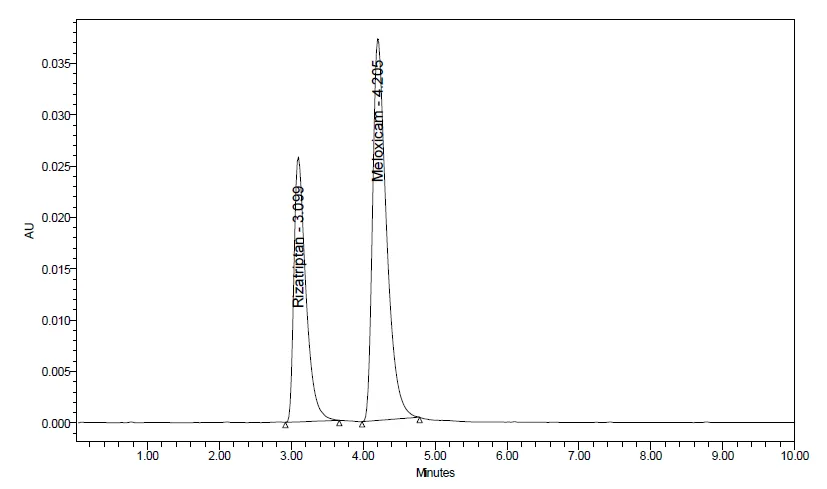
Figure:1 Optimized chromatogram(sample)

SYSTEM SUITABILITY:
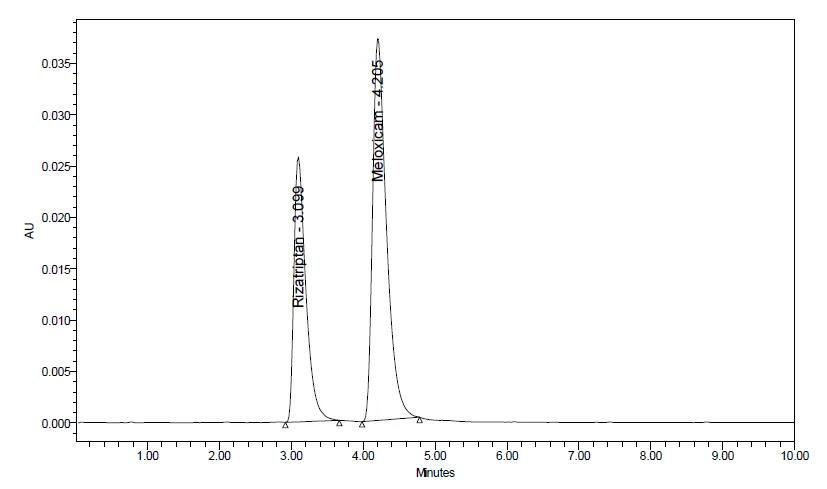
Figure 2: Chromatogram for system suitability

S.No

Name

RT(min)

Area (µV sec)

Height

(µV)

Resolution

USP tailing

USP plate count

1

Rizatriptan

3.099

256214

241189

4.23

1.15

5989

2

Meloxicam

4.205

3654786

3834602

1.32

3998

Table 1: Results of system suitability parameters

VALIDATION PARAMETERS:

ASSAY:
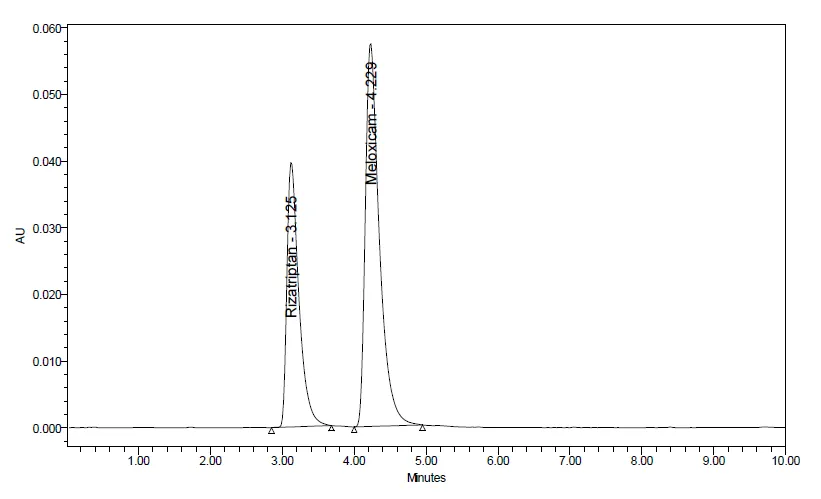
Figure 3: Chromatogram for Standard
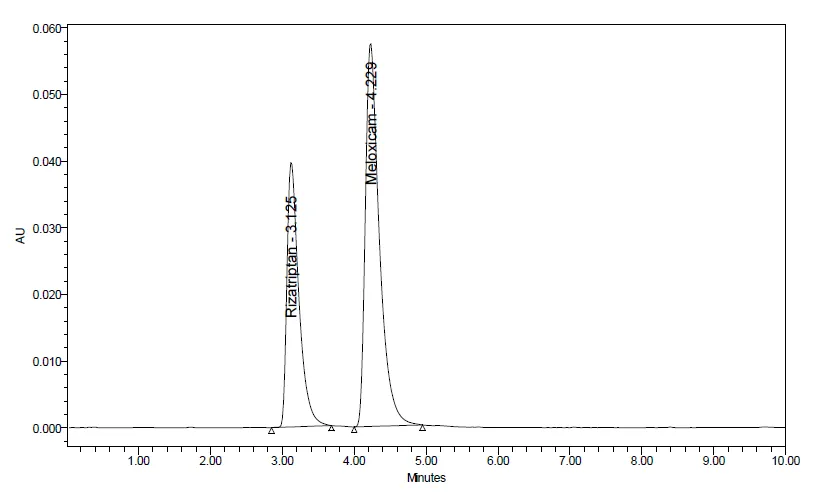
Figure 4: Chromatogram for Sample

Drug Name

Label Claim(mg)

% Assay

Rizatriptan

10mg

99.4%

Meloxican

20mg

99.5%

Table 2: Results of Assay for Rizatriptan  and Meloxican

LINEARITY:

S. No

Rizatriptan

Concentration (µg/ml)

Area

1

10

85438

2

20

170528

3

30

247841

4

40

341085

5

50

427851


S. No

Meloxican

Concentration (µg/ml)

Area

1

20

1282684

2

40

2436854

3

60

3657423

4

80

4873968

5

100

6092543

Table 3: Area of different concentration of Rizatriptan and Meloxican
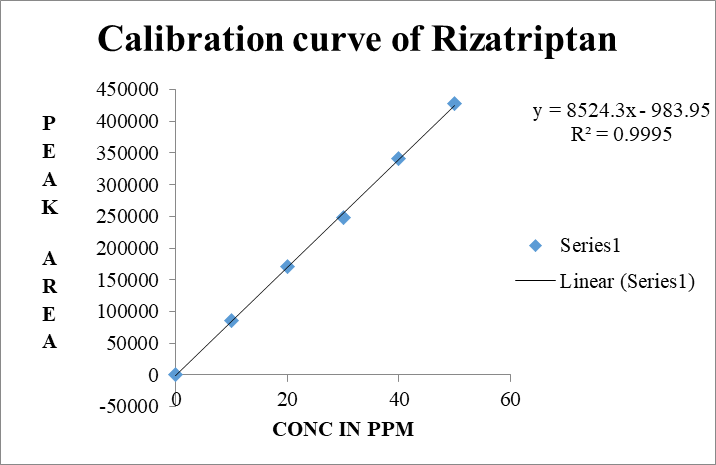
Figure 5: Calibration graph for Rizatriptan
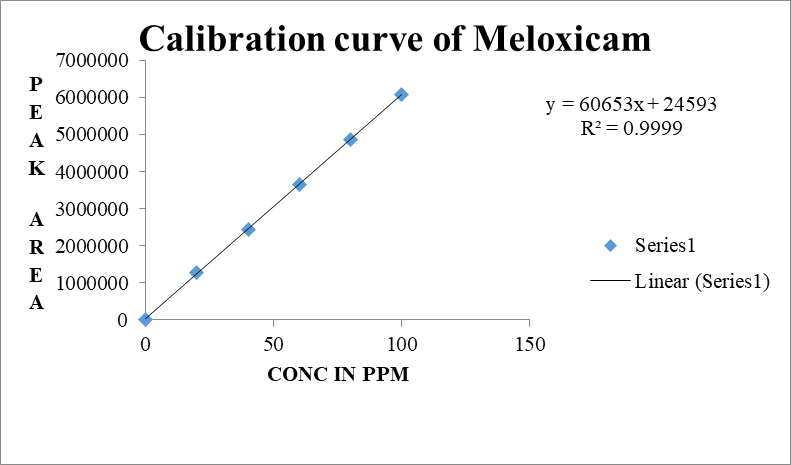
Figure 6: Calibration graph for Meloxican

Parameters

Rizatriptan

Meloxican

Slope (m)

8524.3

60653

Intercept (c)

983.95

24593

Correlation coefficient (R2)

0.9995

0.9999

Table 4: Analytical performance parameters of Rizatriptan and Meloxican

Acceptance criteria:

  • Correlation coefficient (R2) should not be less than 0.999.
  • The correlation coefficient obtained was 0.999 which is in the acceptance limit.

PRECISION:

Injection

Rizatriptan Area

Meloxican Area

Injection-1

2478358

3758753

Injection-2

2461069

3763210

Injection-3

2464136

3787521

Injection-4

2461386

3710258

Injection-5

2466583

3769821

Injection-6

2474139

3730214

Average

2467612

3753296

Standard Deviation

7110.465

28133.75

%RSD

0.3

0.7

Table 5: Results of Precision for Rizatriptan and Meloxican

Acceptance criteria:

  • %RSD for sample should be NMT 2.
  • The %RSD for the standard solution is below 2, which is within the limits hence method is precise.

INTERMEDIATE PRECISION (ruggedness)

Injection

Rizatriptan Area

Meloxican Area

Injection-1

2464380

3887269

Injection-2

2452096

3832589

Injection-3

2466274

3841296

Injection-4

2459384

3878263

Injection-5

2454296

3850214

Injection-6

2453904

3830269

Average

2458389

3853317

Standard Deviation

5408.713

24041.77

%RSD

0.2

0.6

Table 6: Results of Intermediate precision for Rizatriptan and Meloxican

Acceptance criteria:

  • %RSD of five different sample solutions should not more than 2.
  • The %RSD obtained is within the limit, hence the method is rugged.

ACCURACY:

Drug Name

%Concentration

(at specification Level)

Area*

Amount Added (mg)

Amount Found (mg)

% Recovery

Mean Recovery

Rizatriptan

50%

125305

5

5.0

100.9

Rizatriptan

100.3


Meloxican

100.1


Meloxican

50%

1911423

10

9.99

99.9

Rizatriptan

100%

247721

10

10.0

99.7

Meloxican

100%

3804656

20

19.89

99.4

Rizatriptan

150%

373085

15

15.0

100.2

Meloxican

150%

5793856

30

30.3

101.0

Table 7: Accuracy (recovery) data for Rizatriptan and Meloxican.

LIMIT OF DETECTION FOR RIZATRIPTAN AND MELOXICAN

Drug name

Baseline noise(µV)

Signal

obtained (µV)

S/N ratio

Conc.

Rizatriptan

60

179

2.98

0.02µg/ml

Meloxican

60

173

2.88

0.003µg/ml

Table 8: Results of LOD

Acceptance criteria:

  • Signal to noise ratio shall be 3 for LOD solution.
  • The result obtained is within the limit.


LIMIT OF QUANTIFICATION FOR MELOXICAN AND RIZATRIPTAN

Drug name

Baseline noise(µV)

Signal obtained (µV)

S/N ratio

Conc.

Meloxican

60

587

9.78

0.01µg/ml

Rizatriptan

60

595

9.92

0.07µg/ml

Table 9: Results of LOQ

ROBUSTNESS:


Drug name

Flow Rate (ml/min)

System Suitability Results of Rizatriptan

USP Plate Count

USP Tailing

Rizatriptan

0.9

5874

1.01

Meloxican

0.9

3964

1.44

Rizatriptan

1.0

5989

1.21

Meloxican

1.0

3991

1.17

Rizatriptan

1.1

5947

1.18

Meloxican

1.1

3854

1.31

Table 10: Results for variation in flow for Rizatriptan and Meloxican


S. No


Drug name

Change in Organic Composition in the Mobile Phase

System Suitability Results of Rizatriptan Meloxican

USP Plate Count

USP Tailing

1

Rizatriptan

10% less(54ml)

5974

1.01


Meloxican

10% less(54ml)

3897

1.41

2

Rizatriptan

*Actual(60ml)

5874

1.12


Meloxican

*Actual(60ml)

3947

1.34

3

Rizatriptan

10% more(66ml)

5748

1.21


Meloxican

10% more(66ml)

3947

1.54

Table 11: Results for variation in mobile phase composition for Rizatriptan and Meloxican

Acceptance criteria:

  • The Retention time, USP plate count, USP tailing factor obtained for change of flow rate, variation in mobile phase was found to be within the acceptance criteria. Hence the method is robust.

DEGRADATION STUDIES

Parameters

Rizatriptan

Meloxicam

Area

%Degraded

Area

% Degraded

Standard

247853

-----

3818543

-----

Acid

231478

6.61

3457891

9.44

Base

241457

2.58

3741256

2.02

Peroxide

241057

2.74

3700100

3.10

Thermal

228987

7.61

3547891

7.09

Photo

239614

3.32

3714789

2.72

Table 12: Results of Degradation studies

CONCLUSION

The present study successfully developed and optimized a simple, precise, and reliable RP-HPLC method for the simultaneous estimation of Meloxicam and Rizatriptan in bulk and pharmaceutical dosage forms. The optimized chromatographic conditions, employing a Spurcil C18 column with a mobile phase of acetonitrile and phosphate buffer (60:40, pH 4.0), provided well-resolved peaks with good symmetry and acceptable retention times. System suitability parameters such as theoretical plate count, tailing factor, and resolution were found to be within the prescribed limits, indicating the efficiency of the method. The method validation results demonstrated excellent linearity (R² > 0.999), high precision (%RSD < 2), and satisfactory accuracy with recovery values close to 100%, confirming the reliability of the method for quantitative analysis.

Furthermore, the developed method exhibited good sensitivity with low limits of detection (LOD) and quantification (LOQ), enabling accurate estimation even at trace levels. Robustness studies confirmed that small deliberate variations in chromatographic conditions did not significantly affect the method performance, highlighting its ruggedness for routine use. Forced degradation studies under various stress conditions (acidic, basic, thermal, oxidative, and photolytic) indicated that both drugs undergo degradation to some extent, but the method effectively separated the degradation products from the main peaks, proving its stability-indicating capability. Overall, the developed RP-HPLC method is simple, accurate, precise, robust, and suitable for routine quality control analysis of Meloxicam and Rizatriptan in pharmaceutical formulations.

ACKNOWLEDGEMENT:

The authors express their sincere gratitude to Dr. M. Venkataramana, Principal, Surabhi Dayakar Rao College of Pharmacy, Rimmanaguda, for his constant encouragement, valuable support, and for providing the necessary facilities to carry out this research work successfully.

We extend our heartfelt thanks to Mrs. Soundarya Yerrolla, Assistant Professor, Surabhi Dayakar Rao College of Pharmacy, for her invaluable guidance, continuous motivation, constructive suggestions, and support throughout the completion of this research work.

We are also thankful to all the faculty members, staff, and students of Surabhi Dayakar Rao College of Pharmacy for their cooperation and assistance during the study.

Finally, we express our gratitude to our family members, friends, and everyone who directly or indirectly contributed to the successful completion of this research paper.

REFERENCES

  1. International Council for Harmonisation (ICH). ICH Q2(R1): Validation of Analytical Procedures: Text and Methodology. Geneva: ICH; 2005.
  2. International Council for Harmonisation (ICH). ICH Q1A(R2): Stability Testing of New Drug Substances and Products. Geneva: ICH; 2003.
  3. United States Food and Drug Administration (FDA). Guidance for Industry: Analytical Procedures and Methods Validation for Drugs and Biologics. Silver Spring (MD): FDA; 2015.
  4. Snyder LR, Kirkland JJ, Dolan JW. Introduction to Modern Liquid Chromatography. 3rd ed. Hoboken (NJ): John Wiley & Sons; 2010.
  5. Skoog DA, Holler FJ, Crouch SR. Principles of Instrumental Analysis. 6th ed. Belmont (CA): Thomson Brooks/Cole; 2007.
  6. Willard HH, Merritt LL, Dean JA, Settle FA. Instrumental Methods of Analysis. 7th ed. New Delhi: CBS Publishers; 1986.
  7. Chatwal GR, Anand SK. Instrumental Methods of Chemical Analysis. 5th ed. Mumbai: Himalaya Publishing House; 2007.
  8. Beckett AH, Stenlake JB. Practical Pharmaceutical Chemistry. 4th ed. New Delhi: CBS Publishers; 2002.
  9. Kazakevich Y, Lobrutto R. HPLC for Pharmaceutical Scientists. Hoboken (NJ): John Wiley & Sons; 2007.
  10. Meyer VR. Practical High-Performance Liquid Chromatography. 5th ed. Chichester: John Wiley & Sons; 2010.
  11. Swartz ME, Krull IS. Analytical Method Development and Validation. New York: Marcel Dekker; 2012.
  12. Blessy M, Patel RD, Prajapati PN, Agrawal YK. Development of forced degradation and stability indicating studies of drugs—A review. J Pharm Anal. 2014;4(3):159–165.
  13. Bakshi M, Singh S. Development of validated stability-indicating assay methods—critical review. J Pharm Biomed Anal. 2002;28(6):1011–1040.
  14. United States Pharmacopeia (USP). USP 43–NF 38. Rockville (MD): United States Pharmacopeial Convention; 2020.
  15. British Pharmacopoeia Commission. British Pharmacopoeia. London: The Stationery Office; 2020.
  16. DrugBank Online. Meloxicam: drug information, pharmacology, and mechanism of action. Available from: https://go.drugbank.com
  17. PubChem Database. Meloxicam; CID: 3918. National Center for Biotechnology Information, U.S. National Library of Medicine. Available from: https://pubchem.ncbi.nlm.nih.gov
  18. ChemSpider. Meloxicam chemical structure and properties; ID: 3918. Royal Society of Chemistry. Available from: http://www.chemspider.com
  19. Brunton LL, Hilal-Dandan R, Knollmann BC. Goodman & Gilman’s The Pharmacological Basis of Therapeutics. 14th ed. New York: McGraw-Hill Education; 2023.
  20. Katzung BG, Vanderah TW. Basic and Clinical Pharmacology. 16th ed. New York: McGraw-Hill Education; 2021.
  21. DrugBank Online. Rizatriptan: drug information, mechanism of action, and pharmacological data. Available from: https://go.drugbank.com
  22. PubChem Database. Rizatriptan; CID: 104821. National Center for Biotechnology Information, U.S. National Library of Medicine. Available from: https://pubchem.ncbi.nlm.nih.gov
  23. ChemSpider. Rizatriptan chemical structure and properties; ID: 104821. Royal Society of Chemistry. Available from: http://www.chemspider.com
  24. Brunton LL, Hilal-Dandan R, Knollmann BC. Goodman & Gilman’s The Pharmacological Basis of Therapeutics. 14th ed. New York: McGraw-Hill Education; 2023.
  25. Katzung BG, Vanderah TW. Basic and Clinical Pharmacology. 16th ed. New York: McGraw-Hill Education; 2021.
  26. Singh MK, Mazumder R, Padhi S, Singh DK. Formulation development and optimization of bioenhanced sublingual tablets of rizatriptan benzoate to combat migraine. Indian J Pharm Educ Res. 2022 Apr 1;56(2):200-15.
  27. Sinha PK, Jeswani RM, Topagi KS, Damle MC. A validated RP-HPLC method for determination of Meloxicam in the Presence of its Impurities. International J. of Pharm Tech Research. 2009; 1:1051-60.
  28. Bandarkar FS, Vavia PR. A stability indicating HPLC method for the determination of meloxicam in bulk and commercial formulations. Tropical Journal of Pharmaceutical Research. 2009 Jul 23;8(3).
  29. Zaman M, Hanif M, Khan NU, Mahmood A, Qaisar MN, Ali H. Development and validation of     stability-indicating RP-HPLC method for the simultaneous determination of Tizanidine HCl and meloxicam in Rabbit's plasma. Acta Chromatographica. 2019 Sep;31(3):173-8.
  30. Sagar PV, Kumar D, Dey S, Samal HB. Simultaneous estimation of rizatriptan, sumatriptan and zolmitriptan by RP-HPLC method in bulk. Journal of Pharmacy Research. 2010 Dec;3(12):2930-3.
  31. Velusamy S, Masimukku VM, Chereddy S, Jadapalli JK, Palur K, Archakam SC, Kumarachari RK. Bioanalytical method development and validation of rizatriptan in human plasma using LC–MS/MS method. International journal of chemical and analytical science. 2013 Jun 1;4(2):108-14.
  32. Wali AF, Masoodi MH, Akbar M, Mushtaq A. Method development and validation of a stabilityindicating rp-hplc method for analysis of meloxicam using dad detector. Asian Journal of Pharmaceutical Research and Development. 2013 Sep 1:33-9.
  33. Altinoz SA, Ucar GÜ, Yıldız E. Determination of rizatriptan in its tablet dosage forms by UV spectrophotometric and spectrofluorimetric methods. Analytical letters. 2002 Jan 12;35(15):2471-85.
  34. Pawar R. Development and Validation of a Stability-Indicating RP-HPLC Assay Method for The Estimation of Rizatriptan Benzoate in Tablet Dosage Form. Journal of Drug Delivery and Biotherapeutics. 2024 Oct 25;1(02):35-47.
  35. Chagarlamudi K, Maddala VK, Gandla K. A Stability-Indicating and Environmentally Sustainable UPLC Method for Simultaneous Determination of Rizatriptan, Meloxicam, and Related N-Nitrosamine Impurities. Journal of Pharmaceutical and Biomedical Analysis Open. 2025 Aug 10:100087.

Reference

  1. International Council for Harmonisation (ICH). ICH Q2(R1): Validation of Analytical Procedures: Text and Methodology. Geneva: ICH; 2005.
  2. International Council for Harmonisation (ICH). ICH Q1A(R2): Stability Testing of New Drug Substances and Products. Geneva: ICH; 2003.
  3. United States Food and Drug Administration (FDA). Guidance for Industry: Analytical Procedures and Methods Validation for Drugs and Biologics. Silver Spring (MD): FDA; 2015.
  4. Snyder LR, Kirkland JJ, Dolan JW. Introduction to Modern Liquid Chromatography. 3rd ed. Hoboken (NJ): John Wiley & Sons; 2010.
  5. Skoog DA, Holler FJ, Crouch SR. Principles of Instrumental Analysis. 6th ed. Belmont (CA): Thomson Brooks/Cole; 2007.
  6. Willard HH, Merritt LL, Dean JA, Settle FA. Instrumental Methods of Analysis. 7th ed. New Delhi: CBS Publishers; 1986.
  7. Chatwal GR, Anand SK. Instrumental Methods of Chemical Analysis. 5th ed. Mumbai: Himalaya Publishing House; 2007.
  8. Beckett AH, Stenlake JB. Practical Pharmaceutical Chemistry. 4th ed. New Delhi: CBS Publishers; 2002.
  9. Kazakevich Y, Lobrutto R. HPLC for Pharmaceutical Scientists. Hoboken (NJ): John Wiley & Sons; 2007.
  10. Meyer VR. Practical High-Performance Liquid Chromatography. 5th ed. Chichester: John Wiley & Sons; 2010.
  11. Swartz ME, Krull IS. Analytical Method Development and Validation. New York: Marcel Dekker; 2012.
  12. Blessy M, Patel RD, Prajapati PN, Agrawal YK. Development of forced degradation and stability indicating studies of drugs—A review. J Pharm Anal. 2014;4(3):159–165.
  13. Bakshi M, Singh S. Development of validated stability-indicating assay methods—critical review. J Pharm Biomed Anal. 2002;28(6):1011–1040.
  14. United States Pharmacopeia (USP). USP 43–NF 38. Rockville (MD): United States Pharmacopeial Convention; 2020.
  15. British Pharmacopoeia Commission. British Pharmacopoeia. London: The Stationery Office; 2020.
  16. DrugBank Online. Meloxicam: drug information, pharmacology, and mechanism of action. Available from: https://go.drugbank.com
  17. PubChem Database. Meloxicam; CID: 3918. National Center for Biotechnology Information, U.S. National Library of Medicine. Available from: https://pubchem.ncbi.nlm.nih.gov
  18. ChemSpider. Meloxicam chemical structure and properties; ID: 3918. Royal Society of Chemistry. Available from: http://www.chemspider.com
  19. Brunton LL, Hilal-Dandan R, Knollmann BC. Goodman & Gilman’s The Pharmacological Basis of Therapeutics. 14th ed. New York: McGraw-Hill Education; 2023.
  20. Katzung BG, Vanderah TW. Basic and Clinical Pharmacology. 16th ed. New York: McGraw-Hill Education; 2021.
  21. DrugBank Online. Rizatriptan: drug information, mechanism of action, and pharmacological data. Available from: https://go.drugbank.com
  22. PubChem Database. Rizatriptan; CID: 104821. National Center for Biotechnology Information, U.S. National Library of Medicine. Available from: https://pubchem.ncbi.nlm.nih.gov
  23. ChemSpider. Rizatriptan chemical structure and properties; ID: 104821. Royal Society of Chemistry. Available from: http://www.chemspider.com
  24. Brunton LL, Hilal-Dandan R, Knollmann BC. Goodman & Gilman’s The Pharmacological Basis of Therapeutics. 14th ed. New York: McGraw-Hill Education; 2023.
  25. Katzung BG, Vanderah TW. Basic and Clinical Pharmacology. 16th ed. New York: McGraw-Hill Education; 2021.
  26. Singh MK, Mazumder R, Padhi S, Singh DK. Formulation development and optimization of bioenhanced sublingual tablets of rizatriptan benzoate to combat migraine. Indian J Pharm Educ Res. 2022 Apr 1;56(2):200-15.
  27. Sinha PK, Jeswani RM, Topagi KS, Damle MC. A validated RP-HPLC method for determination of Meloxicam in the Presence of its Impurities. International J. of Pharm Tech Research. 2009; 1:1051-60.
  28. Bandarkar FS, Vavia PR. A stability indicating HPLC method for the determination of meloxicam in bulk and commercial formulations. Tropical Journal of Pharmaceutical Research. 2009 Jul 23;8(3).
  29. Zaman M, Hanif M, Khan NU, Mahmood A, Qaisar MN, Ali H. Development and validation of     stability-indicating RP-HPLC method for the simultaneous determination of Tizanidine HCl and meloxicam in Rabbit's plasma. Acta Chromatographica. 2019 Sep;31(3):173-8.
  30. Sagar PV, Kumar D, Dey S, Samal HB. Simultaneous estimation of rizatriptan, sumatriptan and zolmitriptan by RP-HPLC method in bulk. Journal of Pharmacy Research. 2010 Dec;3(12):2930-3.
  31. Velusamy S, Masimukku VM, Chereddy S, Jadapalli JK, Palur K, Archakam SC, Kumarachari RK. Bioanalytical method development and validation of rizatriptan in human plasma using LC–MS/MS method. International journal of chemical and analytical science. 2013 Jun 1;4(2):108-14.
  32. Wali AF, Masoodi MH, Akbar M, Mushtaq A. Method development and validation of a stabilityindicating rp-hplc method for analysis of meloxicam using dad detector. Asian Journal of Pharmaceutical Research and Development. 2013 Sep 1:33-9.
  33. Altinoz SA, Ucar GÜ, Yıldız E. Determination of rizatriptan in its tablet dosage forms by UV spectrophotometric and spectrofluorimetric methods. Analytical letters. 2002 Jan 12;35(15):2471-85.
  34. Pawar R. Development and Validation of a Stability-Indicating RP-HPLC Assay Method for The Estimation of Rizatriptan Benzoate in Tablet Dosage Form. Journal of Drug Delivery and Biotherapeutics. 2024 Oct 25;1(02):35-47.
  35. Chagarlamudi K, Maddala VK, Gandla K. A Stability-Indicating and Environmentally Sustainable UPLC Method for Simultaneous Determination of Rizatriptan, Meloxicam, and Related N-Nitrosamine Impurities. Journal of Pharmaceutical and Biomedical Analysis Open. 2025 Aug 10:100087.

Photo
Yerrolla Soundarya
Corresponding author

Department of Pharmaceutical Analysis, Surabhi Dayakar Rao College of Pharmacy, Rimmanaguda, Gajwel, Telangana, India-502312

Photo
G. Mahesh
Co-author

Department of Pharmaceutical Analysis, Surabhi Dayakar Rao College of Pharmacy, Rimmanaguda, Gajwel, Telangana, India-502312

Photo
B. Vishal
Co-author

Department of Pharmaceutical Analysis, Surabhi Dayakar Rao College of Pharmacy, Rimmanaguda, Gajwel, Telangana, India-502312

Photo
N. Ajay Kiran
Co-author

Department of Pharmaceutical Analysis, Surabhi Dayakar Rao College of Pharmacy, Rimmanaguda, Gajwel, Telangana, India-502312

Photo
B. Rajkumar
Co-author

Department of Pharmaceutical Analysis, Surabhi Dayakar Rao College of Pharmacy, Rimmanaguda, Gajwel, Telangana, India-502312

Photo
MD. Fayaz
Co-author

Department of Pharmaceutical Analysis, Surabhi Dayakar Rao College of Pharmacy, Rimmanaguda, Gajwel, Telangana, India-502312

Yerrolla Soundarya*, G. Mahesh, B. Vishal, N. Ajay Kiran, B. Rajkumar, MD. Fayaz, Development And Validation Of Stability Indicating HPLC Method For The Simultaneous Quantification Of Meloxicam And Rizatriptan In Its Pure & Dosage Forms, Int. J. Sci. R. Tech., 2026, 3 (6), 1504-1514. https://doi.org/10.5281/zenodo.20846227

More related articles
Development And Validation Of RP HPLC Method For T...
M. Venkataramana, Daraksha Anjum, M. Sri Vidhya, M. Navya Sri, D....
A Comprehensive Review of RP-HPLC In Bioanalytical...
Kiran Ukey, Indrajeet Gonjari, Jayashri Dandale , Rugved Sathawan...
Analytical Strategies For Formulation Assessment: ...
Moein S. Attar, Vivek B. Panchbhai, Ram S. Sakhare, Akash C. Kasb...
Related Articles
Development And Validation Of RP HPLC Method For The Simultaneous Estimation Of ...
M. Venkataramana, Daraksha Anjum, M. Sri Vidhya, M. Navya Sri, D. Shivaparameshwari, P. Sri Anjali...
More related articles
Development And Validation Of RP HPLC Method For The Simultaneous Estimation Of ...
M. Venkataramana, Daraksha Anjum, M. Sri Vidhya, M. Navya Sri, D. Shivaparameshwari, P. Sri Anjali...
A Comprehensive Review of RP-HPLC In Bioanalytical Method Validation and Sample ...
Kiran Ukey, Indrajeet Gonjari, Jayashri Dandale , Rugved Sathawane, Kajal Bansode, Pratiksha Rajguru...
Analytical Strategies For Formulation Assessment: A Review Of RP-HPLC Methods Fo...
Moein S. Attar, Vivek B. Panchbhai, Ram S. Sakhare, Akash C. Kasbe, Sana K. Mulla...
Development And Validation Of RP HPLC Method For The Simultaneous Estimation Of ...
M. Venkataramana, Daraksha Anjum, M. Sri Vidhya, M. Navya Sri, D. Shivaparameshwari, P. Sri Anjali...
A Comprehensive Review of RP-HPLC In Bioanalytical Method Validation and Sample ...
Kiran Ukey, Indrajeet Gonjari, Jayashri Dandale , Rugved Sathawane, Kajal Bansode, Pratiksha Rajguru...
Analytical Strategies For Formulation Assessment: A Review Of RP-HPLC Methods Fo...
Moein S. Attar, Vivek B. Panchbhai, Ram S. Sakhare, Akash C. Kasbe, Sana K. Mulla...