View Article

  • A Comparative Study On The Effectiveness Of Tabata Training And Ladder Training On Muscle Endurance And Cardiac Endurance Among Basketball Players.

  • Department of Sports Physiotherapy R.V.S College Of Physiotherapy, Coimbatore, The Tamil Nadu Dr. M.G.R. Medical University, Chennai, Tamil Nadu, India.

Abstract

A comparative study on the effectiveness of tabata training and ladder training on muscle endurance and cardiac endurance among basketball players. Background : Tabata training is a high intensity interval training method involving 20 seconds of exercise and 10 seconds of rest, repeated eight times. Ladder training improves speed, agility, coordination, balance and reaction. Methodology : 30 basketball players were divided into two groups. Group A performed Tabata training, and Group B performed Ladder training. Muscle endurance was assessed using the vertical jump test, and cardiac endurance using the Cooper 12-minute run test. Training was conducted for six weeks over 18 sessions. Results: Both groups showed significant improvement in muscle and cardiac endurance. However, Tabata training produced greater improvement than ladder training. Conclusion: Tabata training was more effective than ladder training in improving the selected endurance outcomes among basketball players.

Keywords

Tabata training, ladder training, muscle endurance, cardiac endurance, basketball players.

Introduction

× Popup Image

Basketball is one of the most popular and physically demanding team sports. It is a fast-paced game that requires continuous movement, rapid acceleration, sudden stopping, jumping, sprinting, pivoting, and frequent changes in direction. During a basketball match, players must perform repeated high-intensity activities while maintaining balance, coordination, speed, strength, and accuracy. These activities place considerable demands on the muscular and cardiovascular systems. Therefore, physical fitness and endurance are essential components of successful basketball performance.

Endurance is the ability to perform physical activity for a prolonged period while resisting fatigue. Muscle endurance refers to the ability of muscles to perform repeated contractions or maintain activity for a long time. Basketball players require good endurance in the lower limbs and core muscles for running, jumping, landing, defensive movements, and repeated changes in direction. Cardiac endurance, or cardiorespiratory endurance, is the ability of the heart and lungs to supply oxygen to the working muscles during exercise. It helps players recover between intense activities and maintain performance throughout the game.

Various training methods are used to improve the physical fitness of basketball players. Tabata training is a form of high-intensity interval training that consists of 20 seconds of intense exercise followed by 10 seconds of rest, repeated eight times. Exercises such as burpees, jump squats, plank jacks, and bicycle crunches may be included. This training method challenges both the muscular and cardiovascular systems and may improve endurance, exercise tolerance, and recovery capacity.

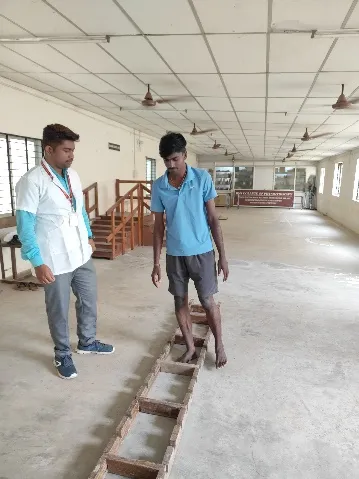
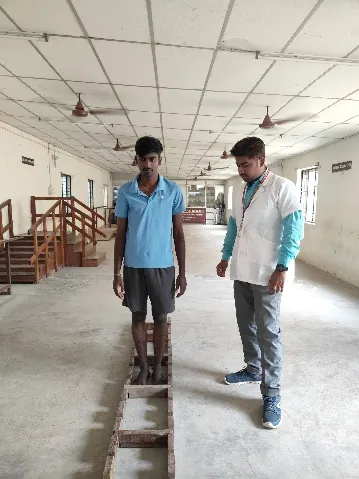
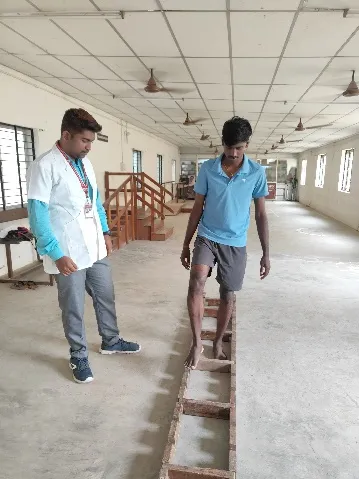
Ladder training is an agility-based exercise programme performed using an agility ladder. Common drills include one-foot-in, two-feet-in, and lateral shuffle movements. Ladder training helps improve foot speed, agility, balance, coordination, reaction time, proprioception, and lower-limb control. These abilities are important in basketball because players frequently perform quick foot movements, defensive slides, pivots, and sudden changes in direction.

Both Tabata training and ladder training may improve the physical performance of basketball players, although they focus on different aspects of conditioning. Tabata training mainly involves repeated high-intensity muscular and cardiovascular activity, whereas ladder training emphasizes agility, footwork, coordination, and movement control.

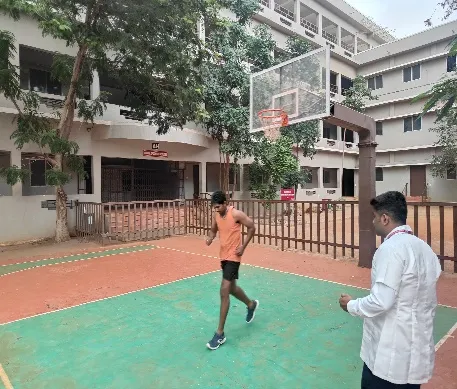
The vertical jump test can be used to assess lower-limb muscular performance, while the Cooper 12-minute run test is commonly used to assess cardiac or cardiorespiratory endurance. These tests help determine changes in physical performance before and after a training programme.

The present study aims to compare the effectiveness of Tabata training and ladder training on muscle endurance and cardiac endurance among basketball players. Thirty healthy male basketball players aged 18–25 years were divided into two groups. Group A performed Tabata training, and Group B performed ladder training. The training programme consisted of 18 sessions conducted three times per week. Pre-test and post-test measurements were taken using the vertical jump test and Cooper 12-minute run test to identify the effects of both training methods.

METHODOLOGY

Study setting

The study was conducted in Physiotherapy outpatient department of RVS College Of Physiotherapy.

 Study design and study duration

The study design was a pre test and post test experimental study conducted over a period of 6 months.

 Inclusion criteria

  •      Healthy normal students of age between 18-25 years (Basketball players).
  •      Male subjects only included.

 Exclusion criteria

  • Severe pain condition of shoulder.
  • Upper limb deformities.
  • Perceptual disorder.
  • Visual and hearing impairment.
  • Abnormally short & abnormally height subject.
  • Cardiovascular disease.
  • Upper and lower motor lesions.
  • Any neurological impairment.
  • Outside the intended age range.

Orientation of  the subjects

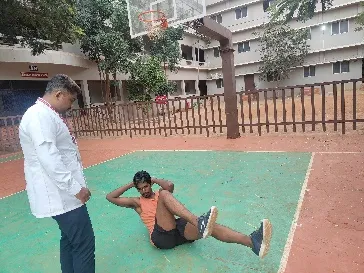
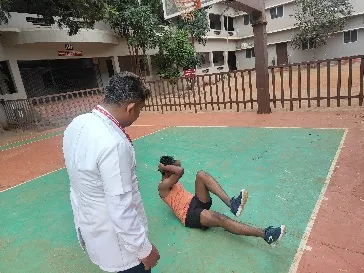
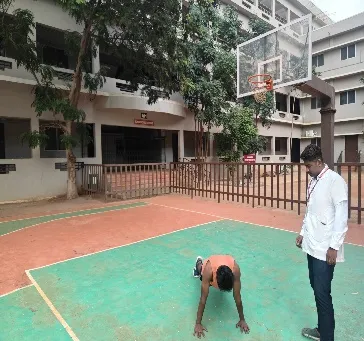
Before the collection of data, subjects were explained about the purpose of the study. The investigators have given a detailed orientation about the various test procedures. Such as the Vertical jump Test to measure muscle endurance and cooper 12 minute run test to measure cardiac endurance. The consent and full cooperation of each participant was sought after explanation of condition and demonstration of the procedures involved in the study.

Measurement Procedure

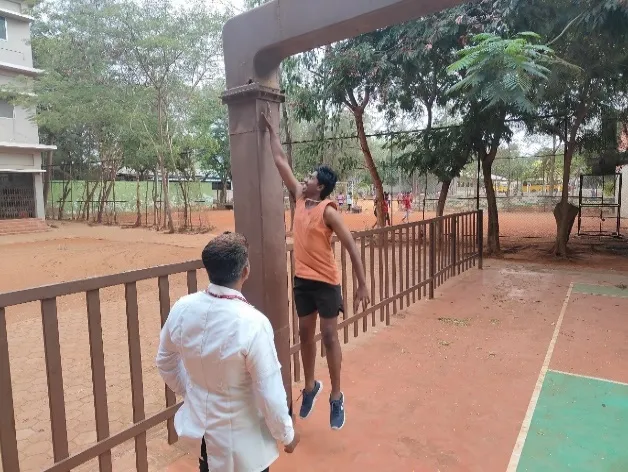
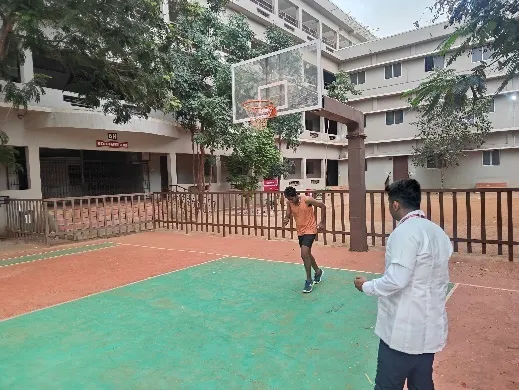
  1. Vertical jump test for muscle endurance

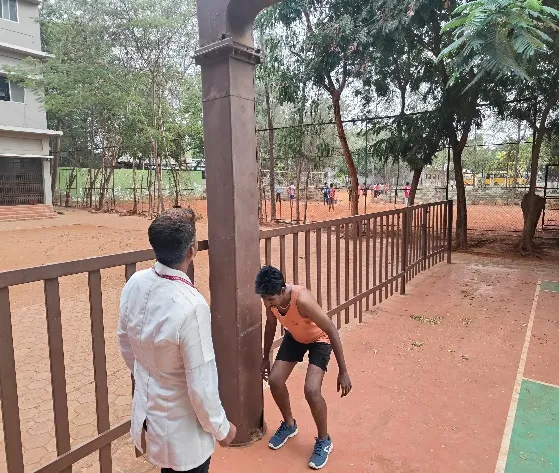
The subject was asked to stand on the side of a wall and reach up with the hand closest to the wall keeping the feet flat on the ground, the point of the fingertips is marked or recorded. This is called the standing reach height.

The subject was then asked to stand away from the wall, and leaps vertically as high as possible using both arms and legs to assist in projecting the body upwards and attempting to touch the wall at the highest point of the jump. The difference in distance between the standing reach height and the jump height is the score.
 

  1. Cooper 12 minutes run test for cardiac endurance

Explain the test procedures to the subject. Perform screening of health risks and obtain informed consent. Prepare forms and record basic information such as age, height, body weight, gender, test conditions.

Procedure: Place markers at set intervals around the track to aid in measuring the completed distance. Participants run for 12 minutes, and the total distance covered is recorded. Walking is allowed, though the participants must be encouraged to push themselves as hard as they can to maximize the distance covered.

Scoring: There are Cooper test norm tables for general guidelines for interpreting the results of this test for adults. There is an equation that can be used to estimate VO2max (in ml/kg/min) from the distance score (there's a formula for either kms or miles). The formula is derived from the original article by Cooper (1968). 
 

Treatment procedure

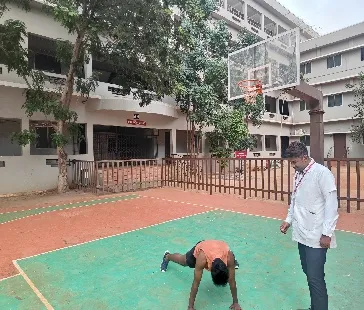
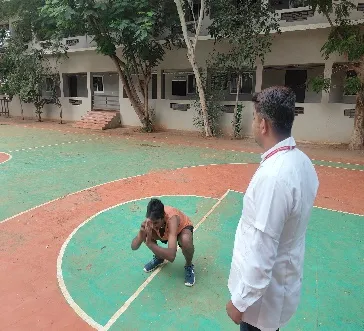
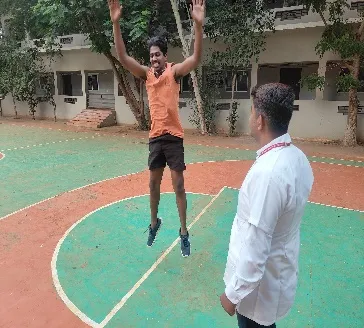
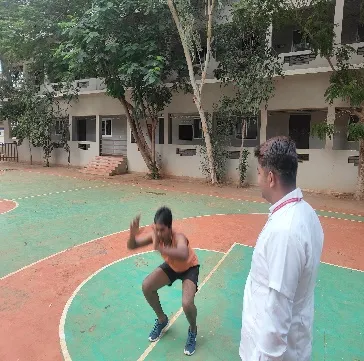
 GROUP A: TABATA TRAINING

EXERCISE

STARTING POSITION

PROCEDURE

Bicycle crunches


Lie on the back with knees bent and feet flat on the floor.

Place the hands behind the head, keeping the elbow wide, and gently support the head. Engage core, then lift shoulder blades off the floor and twist the torso to bring one elbow towards the opposite knee while extending the other leg. Alternate side in a pedaling motion, keeping the core engaged throughout the exercise.

Plank jacks


Start between plank position with feet together and a wider plank position with feet apart, mimicking jumping jack position

Engage the core, and then hop the feets out to the sides and back together in a controlled manner

Burpees


Starting in a standing position

Dropping into a squat, kicking legs back into a plank, performing a push -up (optional ), jumping feet back to the squat, and then jumping up.

Jump squats


Standing with feet shoulder width apart, toes slightly turned out and arms by the sides

Lower into squat position, ensuring the knees are behind the toes. From the squat, explosively jump upwards, landing softly and immediately returning to the squat position to repeat the movement.

GROUP B: LADDER TRAINING

EXERCISE

STARTING POSITION

PROCEDURE

One Foot In Ladder Drill


Stand at the end of the ladder with feet shoulder-width apart.

Focus on the first rung of the ladder directly in front of you

Step Forward: Step into the first rung with one foot, followed by the other foot stepping outside the ladder, next to the first foot.

Repeat: Quickly step the other foot into the next rung, alternating feet in and out of the rungs as you move forward.

Pace: Maintain a quick but controlled pace, ensuring only one foot enters each rung at a time.

Two Foot In Ladder Drill


Stand at the end of the ladder with feet hip-width apart.

Focus on the first rung, ready to step in with both feet.

Step In: Quickly place both feet into the first rung, one after the other, ensuring both feet land inside the ladder.

Step Out: Move to the next rung by stepping both feet out simultaneously and then quickly back into the next rung.

Repeat: Continue this pattern down the length of the ladder, placing both feet in each rung before moving to the next.

Lateral Shuffle Ladder Drill


stand sideways at one end of the ladder with your knees slightly bent and feet shoulder-width apart.

Keep your body low and your core engaged.

Step 1: Step into the first rung with your lead foot (the foot closest to the ladder).

Step 2: Quickly bring your trailing foot into the same rung.

Step 3: Step out to the side of the ladder with your lead foot, followed by your trailing foot, landing outside the rung.

Step 4: Move laterally to the next rung and repeat the pattern, continuing down the length of the ladder.

DATA ANALYSIS AND RESULTS

Variables

Groups

Test

Mean

Mean difference

Standard deviation

Paired ‘t’ value

Muscle endurance

Group A

Pre test

30.98

4.83

0.69

27.1

Post test

35.81

Group B

Pre test

33.01

3.42

0.6

25

Post test

36.43

Cardiac endurance

Group A

Pre test

2.40

0.28

0.06

16.3

Post test

2.68

Group B

Pre test

2.48

1.08

0.3

13.94

Post test

3.56

0.005 level of significance

Table 1 : Shows mean value, mean difference, standard deviation, paired ‘t’ test value between pre and post test of muscle endurance and cardiac endurance.

Variables

Groups

Mean

Mean difference

Standard deviation

Unpaired ‘t’ value

Muscle endurance

Group A

6.66

2.15

0.63

4.16

Group B

4.51

Cardiac endurance

Group A

1.099

0.95

0.21

10.5

Group B

0.149

Table 2 : Shows  me mean value, mean difference, standard deviation, unpaired ‘t’ test value between pre and post test of muscle endurance and cardiac endurance.

DISCUSSION

The aim of this study is to compare the effect of tabata training and ladder training on muscle and cardiac endurance of basketball players.

To  improve the muscle and cardiac endurance among the basketball players. 30 Subjects were taken and divided into 2 groups. Group A were given tabata training and Group B were ladder training

This study was supported by Teo Sin Cher (2025), conducted a study tabata exercise that increased endurance of primary school basketballers. This study is to investigate the effects of the 12 weeks Tabata program on primary basketball players' endurance. 24 male and female from primary school were selected to the tabata training group (EG) and control group (CG). The EG group involved tabata training three times per week for 12 weeks. Body Mass Index showed no significant differences between the control and experimental groups after 12 weeks of intervention. However, other tests of cardiovascular endurance, muscle endurance and flexibility of the primary basketball players showed that there is a significant difference in the endurance scores between the CG and the EG after the tabata training program.

Ketut Chandra Adinata Kusuma (2017), conducted a study effect of ladder drill exercise on speed, surrounding, and power leg muscle. This study is an experimental research. This study utilized one group pre test-post test design. There were total people as the subject of  this research. The data collection technique used a 30-meter sprint test to measure run speed, Illinois agility test to measure agility, and vertical jump test to measure power  of   leg  muscle.  Data  analysis  technique  which  was  used  for  normality  test, homogeneity test/F-test, and T-test with significant level 5% by using SPSS 16.0.0. Based on the finding, there was an effect of ladder drill training upon run speed with sig value=0.007, agility and power of  leg muscle with sig value=0.000. Based on the data analysis, it could be concluded that there was a significant effect of  ladder drill training upon run speed, agility and power of  leg muscle.

CONCLUSION

The study was conducted to compare the effectiveness of tabata training and Ladder training for the muscle and cardiac endurance among the basketball players.

30 subjects were included in this study and were randomly divided into two groups. Group A was treated with tabata training and group B was treated with ladder training to improve muscle and cardiac endurance. The muscle endurance was measured using the vertical jump test and cardiac endurance was measured using a cooper 12 minute run test, scored with corresponding trials considered that as a pre test value. After completing the 6 weeks of training with 18 sessions again the measurement was taken and those values are considered as post test values.

This statistical result shows that there is significant difference in both groups. But when comparing the mean value it is found that the group treated with tabata training  was more effective than ladder training for improving the muscle and cardiac endurance among the basketball players.

LIMITATIONS

  • The number of subjects was small.
  • Psychological factors were not considered.
  • Short term study.

 SUGGESTIONS

  • Similar studies can be carried out for larger sample sizes.
  • Study can be carried out for different age groups.
  • The study can be carried out for a long term period.

REFERENCES

  1. Teo Sin Cher., Nur Shakila Mazalan., Muhammad Naeimmuddin Zakaria (2025). Tabata Exercise Increased Endurance of Primary School Basketballers. International journal of research and innovation in social science. ISSN No. 2454-6186. Volume IX.  Issue III. Page 3407.
  2. Vaquera A. and Radu A. 2019. The Science of Basketball. Routledge. New York,      NY, USA.
  3. Mokray W. Britannica (2020). Basketball - U.S. professional basketball.
  4. Radu A. 2015. Basketball Coaching: Putting Theory Into Practice. Bloomsbury. London.
  5. Laursen P. and Buchheit M. 2019. Science and Application of High-Intensity Interval Training. Human Kinetics. Champaign, IL, USA.
  6. Reuter B., 2012. Developing Endurance. NSCA. Champaign, IL, USA.
  7. Izumi Tabata. 2025. Tabata training in perspective. Applied Physiology, Nutrition, and Metabolism. Vol-50, Pg- 1-10.
  8. Wilmore, J.H., Costil, D.L.(2005). Physiology of sports and exercise. Human Kinetics. 3rd ed. Pg- 205-210.
  9. Sukri, N. M., Ahmad, A., Roos, N. A., et al. (2024). Effects of 12 Week Tabata training on selected health-related fitness components in healthy untrained students from Malaysia. Journal of Science & Sport and Exercise.
  10. Hardy, L (2008). Developing agility and quickness. Human kinetics. Vol-1. Pg-45-55.
  11. Miller, E. (2023). Evaluating vertical jump performance as a measure of muscular power. Journal of Strength and Conditioning Research, Vol-37, Issue-2, Pg- 123–130.
  12. Bandyopadhyay, A. (2023). Modification of Cooper’s 12-min run test for valid prediction of cardiorespiratory fitness in male and female boxers of India. Exercise Medicine. Vol-7. Issue-3.
  13. Sk. Seema., Viswanath Reddy.,  Madhavi., (2024). Effect of tabata training on cardiorespiratory fitness and muscular endurance among recreational male volleyball players. International Journal of Scientific Research
  14. Akhmad Junaedi., Moch Yunus., Taufik Taufik.,(2023). Optimising Cardiovascular Fitness: A Pretest-Posttest Investigation of Tabata Training on VO2max in Junior Futsal Players. Journal Pendidikan Jasmani Olahraga dan Kesehatan. 7(1):142-155.
  15. Ranjith, R.Mano & Subramanian, Nagarajan. (2021). Impact of plyometric and tabata training on speed endurance and vital capacity among men volleyball players. vol-9. 248-257.
  16. Alhussein, Ahmed & Sachit, Hussein & Hamza, Nidahal. (2021). The Effect of (Tabata) Style Exercises to Developing Endurance Ability and Performance of the Skill of Lay-Up Shot of Basketball for Young Players Under Age 18 Years. Indian Journal of Forensic Medicine & Toxicology. 15. 5141-5146.
  17. Liu, Xuefei. (2023). Influence of ladder training on motor co-ordination in basketball players. Revista Brasileira de Medicina do Esporte. issue-29. Vol-10. Pg-1590/1517.
  18. Pradana, Rangga & Maulang, Immanuel & Ahmad Gondo, Adi. (2020). Effect of ladder drill training toward agility level among basketball players. Journal of Physics: Conference Series. Vol-10. Pg-1529.
  19. Bassa, Eleni & Lola, Afroditi & Melliou, Alexandra & Prassa, Maria & Stavropoulou, Georgia & Ziogas, Nikolaos. (2024). Agility Ladder Training Combined With Plyometric or Multidirectional Speed Drills: Short-Term Adaptations on Jump, Speed, and Change of Direction Performance in Young Female Volleyball Players. Pediatric Exercise Science. Vol-36. Pg-2024-0024.
  20. Ravi, Pramod & Kalimuthu, Divya. (2023). Prospective effects of ladder training and circuit training on the strength endurance performance of boys students. European Chemical Bulletin. Vol-12. Pg-485-497.
  21. Selvakumar. (2022). Impact of agility ladder training on coordination and speed endurance among football players. International Journal of Physical Education Sports and Health.Vol- 9. Pg-153-154.
  22. Rodriguez Rosell, David & Mora Custodio, Ricardo & Franco-Márquez, Felipe & Yáñez García, Juan & González-Badillo, Juan. (2016). Traditional vs. Sport-Specific Vertical Jump Tests: Reliability, Validity, and Relationship With the Legs Strength and Sprint Performance in Adult and Teen Soccer and Basketball Players. Journal of Strength and Conditioning Research. Issue-31.
  23. Hackett, Daniel & Davies, Timothy & Soomro, Naj & Halaki, Mark. (2015). Olympic weightlifting training improves vertical jump height in sportspeople: A systematic review with meta-analysis. British Journal of Sports Medicine. Vol-50.
  24. Eagles, Alexander & Sayers, Mark & Bousson, Matthew. (2015). Current Methodologies and Implications of Phase Identification of the Vertical Jump: A Systematic Review and Meta-analysis. Sports medicine (Auckland, N.Z.). Vol-45.
  25. Castagna, Carlo & Ganzetti, Marco & Ditroilo, Massimiliano & Giovannelli, Marco & Rocchetti, Alessandro & Manzi, Vincenzo. (2012). Concurrent Validity of Vertical Jump Performance Assessment Systems. Journal of strength and conditioning research / National Strength & Conditioning Association. Vol-27.
  26. Menzel, Hans-Joachim & Chagas, Mauro & Szmuchrowski, Leszek & Araujo, Silvia & Eduardo Campos, Carlos & Giannetti, Marcus. (2010). Usefulness of the Jump-and-Reach Test in Assessment of Vertical Jump Performance. Perceptual and Motor Skills. Vol-110. Pg-150-158.
  27. Martínez-Lemos I, Otero Rodríguez A, Diz J, Ayán C (2024). Reliability and criterion-related validity of the Cooper test in pre-adolescents and adolescents: A systematic review and meta-analysis. Journal of Sports Science. Vol-42. Issue-3.
  28. Bandyopadhyay. A. (2023). Modification of Cooper’s 12-min Run Test for Valid Prediction of Cardiorespiratory Fitness in Male and Female Boxers of India. Exercise Medicine, 7(3).
  29. J.R. Alvero-cruz (2017). Reliability and accuracy of Cooper’s test in male long distance runners.
  30. Devi nurhidayah (2024). Validity and reliability of the physical fitness test instrument for retired martial art athletes
  31. Weisgerber M, Danduran M, Meurer J, Hartmann K, Berger S, Flores G. (2009). Evaluation of Cooper 12-minute walk/run test as a marker of cardiorespiratory fitness in young urban children with persistent asthma. Clin J Sport Med. Vol-19. Issue-4.

Reference

  1. Teo Sin Cher., Nur Shakila Mazalan., Muhammad Naeimmuddin Zakaria (2025). Tabata Exercise Increased Endurance of Primary School Basketballers. International journal of research and innovation in social science. ISSN No. 2454-6186. Volume IX.  Issue III. Page 3407.
  2. Vaquera A. and Radu A. 2019. The Science of Basketball. Routledge. New York,      NY, USA.
  3. Mokray W. Britannica (2020). Basketball - U.S. professional basketball.
  4. Radu A. 2015. Basketball Coaching: Putting Theory Into Practice. Bloomsbury. London.
  5. Laursen P. and Buchheit M. 2019. Science and Application of High-Intensity Interval Training. Human Kinetics. Champaign, IL, USA.
  6. Reuter B., 2012. Developing Endurance. NSCA. Champaign, IL, USA.
  7. Izumi Tabata. 2025. Tabata training in perspective. Applied Physiology, Nutrition, and Metabolism. Vol-50, Pg- 1-10.
  8. Wilmore, J.H., Costil, D.L.(2005). Physiology of sports and exercise. Human Kinetics. 3rd ed. Pg- 205-210.
  9. Sukri, N. M., Ahmad, A., Roos, N. A., et al. (2024). Effects of 12 Week Tabata training on selected health-related fitness components in healthy untrained students from Malaysia. Journal of Science & Sport and Exercise.
  10. Hardy, L (2008). Developing agility and quickness. Human kinetics. Vol-1. Pg-45-55.
  11. Miller, E. (2023). Evaluating vertical jump performance as a measure of muscular power. Journal of Strength and Conditioning Research, Vol-37, Issue-2, Pg- 123–130.
  12. Bandyopadhyay, A. (2023). Modification of Cooper’s 12-min run test for valid prediction of cardiorespiratory fitness in male and female boxers of India. Exercise Medicine. Vol-7. Issue-3.
  13. Sk. Seema., Viswanath Reddy.,  Madhavi., (2024). Effect of tabata training on cardiorespiratory fitness and muscular endurance among recreational male volleyball players. International Journal of Scientific Research
  14. Akhmad Junaedi., Moch Yunus., Taufik Taufik.,(2023). Optimising Cardiovascular Fitness: A Pretest-Posttest Investigation of Tabata Training on VO2max in Junior Futsal Players. Journal Pendidikan Jasmani Olahraga dan Kesehatan. 7(1):142-155.
  15. Ranjith, R.Mano & Subramanian, Nagarajan. (2021). Impact of plyometric and tabata training on speed endurance and vital capacity among men volleyball players. vol-9. 248-257.
  16. Alhussein, Ahmed & Sachit, Hussein & Hamza, Nidahal. (2021). The Effect of (Tabata) Style Exercises to Developing Endurance Ability and Performance of the Skill of Lay-Up Shot of Basketball for Young Players Under Age 18 Years. Indian Journal of Forensic Medicine & Toxicology. 15. 5141-5146.
  17. Liu, Xuefei. (2023). Influence of ladder training on motor co-ordination in basketball players. Revista Brasileira de Medicina do Esporte. issue-29. Vol-10. Pg-1590/1517.
  18. Pradana, Rangga & Maulang, Immanuel & Ahmad Gondo, Adi. (2020). Effect of ladder drill training toward agility level among basketball players. Journal of Physics: Conference Series. Vol-10. Pg-1529.
  19. Bassa, Eleni & Lola, Afroditi & Melliou, Alexandra & Prassa, Maria & Stavropoulou, Georgia & Ziogas, Nikolaos. (2024). Agility Ladder Training Combined With Plyometric or Multidirectional Speed Drills: Short-Term Adaptations on Jump, Speed, and Change of Direction Performance in Young Female Volleyball Players. Pediatric Exercise Science. Vol-36. Pg-2024-0024.
  20. Ravi, Pramod & Kalimuthu, Divya. (2023). Prospective effects of ladder training and circuit training on the strength endurance performance of boys students. European Chemical Bulletin. Vol-12. Pg-485-497.
  21. Selvakumar. (2022). Impact of agility ladder training on coordination and speed endurance among football players. International Journal of Physical Education Sports and Health.Vol- 9. Pg-153-154.
  22. Rodriguez Rosell, David & Mora Custodio, Ricardo & Franco-Márquez, Felipe & Yáñez García, Juan & González-Badillo, Juan. (2016). Traditional vs. Sport-Specific Vertical Jump Tests: Reliability, Validity, and Relationship With the Legs Strength and Sprint Performance in Adult and Teen Soccer and Basketball Players. Journal of Strength and Conditioning Research. Issue-31.
  23. Hackett, Daniel & Davies, Timothy & Soomro, Naj & Halaki, Mark. (2015). Olympic weightlifting training improves vertical jump height in sportspeople: A systematic review with meta-analysis. British Journal of Sports Medicine. Vol-50.
  24. Eagles, Alexander & Sayers, Mark & Bousson, Matthew. (2015). Current Methodologies and Implications of Phase Identification of the Vertical Jump: A Systematic Review and Meta-analysis. Sports medicine (Auckland, N.Z.). Vol-45.
  25. Castagna, Carlo & Ganzetti, Marco & Ditroilo, Massimiliano & Giovannelli, Marco & Rocchetti, Alessandro & Manzi, Vincenzo. (2012). Concurrent Validity of Vertical Jump Performance Assessment Systems. Journal of strength and conditioning research / National Strength & Conditioning Association. Vol-27.
  26. Menzel, Hans-Joachim & Chagas, Mauro & Szmuchrowski, Leszek & Araujo, Silvia & Eduardo Campos, Carlos & Giannetti, Marcus. (2010). Usefulness of the Jump-and-Reach Test in Assessment of Vertical Jump Performance. Perceptual and Motor Skills. Vol-110. Pg-150-158.
  27. Martínez-Lemos I, Otero Rodríguez A, Diz J, Ayán C (2024). Reliability and criterion-related validity of the Cooper test in pre-adolescents and adolescents: A systematic review and meta-analysis. Journal of Sports Science. Vol-42. Issue-3.
  28. Bandyopadhyay. A. (2023). Modification of Cooper’s 12-min Run Test for Valid Prediction of Cardiorespiratory Fitness in Male and Female Boxers of India. Exercise Medicine, 7(3).
  29. J.R. Alvero-cruz (2017). Reliability and accuracy of Cooper’s test in male long distance runners.
  30. Devi nurhidayah (2024). Validity and reliability of the physical fitness test instrument for retired martial art athletes
  31. Weisgerber M, Danduran M, Meurer J, Hartmann K, Berger S, Flores G. (2009). Evaluation of Cooper 12-minute walk/run test as a marker of cardiorespiratory fitness in young urban children with persistent asthma. Clin J Sport Med. Vol-19. Issue-4.

Photo
Shinos Varghese
Corresponding author

Department of Sports Physiotherapy R.V.S College Of Physiotherapy, Coimbatore, The Tamil Nadu Dr. M.G.R. Medical University, Chennai, Tamil Nadu, India.

Photo
S. Gerald Edwin Raj
Co-author

Department of Sports Physiotherapy R.V.S College Of Physiotherapy, Coimbatore, The Tamil Nadu Dr. M.G.R. Medical University, Chennai, Tamil Nadu, India.

Photo
Franklin Shaju M. K.
Co-author

Department of Sports Physiotherapy R.V.S College Of Physiotherapy, Coimbatore, The Tamil Nadu Dr. M.G.R. Medical University, Chennai, Tamil Nadu, India.

Shinos Varghese*, S. Gerald Edwin Raj, Franklin Shaju M. K., A Comparative Study On The Effectiveness Of Tabata Training And Ladder Training On Muscle Endurance And Cardiac Endurance Among Basketball Players., Int. J. Sci. R. Tech., 2026, 3 (9), 544-553. https://doi.org/10.5281/zenodo.22958794

More related articles
Assessment of the Knowledge of Radiology Student A...
Anil Kumar, Shubhanshi Yadav, Sandhya Verma, Jyoti Yadav, Shivam ...
The Bengaluru Employment Ladder: Why India’s Tec...
Rajib Kumar Sanyal, Aarya Aarya, Roopa Devi, Santosh Angadi...
Evaluation and Preparation of Joint Pain & Muscle Pain Releasing Spray...
Poonam Bansode, Rupali Kale, Sakshi Divate, Rupali Shelke, Sakshi Dhote, Sayli Tayde, Sanika Borpi, ...
Impact of Pelvic Floor Muscle Training on Postural Stability in Postmenopausal W...
Jeevan Kore, Vaishnavi Chopade, Kajal Avatade, Akshata Pawar, Virashree Awati, Harshal Chavan...
Related Articles
Relieving Muscle Cramps Through Leg Exercises: A Quasi-Experimental Study Among ...
Rani Catherine K. V., Ancitta Joseph, Anupama Vincent , Geethu BL...
Restoring Muscle Function Through Siddha Varma Therapy: A Case Report With A Pro...
Sathish Kumar S., Mahalakshmi V., Sri Elamathi Devasena K., Janani E....
Assessment of the Knowledge of Radiology Student About Emergency Crash Cart...
Anil Kumar, Shubhanshi Yadav, Sandhya Verma, Jyoti Yadav, Shivam Kumar...
More related articles
Assessment of the Knowledge of Radiology Student About Emergency Crash Cart...
Anil Kumar, Shubhanshi Yadav, Sandhya Verma, Jyoti Yadav, Shivam Kumar...
The Bengaluru Employment Ladder: Why India’s Technology Capital Offers Work Ac...
Rajib Kumar Sanyal, Aarya Aarya, Roopa Devi, Santosh Angadi...